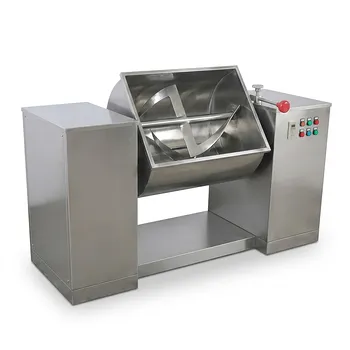
What are the advantages of a planetary centrifugal mixer? Achieve Rapid, Bladeless Homogenization for Small-Dose Simulants
Updated 5 months ago
The primary process advantages of using a planetary centrifugal mixer for small-dose material simulants are the radical reduction in processing time and the achievement of superior homogenization without physical contact. While traditional kneading equipment can take approximately 2 hours to process a single batch, a planetary centrifugal mixer (PCM) can achieve a more uniform result in just 3 to 5 minutes. This technology is specifically optimized for small-dose samples ranging from 10 to 100 grams, making it an ideal solution for laboratory-scale simulant preparation.
Core Takeaway: Planetary centrifugal mixers replace slow, mechanical kneading with high-energy centrifugal forces that simultaneously mix and de-foam materials. This bladeless approach ensures rapid homogenization, eliminates cross-contamination risks, and significantly enhances operator safety through remote operation capabilities.
Radical Efficiency in Processing Cycles
Drastic Reduction in Mixing Time
The most immediate advantage is the massive leap in throughput. By utilizing simultaneous revolution and rotation, the PCM compresses a 2-hour kneading cycle into a 3-to-5-minute window. This allows researchers to iterate on simulant formulations significantly faster than with traditional mechanical methods.
Optimization for Small-Dose Samples
Traditional kneaders often struggle with "dead zones" when handling volumes as low as 10 to 100 grams. The centrifugal forces in a PCM act uniformly on the entire mass within the container. This ensures that every milligram of the simulant is subjected to the same energy, regardless of the small batch size.
Superior Material Homogenization
Multi-Scale Vortex Fields
Unlike traditional paddles that physically push material, a PCM induces multi-scale vortex fields within the fluid. This bladeless design generates intense shear forces that fluidize high-viscosity materials. It is particularly effective for systems where filler loading exceeds 80 vol%.
Effective Agglomerate Breakdown
For simulants containing micron-scale inorganic fillers like aluminum nitride or nano-silica, traditional kneading may leave clusters unrefined. The high-energy centrifugal environment effectively breaks down these agglomerates. This results in a highly uniform dispersion that is critical for the stability of coatings and hierarchical structures.
Integrated De-foaming and Material Integrity
Simultaneous Degassing
A major drawback of traditional kneading is the introduction of air bubbles, which requires a separate de-foaming step. PCMs perform simultaneous de-foaming during the mixing process. By eliminating micro-voids, the final cured product achieves higher density and improved thermal conductivity.
Preservation of Sensitive Structures
Traditional mechanical impellers can cause physical damage to delicate components, such as high-aspect-ratio nanofibers. The non-contact mixing environment of a PCM protects shear-sensitive materials from mechanical degradation. This ensures that the structural integrity of the simulant remains intact throughout the process.
Enhanced Safety and Contamination Control
Remote Operation for Personnel Safety
Simulants are often used to mimic hazardous materials, making personnel exposure a primary concern. PCMs support remote operation, allowing technicians to manage the mixing process from a distance. This removes the need for direct contact with the materials during the high-energy phase.
Elimination of Cross-Contamination
Because the PCM is a bladeless system, there are no internal paddles or impellers to clean. This eliminates the risk of material carry-over between batches. It also prevents contamination caused by mechanical impeller wear, which is a common issue when kneading abrasive fillers.
Understanding the Trade-offs
Thermal Management Challenges
The high-energy nature of centrifugal mixing can generate significant internal friction, leading to heat buildup in high-viscosity materials. While the process is short, temperature-sensitive simulants may require monitored intervals or specialized cooling. Over-mixing can potentially lead to unintended thermal degradation if the cycle is not precisely calibrated.
Equipment and Tooling Limitations
PCMs require precise counter-balancing of the containers to function at high speeds. Unlike a simple stirrer, you cannot easily change container sizes without adjusting the machine's balance. Additionally, the initial capital investment for a planetary mixer is typically higher than for basic traditional kneading or stirring equipment.
How to Apply This to Your Project
Selecting the Right Strategy
When transitioning from traditional kneading to planetary centrifugal mixing, your choice should be driven by your specific material requirements:
- If your primary focus is rapid throughput: Prioritize PCM to reduce your cycle times from hours to minutes while maintaining sample consistency.
- If your primary focus is high-purity or electronic simulants: Utilize the bladeless design to prevent metallic contamination from wear and ensure a 100% clean batch-to-batch transition.
- If your primary focus is structural integrity (nanofibers): Leverage the non-contact vortex fields to achieve homogenization without shearing or breaking the delicate fiber networks.
By adopting planetary centrifugal mixing, you move from a manual, time-intensive kneading process to a highly repeatable, safe, and efficient scientific standard for simulant preparation.
Summary Table:
| Feature | Planetary Centrifugal Mixer (PCM) | Traditional Kneading Equipment |
|---|---|---|
| Processing Time | 3–5 Minutes | ~2 Hours |
| Mixing Mechanism | Bladeless (Revolution & Rotation) | Physical Blades/Paddles |
| Small-Dose Optimization | Excellent (10g–100g) | Poor (Dead zones in small batches) |
| De-foaming | Integrated (Simultaneous degassing) | Separate post-process required |
| Contamination Risk | Zero (Non-contact system) | High (Tool wear & cross-batch) |
| Material Integrity | Preserves sensitive structures | Risk of mechanical degradation |
Elevate Your Lab's Material Processing Efficiency
At the forefront of material science, we provide complete laboratory sample preparation solutions tailored for precision and speed. Whether you are preparing small-dose simulants or advanced powder formulations, our specialized equipment ensures superior results and repeatability.
Our extensive product range includes:
- Mixing & Dispersion: Advanced planetary centrifugal mixers, defoaming mixers, and high-energy mills (planetary ball, jet, sand/bead, disc, and rotor).
- Powder Processing: Robust crushers (jaw/roll), liquid nitrogen cryogenic grinders, and precision sieve shakers (vibratory/air-jet).
- Compaction Solutions: A full spectrum of hydraulic presses, including Cold/Warm Isostatic Presses (CIP/WIP), standard lab presses, XRF pellet presses, and vacuum hot presses.
Ready to transform your 2-hour mixing cycles into 5-minute successes? Contact our technical experts today to discuss your specific application and find the ideal equipment for your laboratory needs.
References
- Yuanyuan Li, Bin Liang. Study on the Centrifugal Mixing Process of PBX Simulants. DOI: 10.1088/1742-6596/2891/5/052003
Mentioned Products
- High Viscosity Planetary Centrifugal Vacuum Mixer for Material Defoaming and Uniform Mixing
- High Efficiency Vacuum Planetary Centrifugal Mixer and Defoaming Machine for Industrial Material Research and Precise Laboratory Powder Dispersion
- High Speed Vacuum Planetary Centrifugal Mixer and Defoamer for Industrial Paste Processing
- Industrial Planetary Centrifugal Vacuum Defoaming Mixer for High Viscosity Paste and Powder Homogenization
- High Viscosity Planetary Centrifugal Mixing and Vacuum Defoaming Machine for Laboratory Material Preparation
People Also Ask
- What core functions does a planetary centrifugal mixer perform? Optimize Hard Carbon Anode Slurry & Degassing
- Why is a planetary centrifugal mixer recommended for geopolymer slurries? Achieve high-shear, air-free homogenization.
- Why is a planetary centrifugal mixer utilized for wood powder and HPMC? Achieve uniform dispersion & rapid defoaming.
- How does a planetary centrifugal mixer address key challenges in Tyr-CDs@EVA optical films? Ensure Optical Clarity.
- What is the role of a planetary centrifugal mixer in UHTC slurry preparation? Achieve Void-Free, High-Viscosity Mixing

Tech Team · PowderPreparation
Last updated on May 14, 2026
Related Products
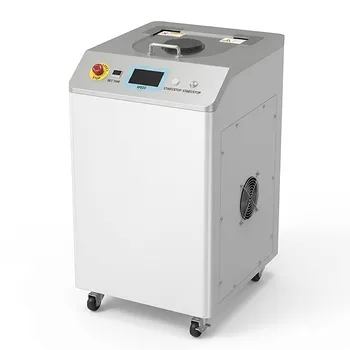
High Viscosity Planetary Centrifugal Vacuum Mixer for Material Defoaming and Uniform Mixing
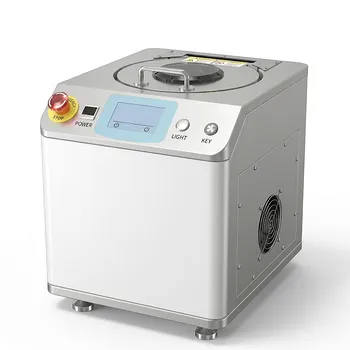
High Efficiency Vacuum Planetary Centrifugal Mixer and Defoaming Machine for Industrial Material Research and Precise Laboratory Powder Dispersion
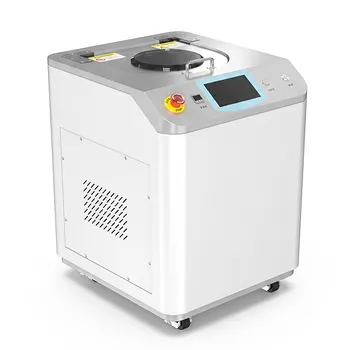
High Speed Vacuum Planetary Centrifugal Mixer and Defoamer for Industrial Paste Processing
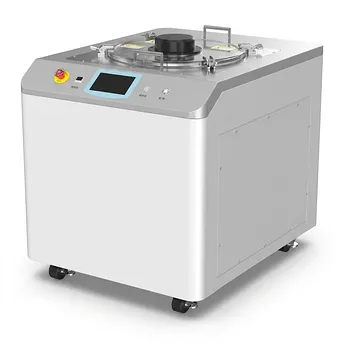
Industrial Planetary Centrifugal Vacuum Defoaming Mixer for High Viscosity Paste and Powder Homogenization
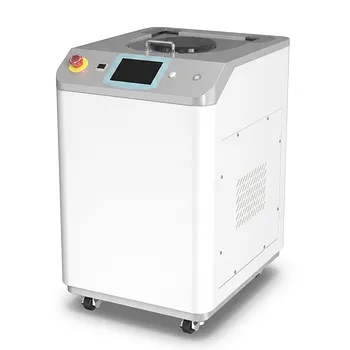
High Viscosity Planetary Centrifugal Mixing and Vacuum Defoaming Machine for Laboratory Material Preparation
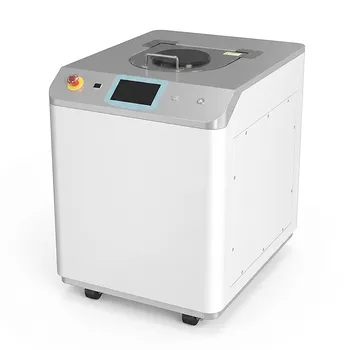
Industrial Planetary Centrifugal Vacuum Defoaming Mixer for High Viscosity Paste and Advanced Material Science
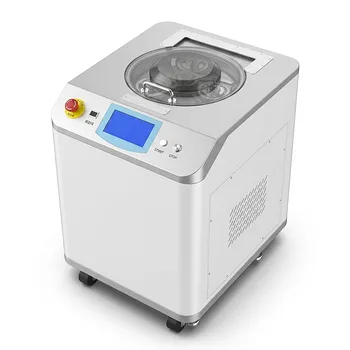
Dual Cup Vacuum Centrifugal Mixer Planetary Paste Defoaming Machine Industrial Material Processor
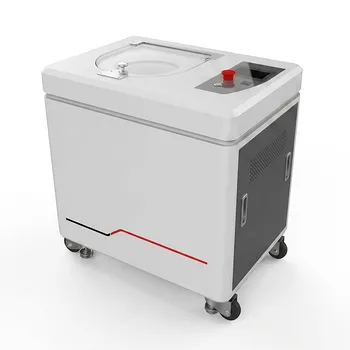
非介入式材料均质机真空脱泡行星搅拌高粘度混合设备
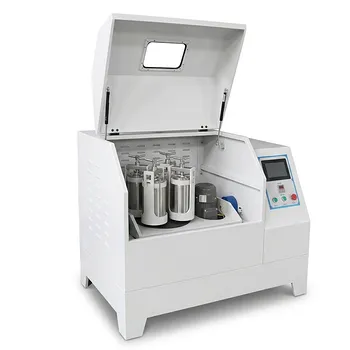
360° Rotating Omnidirectional Laboratory Planetary Ball Mill for Homogeneous Ultra-Fine Grinding and Mixing
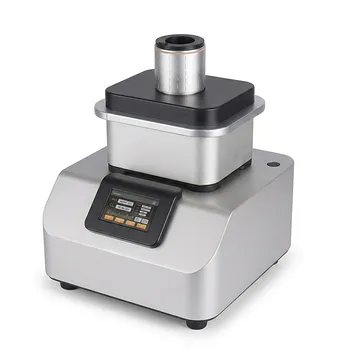
Ultra Centrifugal Mill High Speed Laboratory Grinder for Fibrous and Brittle Sample Preparation
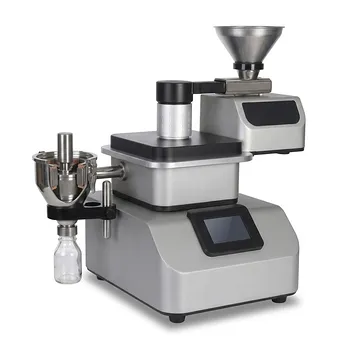
Ultra Centrifugal Mill for Rapid Laboratory Sample Preparation and Fine Powder Grinding
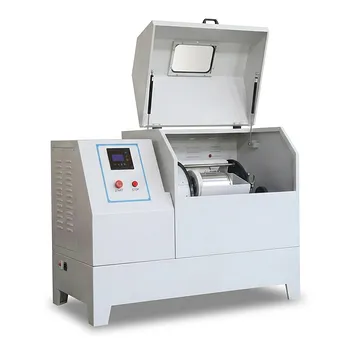
Heavy Duty Horizontal Planetary Ball Mill for Efficient Industrial Grinding and Sample Preparation
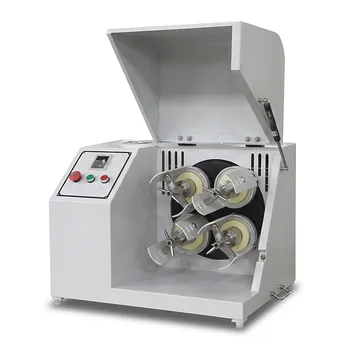
Horizontal Light Duty Planetary Ball Mill for Laboratory Sample Preparation

Vertical Production Planetary Ball Mill for High Throughput Powder Processing
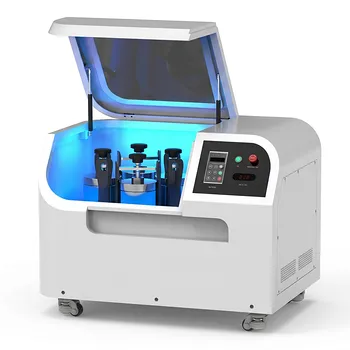
Planetary Ball Mill 12L
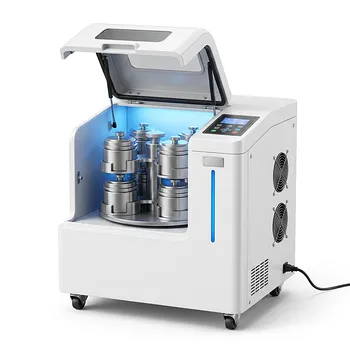
High Energy Omnidirectional Planetary Ball Mill 20L
Inclined Mixer for Homogeneous Powder Blending and Grinding

Miniature Planetary Ball Mill with Vacuum Grinding and High Efficiency for Laboratory Sample Preparation
High Energy Omnidirectional Planetary Ball Mill 16L