CIP vs. Die Pressing for Sodium Electrolytes: Why Uniform Pressure Matters for Performance
Updated 5 months ago
Cold Isostatic Pressing (CIP) offers a transformative advantage over standard die pressing by applying uniform, omnidirectional pressure to sodium-based solid electrolytes. This process utilizes a liquid medium to eliminate internal stress gradients and density irregularities inherent in uniaxial dry pressing. By ensuring a consistent microstructure, CIP significantly enhances the electrochemical performance and structural reliability of the electrolyte after sintering.
Core Takeaway: By replacing rigid mechanical dies with a fluid-based pressure medium, CIP ensures equal compaction from all directions, resulting in green bodies with superior density uniformity. This eliminates internal stresses that lead to cracking during sintering and ensures isotropic ion transmission across the electrolyte.
Overcoming the Limitations of Mechanical Die Pressing
Elimination of Friction and Density Gradients
Standard die pressing suffers from friction between the powder and the rigid mold walls, which creates uneven pressure distribution. CIP uses a liquid medium to apply omnidirectional pressure, ensuring that every part of the green body experiences the same force.
This balanced pressure environment eliminates the density gradients common in traditional dry pressing. The result is a highly uniform green body that maintains its structural integrity throughout the manufacturing process.
Isotropic Compaction and Microstructural Uniformity
CIP creates an isotropic compression environment, meaning the material properties are identical in all directions. This is critical for sodium-based electrolytes, as it ensures consistent ion transmission throughout the entire component.
Green bodies prepared via CIP demonstrate ideal Debye response characteristics in impedance spectroscopy. This indicates a high level of microstructural perfection that is difficult to achieve with the unidirectional force of a standard press.
Impact on Sintering and Structural Integrity
Prevention of Cracking and Delamination
During high-temperature sintering, internal stress concentrations in a green body often lead to cracking or delamination. CIP treatment significantly reduces these internal stresses, allowing the material to densify without failing.
The uniform density achieved through CIP ensures that shrinkage occurs evenly across the component. This prevents the warping and deformation that frequently plague complex ceramic structures when using standard pressing methods.
Enhanced Mechanical Strength and Near-Net-Shape Forming
The high density and microstructural uniformity provided by CIP—often using pressures up to 250 MPa—result in finished products with superior mechanical strength. This makes the electrolytes more resilient during handling and long-term operation.
Furthermore, CIP enables near-net-shape forming, which reduces the need for expensive and difficult mechanical machining of the hardened ceramic. This is particularly valuable for complex geometries where maintaining precise dimensions is essential.
Understanding the Trade-offs
Process Complexity and Cycle Time
While CIP provides superior material properties, it is generally slower than standard die pressing. The need to seal the powder in flexible molds and submerge them in a liquid medium adds steps to the production cycle.
Standard die pressing remains more suitable for high-speed, high-volume production of simple shapes where absolute density uniformity is less critical. CIP is typically reserved for high-performance applications where material quality is the primary concern.
Tooling and Equipment Costs
The initial investment for CIP equipment is often higher due to the high-pressure liquid systems and safety requirements involved. Additionally, flexible molds used in CIP may have a shorter lifespan or require more complex handling than rigid steel dies.
However, these costs are often offset by the reduction in scrap rates caused by sintering cracks and the decreased need for post-sintering machining.
How to Apply This to Your Solid Electrolyte Project
Recommendations Based on Project Goals
- If your primary focus is maximizing electrochemical performance: Utilize CIP to ensure isotropic ion transmission and a uniform microstructure, which provides the most reliable impedance data.
- If your primary focus is structural reliability in large components: Implement a high-pressure CIP step (at least 200 MPa) to eliminate internal stress gradients and prevent cracking during high-temperature sintering.
- If your primary focus is cost-effective mass production: Use standard die pressing for initial shaping, but consider a secondary CIP "wet bag" step to improve density if performance benchmarks are not met.
By leveraging the omnidirectional pressure of Cold Isostatic Pressing, you can overcome the inherent physical limitations of dry pressing and produce sodium-based electrolytes with world-class stability and performance.
Summary Table:
| Feature | Standard Die Pressing | Cold Isostatic Pressing (CIP) |
|---|---|---|
| Pressure Direction | Uniaxial (One Direction) | Omnidirectional (All Sides) |
| Density Distribution | Gradients due to friction | Highly Uniform |
| Internal Stress | High (risk of cracking) | Minimal |
| Microstructure | Anisotropic | Isotropic (Uniform Ion Flow) |
| Shape Capability | Simple discs/cylinders | Complex Near-Net Shapes |
Elevate Your Material Research with Precision Compaction
Achieving perfect ionic conductivity in sodium-based electrolytes requires equipment that eliminates internal defects. At [Brand Name], we provide complete laboratory sample preparation solutions for material science, specializing in high-performance powder processing and compaction equipment.
Whether you need to refine powders using our planetary ball mills, jet mills, or cryogenic grinders, or require superior densification via our Cold/Warm Isostatic Presses (CIP/WIP), we have the expertise to support your workflow. Our extensive line also includes:
- Compaction: Standard lab presses, XRF pellet presses, and vacuum hot presses.
- Processing: Jaw/roll crushers, sieve shakers, and high-shear mixers.
Ready to eliminate sintering cracks and optimize your electrolyte performance? Contact our experts today to find the ideal solution for your lab!
References
- Renjie Liu, Anthony R. West. Electrochemical impedance spectroscopy of battery systems, including sodium materials. DOI: 10.1016/j.coelec.2025.101800
Mentioned Products
- 6-Ton Small Single-Punch Tablet Press — Laboratory Powder & Granule Tableting Equipment / Tablet Forming Machine
- Manual Tablet Press with Dual Scale Pressure Gauge for Pharmaceutical Food Chemical Laboratory Sample Preparation
- 5 Ton Single Punch Tablet Press Laboratory Small Batch Production
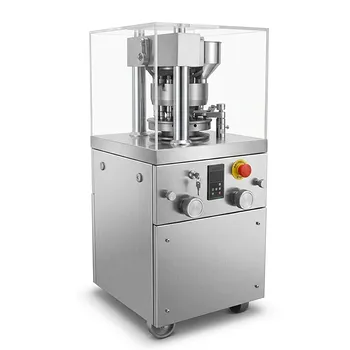
- Ordinary Type Rotary Tablet Press for Pharmaceutical Chemical Food Electronic Industries
People Also Ask
- What is the function of a laboratory press in Cr-Ti alloy evaluation? Quantify Fracture Stress & Strength
- What is the function of a laboratory press in assessing the hydrophobic performance of modified vermiculite fillers?
- What is the core function of a laboratory press in the forming of ceramic filter element green bodies? Maximize Density.
- What is the function of a laboratory press in the preparation of ceramic feed rods? Master Density and Precision
- Why is vacuum sealing and flexible packaging necessary for Aluminum Titanate powders during CIP? Ensure Peak Density

Tech Team · PowderPreparation
Last updated on May 14, 2026
Related Products
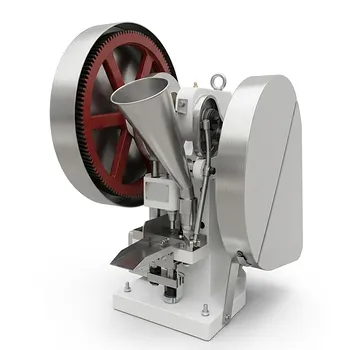
6-Ton Small Single-Punch Tablet Press — Laboratory Powder & Granule Tableting Equipment / Tablet Forming Machine
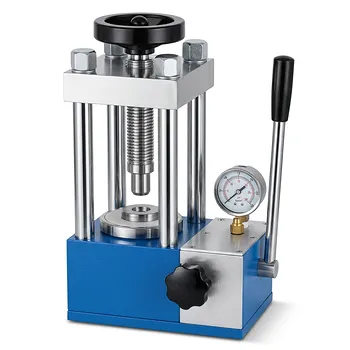
Manual Tablet Press with Dual Scale Pressure Gauge for Pharmaceutical Food Chemical Laboratory Sample Preparation
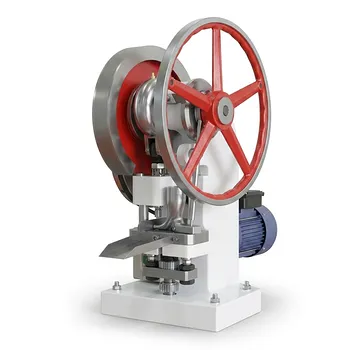
5 Ton Single Punch Tablet Press Laboratory Small Batch Production