UO2-Gd2O3 Prep: Co-precipitation vs. Mechanical Mixing Advantages for Superior Chemical Uniformity
Updated 4 months ago
Co-precipitation provides superior chemical uniformity and lattice stability compared to mechanical mixing by utilizing liquid-phase chemical reactors to achieve molecular-level blending of uranium and gadolinium. This process results in high-purity nanopowders with enhanced chemical activity, which significantly lowers the required sintering temperatures and eliminates the local structural defects often found in mechanically blended fuel.
The co-precipitation method shifts the mixing process from a physical interaction to a chemical synthesis, ensuring that uranium and gadolinium are distributed with molecular precision. This foundational uniformity creates a more stable solid solution and superior microstructural integrity in the final sintered product.
Advancements in Chemical and Molecular Uniformity
Molecular-Level Mixing in the Liquid Phase
Unlike mechanical mixing, which relies on the physical blending of solid particles, co-precipitation utilizes chemical reaction equipment to mix elements in a liquid state. This allows uranium and gadolinium to interact at the molecular level before any solid powder is formed.
Elimination of Local Structural Defects
Because the components are mixed so thoroughly in the liquid phase, the resulting powders are chemically homogeneous. This uniformity effectively eliminates local structural defects that typically occur when mechanical mixing fails to distribute gadolinium evenly throughout the uranium matrix.
Superior Chemical Purity
The co-precipitation process enables precise control over precursor precipitation, which minimizes the introduction of foreign impurities. In contrast, mechanical milling can inadvertently introduce contaminants from the grinding media or the environment.
Sintering Efficiency and Lattice Stability
Pre-formed Solid Solution
Powders produced via co-precipitation often enter the sintering stage having already partially formed a solid solution. This pre-existing bond creates a more stable lattice structure during thermal processing, leading to more predictable material behavior.
Higher Powder Activity and Lower Temperatures
Chemical synthesis generates nanopowders with high surface activity. This increased activity allows the material to reach full density at lower sintering temperatures than those required for traditional mechanically mixed powders.
Refined Microstructural Control
The use of co-precipitated precursors results in fine microstructures and single-phase ceramic formations. These refined structures improve the chemical stability of the material and enhance its resistance to environmental corrosion, such as CMAS (calcium-magnesium-alumino-silicate) degradation.
Understanding the Trade-offs
While co-precipitation excels in chemical uniformity, it may present challenges in the physical handling stages of manufacturing. Mechanical mills—such as ball, hammer, or jet mills—are often superior at optimizing the physical characteristics of the powder for pressing.
Mechanical mixing can break down original agglomerates and optimize particle size distribution, which significantly improves the filling efficiency in pressing dies. Consequently, mechanical methods often achieve higher green density at lower pressures and reduce the risk of physical defects like edge chipping or cracks during the demolding process.
Making the Right Choice for Your Goal
Selecting the optimal preparation method depends on whether your priority lies in the chemical integrity of the fuel or the physical efficiency of the pelletizing process.
- If your primary focus is Chemical Uniformity and Lattice Stability: Co-precipitation is the definitive choice as it ensures a molecular-level distribution that mechanical mixing cannot replicate.
- If your primary focus is Sintering Efficiency: Utilize co-precipitation to leverage high-activity nanopowders that densify at lower temperatures.
- If your primary focus is High Green Density and Pressing Performance: Mechanical mixing remains the preferred route to optimize particle size distribution and minimize physical pellet defects.
The transition to co-precipitation represents a shift from traditional manufacturing toward high-precision material science, offering a path to more stable and reliable nuclear fuel structures.
Summary Table:
| Feature | Co-Precipitation Method | Mechanical Mixing Method |
|---|---|---|
| Mixing Level | Molecular-level (Liquid phase) | Physical blending (Solid phase) |
| Uniformity | Superior chemical homogeneity | Risk of local structural defects |
| Purity | High (Controlled precipitation) | Potential contamination from media |
| Sintering | Lower temperatures required | Higher temperatures required |
| Pressing | Lower green density | Higher green density & efficiency |
| Main Goal | Chemical & lattice stability | Physical handling & pellet density |
Elevate Your Material Synthesis with Precision Equipment
Whether your research focuses on achieving molecular-level uniformity through co-precipitation or optimizing particle distribution via mechanical mixing, [Brand Name] provides complete laboratory sample preparation solutions for material science.
We specialize in high-performance powder processing and compaction equipment designed to meet the rigorous demands of nuclear fuel and ceramic research. Our extensive range includes:
- Advanced Milling & Mixing: Planetary ball mills, jet mills, and specialized powder mixers to achieve the perfect particle size and distribution.
- Precision Compaction: A full spectrum of hydraulic presses, including Cold/Warm Isostatic Presses (CIP/WIP), vacuum hot presses, and XRF pellet presses to ensure superior green density and eliminate structural defects.
- Sample Preparation: Crushers, cryogenic grinders, and air-jet sieve shakers for comprehensive material analysis.
Ready to enhance your lab's efficiency and material integrity? Contact us today to find the ideal solution for your powder processing and pelletizing needs.
References
- Palanki Balakrishna. Fabrication of UO<sub>2</sub>-Gd<sub>2</sub>O<sub>3</sub> Fuel Pellets. DOI: 10.4236/msce.2016.42002
Mentioned Products
- High Speed Air Induced Ultrafine Pulverizer Laboratory Superfine Powder Mill for Pharmaceutical and Material Science Sample Preparation
- High Speed Laboratory Grinder Efficient Stainless Steel Powder Pulverizer Universal Material Science Mill for Sample Preparation
- High Speed Laboratory Powder Grinder Small Batch Sample Preparation Mill
- Vertical Production Planetary Ball Mill for High Throughput Powder Processing
- Laboratory Disc Mill for Ore and Mineral Sample Preparation
People Also Ask
- What are the technical advantages of using a high-speed laboratory pulverizer for grinding tablets into powders? 20K RPM
- How does an air-jet mill enhance the performance of Mo2N when used as an electrocatalyst? Optimize Electrode Efficiency
- How does a laboratory jet mill function in the processing of crude char into rCB? Master High-Purity Particle Refinement
- What is the function of laboratory-scale pulverizing equipment in bio-adsorptive film prep? Maximize Surface Area
- How does jet milling achieve particle size reduction for wheat powder? Explore Cold-Process Micron Precision

Tech Team · PowderPreparation
Last updated on Jun 03, 2026
Related Products
High Speed Air Induced Ultrafine Pulverizer Laboratory Superfine Powder Mill for Pharmaceutical and Material Science Sample Preparation
High Speed Laboratory Grinder Efficient Stainless Steel Powder Pulverizer Universal Material Science Mill for Sample Preparation
High Speed Laboratory Powder Grinder Small Batch Sample Preparation Mill
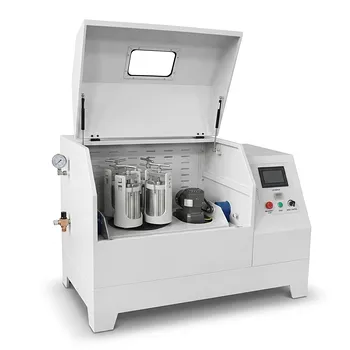
Vertical Production Planetary Ball Mill for High Throughput Powder Processing
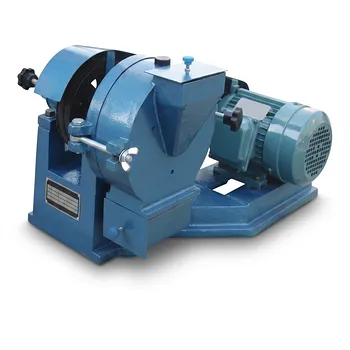
Laboratory Disc Mill for Ore and Mineral Sample Preparation
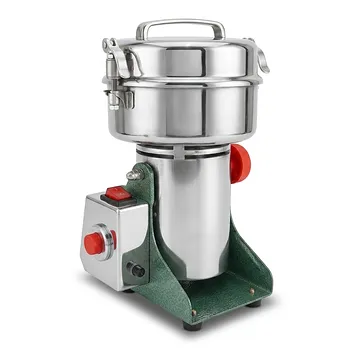
Small High-Speed Laboratory Grinder for Powder Processing
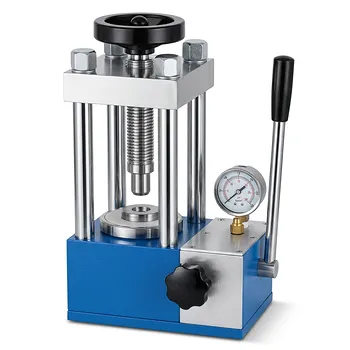
Manual Tablet Press with Dual Scale Pressure Gauge for Pharmaceutical Food Chemical Laboratory Sample Preparation
Small High Speed Upright Grinder for Laboratory Sample Preparation
Experimental Jaw Crusher for Laboratory Ore Crushing and Sample Preparation
High Speed Swing Type Laboratory Pulverizer for Fine Powder Grinding and Sample Preparation
Multi Dimensional Universal Mixer for High Uniformity Powder Blending
Small High-Speed Grinder for Efficient Laboratory Sample Preparation
Small High-Speed Laboratory Grinder for Rapid Sample Preparation
Automatic Vibrating Powder Feeder for Laboratory Material Processing Precision Vibratory Hopper Feeder for Granular and Powder Material Handling Industrial Grade Vibrating Tray Feeder for Consistent Material Sample Preparation
Universal Laboratory Pulverizer Grinder for Small Batch Powder Processing and Material Science Research
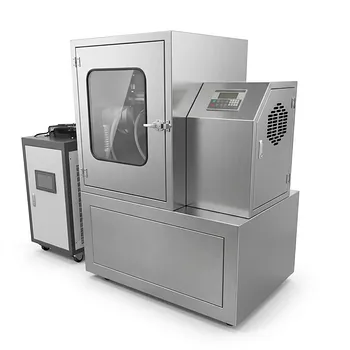
Vibratory Superfine Grinder for Ultra Fine Laboratory Powder Milling
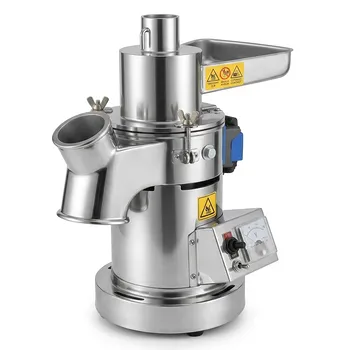
Continuous Feeding Grinder High Efficiency Pulverizer for Lab Sample Preparation
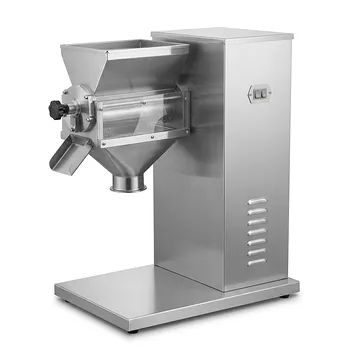
Small Swing Granulator Efficient Powder Granulation for Pharmaceutical Chemical Food Industries
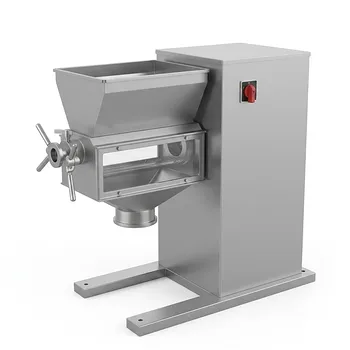
Industrial Swing Granulator for Powder Processing in Pharma Food and Chemical Industries