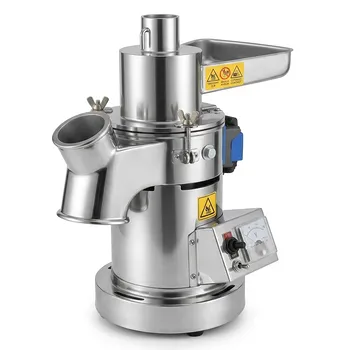
What are the advantages of hot press sintering for graphene/aluminum composites? Achieve Superior Material Density
Updated 5 months ago
Hot press sintering equipment provides a transformative advantage over traditional sintering by simultaneously applying axial pressure and high temperatures to consolidate graphene/aluminum composites. This dual-action approach forces powder particles to undergo plastic flow and rearrangement, effectively eliminating internal pores and achieving near-theoretical density (often exceeding 99.4%) at significantly lower temperatures than conventional methods.
Core Takeaway: Hot press sintering overcomes the physical and chemical limitations of traditional sintering by using mechanical pressure to drive densification, resulting in a stronger interfacial bond and a more refined microstructure while preventing the formation of brittle, performance-degrading phases.
Enhanced Densification and Microstructural Integrity
Achieving Theoretical Density at Lower Temperatures
Traditional sintering relies on high thermal energy alone to drive diffusion, which often requires temperatures that can damage the composite's delicate nanostructure. Hot press sintering uses axial pressure (typically 25–30 MPa) to bridge the gaps between particles, allowing for full densification at lower thermal thresholds.
Inhibiting Grain Coarsening
By reducing the required sintering temperature and duration, hot pressing effectively inhibits the coarsening of aluminum grains. This preservation of a fine-grained or nanocrystalline structure is critical for maintaining high hardness and impact toughness in the final material.
Eliminating Residual Porosity
The simultaneous application of heat and pressure accelerates the elimination of internal pores and ensures that no macroscopic defects remain. This creates a dense, uniform specimen that is ideal for high-performance applications, particularly those requiring superior tribological properties.
Chemical Control and Interfacial Bonding
Preventing the Formation of Brittle Phases
A major risk in aluminum composites is the reaction between carbon and aluminum to form aluminum carbide (Al4C3), a brittle phase that weakens the material. The lower processing temperatures enabled by hot pressing inhibit this reaction, ensuring the chemical integrity of the graphene reinforcement remains intact.
Promoting Strengthening Phases
While inhibiting harmful reactions, the controlled environment of a hot press can promote the generation of beneficial strengthening phases, such as Al2CuMg. This optimizes the internal chemistry of the alloy matrix to support higher mechanical loads.
The Role of the Vacuum Environment
Many hot press systems operate under vacuum conditions, which facilitate the removal of residual volatiles and prevent oxidation of the aluminum powder. This clean environment ensures a strong, uncontaminated bond between the graphene and the aluminum grain boundaries.
Understanding the Trade-offs
Equipment and Operational Costs
The primary drawback of hot press sintering is the high initial capital investment and higher operational costs compared to traditional pressureless sintering furnaces. The equipment is complex, requiring precise control over both hydraulic pressure and thermal cycles.
Geometry and Scalability Limitations
Hot pressing is generally limited to producing relatively simple shapes (like discs or plates) due to the nature of the axial pressure applied within a die. It is less suited for mass-producing high volumes of complex, near-net-shape components than traditional cold-press-and-sinter methods.
How to Apply This to Your Project
Recommendations Based on Performance Goals
- If your primary focus is maximum mechanical strength: Utilize vacuum hot pressing to ensure a density above 99.5% and to prevent the formation of brittle Al4C3 interfaces.
- If your primary focus is preserving nanostructures: Opt for hot pressing at the lowest possible temperature (e.g., 450 °C) to prevent grain growth and maintain the benefits of mechanical alloying.
- If your primary focus is wear resistance and tribology: Use hot press sintering to eliminate all open porosity, as a fully dense surface is critical for reducing friction and material loss.
By leveraging the synergistic effects of pressure and temperature, hot press sintering remains the definitive choice for producing high-integrity graphene/aluminum composites that require exceptional density and microstructural control.
Summary Table:
| Feature | Traditional Sintering | Hot Press Sintering |
|---|---|---|
| Mechanism | Thermal diffusion only | Simultaneous Heat + Axial Pressure |
| Density | Lower (residual porosity) | Near-theoretical (>99.4%) |
| Grain Growth | High risk (high temps) | Inhibited (fine-grained structure) |
| Phase Control | High risk of brittle $Al_4C_3$ | Inhibits brittle phases via lower temps |
| Environment | Ambient or Inert | Vacuum (prevents oxidation) |
Elevate Your Material Research with Precision Engineering
Achieving near-theoretical density in advanced composites requires the right combination of pressure and thermal control. We provide complete laboratory sample preparation solutions for material science, specializing in high-performance powder processing and compaction equipment.
From initial preparation using our planetary ball mills, jet mills, and powder mixers to final consolidation with our advanced vacuum hot presses, we ensure your materials achieve superior microstructural integrity. Our extensive range also includes:
- Compaction Excellence: Cold/Warm Isostatic Presses (CIP/WIP), standard lab presses, and XRF pellet presses.
- Processing Power: Jaw/roll crushers, cryogenic grinders, and air-jet sieve shakers.
Don't let porosity or brittle phases compromise your results. Contact us today to find the ideal equipment solution for your laboratory’s specific requirements!
References
- Xiaohui Du, F. Liu. Microstructure and mechanical properties of graphene-reinforced aluminum-matrix composites. DOI: 10.17222/mit.2018.021
Mentioned Products
- High Efficiency High Speed Grinder Laboratory Mill 1300W 25000rpm
- Multifunctional High Efficiency High Speed Laboratory Grinder
- Small High Speed Grinder for Laboratory Sample Preparation
- Small High-Speed Laboratory Grinder for Rapid Sample Preparation
- Small High-Speed Grinder for Efficient Laboratory Sample Preparation
People Also Ask
- What role does a laboratory grinder play in the pretreatment of sunflower seed shell-based adsorbents? Boost Efficiency.
- How does high-speed grinding equipment facilitate the preparation of lignin binders? Optimize Powder for Stronger Bonds
- How does a laboratory grinder or mill enhance the adsorption performance of agricultural waste materials? Boost Surface Area
- Why is grinding equipment necessary for SnO2-Sb2O3 xerogels? Maximize surface area and photocatalytic activity.
- How does laboratory grinding or pulverizing equipment influence eggshell-derived adsorbents? Maximize Surface Area.

Tech Team · PowderPreparation
Last updated on May 14, 2026
Related Products
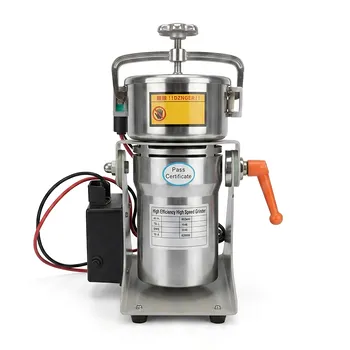
High Efficiency High Speed Grinder Laboratory Mill 1300W 25000rpm
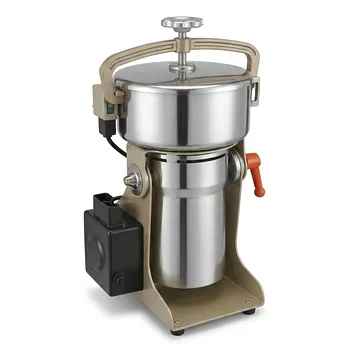
Multifunctional High Efficiency High Speed Laboratory Grinder
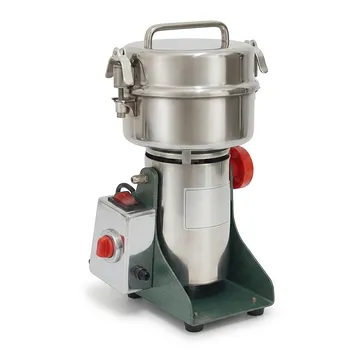
Small High Speed Grinder for Laboratory Sample Preparation
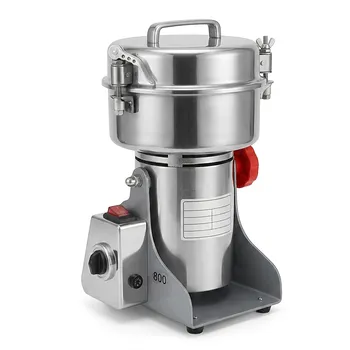
Small High-Speed Laboratory Grinder for Rapid Sample Preparation
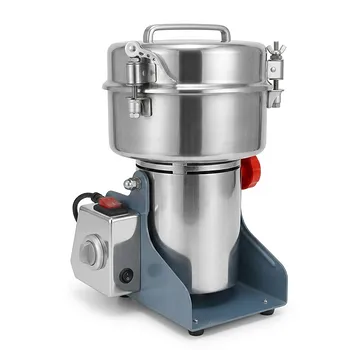
Small High-Speed Grinder for Efficient Laboratory Sample Preparation
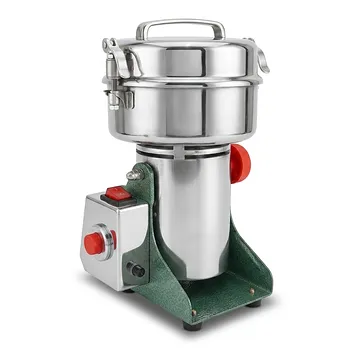
Small High-Speed Laboratory Grinder for Powder Processing
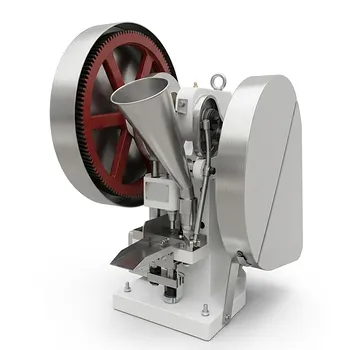
6-Ton Small Single-Punch Tablet Press — Laboratory Powder & Granule Tableting Equipment / Tablet Forming Machine
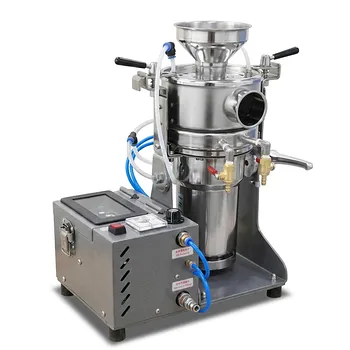
Water Cooled Pulse Jet Ultrafine Grinder
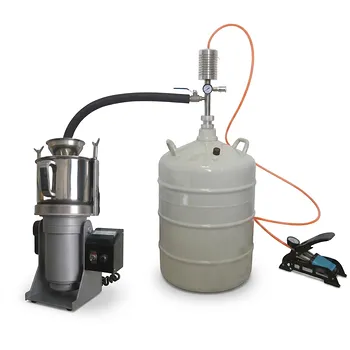
Liquid Nitrogen Cryogenic Grinder for Plastic and Heat-Sensitive Materials
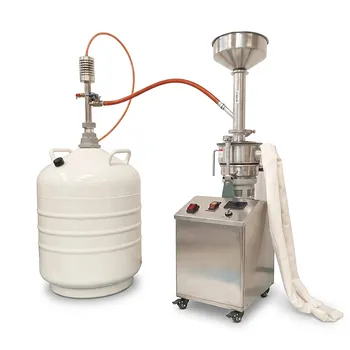
Laboratory Liquid Nitrogen Cryogenic Grinder for Polymer and Elastomer Materials
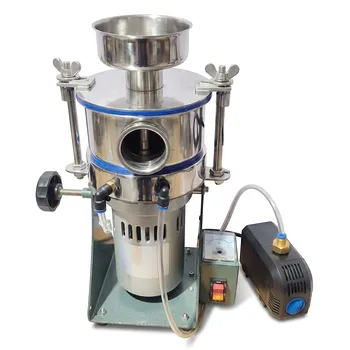
Water Cooled Airflow Ultra Fine Grinder for Low Temperature Material Processing
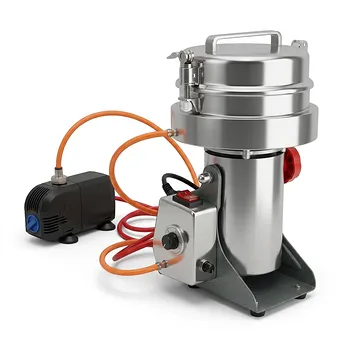
Water Cooled High Speed Grinder with Cryogenic Option for Laboratory Sample Preparation
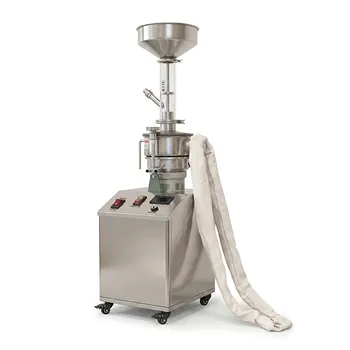
Small Liquid Nitrogen Cryogenic Grinder for Plastic and Heat-Sensitive Material Sample Preparation
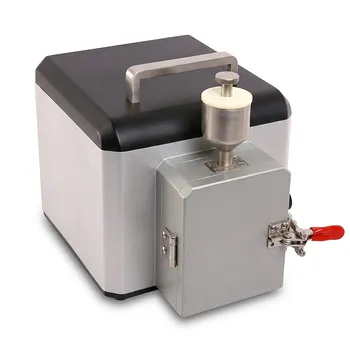
Portable Cutting Mill for Laboratory Sample Preparation and RoHS WEEE Compliance Testing
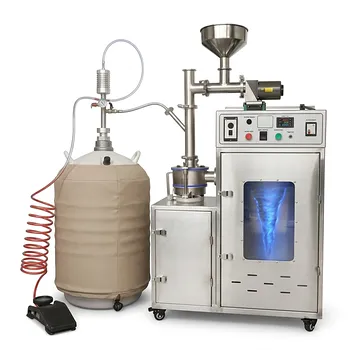
Small Liquid Nitrogen Cryogenic Grinder for Ultrafine Grinding of Heat-Sensitive Materials in Laboratories