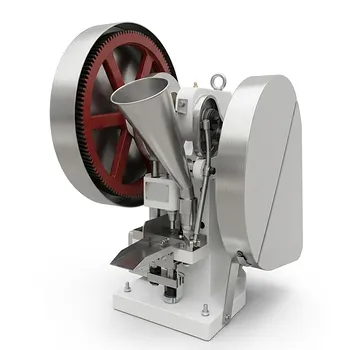
What are the advantages of an industrial extruder for large-scale pellet production? Boost throughput and reactivity.
Updated 5 months ago
Industrial extruders revolutionize large-scale pellet production by transitioning from batch-style compression to a continuous flow, significantly enhancing both throughput and chemical reactivity.
For large-scale operations, industrial extruders provide a decisive advantage over laboratory hydraulic presses by enabling continuous production and creating pellets with high microporosity. This internal structure facilitates the rapid penetration of reducing gases, such as hydrogen, which substantially increases the reduction rate and overall process efficiency compared to the dense, slow-reacting pellets produced by high-pressure pressing.
While laboratory hydraulic presses excel at creating high-density, structurally perfect specimens for testing, industrial extruders are designed for volume and chemical performance, trading extreme compaction for superior gas diffusion and continuous operational capacity.
Scaling for High-Volume Production
The Shift from Batch to Continuous Flow
Industrial extruders are engineered for continuous operation, allowing for a steady stream of output that far exceeds the capabilities of stroke-based hydraulic presses. This eliminates the downtime associated with loading, pressing, and ejecting individual samples found in laboratory environments.
Labor and Energy Efficiency
By automating the feed and formation process, extruders reduce the manual labor required per unit of output. The lower compaction pressures used in extrusion also translate to different energy profiles, focusing power on material throughput rather than extreme vertical force.
Enhancing Chemical Performance via Microporosity
Optimizing Gas Diffusion
Unlike hydraulic presses that utilize high pressure to eliminate internal voids, extruders operate at lower pressures that preserve microporosity. This porous network acts as a highway for reducing gases, allowing them to permeate the pellet core rather than just reacting with the surface.
Accelerating Reduction Rates
The increased internal surface area created by extrusion directly correlates to faster chemical kinetics. In applications like metal reduction, these pellets react significantly faster than high-density pressed pellets, leading to shorter processing times in the furnace.
Structural Integrity and Material Formulation
The Role of Formulation Adjustments
To compensate for lower operating pressures, industrial extrusion relies on precise formulation adjustments. By optimizing binders and moisture content, manufacturers can ensure the material achieves the necessary "green strength" before further processing.
Meeting Industrial Charging Requirements
Despite their higher porosity, properly formulated extruded pellets maintain sufficient mechanical strength for industrial handling. They are designed to withstand the stresses of charging into large-scale reactors or furnaces without excessive crumbling or dust generation.
Understanding the Trade-offs and Pitfalls
Density vs. Reactivity
The primary trade-off in pellet production is between bulk density and chemical reactivity. While hydraulic pressing creates a more "stable" and energy-dense pellet, it often suffers from poor gas permeability, which can stall chemical reactions in industrial settings.
Precision vs. Volume
Laboratory hydraulic presses offer extreme dimensional precision and uniformity, which is critical for standardized testing. However, attempting to scale this "high-pressure" approach often results in "over-pressing," which can cause internal micro-cracks or "capping" where the pellet laminates and fails.
Structural Stability in Combustion
In specific scenarios like wood pellet combustion, the high density of a hydraulic press (1.0 to 1.5 g/cm³) is an advantage because it ensures a repeatable heat release curve. Extruded pellets, being more porous, may burn faster and less predictably if the formulation is not strictly controlled for density.
Making the Right Choice for Your Goal
Selecting the correct forming method depends entirely on whether your priority is the structural density of the individual unit or the chemical efficiency of the mass process.
- If your primary focus is maximizing chemical reaction speed (e.g., hydrogen reduction): Utilize an industrial extruder to leverage high microporosity and superior gas diffusion.
- If your primary focus is maximum calorific value per unit volume: A high-pressure hydraulic press is preferable as it eliminates air gaps and maximizes material density.
- If your primary focus is laboratory-grade repeatability and structural testing: Stick with a laboratory hydraulic press to ensure precise geometric dimensions and uniform density.
- If your primary focus is high-throughput industrial charging: Invest in industrial extrusion with a specialized binder formulation to balance mechanical durability with production volume.
Choosing the right technology ensures that your pellet characteristics align perfectly with the requirements of your downstream industrial or chemical processes.
Summary Table:
| Feature | Industrial Extruder | Laboratory Hydraulic Press |
|---|---|---|
| Operation Mode | Continuous flow for high volume | Batch-style individual pressing |
| Throughput | Extremely high; automated feed | Limited; manual/semi-auto loading |
| Internal Structure | High microporosity; superior diffusion | High density; low permeability |
| Chemical Kinetics | Faster reduction & reaction rates | Slower; reaction often surface-only |
| Precision | Focus on volume & chemical performance | Extreme dimensional/density accuracy |
| Primary Goal | Industrial scaling & process efficiency | Standardized testing & R&D |
Optimize Your Material Processing with Expert Solutions
Whether you are scaling up for industrial production or requiring extreme precision for laboratory research, choosing the right compaction technology is critical to your success.
At [Your Brand Name], we provide complete laboratory sample preparation solutions for material science, specializing in high-performance powder processing and compaction equipment. Our extensive product lines include:
- Size Reduction: Crushers (jaw/roll), liquid nitrogen cryogenic grinders, and various mills (planetary ball, jet, sand/bead, disc, rotor).
- Sieving & Mixing: Vibratory/air-jet sieve shakers and high-efficiency powder/defoaming mixers.
- Advanced Compaction: A full spectrum of hydraulic presses, including Cold/Warm Isostatic Presses (CIP/WIP), standard lab presses, XRF pellet presses, hot presses, and vacuum hot presses.
Ready to enhance your pellet quality and production efficiency? Our technical team is here to help you select the ideal equipment tailored to your specific material requirements.
Contact us today to get a professional consultation and quote!
References
- Karthik Manu, Weihong Yang. Maximizing the Recycling of Iron Ore Pellets Fines Using Innovative Organic Binders. DOI: 10.3390/ma16103888
Mentioned Products
- Industrial Vacuum Kneader for High-Viscosity Silicone, Rubber, and Compound Mixing
- Versatile Industrial Crusher for Laboratory Crushing and Material Processing
- Industrial Swing Granulator for Powder Processing in Pharma Food and Chemical Industries
- Stainless Steel Coarse Crusher for Pharmaceutical Food and Plastic Material Processing
- Heavy-Duty Crusher for Laboratory and Industrial Material Size Reduction
People Also Ask
- Why is a vacuum hot press sintering furnace necessary for producing silicon-based advanced materials? Achieve High-Purity
- What is the role of a vacuum hot press sintering furnace in CBST target prep? Achieve high-density & pure alloy targets.
- What are the core processing advantages of vacuum hot pressing for magnesium alloy composites? Maximize Material Purity.
- What are the advantages of using a vacuum hot press furnace? Superior Density and Strength for SiCp/Al Composites
- What is the primary function of a vacuum hot press furnace in B4C-SiC-TiC-TiB2 synthesis? Maximize Density & Purity

Tech Team · PowderPreparation
Last updated on May 14, 2026
Related Products
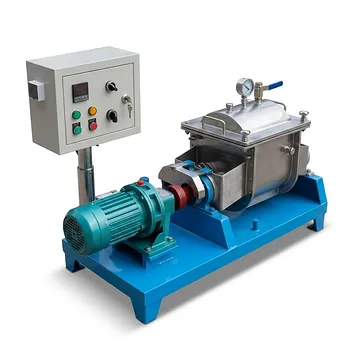
Industrial Vacuum Kneader for High-Viscosity Silicone, Rubber, and Compound Mixing
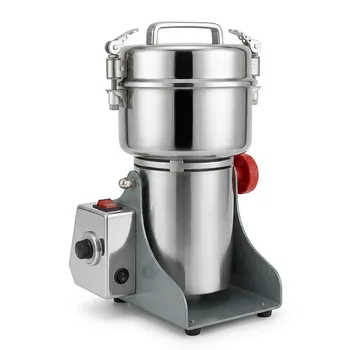
Versatile Industrial Crusher for Laboratory Crushing and Material Processing
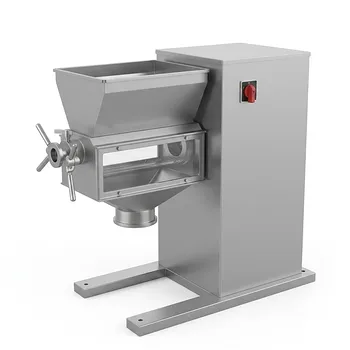
Industrial Swing Granulator for Powder Processing in Pharma Food and Chemical Industries
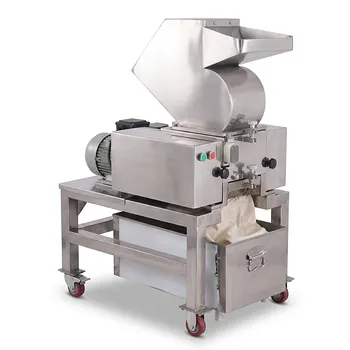
Stainless Steel Coarse Crusher for Pharmaceutical Food and Plastic Material Processing
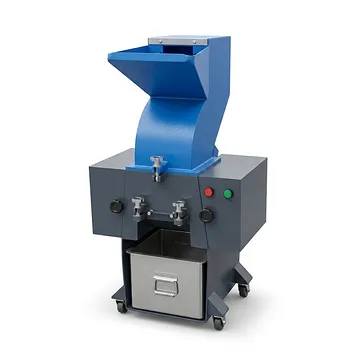
Heavy-Duty Crusher for Laboratory and Industrial Material Size Reduction

High Speed Vacuum Planetary Centrifugal Mixer and Defoamer for Industrial Paste Processing
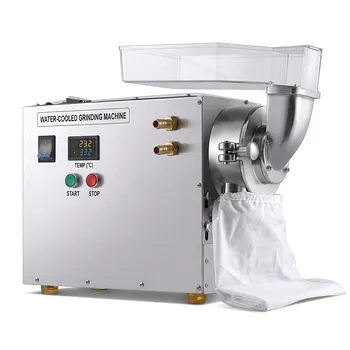
Water Cooled Graduated Continuous Feed Pulverizer for Industrial Powder Processing and Laboratory Material Preparation
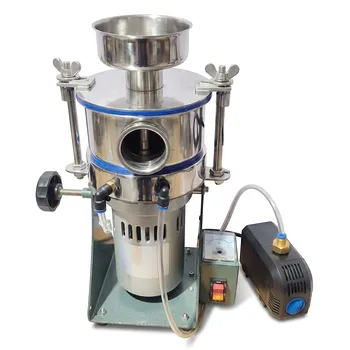
Water Cooled Airflow Ultra Fine Grinder for Low Temperature Material Processing

Dual Cup Vacuum Centrifugal Mixer Planetary Paste Defoaming Machine Industrial Material Processor
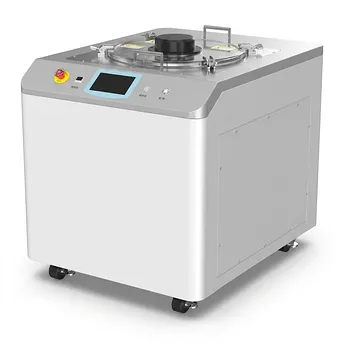
Industrial Planetary Centrifugal Vacuum Defoaming Mixer for High Viscosity Paste and Powder Homogenization
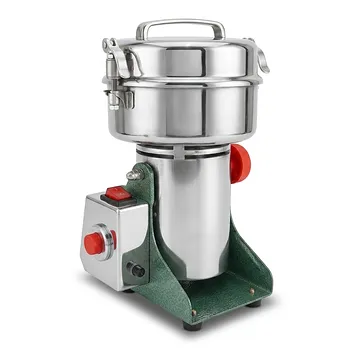
Small High-Speed Laboratory Grinder for Powder Processing
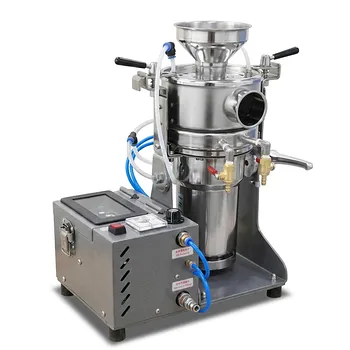
Water Cooled Pulse Jet Ultrafine Grinder
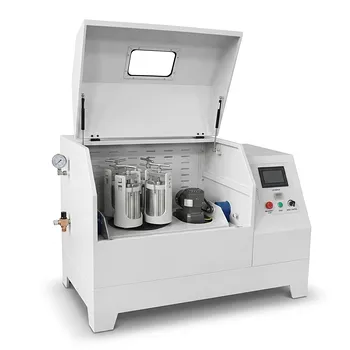
Vertical Production Planetary Ball Mill for High Throughput Powder Processing