What are the advantages of using a Cold Isostatic Press (CIP)? Achieve Superior Uniformity for NbC Cermet Forming
Updated 4 months ago
Cold Isostatic Pressing (CIP) offers superior density uniformity and structural integrity compared to uniaxial pressing for Niobium Carbide (NbC) cermets. By using a liquid medium to apply equal pressure from all directions, CIP eliminates the friction-induced pressure gradients that plague traditional pressing methods. This results in a green body with a highly homogeneous internal structure, drastically reducing the risk of distortion, cracking, or non-uniform shrinkage during the critical sintering stage.
Core Takeaway: CIP overcomes the geometric and density limitations of uniaxial pressing by applying isotropic pressure, ensuring that NbC cermet parts achieve near-perfect density uniformity and enhanced mechanical performance after sintering.
Eliminating Internal Density Gradients
Overcoming Mold Wall Friction
In uniaxial pressing, pressure is applied from one or two directions, causing friction between the powder and the mold walls. This friction leads to significant pressure drops within the material, resulting in uneven compaction.
CIP utilizes a liquid medium to transmit pressure, ensuring the powder is subjected to completely equal force from every angle. This "omnidirectional" approach effectively eliminates the internal density gradients common in uniaxial methods.
Achieving Isotropic Material Properties
Because the pressure is equal in all directions, the resulting material exhibits high isotropy. This means the physical and mechanical properties of the NbC cermet are uniform regardless of the orientation of the part.
Supplementary data suggests that CIP can bring the isotropy ratio of a material close to 1.0. For high-performance cermets, this uniformity is vital for ensuring reliable performance under mechanical stress.
Enhancing Sintering Performance and Reliability
Reducing Shrinkage and Distortion
The primary cause of warping during high-temperature sintering is non-uniform green density. Parts that are more dense in one area than another will shrink at different rates, leading to dimensional inaccuracies.
By creating a highly uniform internal density distribution, CIP significantly reduces the risk of shrinkage distortion. This allows manufacturers to produce parts that remain closer to their intended "net shape" after leaving the furnace.
Improving Mechanical Properties
CIP promotes better deformation and bonding of granulated particles compared to uniaxial pressing. The intense, uniform pressure (often exceeding 170 MPa) effectively narrows the pore size within the green body.
This reduction in pore size and the elimination of local "soft spots" leads to improved hardness and fracture toughness in the final sintered ceramic. It also prevents internal stress concentrations that could cause the part to crack during cooling.
Geometric and Size Versatility
Forming Complex and Large-Scale Components
Uniaxial pressing is generally limited to simple shapes like discs or cylinders because the pressure cannot reach "hidden" areas of a complex mold. CIP, however, is particularly effective for complex-structured cermet parts.
Because the liquid medium flows around the entire mold, pressure is applied evenly regardless of the part's geometry. This makes CIP the preferred choice for large-sized components that would be impossible to compact uniformly using traditional presses.
Post-Processing Pre-Formed Bodies
CIP can also be used as a secondary step to further compact bodies that have already been pre-formed by a uniaxial press. This dual-stage approach combines the speed of uniaxial pressing with the density-leveling benefits of isostatic pressure.
Understanding the Trade-offs
Cycle Time and Production Speed
The primary disadvantage of CIP is that it is generally slower than uniaxial pressing. The process involves sealing parts in flexible bags, vacuuming, and pressurizing a liquid chamber, which takes more time than a rapid mechanical stroke.
Dimensional Precision "As-Pressed"
While CIP reduces distortion during sintering, the "green" (un-sintered) parts may have less precise outer dimensions than uniaxially pressed parts. This is because the flexible rubber or plastic molds used in CIP can deform slightly under pressure compared to rigid steel dies.
Making the Right Choice for Your Goal
How to Apply This to Your Project
When deciding between CIP and uniaxial pressing for Niobium Carbide cermets, consider the final application and the complexity of the part.
- If your primary focus is high-volume production of simple shapes: Uniaxial pressing remains the most cost-effective and fastest solution for basic geometries like thin plates or small cylinders.
- If your primary focus is large or complex geometries: CIP is the necessary choice to ensure that pressure reaches all facets of the part and prevents structural failure.
- If your primary focus is maximum mechanical reliability: Utilize CIP to eliminate internal pores and density gradients, ensuring the highest possible hardness and toughness in the sintered NbC cermet.
By selecting the pressing method that aligns with your part's complexity and performance requirements, you can ensure a reliable and efficient manufacturing process.
Summary Table:
| Feature | Uniaxial Pressing | Cold Isostatic Pressing (CIP) |
|---|---|---|
| Pressure Direction | 1 or 2 directions (Linear) | All directions (Isotropic) |
| Density Uniformity | Low (Internal gradients due to friction) | High (Uniform throughout the part) |
| Shape Complexity | Limited to simple geometries | Ideal for complex and large parts |
| Sintering Result | High risk of warping/cracking | Minimal distortion; near net-shape |
| Material Properties | Anisotropic | Highly Isotropic |
Elevate Your Material Research with Precision Compaction Solutions
At [Company Name], we provide complete laboratory sample preparation solutions tailored for material science professionals. Specializing in advanced powder processing and compaction equipment, we help you achieve the structural integrity and density uniformity required for high-performance Niobium Carbide (NbC) cermets.
Our extensive product line includes:
- Compaction Excellence: Cold/Warm Isostatic Presses (CIP/WIP), standard hydraulic lab presses, XRF pellet presses, and vacuum hot presses.
- Powder Processing: High-energy crushers (jaw/roll), liquid nitrogen cryogenic grinders, and precision mills (planetary ball, jet, and rotor).
- Material Refining: Sieve shakers (vibratory/air-jet), powder mixers, and high-efficiency defoaming mixers.
Whether you are scaling up production or conducting fundamental research, our equipment ensures reliable, repeatable results. Contact our technical experts today to find the perfect solution for your powder metallurgy and material processing needs!
References
- Daniela Hübler, Thomas Gradt. Effect of different binders and secondary carbides on NbC cermets. DOI: 10.1007/s10010-022-00583-1
Mentioned Products
- 6-Ton Small Single-Punch Tablet Press — Laboratory Powder & Granule Tableting Equipment / Tablet Forming Machine
- Manual Tablet Press with Dual Scale Pressure Gauge for Pharmaceutical Food Chemical Laboratory Sample Preparation
- 5 Ton Single Punch Tablet Press Laboratory Small Batch Production
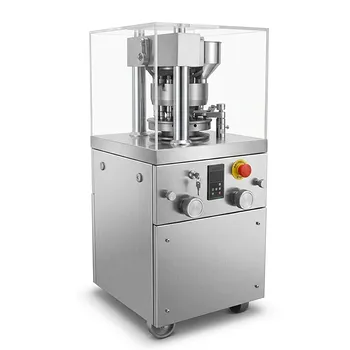
- Ordinary Type Rotary Tablet Press for Pharmaceutical Chemical Food Electronic Industries
People Also Ask
- What is the function of a laboratory press in Cr-Ti alloy evaluation? Quantify Fracture Stress & Strength
- What is the function of a laboratory press in assessing the hydrophobic performance of modified vermiculite fillers?
- What is the core function of a laboratory press in the forming of ceramic filter element green bodies? Maximize Density.
- What is the function of a laboratory press in the preparation of ceramic feed rods? Master Density and Precision
- Why is vacuum sealing and flexible packaging necessary for Aluminum Titanate powders during CIP? Ensure Peak Density

Tech Team · PowderPreparation
Last updated on Jun 03, 2026
Related Products
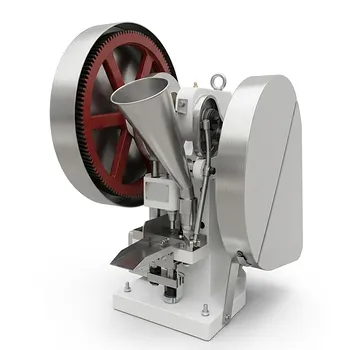
6-Ton Small Single-Punch Tablet Press — Laboratory Powder & Granule Tableting Equipment / Tablet Forming Machine
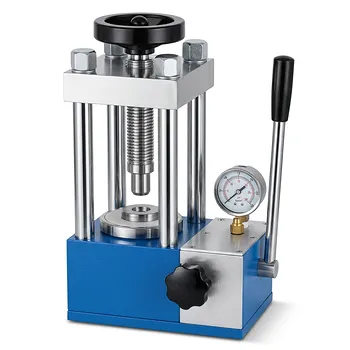
Manual Tablet Press with Dual Scale Pressure Gauge for Pharmaceutical Food Chemical Laboratory Sample Preparation
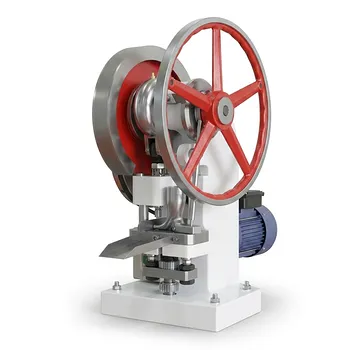
5 Ton Single Punch Tablet Press Laboratory Small Batch Production