What are the advantages of using a Cold Isostatic Press (CIP) after initial pressing? Boost Density & Uniformity
Updated 5 months ago
Applying Cold Isostatic Pressing (CIP) after initial uniaxial pressing is a critical refinement step that ensures structural uniformity and high density in ceramic composites. By subjecting the pre-formed green body to omnidirectional high pressure (often between 100 MPa and 500 MPa), CIP eliminates the internal density gradients and stresses caused by mold friction. This secondary process significantly reduces porosity and prevents catastrophic failure during the subsequent sintering phase.
The central advantage of using CIP after initial pressing is the transformation of a non-uniform "green body" into a highly dense, homogeneous structure. This step is essential for producing high-performance ceramics that require maximum mechanical strength and precise geometric stability.
Correcting the Flaws of Initial Pressing
Eliminating Internal Density Gradients
Standard dry pressing or uniaxial pressing often results in uneven pressure distribution due to friction between the powder and the mold walls. Cold Isostatic Pressing applies balanced pressure from all directions via a liquid medium, ensuring that the density is uniform throughout the entire volume of the component.
Neutralizing Internal Stresses
Directional forces in initial pressing can lock in internal stresses that lead to structural failure. CIP effectively neutralizes these stress concentrations, creating a more stable internal environment that resists cracking during the cooling or machining stages.
Reducing Mold Wall Friction Effects
Unlike mechanical die pressing, where the mold limits the movement of particles, CIP bypasses friction-related pressure drops. This allows for consistent compaction of complex shapes and large-scale components that would otherwise suffer from "soft spots" or structural weaknesses.
Enhancing Material Properties and Density
Maximizing Green Body Density
High-pressure CIP (up to 500 MPa) can push the relative density of a ceramic green body to approximately 62% or higher. This dense packing provides the necessary physical foundation for producing high-strength substrates, such as those used in ceramic cutting tools.
Eliminating Porosity and Bridging Voids
The omnidirectional force of CIP encourages particle rearrangement and the collapse of bridging voids within granulated spheres. By narrowing the pore size and reducing the total volume of internal pores, the process ensures a higher final bulk density after sintering.
Boosting Dielectric and Mechanical Performance
For electronic and structural ceramics, density is directly linked to performance. Utilizing CIP leads to an increased dielectric constant and superior mechanical properties, making the material suitable for high-precision technical applications.
Improving Post-Sintering Outcomes
Preventing Deformation and Cracking
Uniformity in the green state is the best predictor of success in the furnace. By removing density gradients, CIP prevents warping, distortion, and micro-cracking that typically occur during the high-temperature shrinkage phase of sintering.
Ensuring Geometric Consistency
Components treated with CIP exhibit much lower and more predictable shrinkage rates. This results in superior geometric consistency, which is vital for parts with tight tolerances, such as those with a diameter of 56 mm or larger.
Promoting Better Particle Bonding
The high pressures used in CIP promote the deformation and intimate bonding of granulated particles. This enhanced contact improves the diffusion process during sintering, leading to a more robust and defect-free ceramic matrix.
Understanding the Trade-offs
Increased Process Complexity
Integrating CIP requires an additional manufacturing step, which involves sealing the green body in flexible, airtight tooling (such as rubber or plastic bags). This adds complexity to the production workflow compared to a single-stage pressing operation.
Higher Operational Costs
Cold Isostatic Presses are specialized pieces of equipment that require high-pressure liquid systems and safety containment. The capital investment and maintenance costs are significantly higher than those associated with standard laboratory hydraulic presses.
Slower Production Cycles
Because CIP is generally a batch-oriented process rather than a continuous one, it can create a bottleneck. The time required for loading, pressurizing, and decompression means cycle times are longer than automated mechanical die pressing.
How to Apply This to Your Project
High-pressure treatment is a powerful tool, but its application should be dictated by your final performance requirements.
- If your primary focus is maximum mechanical strength: Use CIP at pressures exceeding 300 MPa to eliminate all residual internal pores and bridging voids.
- If your primary focus is preventing warping in large parts: Prioritize CIP to ensure omnidirectional uniformity, which balances shrinkage during the sintering process.
- If your primary focus is high-performance electronics: Utilize CIP to maximize the bulk density, which is critical for achieving a high and stable dielectric constant.
- If your primary focus is low-cost rapid prototyping: Consider if standard uniaxial pressing is sufficient, as CIP adds significant time and equipment overhead to the workflow.
Properly implementing Cold Isostatic Pressing after initial forming is the definitive way to bridge the gap between a standard ceramic part and a high-performance industrial component.
Summary Table:
| Key Feature | Advantage of CIP Post-Pressing | Impact on Final Ceramic Material |
|---|---|---|
| Pressure Distribution | Omnidirectional (360°) high pressure | Eliminates internal density gradients and soft spots |
| Structural Integrity | Neutralizes internal residual stresses | Prevents micro-cracking and structural failure |
| Density Optimization | Pushes relative density to 62%+ | Maximizes mechanical strength and dielectric properties |
| Sintering Prep | Eliminates bridging voids and pores | Ensures uniform shrinkage and prevents deformation |
| Geometric Control | Reduces friction-related pressure drops | Provides superior consistency for complex or large parts |
Elevate Your Material Science Research with Precision Compaction
Achieving structural perfection in ceramic composites requires more than just standard pressing. At our core, we provide complete laboratory sample preparation solutions designed specifically for material science researchers and industrial manufacturers.
Whether you are refining powders or forming high-performance green bodies, our extensive equipment line supports every stage of your workflow:
- Powder Processing: Crushers (jaw/roll), liquid nitrogen cryogenic grinders, and advanced mills (planetary ball, jet, disc, rotor).
- Sieving & Mixing: High-precision sieve shakers (vibratory/air-jet), powder mixers, and defoaming mixers.
- Compaction Excellence: A full spectrum of hydraulic presses, including Cold/Warm Isostatic Presses (CIP/WIP), standard lab presses, XRF pellet presses, and vacuum hot presses.
Ready to eliminate defects and maximize the density of your materials? Contact us today to discuss how our specialized powder processing and compaction equipment can optimize your production outcomes.
References
- Henry E. Mgbemere, Chiedozie Oluigbo. The synthesis and characterization of alkaline niobate-based ceramic composites containing L-lysine Hydrochloride. DOI: 10.26701/ems.1497079
Mentioned Products
- 6-Ton Small Single-Punch Tablet Press — Laboratory Powder & Granule Tableting Equipment / Tablet Forming Machine
- Manual Tablet Press with Dual Scale Pressure Gauge for Pharmaceutical Food Chemical Laboratory Sample Preparation
- 5 Ton Single Punch Tablet Press Laboratory Small Batch Production
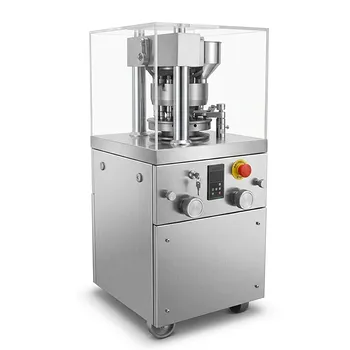
- Ordinary Type Rotary Tablet Press for Pharmaceutical Chemical Food Electronic Industries
People Also Ask
- What is the function of a laboratory press in Cr-Ti alloy evaluation? Quantify Fracture Stress & Strength
- What is the function of a laboratory press in assessing the hydrophobic performance of modified vermiculite fillers?
- What is the core function of a laboratory press in the forming of ceramic filter element green bodies? Maximize Density.
- What is the function of a laboratory press in the preparation of ceramic feed rods? Master Density and Precision
- Why is vacuum sealing and flexible packaging necessary for Aluminum Titanate powders during CIP? Ensure Peak Density

Tech Team · PowderPreparation
Last updated on May 14, 2026
Related Products
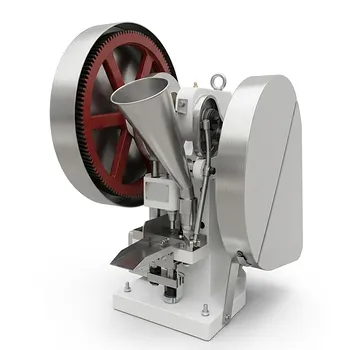
6-Ton Small Single-Punch Tablet Press — Laboratory Powder & Granule Tableting Equipment / Tablet Forming Machine
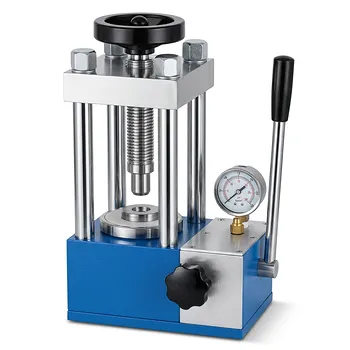
Manual Tablet Press with Dual Scale Pressure Gauge for Pharmaceutical Food Chemical Laboratory Sample Preparation
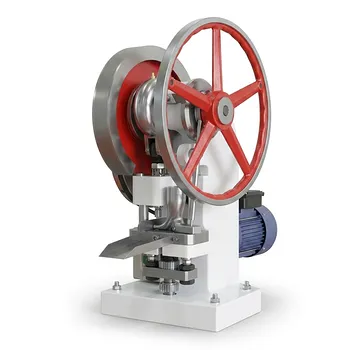
5 Ton Single Punch Tablet Press Laboratory Small Batch Production