What is the role of a high-tonnage laboratory hydraulic press in RTF? Maximize Composite Density & Strength
Updated 5 months ago
In Room Temperature Fabrication (RTF), the high-tonnage laboratory hydraulic press acts as the primary mechanical driver for densification by providing ultra-high uniaxial pressures, often reaching up to 1,000 MPa. This extreme pressure forces particle rearrangement, extrudes trapped air, and facilitates the physical migration of aqueous solutions within the material gaps, allowing for significant densification and bonding without the need for traditional high-temperature sintering.
Core Takeaway: The high-tonnage hydraulic press replaces thermal energy with extreme mechanical pressure and chemical potential, enabling composite materials to reach relative densities of 76%–87% (and sometimes higher) at room temperature.
The Mechanics of Room Temperature Densification
Driving Particle Rearrangement
The primary role of the high-tonnage press is to provide the uniaxial pressure necessary to force loose powder particles into a more compact state. This axial load causes particles to undergo mechanical deformation and rearrangement, effectively filling the empty spaces between them.
Eliminating Porosity and Air
By applying stable and extreme loads, the press excludes air bubbles trapped within the composite mixture. This reduction in porosity is critical for achieving high structural strength and ensuring that the matrix fully occupies the interstitial spaces between particles.
Facilitating Liquid-Phase Migration
In RTF processes involving aqueous solutions, such as LMO-SrTiO3 composites, the press drives the migration of the solution into particle gaps. This movement utilizes chemical potential differences created by the pressure to accelerate the bonding process between particles at the atomic level.
Ensuring Structural Integrity and Precision
Preventing Density Gradients
Precise control over the hydraulic pressure and the pressure-holding duration is vital for eliminating internal density gradients. A uniform distribution of pressure ensures the final "green body" does not suffer from internal stresses that could lead to deforming or cracking.
Achieving Geometric Accuracy
High-tonnage presses, used in conjunction with high-precision stainless steel molds, ensure the composite achieves standardized geometric shapes. This precision is essential for subsequent mechanical testing, allowing for accurate measurements of properties like Young’s modulus and hardness.
Establishing Initial Green Strength
Even before any potential secondary treatments, the press creates a foundation of initial strength through Van der Waals forces and mechanical interlocking. This makes the material handleable and provides a critical first step toward reaching higher levels of theoretical density.
Understanding the Trade-offs
Equipment and Tooling Stress
Operating at pressures near 1,000 MPa places immense stress on both the hydraulic press and the mold assemblies. Continuous high-tonnage use requires specialized, high-strength materials (like hardened tool steels) and frequent maintenance to prevent mechanical failure or mold deformation.
Density Limitations of RTF
While RTF can achieve impressive density at room temperature, it often reaches a plateau between 76% and 87% relative density. Achieving near-theoretical density (99%+) usually requires additional processing or optimized chemical environments, as mechanical pressure alone may not overcome all interfacial resistances.
Scalability and Sample Geometry
Laboratory hydraulic presses are typically limited to small-scale specimens or pellets. Scaling this high-pressure environment to large, complex industrial parts remains a significant challenge due to the exponential increase in the force required to maintain uniform pressure over larger surface areas.
Applying RTF Technology to Your Project
Recommendations for Material Development
- If your primary focus is maximizing initial density: Utilize a press capable of sustained pressures up to 1,000 MPa to drive the physical rearrangement of particles and the migration of any liquid phases.
- If your primary focus is structural uniformity: Prioritize precise pressure control and extended pressure-holding durations to eliminate internal pores and density gradients.
- If your primary focus is dielectric performance: Ensure the press facilitates the complete occupancy of interstitial spaces by the matrix material to achieve practical dielectric constants.
The high-tonnage laboratory hydraulic press is the indispensable engine of Room Temperature Fabrication, converting mechanical force into the chemical and physical energy required for advanced material synthesis.
Summary Table:
| Key Role | Mechanism | Material Impact |
|---|---|---|
| Particle Rearrangement | Uniaxial pressure application | Fills interstitial gaps for higher density |
| Porosity Reduction | Air & bubble exclusion | Eliminates internal voids and weaknesses |
| Liquid Migration | Driven chemical potential | Facilitates atomic-level bonding at room temp |
| Structural Precision | Uniform load & pressure holding | Prevents internal stress, deforming, or cracking |
| Green Strength | Mechanical interlocking | Creates handleable specimens for further testing |
Elevate Your Material Synthesis with Precision Compaction
Achieving theoretical density in Room Temperature Fabrication (RTF) requires equipment that can withstand extreme pressures while maintaining absolute precision. At our core, we provide complete laboratory sample preparation solutions for material science, specializing in advanced powder processing and compaction equipment.
Whether you are focusing on initial green strength or complex liquid-phase migration, our extensive line of equipment is designed to meet the most rigorous research demands:
- Compaction Excellence: A full spectrum of hydraulic presses, including Cold/Warm Isostatic Presses (CIP/WIP), standard lab presses, XRF pellet presses, and vacuum hot presses.
- Powder Processing: High-performance crushers (jaw/roll), liquid nitrogen cryogenic grinders, and diverse mills (planetary ball, jet, sand, bead, disc, and rotor).
- Analysis & Mixing: Sieve shakers (vibratory/air-jet), powder mixers, and specialized defoaming mixers.
Ready to optimize your densification results? Contact us today to discuss your specific application and discover how our high-tonnage solutions can enhance your laboratory's efficiency and material performance.
References
- Nina Kuzmić, Matjaž Spreitzer. Dielectric Properties of Upside-Down SrTiO3/Li2MoO4 Composites Fabricated at Room Temperature. DOI: 10.3389/fmats.2021.669421
Mentioned Products
- 6-Ton Small Single-Punch Tablet Press — Laboratory Powder & Granule Tableting Equipment / Tablet Forming Machine
- 5 Ton Single Punch Tablet Press Laboratory Small Batch Production
- 6 Ton Variable Frequency Single Punch Tablet Press
- High Shear Laboratory Emulsifier for Mixing and Homogenization
- Manual Tablet Press with Dual Scale Pressure Gauge for Pharmaceutical Food Chemical Laboratory Sample Preparation
People Also Ask
- What is the function of a laboratory press in Cr-Ti alloy evaluation? Quantify Fracture Stress & Strength
- What is the function of a laboratory press in assessing the hydrophobic performance of modified vermiculite fillers?
- What is the core function of a laboratory press in the forming of ceramic filter element green bodies? Maximize Density.
- What is the function of a laboratory press in the preparation of ceramic feed rods? Master Density and Precision
- Why is vacuum sealing and flexible packaging necessary for Aluminum Titanate powders during CIP? Ensure Peak Density

Tech Team · PowderPreparation
Last updated on May 14, 2026
Related Products
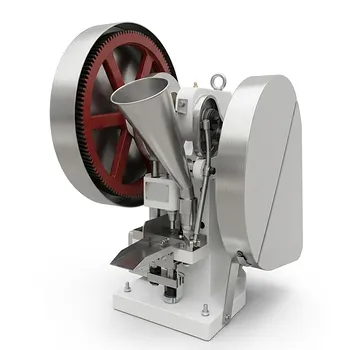
6-Ton Small Single-Punch Tablet Press — Laboratory Powder & Granule Tableting Equipment / Tablet Forming Machine
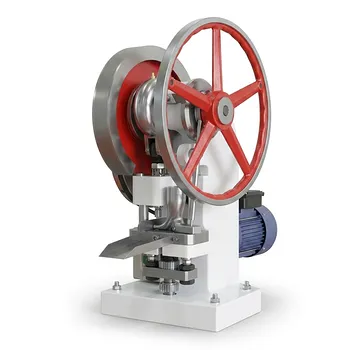
5 Ton Single Punch Tablet Press Laboratory Small Batch Production
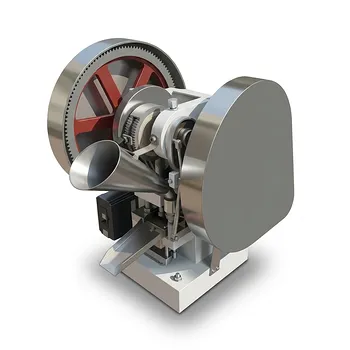
6 Ton Variable Frequency Single Punch Tablet Press
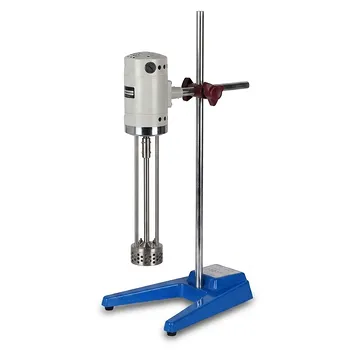
High Shear Laboratory Emulsifier for Mixing and Homogenization
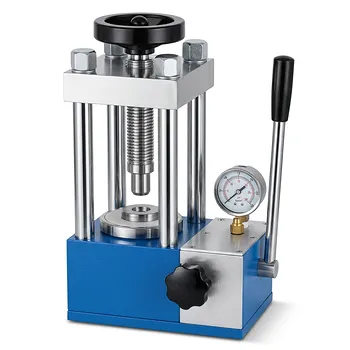
Manual Tablet Press with Dual Scale Pressure Gauge for Pharmaceutical Food Chemical Laboratory Sample Preparation
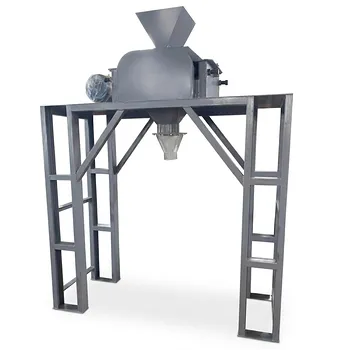
Heightened Customized Laboratory Double Roll Crusher for Coal Ore Rock Crushing
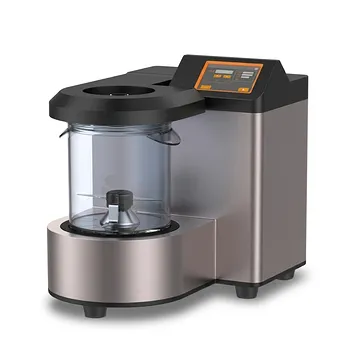
Laboratory Knife Mill for Large Volume Sample Homogenization and Food Preparation
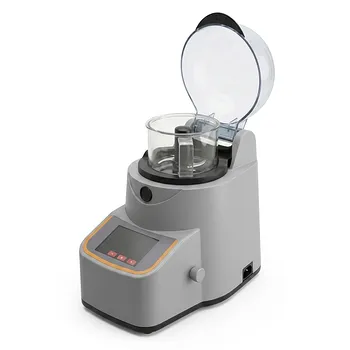
Industrial Knife Mill for Food and Biological Sample Preparation High Speed Laboratory Homogenizer
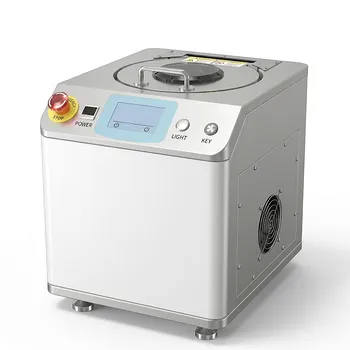
High Efficiency Vacuum Planetary Centrifugal Mixer and Defoaming Machine for Industrial Material Research and Precise Laboratory Powder Dispersion
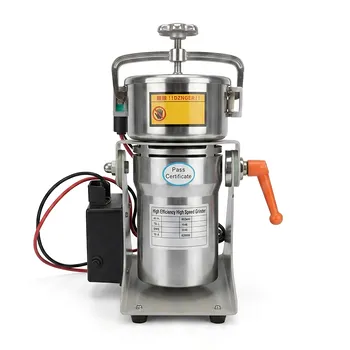
High Efficiency High Speed Grinder Laboratory Mill 1300W 25000rpm