How do hydraulic presses or CIP verify boron material properties? Precision Sample Prep for Accurate Testing
Updated 3 months ago
Verifying mechanical properties in boron-based materials depends entirely on the creation of high-density, defect-free bulk samples. Laboratory hydraulic presses and Cold Isostatic Presses (CIP) are used to transform raw powders into "green bodies" by applying uniform pressure that eliminates internal pores and density gradients. This structural integrity ensures that subsequent testing for Vickers hardness, shear modulus, and Young’s modulus reflects the material’s true theoretical characteristics rather than the flaws of a poorly compacted specimen.
Core Takeaway: Laboratory presses provide the necessary densification and uniformity to ensure that boron-based test specimens survive high-temperature sintering without cracking, allowing for the accurate measurement of fundamental mechanical performance data.
The Role of Densification in Property Verification
Eliminating Internal Porosity and Gradients
Boron-based materials, such as boron carbide (B4C), require extreme density to exhibit their characteristic hardness and stiffness. Hydraulic presses apply high mechanical loads—sometimes exceeding 89 MPa—to force powder particles into a tight rearrangement, which eliminates trapped air and microscopic voids. Without this step, internal pores act as stress concentrators during testing, leading to premature failure and inaccurate data.
Ensuring Uniform Shrinkage During Sintering
High-density green bodies created by these presses undergo more predictable and uniform shrinkage when placed in a high-temperature sintering furnace. By removing density gradients during the pressing phase, the material is less likely to develop structural inconsistencies or warping. This uniformity is critical for producing standardized specimens that meet the precise geometric requirements for tensile and fracture toughness testing.
Refined Measurement of Theoretical Constants
To accurately measure constants like Poisson’s ratio or the elastic modulus, the specimen must be a true representation of the solid material. Hydraulic pressing ensures that particle contact stress is high enough to facilitate complete densification. This allows researchers to provide reliable material input data for finite element analysis (FEA) models, ensuring simulations match physical reality.
The Synergistic Two-Step Pressing Process
Preliminary Shaping via Dry Pressing
A standard laboratory hydraulic press is often the first step, using a steel mold to apply uniaxial pressure (e.g., 20 MPa) for initial shaping. This stage provides the boron powder with a basic geometric form and enough mechanical strength to be handled. However, uniaxial pressing alone can leave density variations between the center and the edges of the pellet.
Achieving Omnidirectional Uniformity with CIP
Cold Isostatic Pressing (CIP) is frequently used as a second step to apply balanced, omnidirectional pressure—often reaching 200 to 250 MPa—via a liquid medium. This hydrostatic approach compresses the internal pores from all directions simultaneously, significantly increasing the relative density of the compact. This two-step method is fundamental for achieving the high relative density required for materials like B4C-graphene composites to reach their full hardness potential.
Understanding the Trade-offs and Pitfalls
Pressure-Induced Micro-Cracking
While high pressure is necessary for density, excessive or unevenly applied force can lead to "capping" or laminations within the green body. If the pressure exceeds the material’s ability to rearrange, internal stresses can cause the specimen to fail immediately upon release from the mold.
Limitations of Uniaxial Pressing
Standard hydraulic presses are efficient for simple shapes but are limited by friction between the powder and the mold walls. This friction can result in a non-uniform density distribution, where the top of the specimen is denser than the bottom. This necessitates the use of CIP for complex specimens where absolute uniformity is required for mechanical verification.
How to Apply This to Your Research
Making the Right Choice for Your Goal
Achieving accurate mechanical data requires matching the pressing technique to your specific material requirements.
- If your primary focus is rapid screening of material hardness: A standard laboratory hydraulic press with a high-strength steel die is usually sufficient to produce the required pellets.
- If your primary focus is measuring fundamental elastic constants (Young's Modulus): Use a two-step process involving initial dry pressing followed by Cold Isostatic Pressing (CIP) to ensure a high-density, gradient-free specimen.
- If your primary focus is producing complex composite structures (e.g., B4C-Graphene): Prioritize high-pressure extrusion or CIP to ensure the plastic flow and tight rearrangement of diverse particle types.
By mastering the transition from loose powder to a high-density green body, researchers ensure that the mechanical properties they measure are a true reflection of the material's engineering potential.
Summary Table:
| Pressing Method | Pressure Application | Primary Benefit | Best Application |
|---|---|---|---|
| Uniaxial Hydraulic Pressing | Single-axis via steel die | Rapid shaping and high throughput | Simple pellets and initial screening |
| Cold Isostatic Pressing (CIP) | Omnidirectional via liquid | Uniform density & zero gradients | Complex shapes & elastic constant measurement |
| Two-Step Process | Combined Uniaxial + CIP | Maximum theoretical density | High-performance B4C-graphene composites |
Elevate Your Material Research with Precision Sample Preparation
Achieving accurate mechanical data for boron-based materials starts with perfect densification. Our Brand provides complete laboratory sample preparation solutions tailored for advanced material science. Whether you are refining powders with our planetary ball mills and jet mills or consolidating them using our Cold/Warm Isostatic Presses (CIP/WIP), we ensure your specimens are defect-free and research-ready.
Our Expertise Includes:
- Powder Processing: High-efficiency crushers, mills, and sieve shakers for precise particle size control.
- Advanced Compaction: A full spectrum of hydraulic presses, including XRF pellet presses, vacuum hot presses, and specialized CIP systems.
- Homogeneous Mixing: High-performance powder and defoaming mixers to ensure uniform composite structures.
Ready to eliminate internal defects and secure reliable research data? Contact our technical team today to find the ideal pressing and processing solution for your laboratory!
References
- Adam Carlsson, Martin Dahlqvist. When Two Becomes Three: Predicting Stable Ternary Boron‐Based Compounds by Populating Unique Lattice Sites in Binary Prototype Structures. DOI: 10.1002/adts.202400759
Mentioned Products
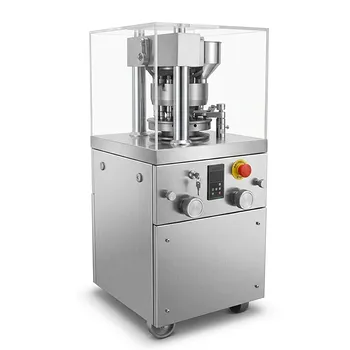
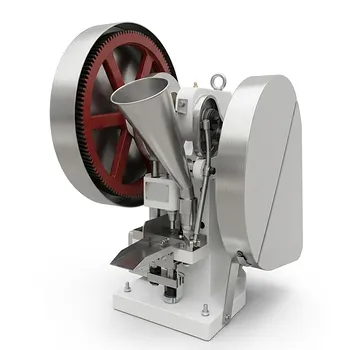
- 6-Ton Small Single-Punch Tablet Press — Laboratory Powder & Granule Tableting Equipment / Tablet Forming Machine
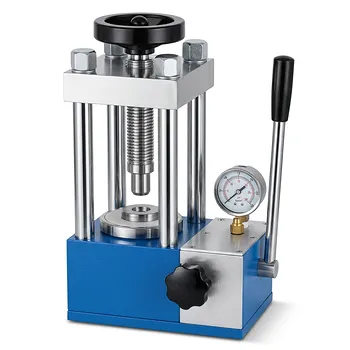
- Manual Tablet Press with Dual Scale Pressure Gauge for Pharmaceutical Food Chemical Laboratory Sample Preparation
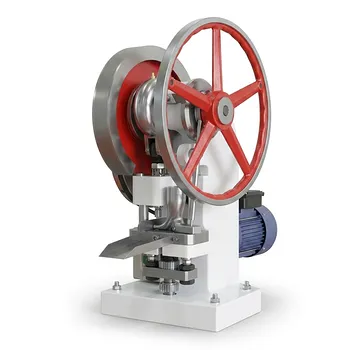
- 5 Ton Single Punch Tablet Press Laboratory Small Batch Production
- Ordinary Type Rotary Tablet Press for Pharmaceutical Chemical Food Electronic Industries
People Also Ask
- What is the function of a laboratory press in Cr-Ti alloy evaluation? Quantify Fracture Stress & Strength
- What is the function of a laboratory press in assessing the hydrophobic performance of modified vermiculite fillers?
- What is the core function of a laboratory press in the forming of ceramic filter element green bodies? Maximize Density.
- What is the function of a laboratory press in the preparation of ceramic feed rods? Master Density and Precision
- Why is vacuum sealing and flexible packaging necessary for Aluminum Titanate powders during CIP? Ensure Peak Density

Tech Team · PowderPreparation
Last updated on Jun 03, 2026
Related Products
6-Ton Small Single-Punch Tablet Press — Laboratory Powder & Granule Tableting Equipment / Tablet Forming Machine
Manual Tablet Press with Dual Scale Pressure Gauge for Pharmaceutical Food Chemical Laboratory Sample Preparation
5 Ton Single Punch Tablet Press Laboratory Small Batch Production