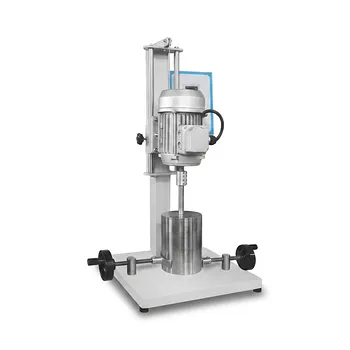
How does a sand mill improve ZTA ceramics? Achieve 4.36 g/cm³ density and superior strength via particle refinement.
Updated 4 months ago
The use of a sand mill transforms Zirconia Toughened Alumina (ZTA) by applying high-energy density to refine particles to approximately 1 micrometer, far exceeding the capabilities of standard mixing. This intense refinement eliminates microscopic non-uniformities and increases the number of contact points between particles. Consequently, the material density rises from 3.80 g/cm³ to 4.36 g/cm³, resulting in a nearly pore-free microstructure with significantly higher hardness and flexural strength.
Core Takeaway: Sand milling is superior to standard mixing because it provides the mechanical activation and particle refinement necessary to achieve a dense, high-strength microstructure. By reducing particles to the micrometer level, it ensures a homogeneous distribution of the zirconia toughening phase within the alumina matrix.
The Mechanics of High-Energy Refinement
Achieving Micrometer-Level Precision
A high-efficiency sand mill operates in an extremely high energy density environment that standard powder mixers cannot replicate. This environment refines the ZTA mixture until particles reach a consistent size of approximately 1 micrometer.
This level of refinement is critical for increasing the specific surface area of the powder. A higher surface area enhances the reaction activity of the raw materials, which is a prerequisite for effective chemical conversion and bonding during the subsequent sintering process.
Eliminating Microscopic Non-Uniformities
Standard mixing often fails to break down hard agglomerates that form during the initial stages of powder preparation. Sand milling provides the high-frequency impact and shearing forces necessary to dismantle these clusters.
By ensuring a homogeneous distribution of alumina and zirconia at a sub-micron level, the sand mill prevents localized phase imbalances. This uniformity allows the zirconia to act as an ideal toughening phase, evenly distributed throughout the alumina matrix.
Increasing Particle Contact Points
The reduction in particle size leads to a massive increase in the number of contact points between the different components. These contact points serve as the "bridges" for mass transport during sintering.
With more contact points, the material can achieve a much higher densification rate. This leads to a final product that is more cohesive and less prone to internal structural flaws.
Impact on Physical and Mechanical Properties
Significant Density Gains
The most measurable impact of sand milling is the dramatic increase in material density. While standard mixing might leave the ceramic at a density of 3.80 g/cm³, sand milling pushes it to 4.36 g/cm³.
This density increase is a direct result of a lower porosity microstructure. Because the particles are smaller and more uniformly packed, the microscopic gaps (pores) that weaken standard ceramics are largely eliminated.
Enhanced Hardness and Flexural Strength
The refined microstructure translates directly into improved mechanical performance. The high-energy milling process ensures that the ceramic can withstand greater loads and resist deformation more effectively.
Increased hardness makes the material more suitable for demanding industrial environments, such as those requiring high wear resistance. Simultaneously, the improved flexural strength allows the ZTA to resist cracking and catastrophic failure under stress.
Understanding the Trade-offs
The Risk of Chemical Contamination
The high-energy environment of a sand mill causes significant wear on the grinding media and the internal lining of the mill. If standard steel or silica media are used, foreign impurities can be introduced into the ceramic, degrading its performance.
To mitigate this, operators must use zirconia grinding jars and milling balls. Using media of the same material ensures that any wear debris is incorporated as a reinforcing phase rather than a contaminant.
Energy Consumption and Processing Time
Sand milling is more resource-intensive than standard mechanical mixing. It requires specialized equipment and higher energy inputs to maintain the high-speed impact and shear forces.
Furthermore, achieving the desired 1-micrometer refinement requires precise control over the milling duration. While it provides superior results, it adds complexity and cost to the initial powder preparation phase.
Making the Right Choice for Your Goal
To determine if sand milling is necessary for your ZTA production, consider your primary performance requirements.
- If your primary focus is Maximum Mechanical Strength: Utilize a high-efficiency sand mill to achieve the 4.36 g/cm³ density and 1-micrometer particle refinement required for high-load applications.
- If your primary focus is Preventing Material Contamination: Always pair your milling process with zirconia-based grinding media to ensure the chemical purity of the ZTA composite.
- If your primary focus is Eliminating Structural Flaws: Incorporate a precision sieve (e.g., 65 µm) after milling to remove any secondary agglomerates that may have formed during the drying process.
By moving beyond standard mixing to high-energy sand milling, you ensure the technical foundation for a high-performance, wear-resistant ceramic.
Summary Table:
| Feature | Standard Mixing | High-Energy Sand Milling |
|---|---|---|
| Particle Size | Coarse / Agglomerated | ~1 Micrometer (Refined) |
| Material Density | ~3.80 g/cm³ | 4.36 g/cm³ |
| Microstructure | Porous & Non-uniform | Dense & Homogeneous |
| Mechanical Properties | Lower wear resistance | High hardness & flexural strength |
| Phase Distribution | Potential imbalances | Uniform zirconia distribution |
Elevate Your Material Performance with Professional Milling Solutions
Achieving the precise densification and 1-micrometer refinement required for high-performance ZTA ceramics demands the right equipment. We provide complete laboratory sample preparation solutions for material science, specializing in advanced powder processing and compaction technology.
Our extensive product line is designed to help you achieve a pore-free microstructure and superior mechanical properties:
- Advanced Milling: High-efficiency sand/bead mills, planetary ball mills, jet mills, and rotor mills for ultimate particle refinement.
- Precision Compaction: A full spectrum of hydraulic presses, including Cold/Warm Isostatic Presses (CIP/WIP), standard lab presses, and vacuum hot presses.
- Support Equipment: Industrial crushers, vibratory sieve shakers, and high-performance powder mixers.
Whether you are refining ceramic composites or preparing XRF pellets, our equipment ensures the chemical purity and structural integrity your research demands.
Ready to optimize your ceramic microstructure? Contact our experts today to find the perfect equipment for your laboratory!
References
- <p>Dan Liu, Dongsheng Li, Ya’nan Zhang, Junyi Ma, Guisheng Liang, Huiyao Wang</p>. Research on the Influence of Additives on the Mechanical Properties of Zirconia-Toughened Alumina Ceramics. DOI: 10.25236/ijfet.2025.070105
Mentioned Products
- Small Ceramic Structure Laboratory Sand Mill Nanoscale Grinding Dispersion Equipment Seal-less Screen-less Design
- Vertical Nano Bead Mill for Ceramic Materials with Permanent Magnet Motor and High Efficiency Grinding
- Nano Laboratory Bead Mill Desktop Sub Micron Sand Mill Screenless Seal Less Powder Grinder
- Mass Production Nano Sand Mill for Industrial Nanomaterial Grinding and Dispersion
- Laboratory Disperser and Sand Mill for Grinding Dispersing Emulsifying
People Also Ask
- Why is a sand mill used to process solid carbon-forming agents like PPVA and PER? Enhance Dispersion & Flame Retardancy
- What is the role of laboratory grinding equipment in the preparation of waste glass powder for eco-friendly red bricks?
- Why is grinding equipment necessary for SnO2-Sb2O3 xerogels? Maximize surface area and photocatalytic activity.
- How does laboratory grinding or pulverizing equipment influence eggshell-derived adsorbents? Maximize Surface Area.
- What is the primary role of grinding equipment in BLA preparation? Enhance Reactivity & Material Uniformity

Tech Team · PowderPreparation
Last updated on Jun 03, 2026
Related Products
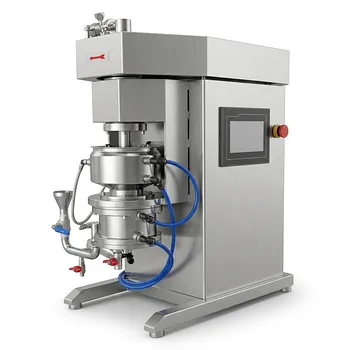
Small Ceramic Structure Laboratory Sand Mill Nanoscale Grinding Dispersion Equipment Seal-less Screen-less Design
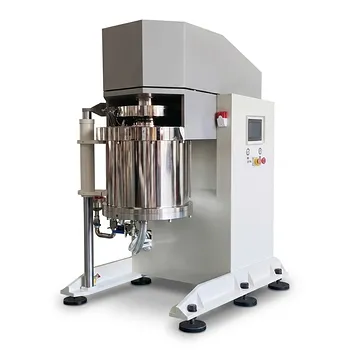
Vertical Nano Bead Mill for Ceramic Materials with Permanent Magnet Motor and High Efficiency Grinding
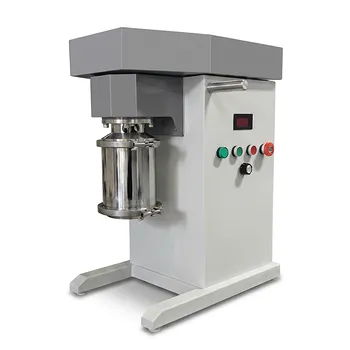
Nano Laboratory Bead Mill Desktop Sub Micron Sand Mill Screenless Seal Less Powder Grinder
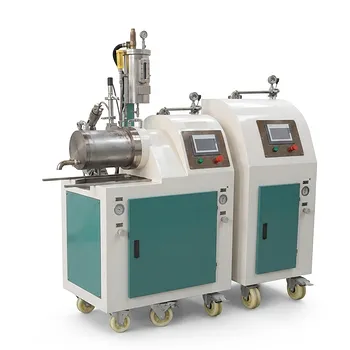
Mass Production Nano Sand Mill for Industrial Nanomaterial Grinding and Dispersion
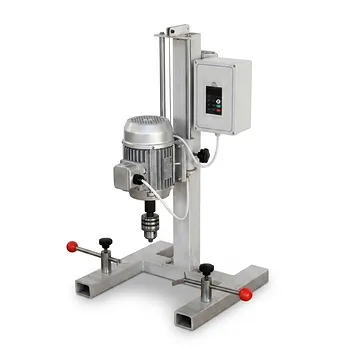
Laboratory Disperser and Sand Mill for Grinding Dispersing Emulsifying
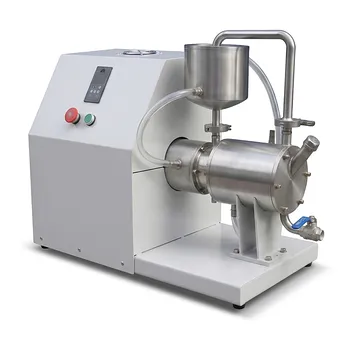
Laboratory Small Horizontal Sand Mill for Nano Materials Wet Grinding
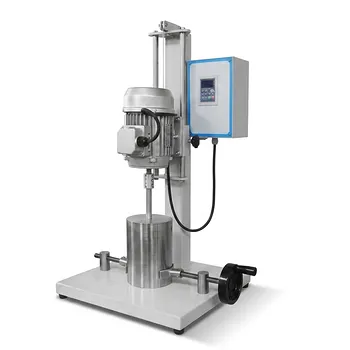
Laboratory Sand Mill Grinding Dispersing Machine for Wet Particle Size Reduction