How does the diameter of grinding beads affect the final particle size in a drug nanonization process? Optimize Results
Updated 5 months ago
The diameter of grinding beads directly determines the frequency of contact points and the minimum achievable particle size. Smaller beads provide more collisions per unit volume, which is essential for reducing drug particles to the nanometer scale, typically achieving sizes below 200 nm or even 100 nm.
The selection of grinding bead diameter is a balance between collision frequency and impact energy. While smaller beads accelerate the breakage of fine particles by increasing the density of contact points, they may lack the individual mass required to break down larger or exceptionally hard raw materials.
The Mechanics of Contact Point Density
Maximizing Collision Frequency
Smaller grinding beads, such as those with a diameter of 0.1 mm to 0.2 mm, significantly increase the number of beads present within a fixed volume. This high density creates a massive increase in the frequency of grinding contacts, ensuring that drug particles are hit more often and more consistently.
Increasing Specific Surface Area
As bead diameter decreases, the total specific surface area of the grinding media increases. This allows for a more uniform distribution of shear forces across the drug crystals, leading to a narrower particle size distribution in a shorter period.
Impact on Final Particle Size and Limits
Reaching the Lower Grinding Limit
Every drug formulation has a theoretical "grinding limit" where further milling provides diminishing returns. Utilizing beads with a minimum diameter (e.g., 100 to 200 micrometers) is often the only way to reach this lower limit effectively, particularly when aiming for ultra-fine particles below 100 nm.
Breakage Kinetics for Brittle Materials
For most soft or brittle active pharmaceutical ingredients (APIs), the high-frequency collisions provided by small beads are more efficient than the high-intensity impacts of large beads. This results in faster breakage rates because the "capture frequency" of the drug particles within the media voids is much higher.
Understanding the Trade-offs and Pitfalls
Energy vs. Frequency
The primary trade-off in reducing bead size is the loss of individual impact energy. While small beads provide more hits, each hit carries less kinetic energy; if the drug particles are too large or too hard, smaller beads may fail to initiate the initial fracture.
Heat Generation and Fluid Resistance
Smaller beads increase the internal resistance within the milling chamber, which can lead to excessive heat generation. This is a critical concern for temperature-sensitive drugs, requiring precise control over cooling systems and agitation speeds.
Processing Challenges
Using extremely small media (under 0.1 mm) increases fluid resistance and may complicate the separation of the beads from the final nanosuspension. This necessitates specialized equipment designed to handle fine media without clogging or media escape.
How to Apply This to Your Process
When selecting a bead diameter for drug nanonization, the decision should be driven by your target particle size and the physical properties of your API.
- If your primary focus is achieving sub-100nm particles: Use the smallest possible beads, typically in the 0.1 mm to 0.2 mm range, to maximize collision density.
- If your primary focus is preliminary crushing of hard materials: Start with larger beads, such as 0.4 mm to 1.0 mm, to provide the high individual impact force necessary for initial breakage.
- If your primary focus is narrowing the size distribution: Opt for 0.3 mm zirconia beads to ensure a uniform distribution of shear forces and faster processing times for standard nano-formulations.
- If your primary focus is temperature-sensitive drugs: Select a slightly larger bead to reduce fluid resistance and heat, or ensure your milling equipment has high-efficiency cooling to offset the heat from smaller media.
Proper bead selection transforms the nanonization process from a slow, inefficient task into a precise and rapid engineering achievement.
Summary Table:
| Bead Diameter | Primary Mechanism | Best Application | Key Consideration |
|---|---|---|---|
| 0.1 - 0.2 mm | Max collision frequency | Achieving sub-100nm particles | High heat & fluid resistance |
| 0.3 - 0.4 mm | Uniform shear forces | Narrow particle size distribution | Standard nano-formulations |
| 0.5 mm + | High individual impact energy | Preliminary crushing of hard APIs | Limited minimum particle size |
Precision Milling Solutions for Material Science
Ready to achieve consistent sub-100nm particle sizes? At [Your Brand Name], we provide complete laboratory sample preparation solutions, specializing in advanced powder processing and compaction equipment. Our extensive line of sand/bead mills, planetary ball mills, and jet mills is specifically designed to handle the delicate balance of collision frequency and energy required for pharmaceutical nanonization.
Beyond milling, we offer a full spectrum of laboratory equipment, including:
- Crushers & Grinders: Jaw/roll crushers and liquid nitrogen cryogenic grinders.
- Sieving & Mixing: Vibratory sieve shakers, powder mixers, and defoaming mixers.
- Hydraulic Presses: Cold/Warm Isostatic Presses (CIP/WIP), XRF pellet presses, and vacuum hot presses.
Whether you are scaling up production or refining a lab-scale formulation, our expertise ensures you have the right tools for superior material performance. Contact us today to find your solution!
References
- Ann-Cathrin Willmann, Karl Wagner. Itraconazole Nanosuspensions via Dual Centrifugation Media Milling: Impact of Formulation and Process Parameters on Particle Size and Solid-State Conversion as Well as Storage Stability. DOI: 10.3390/pharmaceutics14081528
Mentioned Products
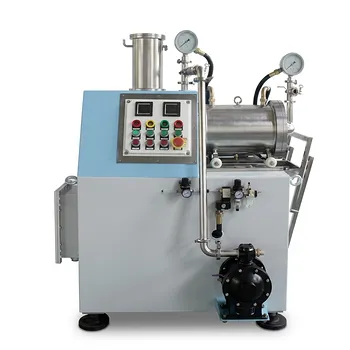
- Horizontal Bead Mill for Nanoscale Grinding and Advanced Material Powder Processing
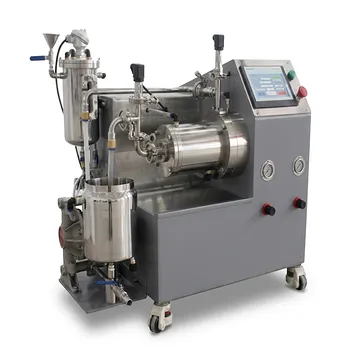
- Laboratory Horizontal Bead Mill for Nanomaterial Wet Grinding and Material Science Research
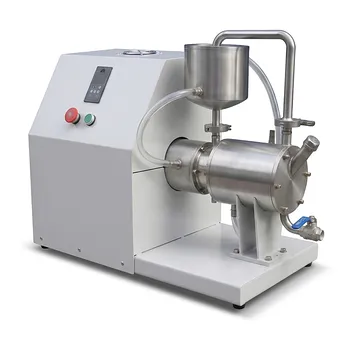
- Laboratory Small Horizontal Sand Mill for Nano Materials Wet Grinding
- Nano Laboratory Bead Mill Desktop Sub Micron Sand Mill Screenless Seal Less Powder Grinder
- Vertical Nano Bead Mill for Ceramic Materials with Permanent Magnet Motor and High Efficiency Grinding
People Also Ask
- How does the bead filling rate affect the grinding performance and equipment wear in a bead mill? Optimization Guide
- Why is it necessary to precisely control the grinding media loading ratio? Master Nanosuspension Yield & API Stability
- Why is a ceramic lining preferred over stainless steel for a bead mill? Protect Enzymes and Ensure Biomass Purity
- Why is an external cooling circulation system necessary during the high-speed operation of a bead mill? Protect Integrity
- Why is the filling rate of grinding beads strictly controlled during the material milling process? Optimize Efficiency.

Tech Team · PowderPreparation
Last updated on May 14, 2026
Related Products
Horizontal Bead Mill for Nanoscale Grinding and Advanced Material Powder Processing
Laboratory Horizontal Bead Mill for Nanomaterial Wet Grinding and Material Science Research
Laboratory Small Horizontal Sand Mill for Nano Materials Wet Grinding
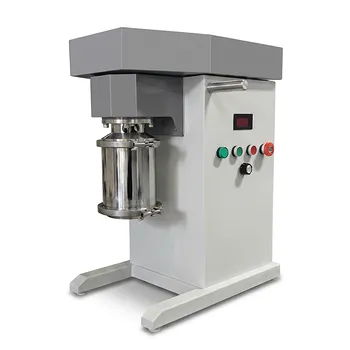
Nano Laboratory Bead Mill Desktop Sub Micron Sand Mill Screenless Seal Less Powder Grinder
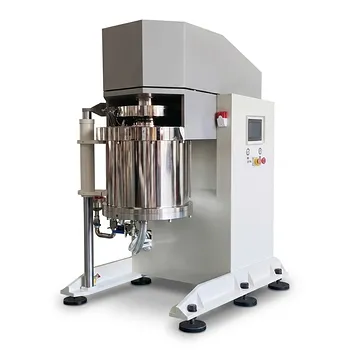
Vertical Nano Bead Mill for Ceramic Materials with Permanent Magnet Motor and High Efficiency Grinding
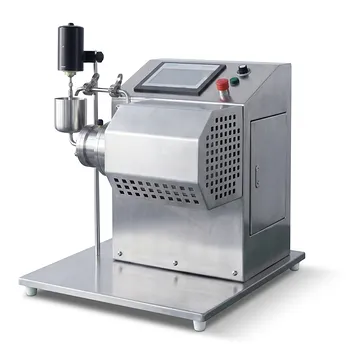
High Efficiency Laboratory Bead Mill Nano Powder Dispersion Sand Mill for Material Science Research
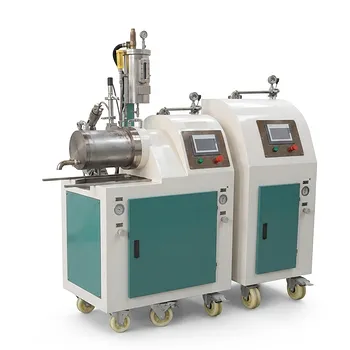
Mass Production Nano Sand Mill for Industrial Nanomaterial Grinding and Dispersion
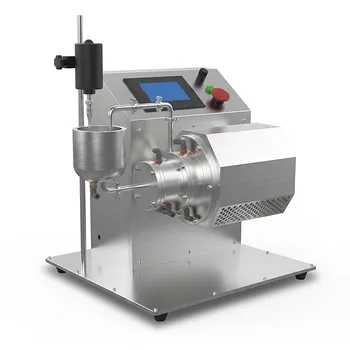
Laboratory Horizontal Pin Nano Sand Mill
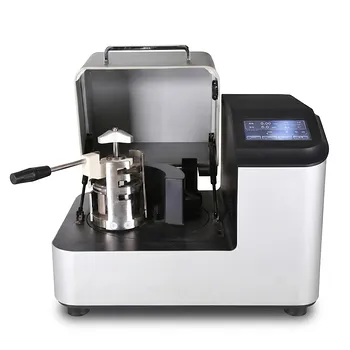
High Energy Laboratory Planetary Ball Mill for Nano Grinding and Material Science Sample Preparation
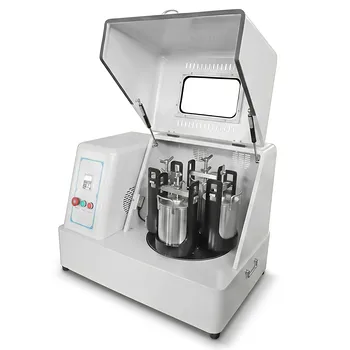
Vertical Square Planetary Ball Mill for Laboratory Sample Preparation and Nanoscale Grinding
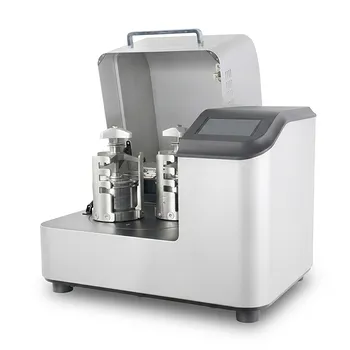
High Energy Planetary Ball Mill for Nano Scale Grinding and Mechanical Alloying
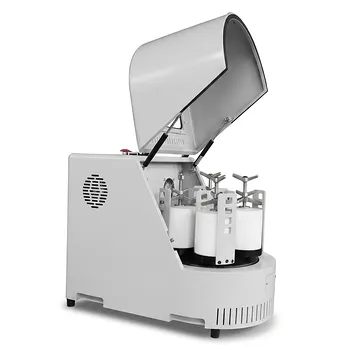
Vertical Semi Circular Planetary Ball Mill for Laboratory Precision Grinding
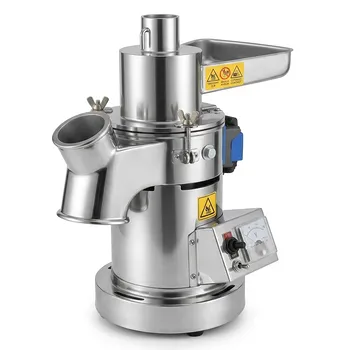
Continuous Feeding Grinder High Efficiency Pulverizer for Lab Sample Preparation
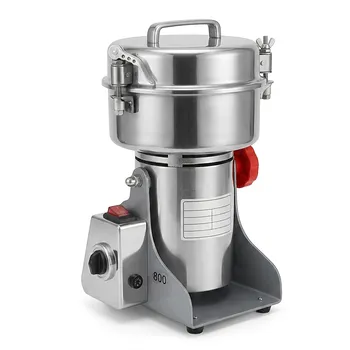
Small High-Speed Laboratory Grinder for Rapid Sample Preparation
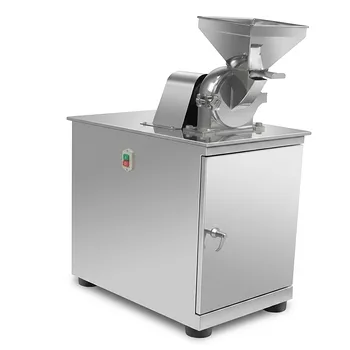
Universal Laboratory Pulverizer Grinder for Small Batch Powder Processing and Material Science Research