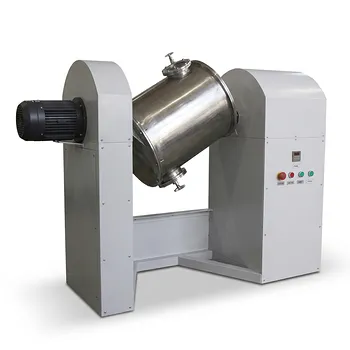
How does mechanical mixing equipment ensure experimental reliability? Achieve Uniform Homogenization in Gangue Slurry.
Updated 3 months ago
Mechanical mixing equipment ensures experimental reliability by utilizing high-speed rotating blades to achieve forced homogenization of gangue particles and water. This process creates a uniform distribution of materials at both the macroscopic and microscopic levels, effectively eliminating localized variations in the water-to-cement ratio. By breaking down flocculated structures among fine particles, the equipment provides highly consistent, standardized samples that are essential for accurate rheological and mechanical performance testing.
The core reliability of gangue slurry experiments depends on forced homogenization, which removes human error and localized chemical gradients. By standardizing the physical state of the mixture, researchers can ensure that subsequent test results reflect the material's inherent properties rather than preparation inconsistencies.
Achieving Macroscopic and Microscopic Homogeneity
Elimination of Localized Variations
Mechanical mixers use high-speed shear forces to ensure that water and solid particles are distributed evenly throughout the entire volume. This prevents the formation of "pockets" where the liquid-to-solid ratio might differ from the intended design. Consistent distribution is critical because even minor localized variations can lead to erratic data during viscosity or flowability tests.
Disruption of Flocculated Structures
Fine gangue particles often stick together to form clusters, or flocculated structures, which trap water and alter the slurry's behavior. High-intensity mechanical stirring provides the energy necessary to break these bonds, ensuring a fully dispersed system. This de-agglomeration allows the slurry to reach a stable state, providing a reliable rheological testing baseline.
Enhancing Chemical Reactivity and Phase Stability
Breaking Surface Inertia
Many mineral components, such as those found in fly ash or gangue, possess an inert surface layer that can inhibit chemical reactions. The continuous impact and shear forces of mechanical mixing help strip away these layers, facilitating immediate contact between the material and any activators. This ensures that polycondensation or hydration reactions occur uniformly, preventing structural defects in the final cured sample.
Promoting Efficient Ion Exchange
Reliable experiments require that chemical additives, such as alkali activators, are in constant contact with the solid particles. Mechanical equipment promotes rapid ion exchange by maintaining a high-energy environment where particles are constantly moved through the liquid phase. This uniformity prevents setting failures and ensures that the strength development of the sample is consistent across all test specimens.
Uniform Nucleation and Gas Distribution
In specialized slurries involving foaming agents or gas-releasing additives, mechanical mixing ensures the equivalent distribution of these agents. This leads to uniform bubble nucleation and prevents the formation of large voids or density gradients. A consistent internal structure is vital for accurately measuring the mechanical strength and porosity of the resulting material.
Understanding the Trade-offs and Technical Limitations
Impact of Shear-Induced Heat
While high-speed mixing is necessary for homogenization, it can generate significant frictional heat within the slurry. This temperature rise can inadvertently accelerate chemical reaction rates or alter the viscosity of temperature-sensitive additives. Researchers must balance mixing intensity with duration to avoid compromising the sample's thermal history.
Risk of Particle Degradation
Extremely high shear forces can lead to mechanical degradation, where the actual size of the gangue particles is reduced during the mixing process. If the equipment is operated at excessive speeds for too long, the particle size distribution may shift, leading to results that do not accurately represent the raw material.
Representative Sampling Challenges
Even the best mixer cannot compensate for a non-representative initial sample. Using standard procedures like the coning and quartering method in conjunction with mechanical mixing is necessary to ensure the small sample used in the lab accurately reflects the bulk chemical composition of the source material.
How to Apply This to Your Project
When preparing gangue slurry samples, the equipment settings should be tailored to the specific goals of your investigation to ensure the highest degree of data integrity.
- If your primary focus is Rheological Precision: Prioritize constant-speed stirring for a fixed duration to ensure complete de-agglomeration without the need for chemical dispersants.
- If your primary focus is Chemical Reactivity: Utilize high-shear settings to break the surface inertia of particles and promote uniform ion exchange throughout the system.
- If your primary focus is Structural Consistency: Implement high-precision speed control to prevent density gradients and ensure an even distribution of air-entraining or foaming agents.
Properly calibrated mechanical mixing transforms a raw mixture into a scientifically valid specimen, ensuring that your experimental conclusions are based on material truth rather than processing artifacts.
Summary Table:
| Feature | Mechanism | Impact on Experimental Reliability |
|---|---|---|
| Forced Homogenization | High-speed rotating blades | Eliminates localized water-to-cement ratio variations. |
| De-agglomeration | High-intensity shear forces | Breaks flocculated structures for stable rheological baselines. |
| Surface Activation | Continuous impact & shear | Strips inert layers to ensure uniform chemical reactivity. |
| Agent Distribution | Equivalent dispersion | Prevents density gradients and ensures uniform bubble nucleation. |
Ensure your experimental results reflect material truth with our precision laboratory equipment. We provide complete sample preparation solutions for material science, specializing in powder processing and compaction.
Our extensive line includes specialized powder and defoaming mixers for gangue slurry homogenization, as well as crushers, cryogenic grinders, and various mills (planetary, jet, rotor). We also manufacture a full spectrum of hydraulic presses, including Cold/Warm Isostatic Presses (CIP/WIP), vacuum hot presses, and XRF pellet presses to ensure your samples are perfectly prepared for testing.
Contact us today to discuss how our specialized equipment can enhance your lab's data integrity and research efficiency!
References
- Yingbo Wang, Mengxin Xu. Experimental Optimization Study on Pumping Pipeline Transportation Performance of Pure Gangue Slurry Filling Material. DOI: 10.3390/ma18204788
Mentioned Products
- Horizontal Ribbon Mixer for Uniform Powder and Slurry Mixing
- Horizontal Ribbon Mixer for Dry Powder and Slurry Blending
- 非介入式材料均质机真空脱泡行星搅拌高粘度混合设备
- Laboratory Basket Sand Mill for Wet Grinding and Dispersion of Viscous Slurries
- Three-Dimensional Motion Mixer for Laboratory Powder and Granule Blending
People Also Ask
- How does the fill level of a horizontal mixer influence the selection of the stirring mechanism? Optimize Your Design
- What is the technical significance of radial clearance in horizontal mixers? Boost Homogeneity & Reduce Dead Zones.
- What is the function of additives like cellulose or wax in lab mixers? Enhance Pellet Integrity and Strength
- How does a laboratory mixer ensure the final performance of lead-zinc metallurgical slag-based mortar? Best Practices
- How does a laboratory mixer facilitate mixing PE wax and bentonite? Master Shear Force for Superior Material Properties

Tech Team · PowderPreparation
Last updated on Jun 03, 2026
Related Products
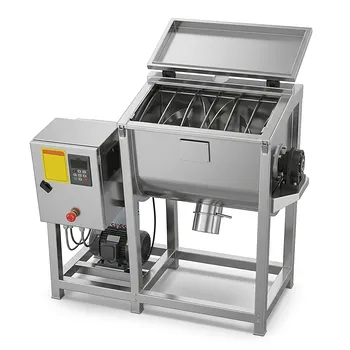
Horizontal Ribbon Mixer for Uniform Powder and Slurry Mixing
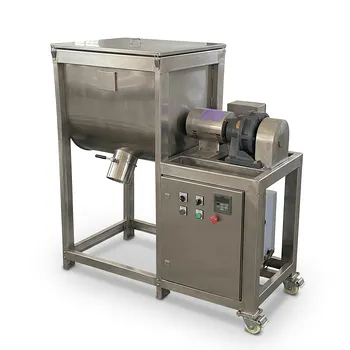
Horizontal Ribbon Mixer for Dry Powder and Slurry Blending
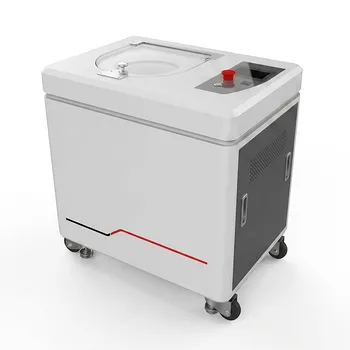
非介入式材料均质机真空脱泡行星搅拌高粘度混合设备
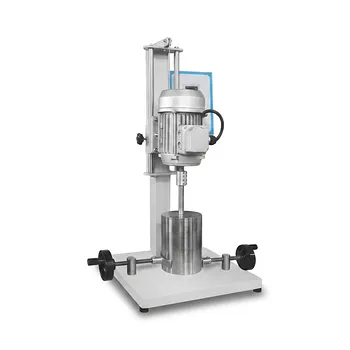
Laboratory Basket Sand Mill for Wet Grinding and Dispersion of Viscous Slurries
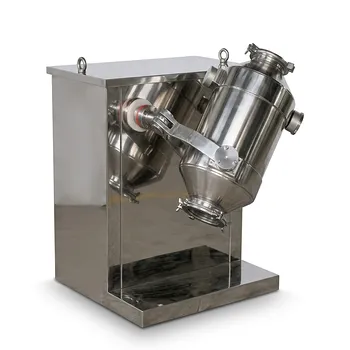
Three-Dimensional Motion Mixer for Laboratory Powder and Granule Blending
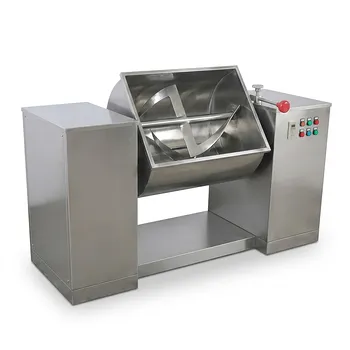
Horizontal Trough Mixer for Uniform Powder and Paste Blending