How does a sand mill vs. ball mill affect BCZT slurry processing? Achieve Nanoscale 200-300nm Precision
Updated 4 months ago
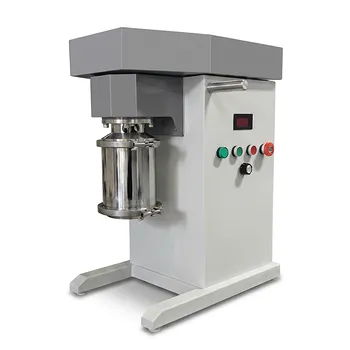
Sand milling (bead milling) represents a critical evolution in the processing of Barium Calcium Zirconium Titanate (BCZT) slurries, offering significantly higher energy density and shear forces than traditional ball milling. By utilizing high-speed agitation, these mills achieve "deep crushing" of BCZT powders, reducing them to a uniform 200-300 nm particle size distribution. This precision is essential for effective dopamine surface modification and ensuring a homogenous dispersion within a Polyvinylidene Fluoride (PVDF) matrix.
While standard ball milling is effective for preliminary mixing and coarse reduction, sand milling provides the intense mechanical energy required to reach the nanoscale precision and uniformity necessary for high-performance BCZT-PVDF composites.
The Mechanics of Ultrafine Dispersion
Energy Density vs. Traditional Impact
Standard ball milling relies primarily on the gravity-driven impact and cascading motion of large media. While this is sufficient for basic mixing, it often lacks the concentrated energy required to break down resilient BCZT agglomerates at the molecular level.
In contrast, a sand mill uses high-speed agitators to move smaller grinding media with immense velocity. This creates a high-energy environment characterized by intense shear and friction, which is far more effective at "deep crushing" powders into the sub-micron range.
Breaking Resilient Agglomerates
BCZT powders often form stubborn clusters or agglomerates during initial synthesis or coarse milling. Sand milling targets these clusters specifically, ensuring that every particle is subjected to uniform mechanical stress.
The result is a narrow particle size distribution that standard ball milling cannot reliably replicate. This uniformity is the foundation for the material’s final dielectric and mechanical properties.
Reaching the Nanoscale Threshold
Achieving the 200-300 nm Target
The primary objective of using a sand mill for BCZT is to reach a specific size threshold of 200-300 nm. Standard ball milling often hits a "plateau" where further milling time yields diminishing returns in size reduction.
The higher shear forces in a sand mill allow the process to push past this plateau. Reaching this nanoscale range increases the total surface area of the powder significantly.
Preparation for Surface Modification
Achieving a 200-300 nm size is not an arbitrary goal; it is a prerequisite for downstream chemical processes. Specifically, this size range is ideal for dopamine surface modification.
Uniformly small particles allow the dopamine coating to adhere evenly across the entire powder batch. Without this uniformity, the subsequent integration into polymers like PVDF would result in "clumping" and reduced performance.
Impact on the PVDF Matrix
Ensuring Homogenous Dispersion
When BCZT is integrated into a Polyvinylidene Fluoride (PVDF) matrix, the quality of the dispersion dictates the composite's success. Large or non-uniform particles create "weak spots" and inconsistencies in the material's dielectric properties.
Sand milling ensures that the BCZT particles are small enough to be suspended evenly within the polymer. This creates a more stable and predictable composite material.
Improving Composite Performance
Narrow particle size distribution leads to better packing density within the PVDF matrix. This optimization enhances the overall performance of the solid-state electrolyte or composite, providing better electrical properties and mechanical durability.
Understanding the Trade-offs
Heat Generation and Management
The high energy density of sand mills generates significant heat during operation. If not managed with cooling jackets, this heat can potentially alter the chemistry of the BCZT or affect the slurry's stability.
Media Wear and Contamination
Because sand mills use smaller media and higher speeds, there is a higher risk of media wear. Technical teams must select high-hardness grinding media (such as zirconia) to prevent contamination of the BCZT slurry.
Operational Complexity
Sand mills are generally more complex to set up, clean, and maintain than standard ball mills. They require precise control over flow rates, agitator speeds, and media loading to achieve the desired 200-300 nm result.
How to Apply This to Your Project
Making the Right Choice for Your Goal
The choice between milling technologies depends entirely on your required final particle size and the sensitivity of your downstream applications.
- If your primary focus is initial component mixing: Standard ball milling is often the most cost-effective and simplest solution for basic homogenization.
- If your primary focus is nanoscale BCZT-PVDF composites: You must utilize a sand mill to achieve the 200-300 nm distribution required for dopamine modification.
- If your primary focus is narrow size distribution for electrolytes: A stirred sand mill is necessary to provide the high-energy impact and compression required for high-performance electrolyte slurries.
By transitioning from standard ball milling to sand milling, you move from simple material blending to high-precision engineering of the BCZT microstructure.
Summary Table:
| Feature | Standard Ball Mill | Sand (Bead) Mill |
|---|---|---|
| Grinding Mechanism | Gravity-driven impact | High-speed agitator shear |
| Energy Density | Moderate | Very High |
| Target Particle Size | Coarse / Micron range | 200–300 nm (Nanoscale) |
| Dispersion Quality | Lower (Agglomeration risks) | Superior (Homogenous) |
| Primary Function | Preliminary mixing | Deep crushing & modification |
Optimize Your BCZT Powder Processing and Compaction
Achieving the critical 200-300 nm threshold for BCZT-PVDF composites requires precision equipment designed for high-energy dispersion. We provide complete laboratory sample preparation solutions for material science, specializing in high-performance powder processing and compaction equipment.
Our extensive product line supports your entire workflow:
- Ultrafine Milling: Advanced sand/bead mills, planetary ball mills, jet mills, and liquid nitrogen cryogenic grinders.
- Homogenous Mixing: High-efficiency powder mixers and defoaming mixers for stable slurries.
- Precision Compaction: A full spectrum of hydraulic presses, including Cold/Warm Isostatic Presses (CIP/WIP), vacuum hot presses, and XRF pellet presses.
- Sizing & Preparation: Jaw/roll crushers and vibratory/air-jet sieve shakers.
Whether you are refining dopamine surface modifications or developing solid-state electrolytes, our specialized tools ensure the uniformity and performance your research demands. Contact our technical experts today to find the ideal solution for your lab!
References
- Yueping Wang, Zhijian Peng. [Retracted Article] Performance of Ba<sub>0.95</sub>Ca<sub>0.05</sub>Zr<sub>0.15</sub>Ti<sub>0.85</sub>O<sub>3</sub>/PVDF composite flexible films. DOI: 10.2109/jcersj2.122.719
Mentioned Products
- Laboratory Basket Sand Mill for Wet Grinding and Dispersion of Viscous Slurries
- Laboratory Disperser and Sand Mill for Grinding Dispersing Emulsifying
- Laboratory Sand Mill Grinding Dispersing Machine for Wet Particle Size Reduction
- Small Ceramic Structure Laboratory Sand Mill Nanoscale Grinding Dispersion Equipment Seal-less Screen-less Design
- Laboratory Small Horizontal Sand Mill for Nano Materials Wet Grinding
People Also Ask
- What is the function of a laboratory mill in Cassia tora L. seed analysis? Master Precision Thermal Data Prep.
- What is the purpose of using a laboratory mill to grind dried precipitates? Optimize TiO2/AuNRs Catalyst Homogeneity
- What role does a laboratory mill play in the study of lignite coal co-combustion? Optimizing Fuel Blends and Reactivity
- Why is a sand mill used to process solid carbon-forming agents like PPVA and PER? Enhance Dispersion & Flame Retardancy
- What function does a laboratory mill serve in corn starch saccharification experiments? Optimize Surface Area & Reactions

Tech Team · PowderPreparation
Last updated on Jun 03, 2026
Related Products
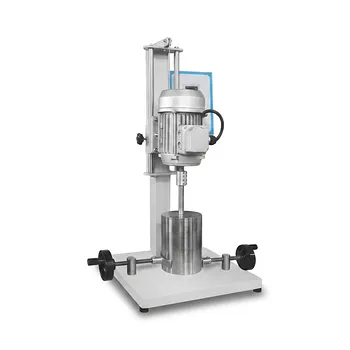
Laboratory Basket Sand Mill for Wet Grinding and Dispersion of Viscous Slurries
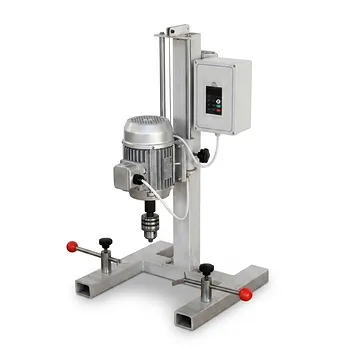
Laboratory Disperser and Sand Mill for Grinding Dispersing Emulsifying
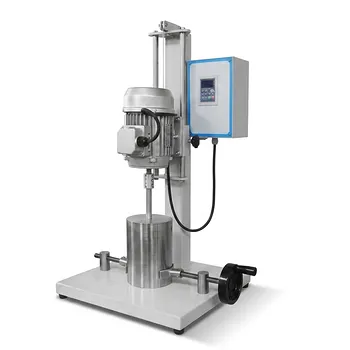
Laboratory Sand Mill Grinding Dispersing Machine for Wet Particle Size Reduction
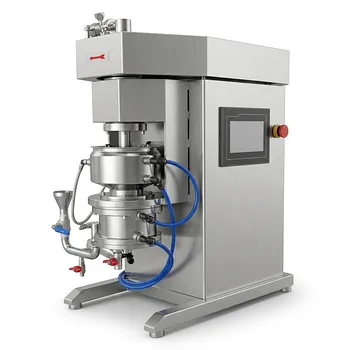
Small Ceramic Structure Laboratory Sand Mill Nanoscale Grinding Dispersion Equipment Seal-less Screen-less Design
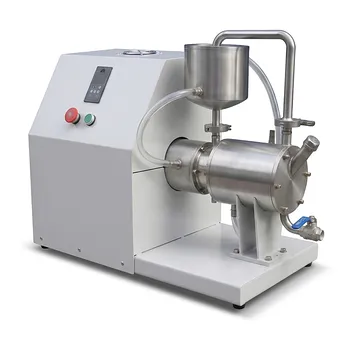
Laboratory Small Horizontal Sand Mill for Nano Materials Wet Grinding
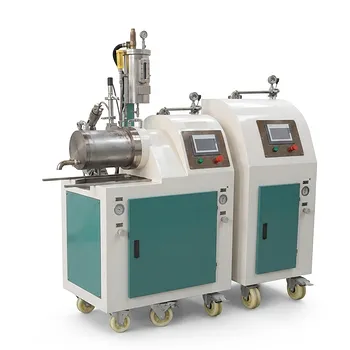
Mass Production Nano Sand Mill for Industrial Nanomaterial Grinding and Dispersion
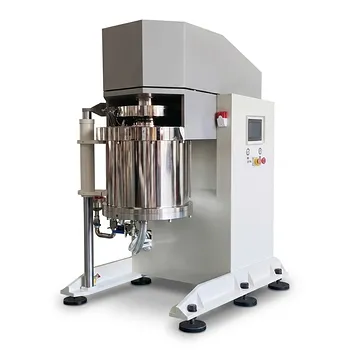
Vertical Nano Bead Mill for Ceramic Materials with Permanent Magnet Motor and High Efficiency Grinding
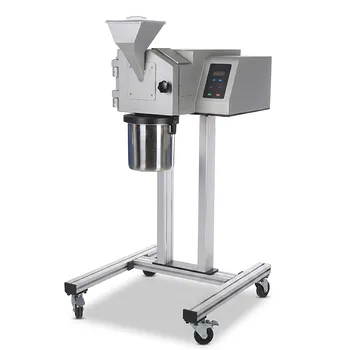
Cross Beater Mill for Brittle Material Grinding and Continuous Fine Crushing Industrial Sample Preparation