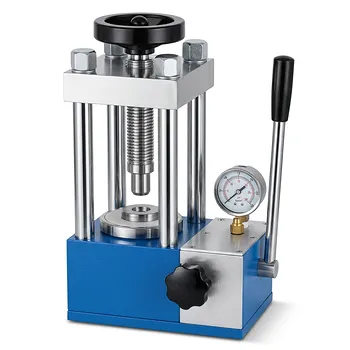
How does a large-capacity laboratory hydraulic press provide critical data for concrete compressive strength testing?
Updated 5 months ago
The large-capacity laboratory hydraulic press is the definitive instrument for quantifying the mechanical limits of concrete.
By applying a precisely controlled, continuous axial load until a specimen reaches its breaking point, this equipment converts physical resistance into measurable data. It captures critical values such as maximum load-bearing capacity and yield force, allowing engineers to determine the exact compressive strength in megapascals (MPa).
A hydraulic press provides critical data by eliminating variables through standardized loading rates and uniform stress distribution. This precision allows researchers to quantify how specific additives, reinforcements, or recycled materials alter the load-bearing capacity and brittleness of the cement matrix.
The Mechanics of Precision Data Collection
Standardized Axial Loading
The machine applies a constant vertical downward load to ensure that results are repeatable and scientifically valid. This controlled loading rate prevents sudden impact spikes that could skew the recorded failure point, ensuring the data reflects the material's true properties.
Uniform Stress Distribution
High-precision presses ensure that pressure is distributed evenly across the specimen surface, whether using 150mm cubes or standard cylinders. This uniformity is essential for capturing the true average compressive strength rather than localized failure caused by machine misalignment.
Capture of Real-Time Failure Points
The integrated measurement systems capture the yield force and the relative deformation of the specimen at the exact moment of failure. This provides a quantitative limit for the material, which is necessary for calculating safety margins in structural engineering.
Quantifying the Impact of Material Science
Evaluating Nanomaterials and Additives
The equipment measures how advanced ingredients, such as carbon nanotubes or rice husk ash, reduce the brittleness of the cement matrix. It provides a numerical baseline to see how these nanomaterials contribute to an increased load-bearing capacity.
Analyzing Reinforcement Effects
For high-performance concrete, the press captures the "bridging effect" provided by steel fibers during compression. Researchers use this data to calculate how different fiber volumes influence the overall mechanical response and toughness of the concrete.
Verifying Cement Substitutes
The press quantifies the actual contribution of alternative materials, such as blood clam shell powder or silica fume, to mechanical strength. This allows for a scientific comparison between traditional cement and more sustainable, low-carbon alternatives.
Verifying Structural Integrity and Sustainability
Validating Recycled Aggregates
Engineers use hydraulic testing to compare recycled basalt or crushed stone against traditional natural aggregates. This determines if the mechanical performance reduction caused by recycled materials remains within structural safety standards.
Tracking Strength Development Over Time
The press is used at specific intervals, typically 7 and 28 days, to monitor the curing process. This data confirms if a specific mix design will meet the required load limits at different stages of a construction timeline.
Industrial Equipment Selection
Beyond concrete, the data generated by the press—specifically the resistance to compression—is critical for mineral processing. This information helps engineers budget power consumption and select the appropriate industrial crushing equipment for ore processing.
Understanding the Trade-offs and Pitfalls
Loading Rate Sensitivity
The accuracy of the data is highly dependent on a constant loading rate. If the rate fluctuates, the measured strength can appear artificially high or low, leading to incorrect assumptions about the material's safety.
Specimen Preparation Errors
Data accuracy depends heavily on the specimen's geometry and surface flatness. Even a high-capacity press cannot compensate for a specimen that is not perfectly perpendicular to the load, as this creates uneven stress concentrations.
Machine Calibration Requirements
To maintain "standardized" results, the hydraulic press must undergo regular calibration. Small deviations in the load sensor or hydraulic pressure can result in data that is technically precise but factually inaccurate.
How to Apply This to Your Project
- If your primary focus is material innovation: Use the press to quantify the specific "bridging effects" and brittleness reduction provided by nanomaterials or fibers.
- If your primary focus is structural safety: Prioritize 7-day and 28-day testing to ensure the concrete reaches its design strength before proceeding with heavy construction phases.
- If your primary focus is environmental sustainability: Utilize the equipment to verify that replacing natural stone with recycled aggregates does not compromise the load-bearing integrity of the structure.
By meticulously quantifying the point of failure under controlled conditions, the laboratory hydraulic press transforms material samples into the actionable data required to build safer, more efficient structures.
Summary Table:
| Key Feature | Functional Benefit | Research Application |
|---|---|---|
| Standardized Loading | Ensures repeatability by eliminating impact spikes | Material property baseline verification |
| Uniform Stress | Prevents localized failure via even distribution | Testing 150mm cubes and standard cylinders |
| Real-Time Capture | Quantifies exact yield force and breaking points | Determining safety margins for construction |
| Material Analysis | Measures impact of fibers and nanomaterials | Developing high-performance & green concrete |
Elevate Your Material Testing with Professional Grade Solutions
Need precise, repeatable data for your structural or material science research? At [Company Name], we provide complete laboratory sample preparation solutions tailored for material science professionals.
Whether you are verifying the integrity of sustainable concrete or developing advanced nanomaterials, our extensive equipment line supports every stage of your workflow:
- Advanced Press Technology: Cold/Warm Isostatic Presses (CIP/WIP), standard lab presses, XRF pellet presses, and vacuum hot presses.
- Powder Processing: High-efficiency crushers (jaw/roll), liquid nitrogen cryogenic grinders, and various mills (planetary ball, jet, rotor).
- Sieving & Mixing: Vibratory sieve shakers and high-precision powder/defoaming mixers.
Ready to optimize your lab's efficiency and accuracy? Contact our technical experts today to find the perfect equipment for your specific testing requirements!
References
- Yi Jing, Yong Jin. Durability and environmental evaluation of rice husk ash sustainable concrete containing carbon nanotubes. DOI: 10.1038/s41598-025-88927-z
Mentioned Products
- 5 Ton Single Punch Tablet Press Laboratory Small Batch Production
- 6-Ton Small Single-Punch Tablet Press — Laboratory Powder & Granule Tableting Equipment / Tablet Forming Machine
- 6 Ton Variable Frequency Single Punch Tablet Press
- Laboratory Knife Mill for Large Volume Sample Homogenization and Food Preparation
- Manual Tablet Press with Dual Scale Pressure Gauge for Pharmaceutical Food Chemical Laboratory Sample Preparation
People Also Ask
- What is the function of a laboratory press in assessing the hydrophobic performance of modified vermiculite fillers?
- What is the core function of a laboratory press in the forming of ceramic filter element green bodies? Maximize Density.
- What is the function of a laboratory press in Cr-Ti alloy evaluation? Quantify Fracture Stress & Strength
- Why is vacuum sealing and flexible packaging necessary for Aluminum Titanate powders during CIP? Ensure Peak Density
- Why is a laboratory hydraulic press required for FT-IR KBr pellets? Achieve Precise Sample Clarity for ZrC–SiC Analysis

Tech Team · PowderPreparation
Last updated on May 14, 2026
Related Products
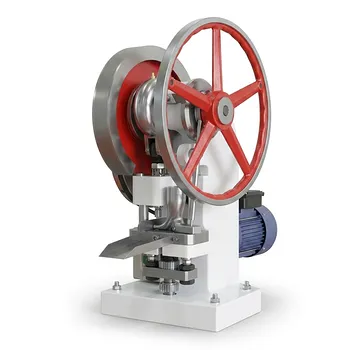
5 Ton Single Punch Tablet Press Laboratory Small Batch Production
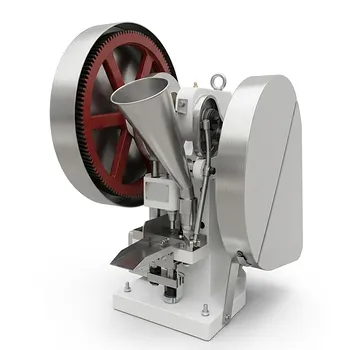
6-Ton Small Single-Punch Tablet Press — Laboratory Powder & Granule Tableting Equipment / Tablet Forming Machine
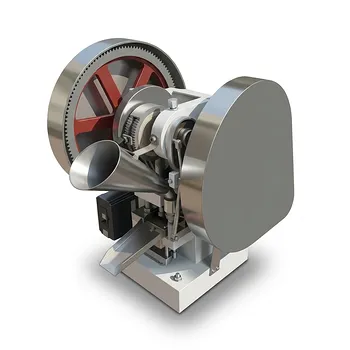
6 Ton Variable Frequency Single Punch Tablet Press
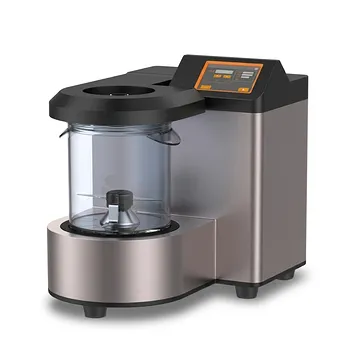
Laboratory Knife Mill for Large Volume Sample Homogenization and Food Preparation