How does a planetary ball mill facilitate PA6/MoS2 composites? Master Mechanochemical Activation for Superior Materials
Updated 4 months ago
Mechanochemical activation via planetary ball milling is the primary driver for high-performance PA6/MoS2 composite synthesis. By delivering high-intensity energy input, the mill facilitates mechanical alloying and cold welding between Molybdenum Disulfide (MoS2) and Polyamide 6 (PA6) particles. This process creates a level of interfacial bonding that far exceeds traditional low-energy mixing methods, enabling significant improvements in material properties even at minimal filler concentrations.
Core Takeaway: Laboratory-scale planetary ball mills use high-speed centrifugal forces to induce mechanical alloying and structural activation, transforming the PA6/MoS2 interface into a robust bond that enhances both mechanical strength and wear resistance.
The Mechanics of High-Intensity Energy Transfer
Utilizing Centrifugal and Impact Forces
A planetary ball mill operates by rotating a sun wheel while the grinding jars spin in the opposite direction. This motion generates powerful centrifugal forces that propel the grinding media into high-frequency, high-energy collisions with the PA6 and MoS2 particles.
Synergy of Impact and Shear
The process relies on a combination of intense impact and shear forces. These forces are necessary to overcome the surface tension and inert nature of the polymer and filler, ensuring they do not merely sit side-by-side but actively interact at the molecular level.
Driving Mechanochemical Activation
Promoting Mechanical Alloying and Cold Welding
The primary role of the mill in this application is to facilitate mechanical alloying. The energy from the collisions causes the PA6 and MoS2 to undergo cold welding, where the surfaces of the particles are fused together through mechanical pressure rather than heat alone.
Increasing Interfacial Bonding Strength
Standard mixing often results in poor adhesion between the polymer matrix and the inorganic filler. Mechanochemical activation disrupts the surface of the PA6 particles, creating a highly reactive state that allows for a much stronger interfacial bond with the MoS2 flakes.
Structural Disruption and Amorphization
As seen in similar materials, high-energy milling can induce lattice distortion and amorphization. In PA6/MoS2 composites, this means the crystalline structures are temporarily disrupted, allowing the MoS2 to integrate more deeply into the polymer matrix.
Optimizing Composite Properties
Enhancement at Low Concentrations
One of the most significant advantages of this method is its efficiency. Because the bonding is so effective, the composite achieves superior mechanical and tribological properties (such as reduced friction and wear) even when the MoS2 filler concentration remains low.
Increasing Specific Surface Area
The milling process achieves ultra-fine grinding, which dramatically increases the specific surface area of the MoS2. This ensures a more uniform distribution of the filler throughout the PA6, preventing the agglomeration that often weakens composite materials.
Understanding the Trade-offs
Risk of Thermal Degradation
The high energy required for mechanochemical activation generates significant internal heat. If the milling duration or speed is not carefully controlled, the PA6 polymer may undergo thermal degradation, which can break down molecular chains and weaken the final product.
Processing Time vs. Material Integrity
While longer milling times increase the structural disorder and reactivity of the fillers, they can also lead to excessive amorphization. Over-processing may result in a material that is too brittle or has lost the inherent beneficial properties of the base PA6 resin.
Scaling and Energy Consumption
While laboratory-scale mills are highly effective for research and small batches, the process is energy-intensive. Transitioning from a planetary ball mill to industrial-scale production requires balancing the high-energy input with the economic costs of the power consumed.
How to Apply This to Your Project
Making the Right Choice for Your Goal
To achieve the best results with PA6/MoS2 composites, you must align your milling parameters with your specific performance requirements.
- If your primary focus is Maximum Wear Resistance: Prioritize high rotational speeds (e.g., 400-600 rpm) to ensure the MoS2 is fully exfoliated and cold-welded to the PA6 surface.
- If your primary focus is Structural Integrity: Use interval milling or cooling cycles to prevent thermal degradation of the PA6 matrix while still achieving mechanochemical activation.
- If your primary focus is Material Efficiency: Utilize shorter milling times to achieve ultra-fine particle distribution without unnecessarily disrupting the crystalline structure of the polymer.
By leveraging the high-energy environment of a planetary ball mill, you can transform simple mixtures into high-performance, technologically advanced composites.
Summary Table:
| Feature | Mechanism | Impact on PA6/MoS2 Composite |
|---|---|---|
| Energy Input | High-speed centrifugal & impact forces | Drives mechanical alloying and surface activation |
| Interfacial Bonding | Cold welding & molecular interaction | Creates robust bonds exceeding traditional mixing |
| Particle Size | Ultra-fine grinding | Increases surface area for uniform filler distribution |
| Material State | Lattice distortion & amorphization | Deep integration of MoS2 into the polymer matrix |
| Efficiency | High-intensity shear | Enhanced properties even at low filler concentrations |
Elevate Your Material Research with Expert Sample Prep Solutions
Are you looking to achieve superior interfacial bonding and high-performance properties in your polymer composites? [Brand Name] provides complete laboratory sample preparation solutions for material science, specializing in advanced powder processing and compaction equipment.
Our extensive product lines are designed to meet the rigorous demands of mechanochemical activation and material synthesis:
- Advanced Milling: High-performance planetary ball mills, jet mills, and cryogenic grinders for precise particle size control.
- Powder Processing: Sieve shakers (vibratory/air-jet), powder mixers, and defoaming mixers to ensure material homogeneity.
- Precision Compaction: A full spectrum of hydraulic presses, including Cold/Warm Isostatic Presses (CIP/WIP), vacuum hot presses, and XRF pellet presses.
Whether you are developing PA6/MoS2 composites or advanced ceramics, our equipment delivers the reliability and precision your research deserves.
Contact our technical experts today to find the perfect solution for your laboratory and accelerate your R&D workflow!
References
- D. O. Zavrazhin, Anastasia Chuprikova. The Effect of Preliminary Mixing Methods on the Properties of PA6 Composites with Molybdenum Disulphide. DOI: 10.3390/sci7040178
Mentioned Products
- Miniature Planetary Ball Mill with Vacuum Grinding and High Efficiency for Laboratory Sample Preparation
- 360° Rotating Omnidirectional Laboratory Planetary Ball Mill for Homogeneous Ultra-Fine Grinding and Mixing
- Vertical Square Planetary Ball Mill for Laboratory Sample Preparation and Nanoscale Grinding
- Dual Station Planetary Ball Mill 24L
- Vertical Semi Circular Planetary Ball Mill for Laboratory Precision Grinding
People Also Ask
- Why is a planetary ball mill essential for SiBCN-rGO wet-spinning? Achieve Superior Dispersion and Spinnability
- What role does a planetary ball mill play in the preparation of forsterite (Mg2SiO4) ceramic raw materials? Key Insights
- How does a planetary ball mill contribute to the top-down size reduction of silica particles? Achieve Nano-Scale Precision
- Why is a benchtop planetary ball mill used for eggshell microparticles? Optimize Flame Retardant Grinding Efficiency
- Why grind lime-pozzolan specimens for TG/DTA for 3 mins? Master sample prep for high-precision thermal analysis.

Tech Team · PowderPreparation
Last updated on Jun 03, 2026
Related Products
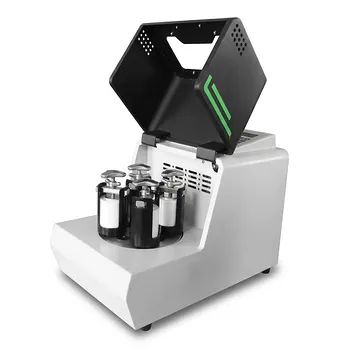
Miniature Planetary Ball Mill with Vacuum Grinding and High Efficiency for Laboratory Sample Preparation
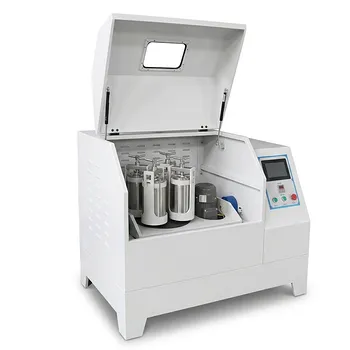
360° Rotating Omnidirectional Laboratory Planetary Ball Mill for Homogeneous Ultra-Fine Grinding and Mixing
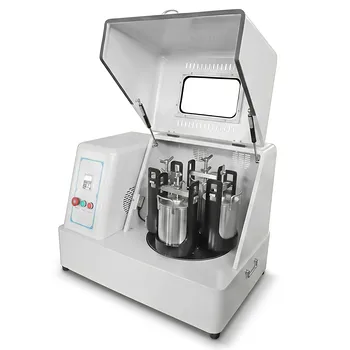
Vertical Square Planetary Ball Mill for Laboratory Sample Preparation and Nanoscale Grinding
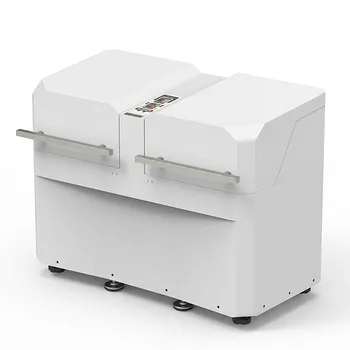
Dual Station Planetary Ball Mill 24L
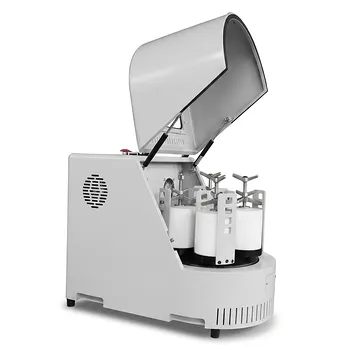
Vertical Semi Circular Planetary Ball Mill for Laboratory Precision Grinding
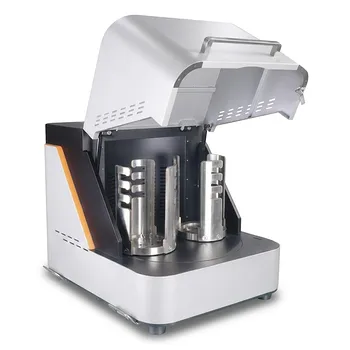
High Energy Laboratory Planetary Ball Mill for Nano Grinding and Colloidal Mixing of Hard and Brittle Materials
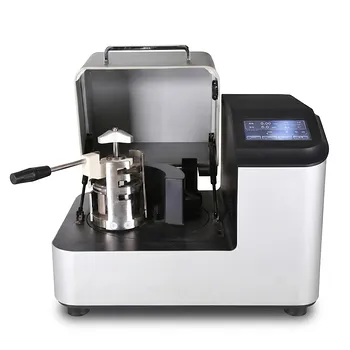
High Energy Laboratory Planetary Ball Mill for Nano Grinding and Material Science Sample Preparation
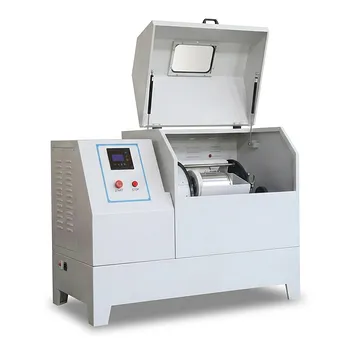
Heavy Duty Horizontal Planetary Ball Mill for Efficient Industrial Grinding and Sample Preparation

Vertical Production Planetary Ball Mill for High Throughput Powder Processing
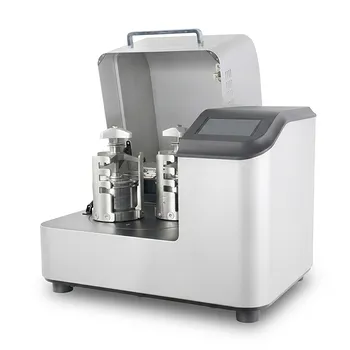
High Energy Planetary Ball Mill for Nano Scale Grinding and Mechanical Alloying
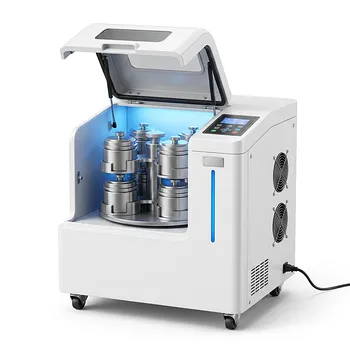
High Energy Omnidirectional Planetary Ball Mill 20L

High Energy Omnidirectional Planetary Ball Mill 16L
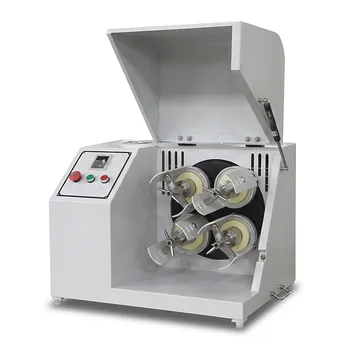
Horizontal Light Duty Planetary Ball Mill for Laboratory Sample Preparation
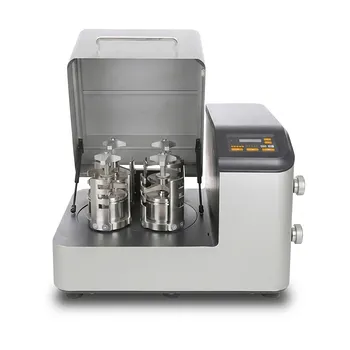
High Energy Planetary Ball Mill for Nano Scale Grinding and Colloidal Mixing in Material Science Research
8L Planetary Ball Mill for Laboratory Grinding and Sample Preparation
Planetary Ball Mill 12L
Multi-Platform Nanoscale High-Energy Vibratory Ball Mill

High Energy Hybrid Vibratory Ball Mill for Grinding Mixing and Cell Disruption
Single Tank High Energy Vibratory Ball Mill for Laboratory Grinding and Mixing