How does a laboratory manual hydraulic press contribute to copper electrode green compacts? Maximize Sample Density
Updated 5 months ago
A laboratory manual hydraulic press is the critical instrument for converting loose copper powder into a cohesive "green compact" through controlled uniaxial force. It provides the necessary pressure—typically ranging from 400 to 1000 MPa—to force copper particles into plastic deformation, eliminating internal voids and establishing the physical contact points required for later heat treatment. By precisely regulating this initial densification, the press determines the final electrode's structural integrity, porosity, and electrical conductivity.
The primary role of the hydraulic press is to establish the "physical foundation" of the electrode by maximizing particle-to-particle contact and green strength. This stage directly dictates the success of subsequent sintering by ensuring atomic diffusion can occur across a densified, uniform matrix.
The Mechanics of Powder Consolidation
Particle Rearrangement and Void Elimination
When copper powder is loaded into a die, it consists of loose particles separated by significant air gaps. The hydraulic press applies uniaxial pressure to force these particles to slide past one another and fill the largest voids.
This initial rearrangement is the first step in increasing the relative density of the green body. By minimizing the space between particles, the press ensures the resulting electrode has the structural consistency required for industrial or laboratory use.
Plastic Deformation and Mechanical Interlocking
As the manual press reaches higher pressure levels, the copper particles undergo plastic deformation. Because copper is a relatively soft and ductile metal, the particles flatten against each other under the intense load.
This deformation creates mechanical interlocking, where the particles physically hook into one another. This provides the "green strength" necessary for the compact to be handled and moved to a furnace without crumbling.
Establishing Sintering Preconditions
Maximizing Contact Area for Atomic Diffusion
The press is not just forming a shape; it is setting the stage for atomic diffusion. By forcing particles into close contact, the press expands the total surface area where individual copper atoms can migrate during the sintering process.
Without this high-pressure contact, the heat from the sintering furnace would be unable to bridge the gaps between particles. The hydraulic press effectively creates the physical bridges that allow the powder to eventually become a solid, monolithic piece of metal.
Controlling Initial Porosity and Density
The pressure applied by the press directly regulates the initial porosity of the green compact. Precision control allows the operator to determine how much empty space remains within the electrode structure.
This control is vital because the initial density determines the final part's shrinkage rate and compressive strength. A uniform density distribution, achieved through steady pressure application, prevents warping and internal cracks during the cooling phase of production.
Understanding the Trade-offs
Die Wall Friction and Density Gradients
One common challenge with manual uniaxial pressing is die wall friction. As the press applies downward force, friction between the powder and the mold walls can cause the pressure to dissipate.
This often results in a density gradient, where the top of the electrode is denser than the bottom. To mitigate this, lubricants are often used, or double-ended pressing techniques are employed to ensure the green compact is uniform throughout.
Over-Compaction and Lamination Defects
While high pressure is generally beneficial, exceeding the material's limits can lead to lamination or "capping." This occurs when internal stresses trapped during pressing cause the compact to split into layers upon being ejected from the die.
Finding the optimal pressure—typically between 400 and 1000 MPa for copper—is a balance between achieving maximum density and avoiding structural failure. The manual gauge on the press allows for the incremental adjustments needed to find this "sweet spot."
How to Apply This to Your Project
When using a laboratory hydraulic press for copper electrode formation, your pressure settings should align with your specific performance requirements.
- If your primary focus is Maximum Conductivity: Use higher pressures (near 800-1000 MPa) to maximize particle contact area and eliminate as many voids as possible before sintering.
- If your primary focus is Controlled Porosity: Use lower, precise pressure settings (around 400-500 MPa) to maintain a specific oil-impregnation rate or surface area for electrochemical reactions.
- If your primary focus is Dimensional Accuracy: Focus on the consistency of the pressure application and the use of precision stainless steel molds to minimize shrinkage during the final sintering stage.
By mastering the application of uniaxial pressure, you ensure that the transition from loose powder to a high-performance electrode is both predictable and repeatable.
Summary Table:
| Process Stage | Action Taken | Key Benefit for Electrodes |
|---|---|---|
| Rearrangement | Particles slide and fill gaps | Eliminates air voids and increases relative density |
| Deformation | Particles flatten under load | Creates mechanical interlocking and green strength |
| Consolidation | 400 - 1000 MPa pressure | Establishes the physical foundation for sintering |
| Density Control | Manual gauge adjustment | Prevents lamination and ensures uniform conductivity |
Optimize Your Electrode Formation with Precision Compaction
Achieving the perfect copper electrode requires more than just pressure; it requires precision. At [Your Brand Name], we provide complete laboratory sample preparation solutions tailored for material science. We specialize in high-performance powder processing and compaction equipment designed to ensure your green compacts meet the highest standards of structural integrity and conductivity.
Our extensive product range includes:
- Advanced Presses: Standard lab presses, XRF pellet presses, Cold/Warm Isostatic Presses (CIP/WIP), and vacuum hot presses.
- Powder Processing: Crushers (jaw/roll), liquid nitrogen cryogenic grinders, and various mills (planetary ball, jet, rotor).
- Sieving & Mixing: Vibratory sieve shakers, powder mixers, and defoaming mixers.
Whether you are a researcher aiming for maximum conductivity or a distributor seeking reliable OEM/ODM support, we have the expertise to enhance your laboratory's efficiency. Contact us today to discuss your specific application and find the ideal compaction solution!
References
- Jun Hong Chong, T. Joseph Sahaya Anand. Development and Characterization of Electrical Discharge Coating Electrode Through Powder Metallurgy Process. DOI: 10.37934/armne.29.1.104113
Mentioned Products
- Manual Tablet Press with Dual Scale Pressure Gauge for Pharmaceutical Food Chemical Laboratory Sample Preparation
- 6-Ton Small Single-Punch Tablet Press — Laboratory Powder & Granule Tableting Equipment / Tablet Forming Machine
- 5 Ton Single Punch Tablet Press Laboratory Small Batch Production
- 6 Ton Variable Frequency Single Punch Tablet Press
- Heavy-Duty Crusher for Laboratory and Industrial Material Size Reduction
People Also Ask
- What is the function of a laboratory press in Cr-Ti alloy evaluation? Quantify Fracture Stress & Strength
- What is the function of a laboratory press in assessing the hydrophobic performance of modified vermiculite fillers?
- What is the core function of a laboratory press in the forming of ceramic filter element green bodies? Maximize Density.
- What is the function of a laboratory press in the preparation of ceramic feed rods? Master Density and Precision
- Why is vacuum sealing and flexible packaging necessary for Aluminum Titanate powders during CIP? Ensure Peak Density

Tech Team · PowderPreparation
Last updated on May 14, 2026
Related Products
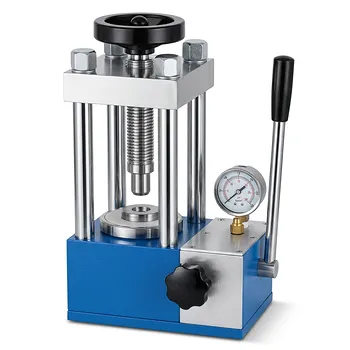
Manual Tablet Press with Dual Scale Pressure Gauge for Pharmaceutical Food Chemical Laboratory Sample Preparation
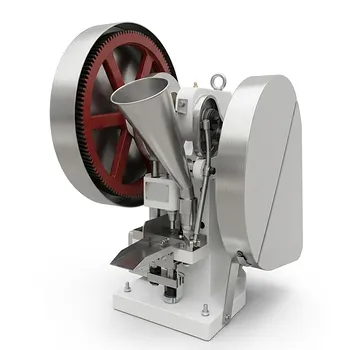
6-Ton Small Single-Punch Tablet Press — Laboratory Powder & Granule Tableting Equipment / Tablet Forming Machine
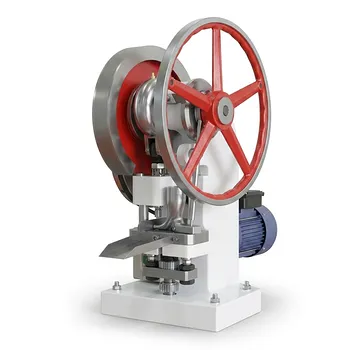
5 Ton Single Punch Tablet Press Laboratory Small Batch Production
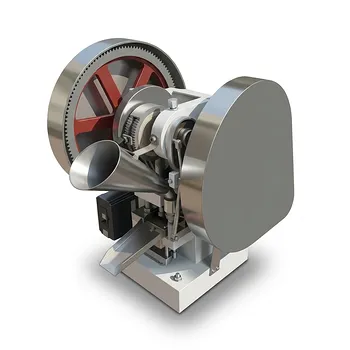
6 Ton Variable Frequency Single Punch Tablet Press
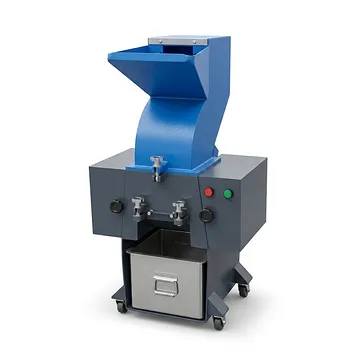
Heavy-Duty Crusher for Laboratory and Industrial Material Size Reduction
Hydraulic Double Shaft Disperser for High Viscosity Liquid Mixing and Dispersion

Automatic Vibrating Powder Feeder for Laboratory Material Processing Precision Vibratory Hopper Feeder for Granular and Powder Material Handling Industrial Grade Vibrating Tray Feeder for Consistent Material Sample Preparation
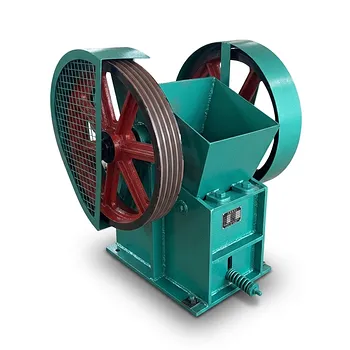
150x250mm Laboratory Jaw Crusher for Medium Hard Material Crushing and Sample Preparation