How does a laboratory hydraulic press impact the quality and performance of electrode sheets during cathode slurry preparation?
Updated 4 months ago
The laboratory hydraulic press is a critical tool for electrode densification.
By applying precise, high-pressure compaction to coated electrode sheets, the hydraulic press adjusts the material's porosity and density. This process strengthens the mechanical bond between the active material and the current collector while optimizing the internal particle arrangement to ensure efficient electron transport and structural integrity during battery cycling.
Controlled compaction transforms a loose coating into a high-performance electrode by minimizing contact resistance and maximizing volumetric energy density. This step is essential for ensuring that laboratory test results accurately reflect the intrinsic electrochemical potential of the cathode material.
Enhancing Mechanical and Electrical Connectivity
Optimizing Internal Particle Arrangement
The hydraulic press forces active material particles, conductive agents (like carbon black), and binders to rearrange into a more compact structure. This physical realignment eliminates large voids and ensures that conductive pathways are continuous throughout the electrode layer.
Strengthening Adhesion to the Current Collector
High-pressure pressing increases the contact area between the electrode film and the current collector, such as aluminum foil or nickel mesh. This mechanical interlocking prevents the active material from delaminating or "peeling" during the repeated expansion and contraction of charge-discharge cycles.
Reducing Contact Resistance
By squeezing particles closer together, the press significantly lowers the interface resistance between the active material and the conductive network. This reduction in internal resistance is vital for maintaining low polarization and high efficiency during rapid electron transfer.
Impact on Electrochemical Performance
Increasing Volumetric Energy Density
Compaction allows more active material to be packed into a specific volume, which directly raises the volumetric energy density of the battery. This is a key metric for determining how much energy a battery can store relative to its physical size.
Improving Rate Capability and Stability
Optimized porosity ensures that the electrode maintains structural integrity even during high-rate charging and discharging. The hydraulic press helps create a stable framework that supports efficient ion diffusion and electron collection, preventing premature capacity fade.
Ensuring Data Repeatability
In a research setting, the hydraulic press eliminates random interference caused by inconsistent porosity or thickness in hand-coated samples. Precise pressure control ensures that each electrode disc is uniform, making laboratory measurements with Vector Network Analyzers or cyclers more reliable.
Understanding the Trade-offs
The Risk of Over-Compaction
While high density is beneficial, excessive pressure can crush active material particles or destroy the pore network entirely. If porosity becomes too low, the liquid electrolyte cannot effectively penetrate the electrode, leading to high ion-transport resistance and poor performance.
Pressure Uniformity and Consistency
Manual hydraulic presses require careful operator technique to ensure repeatable results across different batches. Variations in applied load or "dwell time" (how long the pressure is held) can lead to subtle differences in electrode thickness, which may skew comparative research data.
How to Apply This to Your Project
When integrating a hydraulic press into your electrode fabrication workflow, your approach should vary based on your specific research objectives:
- If your primary focus is High-Rate Performance: Use moderate pressure to balance high electronic conductivity with sufficient residual porosity for fast electrolyte wetting and ion diffusion.
- If your primary focus is Maximum Energy Density: Apply higher, precise loads (such as 4.7 to 6 tons/cm²) to minimize thickness and maximize the packing fraction of the active material.
- If your primary focus is Cycle Life and Durability: Prioritize the mechanical bond to the current collector to prevent delamination, ensuring the pressure is high enough to embed the material into the collector surface.
Properly calibrated compaction is the bridge between a raw chemical mixture and a functional, high-performance battery component.
Summary Table:
| Key Factor | Impact of Proper Compaction | Risk of Over-Pressing |
|---|---|---|
| Energy Density | Increases volumetric energy storage | No benefit; potential foil damage |
| Connectivity | Lowers internal contact resistance | May crush active material particles |
| Adhesion | Prevents delamination from collector | Can cause electrode peeling or cracking |
| Porosity | Optimizes ion and electron transport | Blocks electrolyte penetration |
| Data Integrity | Ensures uniform, repeatable test samples | Skewed results due to structural damage |
Elevate Your Battery Research with Precision Compaction Solutions
High-performance energy storage starts with perfectly prepared materials. At [Your Brand Name], we provide complete laboratory sample preparation solutions for material science, specializing in high-precision powder processing and compaction equipment.
Whether you are refining cathode slurry or optimizing electrode density, our extensive product lines are designed to meet the rigorous demands of material research:
- Compaction Excellence: A full spectrum of hydraulic presses, including Cold/Warm Isostatic Presses (CIP/WIP), standard lab presses, XRF pellet presses, and vacuum hot presses for superior electrode densification.
- Material Processing: High-efficiency planetary ball mills, jet mills, and rotor mills, alongside jaw/roll crushers for precise particle size control.
- Consistency & Quality: Sieve shakers, powder mixers, and vacuum defoaming mixers to ensure uniform slurry and coating quality.
Ready to improve your battery's volumetric energy density and cycle life? Contact our experts today to find the ideal solution for your laboratory!
References
- Francisco J. Garcia‐Garcia, J. G. Lozano. Ultrafast Organic Emulsion‐Based Synthesis of High‐Performance Cathode Materials for Rechargeable Batteries. DOI: 10.1002/batt.202500213
Mentioned Products
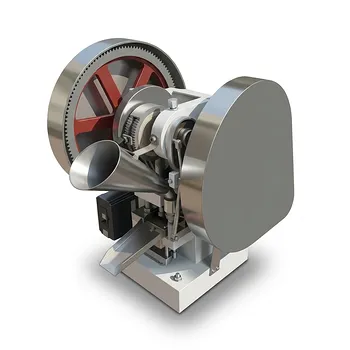
- 6-Ton Small Single-Punch Tablet Press — Laboratory Powder & Granule Tableting Equipment / Tablet Forming Machine
- 5 Ton Single Punch Tablet Press Laboratory Small Batch Production
- Manual Tablet Press with Dual Scale Pressure Gauge for Pharmaceutical Food Chemical Laboratory Sample Preparation
- 6 Ton Variable Frequency Single Punch Tablet Press
People Also Ask
- What is the function of a laboratory press in Cr-Ti alloy evaluation? Quantify Fracture Stress & Strength
- What is the function of a laboratory press in assessing the hydrophobic performance of modified vermiculite fillers?
- What is the core function of a laboratory press in the forming of ceramic filter element green bodies? Maximize Density.
- What is the function of a laboratory press in the preparation of ceramic feed rods? Master Density and Precision
- Why is vacuum sealing and flexible packaging necessary for Aluminum Titanate powders during CIP? Ensure Peak Density

Tech Team · PowderPreparation
Last updated on Jun 03, 2026
Related Products
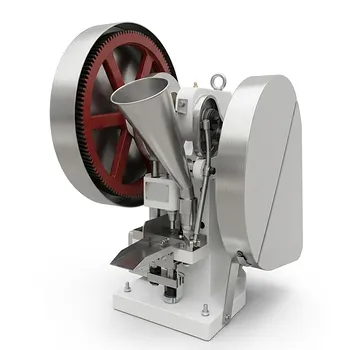
6-Ton Small Single-Punch Tablet Press — Laboratory Powder & Granule Tableting Equipment / Tablet Forming Machine
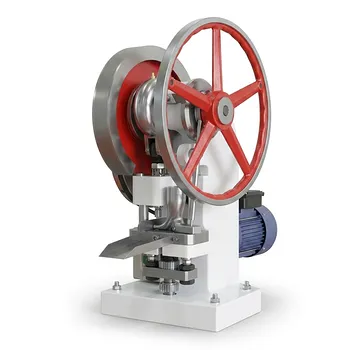
5 Ton Single Punch Tablet Press Laboratory Small Batch Production
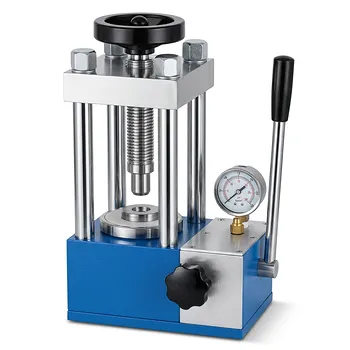
Manual Tablet Press with Dual Scale Pressure Gauge for Pharmaceutical Food Chemical Laboratory Sample Preparation