How does a laboratory hydraulic press ensure data reliability in XRF? Master Sandstone Pellet Preparation
Updated 4 months ago
Ensuring data reliability in XRF analysis begins with physical standardization. A laboratory hydraulic press achieves this by applying high pressure—typically around 15 tons—to sandstone powder mixed with a binder. This process transforms loose material into a dense pellet with a perfectly flat surface, uniform internal density, and constant diameter, which eliminates the physical variables that would otherwise distort X-ray measurements.
The central role of a laboratory hydraulic press is to eliminate "matrix effects" by converting irregular powder into a standardized solid disk. This ensures that any variations in X-ray signals are the result of the sample’s chemical composition rather than its physical texture or porosity.
Eliminating Physical Interference through Standardization
Achieving Surface Planarity
X-ray Fluorescence (XRF) analysis relies on the precise reflection and excitation of X-rays. A hydraulic press creates an extremely flat surface that ensures the angle of incidence remains constant across the entire sample.
This flatness prevents signal scattering caused by surface roughness. Without this uniformity, surface "peaks and valleys" would cause unpredictable X-ray reflections, leading to inaccurate readings of chemical concentrations.
Controlling Geometric Consistency
The use of specialized dies ensures that every sandstone pellet has a constant diameter and thickness (e.g., 32mm). This physical uniformity is critical for maintaining a fixed distance between the sample and the X-ray source.
Geometric consistency serves as a technical prerequisite for high-precision data. It ensures that the X-ray beam interacts with the same volume of material every time, which is essential for reproducible elemental analysis.
Optimizing the X-ray Interaction Path
Eliminating Voids and Porosity
Loose sandstone powder contains internal air pockets and voids that interrupt the X-ray beam's path. High-pressure molding eliminates these pores, creating a structurally dense pellet.
By removing these voids, the press ensures a consistent penetration path for the X-ray beam. This stability allows the detector to accurately measure the mass fractions of major oxides, such as silica and iron, without interference from internal gaps.
Mitigating Grain-Size Effects
Sandstone particles vary in size, which can lead to "shadowing" where larger grains block the signal from smaller ones. The hydraulic press compacts microcrystal powders into a dense, uniform structure.
This compaction minimizes grain-size effects and ensures consistent physical conditions during X-ray excitation. The result is a significant improvement in the quantitative accuracy of both major elements and rare-earth dopant concentrations.
Understanding the Trade-offs
Pressure and Pelleted Integrity
Applying the correct tonnage is a delicate balance. Insufficient pressure results in fragile pellets that may crumble, while excessive pressure can cause "lamination" or internal cracking in certain mineral types.
Binder-to-Sample Ratios
While binders like boric acid are necessary to create self-supporting pellets, they introduce their own chemical signature. The ratio must be strictly controlled to prevent the binder from diluting the sample signal or introducing its own "matrix effects."
Contamination Risks
Every contact point between the press, the die, and the sample is a potential source of contamination. To maintain data reliability, dies must be meticulously cleaned between samples to prevent cross-contamination of trace elements like Cr or Pb.
How to Apply This to Your Laboratory Workflow
Recommendations Based on Your Analytical Goals
- If your primary focus is Quantitative Accuracy: Prioritize high-pressure molding to eliminate internal voids and ensure a stable X-ray penetration path.
- If your primary focus is Reproducibility: Standardize your pressing time and pressure (e.g., 15 tons for 30 seconds) to ensure every pellet has identical density.
- If your primary focus is Trace Element Detection: Use high-purity binders and specialized dies to reduce scattering interference and background noise.
The laboratory hydraulic press is not merely a molding tool; it is the fundamental instrument for ensuring that XRF data reflects the true chemistry of the sandstone.
Summary Table:
| Factor | Technical Mechanism | Impact on Data Reliability |
|---|---|---|
| Surface Planarity | Creates an extremely flat sample face | Eliminates signal scattering and ensures constant reflection angles. |
| Geometric Consistency | Precision dies maintain fixed diameter/thickness | Ensures a constant distance between sample and X-ray source. |
| Porosity Removal | High pressure (15+ tons) eliminates air pockets | Provides a stable X-ray penetration path for accurate mass fraction measurement. |
| Grain-Size Uniformity | Compacts microcrystal powders | Minimizes "shadowing" effects, improving quantitative accuracy of trace elements. |
| Density Control | Standardized pressure and dwell time | Guarantees reproducibility across multiple sample batches. |
Elevate Your Material Analysis with Precision Sample Prep
High-quality XRF data starts with a perfect pellet. At KINTEK SOLUTION, we provide complete laboratory sample preparation solutions for material science, specializing in the precision powder processing and compaction equipment you need for reliable results.
Whether you are analyzing geological sandstone or advanced ceramics, our extensive line includes:
- Hydraulic Presses: XRF pellet presses, standard lab presses, hot presses, and Cold/Warm Isostatic Presses (CIP/WIP).
- Milling & Grinding: Planetary ball mills, jet mills, and liquid nitrogen cryogenic grinders.
- Sieving & Mixing: Vibratory sieve shakers, powder mixers, and centrifugal defoaming mixers.
Don’t let physical variables compromise your research. Contact our experts today to find the perfect pressing solution for your lab and ensure your data reflects the true chemistry of your materials.
References
- Eric Enzula Bayari, Jude Simons Bayor. Tamale sandstone petrology and engineering properties as suitable coarse aggregate in concrete production. DOI: 10.1007/s44288-025-00290-8
Mentioned Products
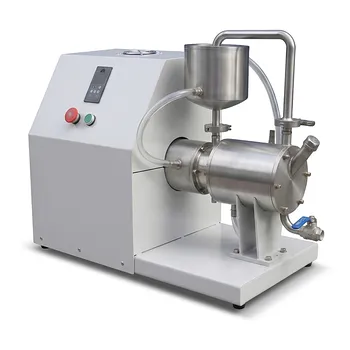
- Laboratory Small Horizontal Sand Mill for Nano Materials Wet Grinding
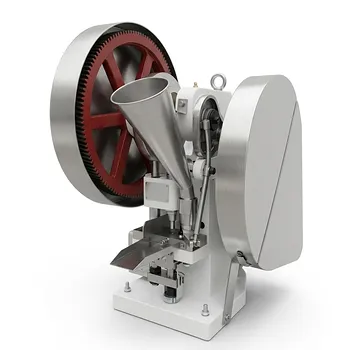
- 6-Ton Small Single-Punch Tablet Press — Laboratory Powder & Granule Tableting Equipment / Tablet Forming Machine
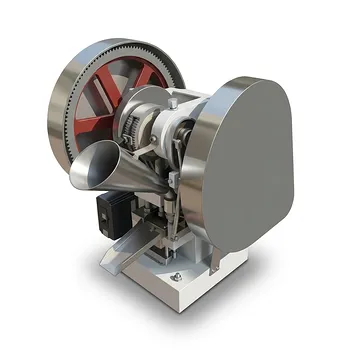
- 6 Ton Variable Frequency Single Punch Tablet Press
People Also Ask
- Why is a sand mill used to process solid carbon-forming agents like PPVA and PER? Enhance Dispersion & Flame Retardancy
- What role does a laboratory mill play in the study of lignite coal co-combustion? Optimizing Fuel Blends and Reactivity
- What is the function of a laboratory mill in Cassia tora L. seed analysis? Master Precision Thermal Data Prep.
- What is the purpose of using a laboratory mill to grind dried precipitates? Optimize TiO2/AuNRs Catalyst Homogeneity
- What function does a laboratory mill serve in corn starch saccharification experiments? Optimize Surface Area & Reactions

Tech Team · PowderPreparation
Last updated on Jun 03, 2026