How does a lab hot press with a precision manometer affect bio-based particleboard? Optimize Density & Strength
Updated 3 months ago
The integration of a precision manometer in a laboratory hot press is the primary factor governing the structural density and mechanical reliability of bio-based particleboard. By maintaining a controllable, constant pressure, the equipment ensures that loose biomass particles are forced to rearrange and compress into a cohesive matrix. This precision directly determines the final panel's compactness, bending strength, and resistance to internal failure.
The precision manometer allows for the exact calibration of force required to eliminate internal voids and facilitate optimal adhesive curing. This control transforms raw biomass into high-performance panels by ensuring the material reaches its target density and structural equilibrium.
The Impact of Pressure Precision on Physical Integrity
Eliminating Internal Voids and Micro-pores
The precision manometer ensures that the press applies enough force to eliminate density gradients and air pockets within the biomass. By reducing these internal voids, the raw material particles are forced to bond tightly, resulting in a pellet or board density that approaches the true density of the constituent materials.
Achieving Target Thickness and Compactness
Precise pressure control is the core driver for meeting specific engineering specifications for thickness and density. This accuracy is essential for defining the board's modulus of rupture and overall bending strength, which are critical for construction-grade panels.
Uniformity Across the Material Surface
A high-precision press ensures that the axial pressure is distributed evenly across the mold surface. This uniformity prevents localized weak spots, ensuring the entire panel exhibits consistent mechanical and vibrational characteristics throughout its structure.
Synergistic Effects of Pressure and Thermal Energy
Facilitating Adhesive Flow and Curing
While the heat triggers chemical reactions, the pressure provided by the hot press enables the adhesive to flow adequately between wood particles. This ensures a tight interfacial bond between the polymer matrix and the reinforcement fibers, such as flax or hemp.
Promoting Molecular Cross-Linking
The combination of constant mechanical pressure and high temperatures facilitates cross-linking reactions between bio-binders and fibers. For example, specific pressures enhance the adhesive properties of components like galactose and rhamnose, or the bonding between lignosulfonate and isocyanates.
Reducing Pressing Factors and Increasing Efficiency
High-precision control allows researchers to achieve low pressing factors, sometimes as short as 7.5 s/mm. This efficiency is achieved because the manometer allows for the exact pressure curves needed to simulate industrial production while maximizing internal bond strength.
Understanding the Trade-offs and Technical Limitations
Pressure Limits vs. Fiber Degradation
While high pressure increases density, exceeding the structural limits of the biomass can crush individual fibers. This degradation can lead to a decrease in the modulus of elasticity, making the board brittle despite its high density.
The Complexity of Degassing
Applying constant, high pressure without accounting for gas escape can trap steam and air within the board. If the pressure is released too quickly or maintained too rigidly without a "breathing" phase, the finished board may suffer from internal delamination or "blowouts."
Calibration and Maintenance Requirements
Precision manometers require frequent calibration to remain accurate under high-heat conditions. Even a slight drift in pressure readings can lead to inconsistent experimental results, undermining the repeatability of bio-composite research.
How to Optimize Your Pressing Strategy
Making the Right Choice for Your Goal
- If your primary focus is Maximum Structural Strength: Use the manometer to maintain the highest recommended unit pressure (e.g., 3.0 N/mm²) to ensure total fiber rearrangement and eliminate micro-pores.
- If your primary focus is Adhesive Efficiency: Balance the pressure to ensure resin flow without squeezing the binder out of the particle matrix before curing is complete.
- If your primary focus is Industrial Scalability: Use the precision manometer to replicate the specific pressure curves and closure times used in continuous industrial hot presses.
Mastering the precise application of pressure through high-accuracy instrumentation is the definitive step in transitioning bio-based materials from laboratory concepts to viable industrial solutions.
Summary Table:
| Key Feature | Impact on Bio-based Particleboard | Primary Benefit |
|---|---|---|
| Void Elimination | Removes density gradients and air pockets | Approximates true material density |
| Pressure Uniformity | Even distribution across mold surface | Consistent mechanical & vibrational properties |
| Adhesive Control | Facilitates optimal flow and cross-linking | Enhanced internal bond strength |
| Precision Manometry | Replicates industrial pressure curves | Reliable scalability and research repeatability |
| Thickness Accuracy | Regulates axial pressure and compaction | Stable Modulus of Rupture (MOR) |
Elevate Your Material Research with Precision Pressing Solutions
Achieving the perfect balance of density and structural integrity in bio-composites requires equipment that delivers absolute control. At [Company Name], we provide complete laboratory sample preparation solutions for material science, specializing in high-performance powder processing and compaction equipment.
Whether you are developing next-generation bio-based particleboards or advanced ceramics, our extensive range is designed to meet your exact specifications:
- Advanced Pressing: A full spectrum of hydraulic presses including Hot Presses, Vacuum Hot Presses, Cold/Warm Isostatic Presses (CIP/WIP), and standard lab or XRF pellet presses.
- Material Preparation: Industrial-grade crushers (jaw/roll), cryogenic grinders, and a variety of mills (planetary ball, jet, sand, rotor) to refine your raw biomass.
- Classification & Mixing: Precision sieve shakers (vibratory/air-jet) and high-efficiency powder and defoaming mixers for uniform material distribution.
Ready to optimize your laboratory workflow? Contact our experts today to find the ideal equipment for your research goals and experience the precision that drives innovation.
References
- Janis Andris Krumins, Dagnija Blumberga. Particle Boards from Forest Residues and Bio-Based Adhesive. DOI: 10.3390/buildings14020462
Mentioned Products
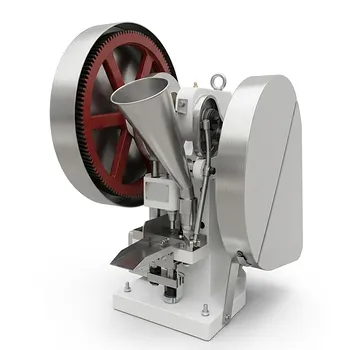
- 6-Ton Small Single-Punch Tablet Press — Laboratory Powder & Granule Tableting Equipment / Tablet Forming Machine
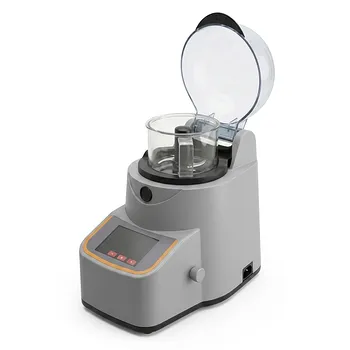
- Industrial Knife Mill for Food and Biological Sample Preparation High Speed Laboratory Homogenizer
People Also Ask
- What is the function of a laboratory press in Cr-Ti alloy evaluation? Quantify Fracture Stress & Strength
- What is the function of a laboratory press in assessing the hydrophobic performance of modified vermiculite fillers?
- What is the core function of a laboratory press in the forming of ceramic filter element green bodies? Maximize Density.
- What is the function of a laboratory press in the preparation of ceramic feed rods? Master Density and Precision
- Why is vacuum sealing and flexible packaging necessary for Aluminum Titanate powders during CIP? Ensure Peak Density

Tech Team · PowderPreparation
Last updated on Jun 03, 2026