How does a lab heating press contribute to natural rubber specimen prep? Ensure Precise Vulcanization & Uniformity
Updated 4 months ago
A laboratory heating hydraulic press is the primary instrument for transforming raw rubber compounds into standardized, high-integrity test specimens. It achieves this by simultaneously applying precise molding pressure and controlled vulcanization temperatures to ensure full chemical cross-linking and structural uniformity.
The laboratory press serves as the bridge between raw material and finished specimen, using heat and pressure to eliminate internal defects and finalize the rubber's molecular structure. This controlled environment is essential for obtaining accurate, repeatable data regarding the composite's mechanical performance.
Facilitating the Vulcanization Process
Precise Temperature Compensation
The heating functionality of the press provides the thermal energy required to trigger the vulcanization reaction. By maintaining a stable, high-temperature environment (often around 150°C), the press facilitates the chemical cross-linking of the rubber polymer chains.
Achieving Complete Chemical Cure
The press ensures that the rubber compound reaches its optimum cure time under consistent conditions. This results in finished sheet or block samples that have transitioned from a plastic state to a stable, elastic composite.
Ensuring Structural Integrity and Density
Elimination of Internal Voids
High hydraulic pressure is critical for expelling air bubbles trapped within the compound during the mixing phase. By forcing these gases out, the press reduces porosity, which prevents the specimens from cracking or deforming during testing.
Reducing Density Gradients
The application of stable pressure—sometimes reaching loads up to 120 MPa for specific mixtures—forces particles to overcome friction and rearrange. This ensures a uniform density throughout the specimen, preventing weak spots that could lead to "premature failure" during mechanical analysis.
Interstitial Filling
In natural rubber composites involving fillers or fibers, the press ensures the rubber matrix fully occupies the interstitial spaces between particles. This maximum contact area is the physical foundation necessary for strength development and effective mass diffusion.
Defining Geometric Precision
Mold Cavity Conformance
The hydraulic force ensures the rubber compound completely fills every corner of the steel mold. This provides the specimen with its final geometry, ensuring that thickness and dimensions are consistent across a series of tests.
Standardized Shape Cutting
Beyond molding, hydraulic presses are often used with standardized cutting dies to punch out specific shapes, such as dumbbell specimens required by ISO standards. This high-pressure action ensures clean, burr-free edges, which are vital for reliable tensile strength and Young's modulus data.
Understanding the Trade-offs and Pitfalls
Pressure and Temperature Imbalance
Excessive temperature can cause "scorching" or thermal degradation of the natural rubber before it properly fills the mold. Conversely, insufficient pressure may lead to internal pores, resulting in data that underestimates the material's true strength.
Post-Molding Deformation
If the specimen is removed from the press too quickly or cooled unevenly, it may experience internal stresses. These stresses can cause the specimen to warp, compromising its geometric precision and the validity of subsequent mechanical tests.
Optimizing Your Specimen Preparation
To achieve the most reliable results for your rubber composite testing, tailor your press parameters to your specific research goals.
- If your primary focus is accurate tensile and modulus data: Prioritize the use of precision cutting dies and consistent pressure-holding to ensure burr-free edges and uniform density.
- If your primary focus is chemical property analysis: Focus on the precise calibration of the heating plates to ensure the vulcanization reaction is consistent across all samples.
- If your primary focus is fiber-reinforced composites: Increase the molding pressure to ensure the rubber matrix effectively encapsulates the fibers and eliminates air pockets at the interface.
The laboratory heating hydraulic press remains the cornerstone of rubber research by providing the controlled environment necessary to turn a raw mixture into a scientifically valid test subject.
Summary Table:
| Key Function | Contribution to Specimen Quality | Critical Parameters |
|---|---|---|
| Vulcanization | Triggers chemical cross-linking for elastic stability | Temperature (e.g., 150°C) |
| Void Elimination | Expels trapped air to prevent porosity and cracking | High Hydraulic Pressure |
| Density Uniformity | Forces particle rearrangement for consistent mass | Stable Load Application |
| Geometric Precision | Ensures full mold conformance and clean die cutting | Precise Mold Design |
Optimize Your Rubber Composite Research with Precision Equipment
Achieving reliable, repeatable data starts with perfect specimen preparation. [Brand Name] provides complete laboratory sample preparation solutions for material science, specializing in advanced powder processing and compaction technology.
Our extensive product line is designed to help you achieve perfect vulcanization and structural integrity:
- Advanced Hydraulic Presses: A full spectrum including Hot Presses, Vacuum Hot Presses, Standard Lab Presses, and Isostatic Presses (CIP/WIP).
- Sample Preparation: High-performance crushers (jaw/roll), liquid nitrogen cryogenic grinders, and versatile mills (planetary ball, jet, and rotor).
- Mixing & Sizing: Precision powder mixers, defoaming mixers, and vibratory/air-jet sieve shakers for particle consistency.
Whether you are focusing on fiber-reinforced composites or chemical property analysis, our equipment ensures your specimens meet the most rigorous ISO standards.
Contact us today to find the ideal solution for your laboratory and elevate your material testing accuracy!
References
- Dener da Silva Souza, Renivaldo José dos Santos. Recycling of Post-Consumer Silica Gel Desiccants as Reinforcing Filler in Natural Rubber Composites: The Effect of Coupling Agents and Comparison with Commercial Silicas. DOI: 10.3390/recycling10050184
Mentioned Products
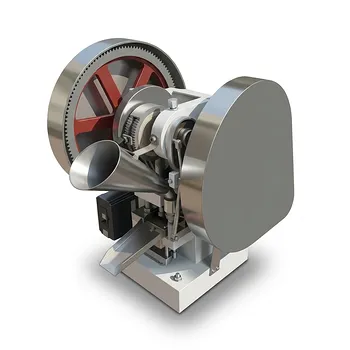
- 5 Ton Single Punch Tablet Press Laboratory Small Batch Production
- 6-Ton Small Single-Punch Tablet Press — Laboratory Powder & Granule Tableting Equipment / Tablet Forming Machine
- Manual Tablet Press with Dual Scale Pressure Gauge for Pharmaceutical Food Chemical Laboratory Sample Preparation
- 6 Ton Variable Frequency Single Punch Tablet Press
People Also Ask
- What is the function of a laboratory press in assessing the hydrophobic performance of modified vermiculite fillers?
- What is the core function of a laboratory press in the forming of ceramic filter element green bodies? Maximize Density.
- What is the function of a laboratory press in Cr-Ti alloy evaluation? Quantify Fracture Stress & Strength
- Why is vacuum sealing and flexible packaging necessary for Aluminum Titanate powders during CIP? Ensure Peak Density
- Why is a laboratory hydraulic press required for FT-IR KBr pellets? Achieve Precise Sample Clarity for ZrC–SiC Analysis

Tech Team · PowderPreparation
Last updated on May 14, 2026
Related Products
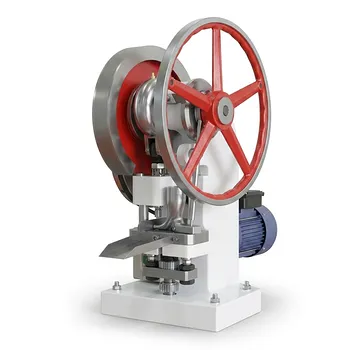
5 Ton Single Punch Tablet Press Laboratory Small Batch Production
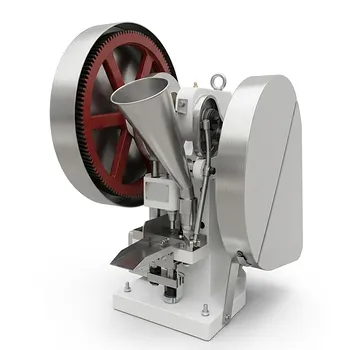
6-Ton Small Single-Punch Tablet Press — Laboratory Powder & Granule Tableting Equipment / Tablet Forming Machine
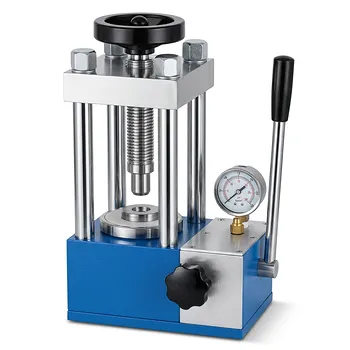
Manual Tablet Press with Dual Scale Pressure Gauge for Pharmaceutical Food Chemical Laboratory Sample Preparation