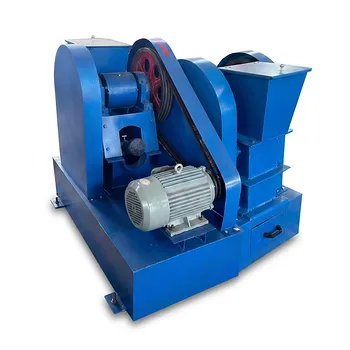
How does a lab hydraulic press contribute to the formation of high-density wollastonite ceramic green compacts?
Updated 4 months ago
The application of high-precision uniaxial pressure is the fundamental mechanism by which a lab hydraulic press transforms loose wollastonite precursors into high-density green compacts. By applying a specific pressure, often around 95 MPa, the press forces particles to rearrange and undergo plastic deformation, effectively extruding trapped air and reducing internal voids to create a structurally sound cylindrical specimen.
A laboratory hydraulic press provides the mechanical energy required to overcome inter-particle friction, forcing powders into a state of high relative density. This process creates the necessary physical contact points and structural integrity—known as green strength—required for the ceramic to survive the high-temperature sintering process without deforming or cracking.
The Mechanics of Powder Compaction
The transition from a loose powder mixture (such as cement kiln dust and rice husk ash) to a solid "green" body is driven by two primary mechanical phases controlled by the press.
Particle Rearrangement and Plastic Deformation
Under an initial load, typically reaching 95 MPa in wollastonite applications, the loose particles slide past one another to fill large macro-pores. As the pressure increases, the press forces the particles to undergo plastic deformation, which increases the contact area between individual grains and creates a more cohesive internal structure.
Air Extrusion and Void Reduction
The uniaxial force of the press effectively extrudes trapped air from the powder bed. By minimizing these internal voids, the press ensures the resulting compact achieves a high relative density, which is critical for preventing structural failure during the subsequent firing stages.
Ensuring Structural Integrity and Precision
The role of the hydraulic press extends beyond simple force; it provides the controlled environment necessary for uniform material properties.
Mechanical Interlocking and Green Strength
As the press applies axial pressure, often using precision stainless steel molds, the particles experience mechanical interlocking. This physical bonding provides the "green strength" necessary for the compact to be handled, moved, or even machined before it is ever placed in a kiln.
Uniform Density Distribution
Advanced lab presses offer pressure-holding functions that maintain a constant load for a set duration. This stability minimizes internal density gradients, ensuring that the top and bottom of the ceramic disc have the same density, which prevents warping during the sintering phase.
Preparing the Foundation for Sintering
The quality of the green compact produced by the press directly dictates the performance of the final sintered ceramic.
Minimizing Sintering Shrinkage
A high-density green body produced by a hydraulic press reduces the total volume shrinkage that occurs during firing. By packing particles tightly from the start, the press limits the distance atoms must travel during diffusion, resulting in a more dimensionally stable final product.
Preventing Micro-cracks and Defects
By ensuring a uniform distribution of particles and eliminating large pores, the hydraulic press prevents the formation of micro-cracks or physical defects. In technical ceramics, this is vital for maintaining high dielectric strength and minimizing loss caused by internal irregularities.
Understanding the Trade-offs
While high pressure is beneficial, it must be carefully calibrated to avoid compromising the material.
- Pressure Limitations: Exceeding the optimal pressure (e.g., going far beyond 95 MPa) can lead to lamination cracks, where the compact splits into layers upon release due to stored elastic energy.
- Friction Effects: Pressure is not always transmitted perfectly through the powder; friction between the powder and the mold walls can lead to non-uniform density, where the center of the compact is less dense than the outer edges.
- Binder Requirements: If the powder is too dry or lacks plastic precursors, even high pressure may fail to create a stable compact, necessitating the use of specialized chemical binders to aid the press in achieving green strength.
How to Apply This to Your Project
To achieve the highest density for your wollastonite ceramic compacts, your approach should vary based on your technical requirements.
- If your primary focus is Maximum Density: Utilize a press capable of maintaining a specific pressure (such as 95 MPa) with a dedicated "dwell time" or pressure-holding phase to allow particles to settle fully.
- If your primary focus is Dimensional Precision: Ensure you are using high-tolerance stainless steel molds to minimize lateral expansion when the axial pressure is released.
- If your primary focus is Post-Sintering Strength: Prioritize the elimination of internal voids by ensuring the powder is finely ground and evenly distributed in the mold before applying the hydraulic load.
The laboratory hydraulic press is not merely a tool for shaping; it is the essential instrument for establishing the physical conditions required for successful ceramic densification.
Summary Table:
| Compaction Phase | Mechanical Mechanism | Benefit to Wollastonite Compact |
|---|---|---|
| Initial Loading | Uniaxial Pressure (95 MPa) | Rearranges particles to fill large macro-pores. |
| Compression | Plastic Deformation | Increases grain contact area for higher cohesion. |
| De-airing | Air Extrusion | Eliminates internal voids to prevent sintering failure. |
| Pressure Holding | Constant Load Stability | Minimizes density gradients to prevent warping. |
Elevate Your Material Science Research with Precision Compaction
Achieving the perfect green strength and high relative density for wollastonite ceramics requires specialized equipment. At [Company Name], we provide complete laboratory sample preparation solutions tailored for material science.
Our extensive range includes:
- Powder Processing: Crushers (jaw/roll), liquid nitrogen cryogenic grinders, and mills (planetary ball, jet, sand/bead, disc, rotor).
- Sizing & Mixing: Sieve shakers (vibratory/air-jet) and high-performance powder/defoaming mixers.
- Compaction Equipment: A full spectrum of hydraulic presses, including Cold/Warm Isostatic Presses (CIP/WIP), standard lab presses, XRF pellet presses, and vacuum hot presses.
Whether you need to minimize sintering shrinkage or prevent micro-cracks in technical ceramics, our expert team is here to help. Contact us today to find your ideal laboratory solution!
References
- Emad M.M. Ewais, H. El-Didamony. Cement kiln dust/rice husk ash as a low temperature route for wollastonite processing. DOI: 10.14382/epitoanyag-jsbcm.2014.14
Mentioned Products
- 6-Ton Small Single-Punch Tablet Press — Laboratory Powder & Granule Tableting Equipment / Tablet Forming Machine
- Manual Tablet Press with Dual Scale Pressure Gauge for Pharmaceutical Food Chemical Laboratory Sample Preparation
- 6 Ton Variable Frequency Single Punch Tablet Press
- 5 Ton Single Punch Tablet Press Laboratory Small Batch Production
- Custom Raised Height Laboratory Jaw Crusher for Precision Sample Preparation in Material Science
People Also Ask
- What is the function of a laboratory press in Cr-Ti alloy evaluation? Quantify Fracture Stress & Strength
- What is the function of a laboratory press in assessing the hydrophobic performance of modified vermiculite fillers?
- What is the core function of a laboratory press in the forming of ceramic filter element green bodies? Maximize Density.
- What is the function of a laboratory press in the preparation of ceramic feed rods? Master Density and Precision
- Why is vacuum sealing and flexible packaging necessary for Aluminum Titanate powders during CIP? Ensure Peak Density

Tech Team · PowderPreparation
Last updated on Jun 03, 2026
Related Products
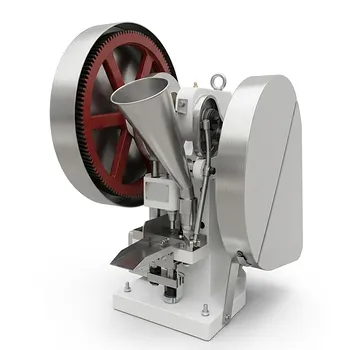
6-Ton Small Single-Punch Tablet Press — Laboratory Powder & Granule Tableting Equipment / Tablet Forming Machine
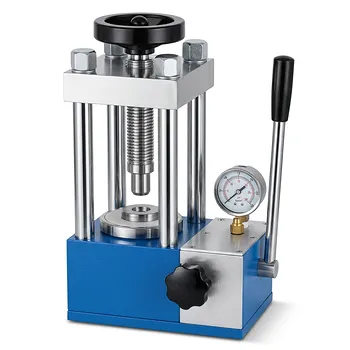
Manual Tablet Press with Dual Scale Pressure Gauge for Pharmaceutical Food Chemical Laboratory Sample Preparation
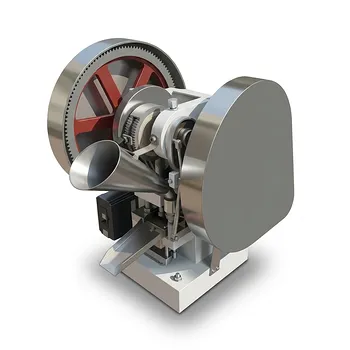
6 Ton Variable Frequency Single Punch Tablet Press
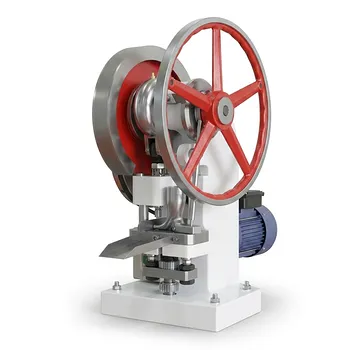
5 Ton Single Punch Tablet Press Laboratory Small Batch Production
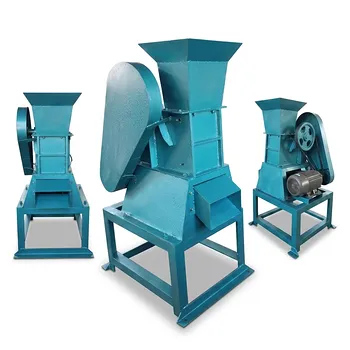
Custom Raised Height Laboratory Jaw Crusher for Precision Sample Preparation in Material Science
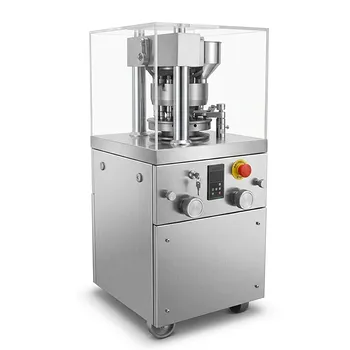
Ordinary Type Rotary Tablet Press for Pharmaceutical Chemical Food Electronic Industries