How does a laboratory hydraulic press facilitate DAC loading? Precision Control for Advanced High-Pressure Research
Updated 4 months ago
The integration of a high-precision laboratory hydraulic press is critical for achieving the incremental pressure control necessary in Diamond Anvil Cell (DAC) experiments. These presses facilitate the loading process by applying constant, controllable loads through remote-controlled mechanical devices. This precision allows researchers to adjust the sample state in minute increments, providing the necessary equilibrium time required to observe delicate material behaviors such as phase transitions or amorphization.
A high-precision hydraulic press transforms DAC loading from a manual, coarse adjustment into a refined, stable process. By providing granular control over force application, it ensures researchers can capture the exact moment of structural change in materials under extreme pressure.
Precision Control in Pressure Application
Achieving Equilibrium in Small Steps
The primary function of a high-precision press in DAC experiments is the ability to apply incremental pressure updates. This is essential for materials like mullite, which require sufficient time to reach equilibrium near their phase transition points.
Capturing Phase Transition Dynamics
Without the steady application of force provided by a hydraulic system, researchers risk "overshooting" critical pressure thresholds. Precise control enables the accurate mapping of pressure-driven amorphization and other subtle structural shifts that occur within the cell.
Remote Operation and Safety
By using a remote-controlled mechanical loading device, researchers can manipulate the DAC from a distance or within a shielded environment. This setup maintains a constant load without the fluctuations often introduced by manual tightening, ensuring experimental repeatability.
Preparing the Sample Foundation
Optimizing Initial Sample Density
Before final loading, the press is often used to pre-compress powders into dense green bodies at stable pressures (typically around 5 MPa). This process increases the initial packing density, which is a prerequisite for a successful high-pressure experiment.
Ensuring Geometric Precision
The press helps maintain a strict height consistency, often within a tolerance of 0.1 mm. This structural integrity ensures that the sample sits correctly within the DAC gasket, preventing uneven stress distribution during the loading phase.
Reducing Porosity Through High-Pressure Molding
At higher pressures—up to 120 MPa—the hydraulic press forces particles to overcome friction and rearrange. This significantly reduces large internal pores and increases the contact area between particles, creating the physical foundation for mass diffusion.
Understanding the Trade-offs
Speed vs. Precision
While high-precision hydraulic presses offer unmatched control, the process of incremental loading is time-intensive. Researchers must balance the need for high-resolution data with the logistical constraints of long-duration experiments.
System Complexity and Maintenance
Remote-controlled hydraulic systems are more complex than manual loading screws. This complexity requires regular calibration and maintenance of the hydraulic fluid and mechanical linkages to prevent drift during long-term pressure holds.
Sensitivity to Temperature
Hydraulic systems can be sensitive to environmental temperature fluctuations, which may affect the fluid density and, consequently, the applied load. In high-precision DAC work, maintaining a stable thermal environment for the press is often as important as the press itself.
How to Apply This to Your Research
When selecting or operating a laboratory hydraulic press for DAC experiments, your approach should align with your specific material goals.
- If your primary focus is observing phase transitions: Prioritize a system with a high-resolution, remote-controlled mechanical interface to ensure you can apply the smallest possible pressure increments.
- If your primary focus is sample preparation and density: Focus on the press's ability to maintain a stable, lower-range pressure (approx. 5 MPa) with high geometric tolerance (0.1 mm) for creating consistent green bodies.
- If your primary focus is reducing sample porosity: Ensure your hydraulic press is rated for higher molding pressures (up to 120 MPa) to facilitate particle rearrangement before the final sintering or loading phase.
The transition from manual force to high-precision hydraulic loading is the most effective way to ensure the integrity and reproducibility of extreme-pressure data.
Summary Table:
| Feature | Role in DAC Loading | Key Impact |
|---|---|---|
| Incremental Control | Precise force application | Captures delicate phase transition dynamics |
| Sample Density | Pre-compression (5-120 MPa) | Reduces porosity and improves mass diffusion |
| Geometric Precision | Strict height consistency | Maintains 0.1 mm tolerance for gasket stability |
| Remote Operation | Shielded mechanical loading | Ensures researcher safety and load stability |
| Equilibrium Management | Steady pressure holds | Allows materials time to reach structural stability |
Elevate Your Material Research with Precision Engineering
Achieving success in extreme-pressure experiments requires equipment that offers more than just force—it requires absolute control. At our company, we provide complete laboratory sample preparation solutions tailored for material science. Whether you are performing delicate Diamond Anvil Cell (DAC) loading or preparing dense green bodies for sintering, our equipment is designed to ensure the integrity and reproducibility of your data.
Our Specialized Product Range Includes:
- Advanced Hydraulic Presses: Cold/Warm Isostatic Presses (CIP/WIP), standard lab presses, XRF pellet presses, hot presses, and vacuum hot presses.
- Powder Processing Equipment: Crushers (jaw/roll), liquid nitrogen cryogenic grinders, and high-performance mills (planetary ball, jet, sand/bead, disc, rotor).
- Characterization & Mixing: Sieve shakers (vibratory/air-jet), powder mixers, and vacuum defoaming mixers.
Don't let manual adjustments compromise your research precision. Contact us today to find the perfect solution for your lab and see how our expertise in powder processing and compaction can transform your experimental outcomes.
References
- Patricia Kalita. High Pressure Behavior of Mullite-Type Oxides: Phase Transitions, Amorphization, Negative Linear Compressibility and Microstructural Implications. DOI: 10.34917/7645928
Mentioned Products
- 6-Ton Small Single-Punch Tablet Press — Laboratory Powder & Granule Tableting Equipment / Tablet Forming Machine
- Manual Tablet Press with Dual Scale Pressure Gauge for Pharmaceutical Food Chemical Laboratory Sample Preparation
- 5 Ton Single Punch Tablet Press Laboratory Small Batch Production
- 6 Ton Variable Frequency Single Punch Tablet Press
- Laboratory Ultrafine Impact and Airflow Grinder for Precise Particle Size Control
People Also Ask
- What is the function of a laboratory press in Cr-Ti alloy evaluation? Quantify Fracture Stress & Strength
- What is the function of a laboratory press in assessing the hydrophobic performance of modified vermiculite fillers?
- What is the core function of a laboratory press in the forming of ceramic filter element green bodies? Maximize Density.
- What is the function of a laboratory press in the preparation of ceramic feed rods? Master Density and Precision
- Why is vacuum sealing and flexible packaging necessary for Aluminum Titanate powders during CIP? Ensure Peak Density

Tech Team · PowderPreparation
Last updated on May 14, 2026
Related Products
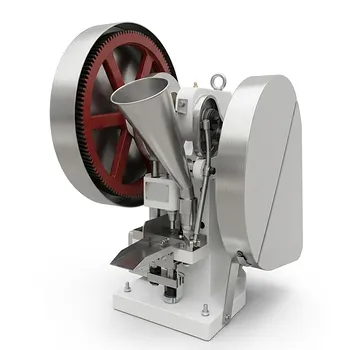
6-Ton Small Single-Punch Tablet Press — Laboratory Powder & Granule Tableting Equipment / Tablet Forming Machine
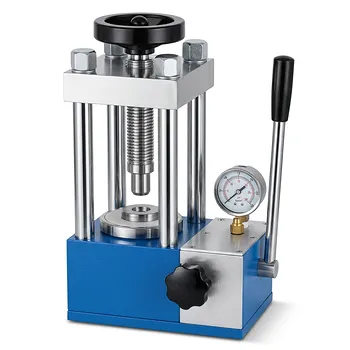
Manual Tablet Press with Dual Scale Pressure Gauge for Pharmaceutical Food Chemical Laboratory Sample Preparation
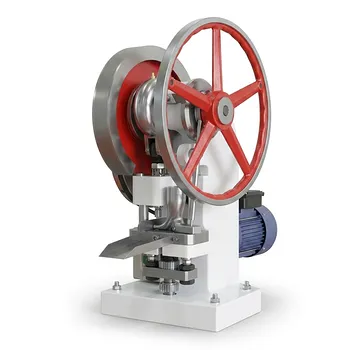
5 Ton Single Punch Tablet Press Laboratory Small Batch Production
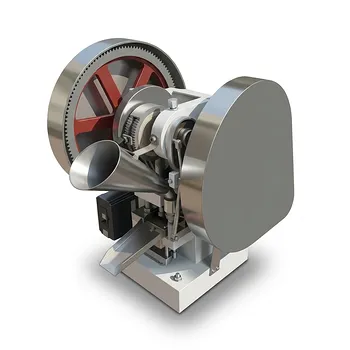
6 Ton Variable Frequency Single Punch Tablet Press
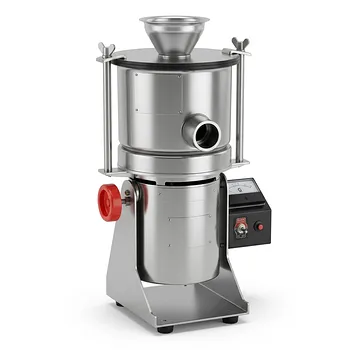
Laboratory Ultrafine Impact and Airflow Grinder for Precise Particle Size Control
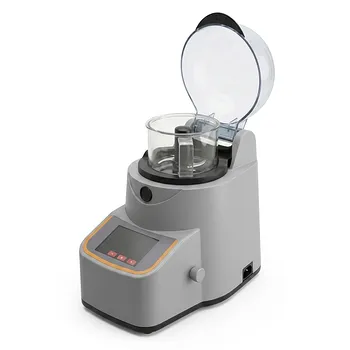
Industrial Knife Mill for Food and Biological Sample Preparation High Speed Laboratory Homogenizer
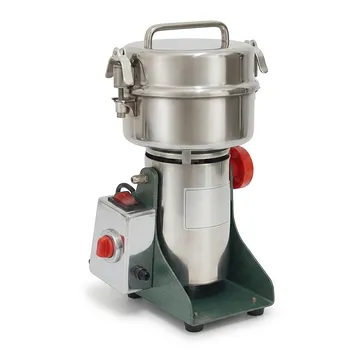
Small High Speed Grinder for Laboratory Sample Preparation
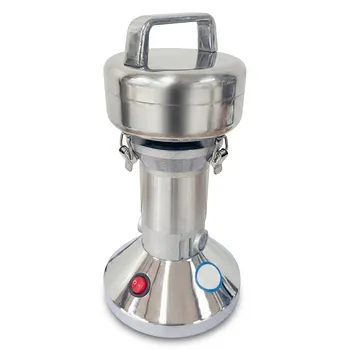
Small Trace Sample High Speed Pulverizer Grinder Laboratory Powder Mill
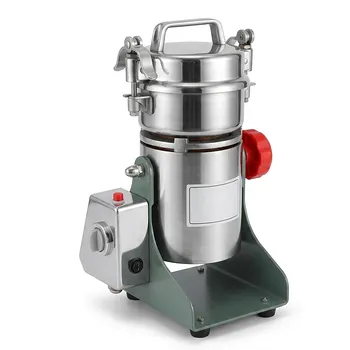
High Speed Swing Type Laboratory Pulverizer for Fine Powder Grinding and Sample Preparation
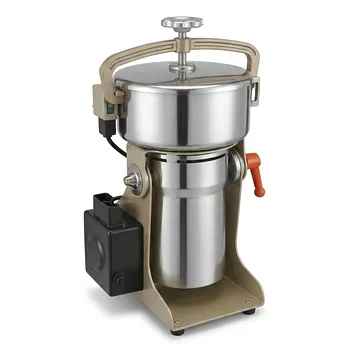
Multifunctional High Efficiency High Speed Laboratory Grinder
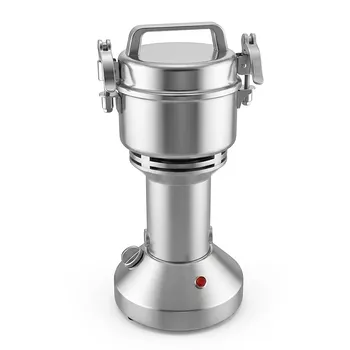
Small High Speed Upright Grinder for Laboratory Sample Preparation

Automatic Vibrating Powder Feeder for Laboratory Material Processing Precision Vibratory Hopper Feeder for Granular and Powder Material Handling Industrial Grade Vibrating Tray Feeder for Consistent Material Sample Preparation
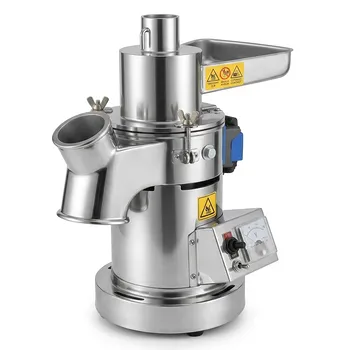
Continuous Feeding Grinder High Efficiency Pulverizer for Lab Sample Preparation
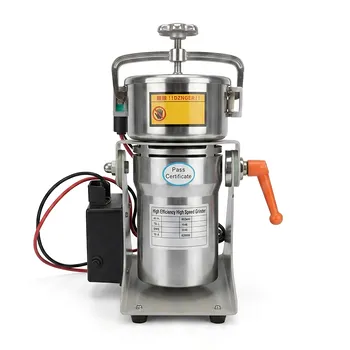
High Efficiency High Speed Grinder Laboratory Mill 1300W 25000rpm