How does a Cold Isostatic Press (CIP) contribute to processing green bodies? Achieve Uniform Density and Homogeneity
Updated 3 months ago
Cold Isostatic Pressing (CIP) acts as a critical secondary densification stage that transforms an initially molded green body into a highly uniform, high-density precursor. By applying isotropic pressure—often reaching up to 392 MPa—the CIP eliminates micro-pores and internal non-uniformities without disturbing the specific structural alignments, such as crystal orientation, induced by external fields during the initial molding phase.
Core Takeaway: CIP provides the omnidirectional pressure necessary to maximize green body density and structural homogeneity, creating a stable, high-activity precursor that ensures uniform shrinkage and prevents cracking during subsequent high-temperature sintering.
Enhancing Microstructural Homogeneity
Eliminating Internal Voids and Micro-pores
Initial molding processes, such as slip casting or 3D printing, often leave behind micro-pores and bridging voids within the green body. The high-pressure environment of a CIP forces powder particles to rearrange and bond more tightly, effectively "crushing" these internal voids.
Reducing Density Gradients
Unlike mechanical die pressing, which often results in uneven pressure distribution due to wall friction, CIP applies isotropic (equal from all directions) force. This uniform compression eliminates density gradients, ensuring the material has the same physical properties from the core to the surface.
Increasing Green Body Density
By subjecting the green body to pressures typically ranging from 100 MPa to nearly 400 MPa, the packing density is significantly increased. This high-density state is essential for achieving final products that approach their theoretical maximum density after sintering.
Preservation of Induced Orientations
Maintaining Crystal Alignment
When an external field (such as a magnetic field) is used during molding to align crystals, the resulting structure is often fragile. CIP is uniquely capable of further compacting these particles while preserving the specific orientation structure established during the initial molding step.
Strengthening the Precursor Structure
The intense pressure promotes better mechanical interlocking and bonding between particles. This results in a high-activity precursor that is physically robust enough to be handled and processed without losing its structural integrity.
Protecting Complex Geometries
For green bodies produced via additive manufacturing or complex casting, CIP allows for densification while maintaining the intricate shape of the part. The use of sealed, flexible molds ensures the pressure is distributed evenly across all surfaces, regardless of geometric complexity.
Optimizing the Sintering Foundation
Ensuring Uniform Shrinkage
Internal non-uniformities are the primary cause of warping and cracking during sintering. By creating a structurally consistent green body, CIP ensures that shrinkage occurs at a uniform rate across the entire component, preventing dimensional distortion.
Enhancing Diffusion Driving Forces
A higher initial green density provides a greater driving force for particle diffusion during high-temperature sintering. This allows for faster densification and reduces the time and temperature required to achieve full ceramic maturity.
Minimizing Post-Sintering Defects
By eliminating large internal pores before the heat treatment begins, CIP prevents the formation of "sintering chimneys" or trapped gas pockets. This leads to a defect-free microstructure, which is vital for high-performance applications like transparent ceramics or cutting tools.
Understanding the Trade-offs
Equipment and Operational Costs
Cold Isostatic Pressing requires specialized high-pressure vessels and fluid handling systems, making it a more capital-intensive process than simple dry pressing. The batch nature of the process can also impact throughput compared to continuous molding techniques.
Tooling and Preparation Requirements
The green body must be placed in a sealed, flexible membrane (often rubber or polyurethane) to prevent the pressing fluid from contaminating the material. Designing these molds to ensure accurate final dimensions after the isotropic compression requires careful engineering.
Secondary Processing Step
Integrating CIP adds an additional stage to the manufacturing workflow, increasing the total lead time. However, this is typically offset by the significantly lower rejection rates and higher performance of the final sintered parts.
Integrating CIP into Your Production Workflow
To determine the necessity and parameters of a CIP stage, consider the specific requirements of your final ceramic component:
- If your primary focus is high mechanical strength: Utilize CIP at pressures exceeding 300 MPa to ensure the elimination of all bridging voids that act as stress concentrators.
- If your primary focus is functional orientation (e.g., magnetic or optical): Use CIP to lock in the field-induced alignment, ensuring the isotropic pressure does not disrupt the established crystal lattice.
- If your primary focus is complex geometric precision: Employ sealed, flexible molds that conform to the 3D-printed or cast shape to provide uniform densification without distorting the part's profile.
By strategically applying Cold Isostatic Pressing, you provide the necessary physical foundation for producing high-performance ceramics that can withstand the most demanding ultra-high-temperature environments.
Summary Table:
| Feature | Benefit for Green Bodies | Impact on Sintered Product |
|---|---|---|
| Isotropic Pressure | Eliminates density gradients from all directions | Prevents warping, cracking, and distortion |
| Void Elimination | Crushes micro-pores and internal bridging voids | Higher mechanical strength and structural integrity |
| Orientation Preservation | Maintains field-induced crystal alignments | Optimized functional (magnetic/optical) properties |
| High Packing Density | Increases particle bonding and mechanical interlocking | Faster densification and lower sintering temperatures |
Elevate Your Material Research with Precision Compaction Solutions
At KinTek, we provide complete laboratory sample preparation solutions tailored for material science and advanced manufacturing. We specialize in high-performance powder processing and compaction equipment designed to help you achieve theoretical material density and defect-free microstructures.
Our extensive product line includes:
- Advanced Pressing: Cold/Warm Isostatic Presses (CIP/WIP), standard lab presses, XRF pellet presses, and vacuum hot presses.
- Powder Processing: Planetary ball mills, jet mills, cryogenic grinders, and jaw/roll crushers.
- Sizing & Mixing: Vibratory sieve shakers, powder mixers, and high-speed defoaming mixers.
Whether you are refining green bodies for ultra-high-temperature ceramics or looking to preserve complex crystal orientations, our technical team is ready to assist. Contact us today to optimize your production workflow!
References
- Tetsuo Uchikoshi, T. Suzuki. Fabrication of Microstructure-controlled Advanced Ceramics by External Field-applied Colloidal Processing. DOI: 10.14356/hptf.02113
Mentioned Products
- Ordinary Type Rotary Tablet Press for Pharmaceutical Chemical Food Electronic Industries
- 6-Ton Small Single-Punch Tablet Press — Laboratory Powder & Granule Tableting Equipment / Tablet Forming Machine
- Manual Tablet Press with Dual Scale Pressure Gauge for Pharmaceutical Food Chemical Laboratory Sample Preparation
People Also Ask
- Why is a laboratory hydraulic press required for FT-IR KBr pellets? Achieve Precise Sample Clarity for ZrC–SiC Analysis
- Why is a laboratory hydraulic press required to compress oyster shell powder before XRF analysis? Improve Data Accuracy.
- Why is vacuum sealing and flexible packaging necessary for Aluminum Titanate powders during CIP? Ensure Peak Density
- What are the advantages of using hardened steel molds and graphite spray for titanium powder? Ensure structural integrity
- What role does a high-strength stainless steel mold kit play in the uniaxial die compaction process? Ensuring Precision

Tech Team · PowderPreparation
Last updated on Jun 03, 2026
Related Products
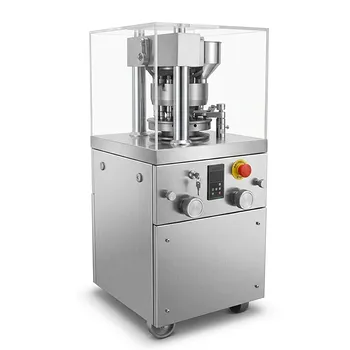
Ordinary Type Rotary Tablet Press for Pharmaceutical Chemical Food Electronic Industries
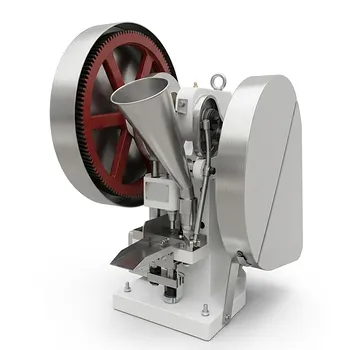
6-Ton Small Single-Punch Tablet Press — Laboratory Powder & Granule Tableting Equipment / Tablet Forming Machine