How do stepped liners improve grinding efficiency compared to T-shaped liners in ball milling? Maximize Impact & Output
Updated 4 months ago
Stepped liners improve ball milling efficiency by optimizing the lifting angle of the grinding media to maximize active grinding height. Compared to T-shaped liners, they shift the motion of the balls from unproductive sliding to high-energy cataracting and cascading movements, which significantly increases the frequency of impacts and reduces energy waste.
The primary advantage of stepped liners lies in their ability to convert rotational energy into effective grinding motion while simultaneously protecting the mill's internal components from premature wear. By reducing ineffective collisions, these liners lower operational costs and improve the fineness of the final product.
Mechanics of Media Motion
Optimizing the Lifting Angle
The geometry of a stepped liner is specifically designed to grip the grinding media more effectively than a standard T-shaped profile. This enhanced grip allows the balls to reach a higher lifting angle before they are released to fall back into the charge.
Cataracting and Cascading Effects
Once the balls reach their peak height, the stepped profile induces more cataracting movements (where balls fall through the air onto the toe of the charge) and cascading movements (where balls roll down the face of the charge). This combination ensures that both impact and attrition grinding occur at their highest possible intensity.
Increasing Active Grinding Height
Because the media is lifted higher, the active grinding height within the mill increases. This results in a greater potential energy for each ball, leading to more forceful impacts and a more efficient reduction in particle size.
Impact on Operational Longevity
Reducing Ineffective Collisions
In T-shaped liner systems, grinding media often slides against the liner or strikes it directly at inefficient angles. Stepped liners minimize these ineffective collisions, ensuring that the kinetic energy of the steel balls is directed toward the ore rather than the mill shell.
Minimizing Liner and Ball Wear
By promoting a more controlled trajectory for the grinding media, stepped liners significantly decrease the wear and consumption of both the liners and the steel balls. This extension of component life reduces maintenance downtime and lowers the overall cost per ton of processed material.
Improving Grinding Frequency
The optimized motion patterns lead to a higher grinding frequency, meaning the media interacts with the ore more often per revolution. This increased interaction rate allows for higher throughput and a more consistent particle size distribution.
Synergizing Design with Chemical Aids
Enhancing Rheological Properties
While liner geometry handles the physical motion, the efficiency of a stepped liner system can be further enhanced by Polysaccharide-based grinding aids (PGA). These aids alter the rheological properties of the mineral pulp, making it easier for the media to move through the slurry.
Achieving Finer Product Quality
Combining the mechanical advantages of stepped liners with chemical aids helps produce a finer product with a narrower particle size distribution. This synergy creates a higher quality feed for downstream processes like flotation separation.
Understanding the Trade-offs
Sensitivity to Mill Speed
Stepped liners are highly sensitive to the critical speed of the mill; if the speed is too low, the "step" may not provide enough lift, and if too high, the media may centrifugally lock. Proper calibration is required to ensure the balls do not strike the liner above the charge level, which causes rapid damage.
Installation Complexity
The directional nature of stepped liners means they must be installed with precise orientation relative to the mill's rotation. Incorrect installation completely negates their performance benefits and can lead to accelerated wear compared to symmetrical T-shaped liners.
Making the Right Choice for Your Goal
- If your primary focus is maximizing throughput: Stepped liners are the superior choice because they increase the active grinding height and impact frequency.
- If your primary focus is reducing maintenance costs: Opt for stepped liners to minimize ineffective collisions and extend the lifespan of your grinding media.
- If your primary focus is downstream flotation recovery: Combine stepped liners with polysaccharide-based grinding aids to achieve a more uniform and finer particle size distribution.
By aligning liner geometry with the kinetic requirements of your specific ore, you transform the ball mill from a high-wear environment into a precision grinding instrument.
Summary Table:
| Feature | Stepped Liners | T-shaped Liners |
|---|---|---|
| Primary Motion | Cataracting & Cascading (High Energy) | Sliding & Low-angle Tumbling |
| Active Grinding Height | Maximized (Higher lifting angle) | Limited |
| Energy Utilization | High (Directed at material) | Lower (Wasted on liner friction) |
| Component Wear | Reduced (Controlled trajectory) | Higher (Ineffective collisions) |
| Throughput | Significantly Increased | Standard |
Elevate Your Material Processing Efficiency with Our Expert Solutions
Optimizing your milling operations is critical for achieving superior results in material science. At [Company Name], we provide complete laboratory sample preparation solutions tailored to your specific needs.
Whether you require high-precision planetary ball mills, jet mills, or disc mills, our equipment is designed to maximize throughput and ensure consistent particle size distribution. Beyond milling, we specialize in a full spectrum of powder processing tools, including:
- Crushers: Jaw and roll crushers for primary reduction.
- Advanced Mixers: Powder and defoaming mixers for homogeneous blends.
- Hydraulic Presses: A complete range of Cold/Warm Isostatic Presses (CIP/WIP), XRF pellet presses, and vacuum hot presses.
Ready to transform your lab's performance? Contact us today to consult with our specialists and find the perfect equipment to streamline your workflow and reduce operational costs.
References
- Jun Shen, Mingrong Huang. Discrete element simulation analysis of ball mill ball trajectory and liner plate structure based on EDEM. DOI: 10.55214/25768484.v9i4.6037
Mentioned Products
- Heavy Duty Horizontal Planetary Ball Mill for Efficient Industrial Grinding and Sample Preparation
- Vertical Production Planetary Ball Mill for High Throughput Powder Processing
- Vertical Square Planetary Ball Mill for Laboratory Sample Preparation and Nanoscale Grinding
- 8L Planetary Ball Mill for Laboratory Grinding and Sample Preparation
- Horizontal Light Duty Planetary Ball Mill for Laboratory Sample Preparation
People Also Ask
- Why grind lime-pozzolan specimens for TG/DTA for 3 mins? Master sample prep for high-precision thermal analysis.
- What is the role of a planetary ball mill in the mechanical activation of ZTA powder? Boost Sintering Performance
- What is the function of a planetary ball mill in wollastonite ceramic prep? Achieve Molecular Homogenization & Reactivity
- How does a planetary ball mill contribute to the homogenization of trace elements? Achieve Sub-Micron Uniformity
- What is the function of a high-performance planetary ball mill in AMZ laminates? Master Ceramic Homogenization.

Tech Team · PowderPreparation
Last updated on Jun 03, 2026
Related Products
Heavy Duty Horizontal Planetary Ball Mill for Efficient Industrial Grinding and Sample Preparation

Vertical Production Planetary Ball Mill for High Throughput Powder Processing

Vertical Square Planetary Ball Mill for Laboratory Sample Preparation and Nanoscale Grinding
8L Planetary Ball Mill for Laboratory Grinding and Sample Preparation
Horizontal Light Duty Planetary Ball Mill for Laboratory Sample Preparation
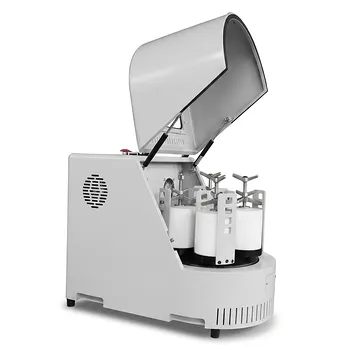
Vertical Semi Circular Planetary Ball Mill for Laboratory Precision Grinding
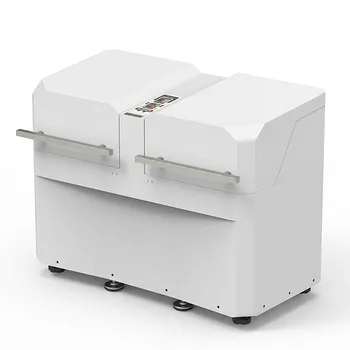
Dual Station Planetary Ball Mill 24L

High Energy Omnidirectional Planetary Ball Mill 16L
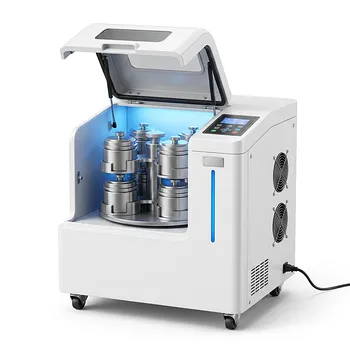
High Energy Omnidirectional Planetary Ball Mill 20L
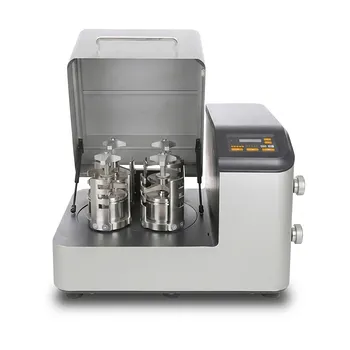
High Energy Planetary Ball Mill for Nano Scale Grinding and Colloidal Mixing in Material Science Research

360° Rotating Omnidirectional Laboratory Planetary Ball Mill for Homogeneous Ultra-Fine Grinding and Mixing
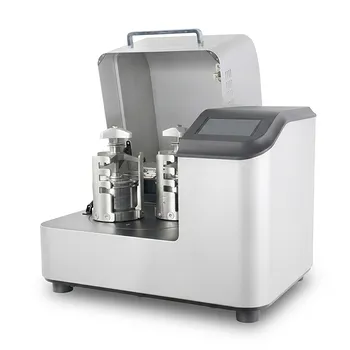
High Energy Planetary Ball Mill for Nano Scale Grinding and Mechanical Alloying
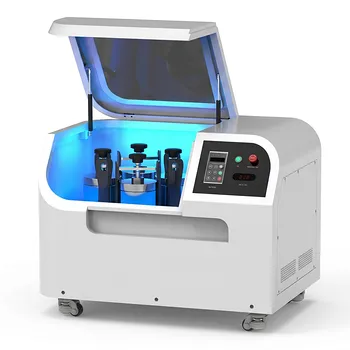
Planetary Ball Mill 12L
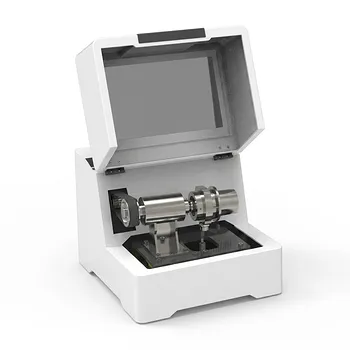
Single Tank High Energy Vibratory Ball Mill for Laboratory Grinding and Mixing
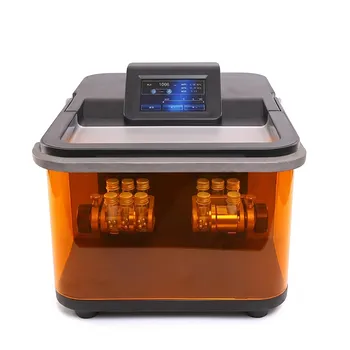
High Throughput Micro Ball Mill for Cryogenic Grinding and Laboratory Cell Disruption

Miniature Planetary Ball Mill with Vacuum Grinding and High Efficiency for Laboratory Sample Preparation