How do standard test sieve stacks contribute to the study of physical characteristics in basin sediments? Expert Guide.
Updated 3 months ago
Standard test sieve stacks are the fundamental tools for quantifying the particle size distribution of basin sediments. By physically separating non-homogeneous mixtures into discrete size fractions—typically ranging from 2.00mm down to 0.063mm—researchers can calculate critical statistical parameters such as the median particle diameter (D50) and mean grain size. This quantitative data allows geologists to infer the hydraulic energy of the depositional environment, the distance of sediment transport, and the overall degree of particle abrasion.
Core Takeaway: Sieve stacks provide a precise, standardized method for decomposing complex sediment samples into measurable categories. This mechanical classification is the prerequisite for calculating distribution curves that reveal the energy levels and transport history of a sedimentary basin.
Mechanical Separation and Hierarchical Logic
The Physical Partitioning of Mixed Sediments
Standard test sieves utilize precisely defined metal wire woven mesh as physical size boundaries to separate complex natural sediment. By arranging sieves in a vertical stack from the largest aperture at the top to the smallest at the bottom, researchers can decompose a sample into specific categories including coarse, medium, and fine sand.
Integration of the Phi (φ) Scale
The standardized grading of sieve apertures, often ranging from 10 mesh to 230 mesh, allows for systematic partitioning according to the phi (φ) scale. This uniform gradient is essential for generating continuous grain size distribution curves and facilitates the comparison of data across different laboratories and studies.
Preservation of Fine Fractions
When combined with a well-sealed top cover and a bottom receiving pan, the stacked configuration prevents the loss of fine particles like silt and clay during vibration. This structural integrity ensures that the mass balance of the sample remains accurate, which is critical for identifying whether a sediment distribution is unimodal or bimodal.
Quantifying Physical and Environmental Characteristics
Calculating Statistical Parameters
By weighing the mass retained on each sieve level, researchers can calculate the median particle diameter (D50) and the standard deviation (sorting). These values help determine if the sediment is well-sorted or poorly sorted, which directly reflects the stability and consistency of the flow that deposited it.
Inferring Hydraulic Energy and Abrasion
The proportion of coarse vs. very coarse material helps researchers infer the energy levels of the hydraulic environment. Larger particles generally indicate high-energy transport (such as fast-moving river currents), while the physical roundness or angularity of the retained fractions provides clues regarding the degree of abrasion during transport.
Defining the Fine Earth Fraction
Standardized sieves, particularly those with a 2-mm mesh size, are used to remove large organic debris, gravel, and macro-organisms. This process defines the "fine earth fraction," eliminating interference from non-sediment matrix impurities and allowing for more accurate heavy metal or chemical concentration measurements.
Understanding the Trade-offs and Limitations
The Shape Factor Bias
Test sieves categorize particles based on their intermediate axis (width), meaning elongated or flat particles may pass through a mesh that does not accurately reflect their true volume or length. This can lead to a slight underestimation of particle size for non-spherical sediments.
Cohesiveness and Clogging
While sieving is highly effective for non-cohesive sediments like sand, moist or clay-rich samples can "blind" or clog the mesh apertures. This requires specialized pre-treatment, such as drying or wet sieving, to ensure that particles do not stick together and produce an artificially coarse result.
Physical Wear of the Mesh
Over time, the mechanical stress of vibration and the abrasive nature of sediments can cause mesh deformation. Regular calibration and metrological verification are necessary to ensure that the aperture sizes remain within the strict tolerances required for reproducible scientific data.
Applying Sieve Analysis to Your Research
How to Apply This to Your Project
- If your primary focus is determining transport energy: Utilize a full range of sieve sizes to calculate the D50 and Mz (mean grain size) to map high and low-energy zones within the basin.
- If your primary focus is environmental chemistry: Use a 2-mm standard sieve to isolate the fine earth fraction, ensuring that your heavy metal analysis is not skewed by large, inert gravel or organic debris.
- If your primary focus is sediment provenance: Analyze the sorting characteristics (standard deviation) and the presence of unimodal vs. bimodal distributions to determine if the sediment originated from a single or multiple source environments.
By mastering the hierarchical logic of the sieve stack, researchers transform raw geological samples into the precise data required to reconstruct the complex history of a sedimentary basin.
Summary Table:
| Feature | Function | Geological Insight |
|---|---|---|
| Mechanical Separation | Partitions sediment by grain size (0.063mm - 2.00mm) | Identifies transport distance and hydraulic energy levels. |
| Statistical Parameters | Calculates median diameter (D50) and sorting | Determines the stability and consistency of depositional flow. |
| Fine Earth Definition | Removes organic debris and gravel (>2mm) | Ensures accurate chemical and heavy metal concentration analysis. |
| Mass Balance | Preserves silt and clay in sealed receiving pans | Reveals if sediment distribution is unimodal or bimodal. |
Elevate Your Geological Research with Precision Sample Prep
Accurate sediment analysis starts with high-quality separation. At [Company Name], we provide complete laboratory sample preparation solutions tailored for material science and geological research. Our specialized range includes:
- Sieving Excellence: Vibratory and air-jet sieve shakers equipped with high-precision test sieves and meshes.
- Advanced Processing: A full suite of mills (planetary ball, jet, rotor) and crushers (jaw/roll) for total size reduction control.
- Compaction Solutions: Hydraulic presses, including Cold/Warm Isostatic Presses (CIP/WIP) and XRF pellet presses, for advanced material testing.
Whether you are quantifying hydraulic energy in basin sediments or preparing samples for chemical analysis, our equipment ensures the durability and repeatability your data demands.
Ready to optimize your lab workflow? Contact our experts today for a customized equipment solution!
References
- Peter Mafimisebi. Sedimentology and Petrographic Studies of Ogun River Bridge Sediments, Dahomey Basin, Southwestern Nigeria. DOI: 10.46759/iijsr.2024.8403
Mentioned Products
- Stainless Steel Laboratory Vibratory Test Sieve Shaker
- Laboratory Vibratory Test Sieve Shaker for Precision Particle Size Analysis and Powder Grading
- Small Laboratory Vibrating Sieve Shaker for Precise Particle Size Analysis
- 三维电磁微量振动筛分仪
- Small Laboratory Vibratory Sieve Shaker for Powder Gradation and Particle Size Analysis
People Also Ask
- What function does a laboratory vibratory sieve shaker serve in the production process of metakaolin? Optimize Reactivity
- Why is a precision laboratory vibratory sieve shaker necessary for particle size control? Optimize Biomass Carbonization
- What is the function of a laboratory vibratory sieve shaker? Enhance Coal Particle Size Distribution (PSD) Analysis
- What role do laboratory vibratory sieve shakers and test sieves play before the molding of Nb-Cu composite powders?
- What is the primary function of a laboratory vibratory sieve shaker in the evaluation of sand liquefaction potential?

Tech Team · PowderPreparation
Last updated on Jun 03, 2026
Related Products
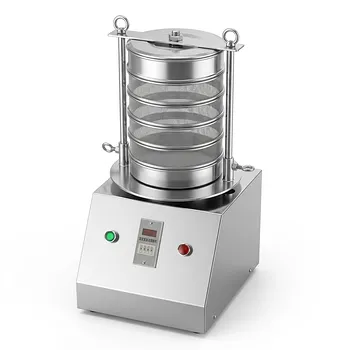
Stainless Steel Laboratory Vibratory Test Sieve Shaker

Laboratory Vibratory Test Sieve Shaker for Precision Particle Size Analysis and Powder Grading

Small Laboratory Vibrating Sieve Shaker for Precise Particle Size Analysis
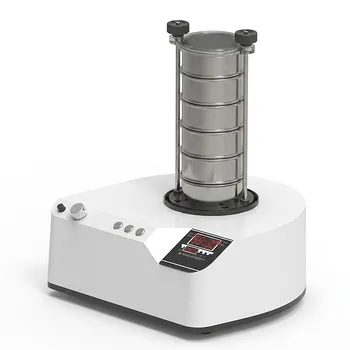
三维电磁微量振动筛分仪
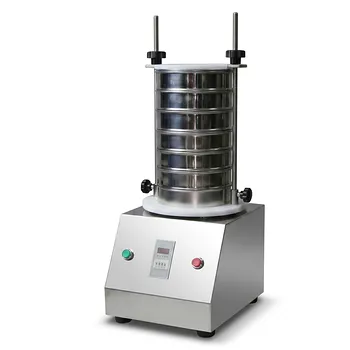
Small Laboratory Vibratory Sieve Shaker for Powder Gradation and Particle Size Analysis