How do mechanical mills contribute to improving the pressing performance of UO2-Gd2O3 powders? Optimize Pellet Quality
Updated 4 months ago
Mechanical mills significantly improve pressing performance by fundamentally altering the physical morphology of $\text{UO}_2\text{-Gd}_2\text{O}_3$ powder blends. This process involves light grinding to break down existing agglomerates and refine the particle size distribution, which directly enhances how the powder fills and compacts within the pressing die.
By optimizing particle size distribution and eliminating large agglomerates, mechanical milling allows manufacturers to achieve higher green densities at lower pressures while drastically reducing handling defects like chipping and cracking.
Optimizing Powder Morphology
Breaking Down Agglomerates
Mechanical mills—such as ball, hammer, or jet mills—use controlled energy to disintegrate large, irregular clusters of $\text{UO}_2$ and $\text{Gd}_2\text{O}_3$. This creates a more uniform starting material that behaves predictably during the compaction cycle.
Refining Particle Size Distribution
The grinding process is designed to engineer a specific range of particle sizes. A well-optimized distribution ensures that smaller particles can fill the interstitial spaces between larger ones, leading to a more stable powder column.
Enhancing Die Filling and Compaction
Maximizing Filling Efficiency
Improved particle size distribution directly translates to better filling efficiency within the pressing dies. The powder flows more consistently, ensuring that the die cavity is packed uniformly before pressure is applied.
Lowering Required Pressing Pressures
Because the milled powder is more efficiently packed, high green densities can be achieved using significantly lower pressing pressures. This reduces the mechanical load on the pressing equipment and extends the life of the tooling.
Improving Green Pellet Integrity
Minimizing Structural Defects
Properly milled powders exhibit better cohesion during the demolding process. This minimizes the internal stresses that typically lead to cracks or laminations when the pellet is ejected from the die.
Reducing Edge Chipping
The structural integrity of the "green" (unsintered) pellet is greatly enhanced by the removal of large, weak agglomerates. This makes the pellets more resilient during the automated handling and transport phases of fuel fabrication.
Understanding the Trade-offs
The Risk of Over-Grinding
While milling improves density, excessive grinding can create powders that are too fine. These "ultra-fines" can decrease the flowability of the powder, leading to inconsistent die filling and increased dusting within the facility.
Media Contamination
Mechanical milling introduces the potential for contamination from the mill lining or the grinding media itself. Engineers must carefully select abrasion-resistant materials to ensure the high purity standards of nuclear fuel are maintained.
How to Apply This to Your Process
Choosing the right milling intensity depends on your specific manufacturing priorities and equipment capabilities.
- If your primary focus is increasing throughput: Prioritize light grinding to break agglomerates and improve flow, allowing for faster die-filling cycles.
- If your primary focus is reducing scrap rates: Focus on optimizing the particle size distribution to strengthen pellet edges and prevent chipping during high-speed handling.
- If your primary focus is tool longevity: Use milling to achieve target densities at lower pressures, thereby reducing the abrasive wear on expensive pressing dies.
By carefully tuning the mechanical milling process, manufacturers can transform inconsistent raw powders into a high-performance feedstock that ensures both quality and efficiency.
Summary Table:
| Improvement Area | Mechanism | Key Benefit to Pressing |
|---|---|---|
| Agglomerate State | Disintegrates large, irregular clusters | Ensures uniform die filling and consistent flow |
| Particle Size | Refines distribution (engineered range) | Smaller particles fill voids; higher green density |
| Compaction Pressure | Optimized packing efficiency | Reaches target density at significantly lower pressures |
| Pellet Integrity | Enhances particle cohesion | Reduces internal stress, preventing cracks and chipping |
Elevate Your Powder Processing Precision
At the forefront of material science, we provide complete laboratory sample preparation solutions tailored for advanced nuclear and ceramic materials. Our specialization in powder processing and compaction equipment ensures your $UO_2$-$Gd_2O_3$ workflows achieve maximum efficiency and quality.
- Advanced Milling: Achieve perfect particle size distribution with our planetary ball mills, jet mills, and cryogenic grinders.
- Precision Compaction: Ensure superior pellet integrity using our full spectrum of hydraulic presses, including Cold/Warm Isostatic Presses (CIP/WIP), vacuum hot presses, and standard lab presses.
Whether you are refining fuel fabrication or developing new materials, our equipment is designed to reduce scrap rates and extend tooling life.
Ready to optimize your results? Contact our technical experts today to find the ideal solution for your laboratory or production line!
References
- Palanki Balakrishna. Fabrication of UO<sub>2</sub>-Gd<sub>2</sub>O<sub>3</sub> Fuel Pellets. DOI: 10.4236/msce.2016.42002
Mentioned Products
- Vertical Production Planetary Ball Mill for High Throughput Powder Processing
- Ultra Centrifugal Mill for Rapid Laboratory Sample Preparation and Fine Powder Grinding
- Vibratory Superfine Grinder for Ultra Fine Laboratory Powder Milling
- Laboratory Disc Mill for Ore and Mineral Sample Preparation
- High Energy Planetary Ball Mill for Nano Scale Grinding and Mechanical Alloying
People Also Ask
- What is the function of a high-performance planetary ball mill in AMZ laminates? Master Ceramic Homogenization.
- What is the role of a planetary ball mill in Al–Si3N4 nanocomposite prep? Achieve Uniform Homogenization
- What is the function of a planetary ball mill in lanthanum hexaaluminate synthesis? Master Micron-Level Homogenization
- What role does a planetary ball mill play in the synthesis of Er-doped PMN-PT ceramics? Enhancing Homogeneity & Purity
- What are the advantages of using a planetary ball mill for the fine grinding of barium silicate glass powder? Peak Results

Tech Team · PowderPreparation
Last updated on Jun 03, 2026
Related Products
Vertical Production Planetary Ball Mill for High Throughput Powder Processing
Ultra Centrifugal Mill for Rapid Laboratory Sample Preparation and Fine Powder Grinding
Vibratory Superfine Grinder for Ultra Fine Laboratory Powder Milling
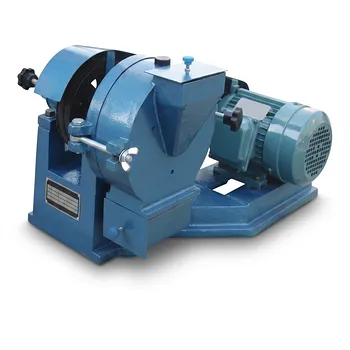
Laboratory Disc Mill for Ore and Mineral Sample Preparation
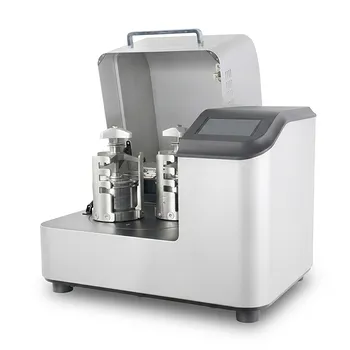
High Energy Planetary Ball Mill for Nano Scale Grinding and Mechanical Alloying
High Speed Laboratory Grinder Efficient Stainless Steel Powder Pulverizer Universal Material Science Mill for Sample Preparation
Small Trace Sample High Speed Pulverizer Grinder Laboratory Powder Mill
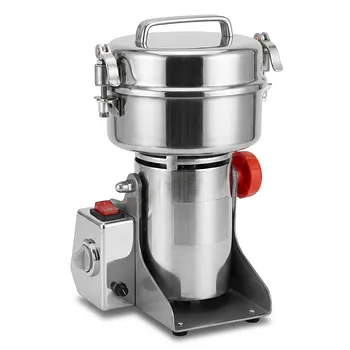
High Speed Laboratory Powder Grinder Small Batch Sample Preparation Mill
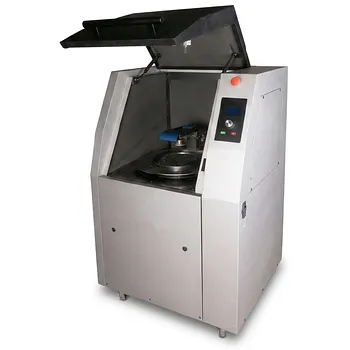
High Speed Vibratory Disc Mill for Spectral Analysis Sample Preparation and Rapid Powder Grinding
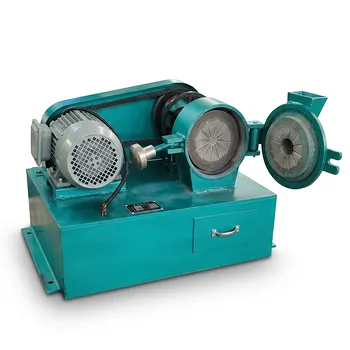
Laboratory Disc Mill Medium Hard Material Grinding Coal Coke Ore Pulverizer
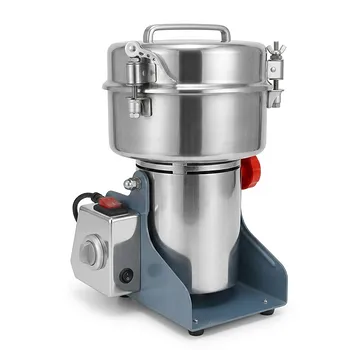
Small High-Speed Grinder for Efficient Laboratory Sample Preparation
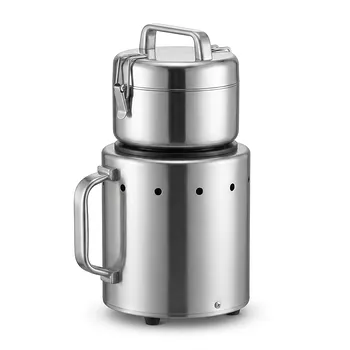
Small High Speed Grinder for Laboratory Sample Preparation
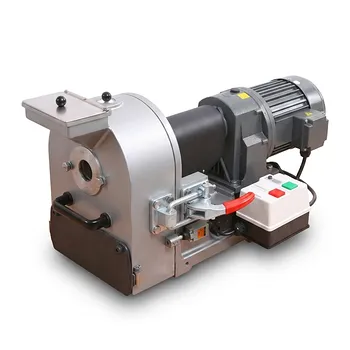
Laboratory Disc Mill for Fine Sample Preparation of Hard and Brittle Materials
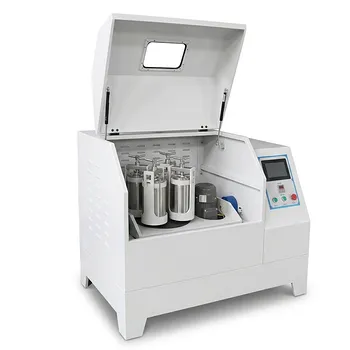
360° Rotating Omnidirectional Laboratory Planetary Ball Mill for Homogeneous Ultra-Fine Grinding and Mixing
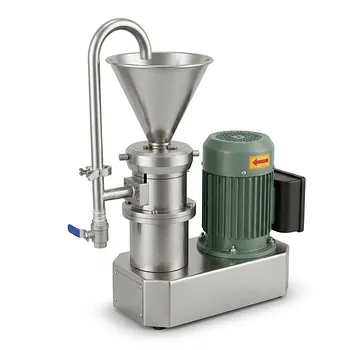
Small Laboratory Colloid Mill for Ultra-Fine Wet Grinding and Emulsification
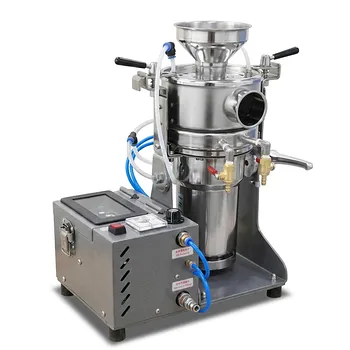
Water Cooled Pulse Jet Ultrafine Grinder
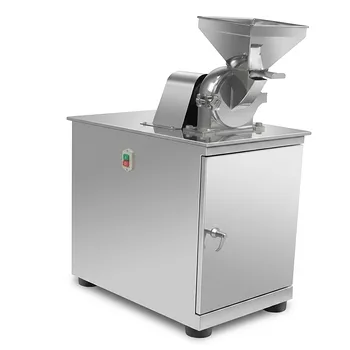
Universal Laboratory Pulverizer Grinder for Small Batch Powder Processing and Material Science Research
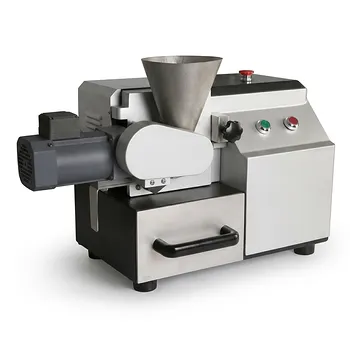
Laboratory Hammer Mill for Coal Quality Analysis and Brittle Mineral Grinding
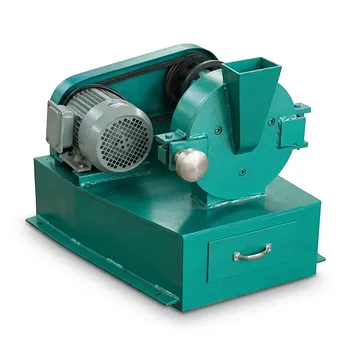
Medium Hardness Material Disc Pulverizer for Coal Ore Sample Preparation