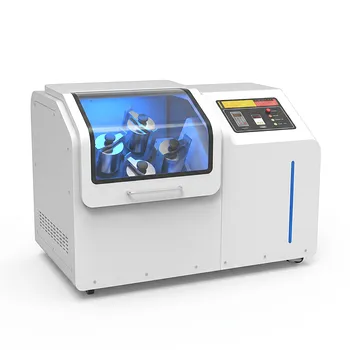
How do high-pressure jars function in carbonization? Enhance Synthesis with Dual-Purpose Micro-Reactors
Updated 4 months ago
High-pressure grinding jars with stainless steel protective shells function as dual-purpose micro-reactors that simultaneously pulverize materials and facilitate chemical reactions under pressure. By maintaining internal pressures of 5 bar or higher, these jars enable gas-liquid-solid three-phase reactions—such as carbonization—by using mechanical impact to accelerate mass transfer and provide the localized thermal energy required for chemical conversion.
These specialized jars transform traditional milling into a high-energy chemical process by serving as sealed, high-pressure vessels. They leverage mechanical collisions to drive faster reaction rates and higher conversion levels than separate, sequential processing methods.
The Mechanism of Concurrent Grinding and Carbonization
Dual-Function as a High-Pressure Micro-Reactor
Unlike standard containers, these jars are engineered to act as high-pressure micro-reactors capable of holding back pressures of 5 bar or higher of pure carbon dioxide. This allows the grinding environment to transition from a simple physical process to a complex gas-liquid-solid three-phase reaction zone.
Enhanced Gas-Liquid Mass Transfer
The high-frequency movement of the grinding media creates intense mechanical agitation that significantly enhances gas-liquid mass transfer. This mechanical energy forces the carbonizing gas into more intimate contact with the liquid and solid phases, overcoming the diffusion barriers that typically slow down carbonization.
Localized High Temperature and Pressure
During grinding, the high-velocity collisions between the grinding balls and the jar walls generate localized high temperatures and pressures. These microscopic "hot spots" provide the necessary activation energy to trigger carbonization reactions concurrently with the reduction of particle size.
The Role of the Stainless Steel Protective Shell
Structural Integrity and Pressure Resistance
The high-strength stainless steel shell provides the necessary reinforcement to withstand intense internal pressures and physical impacts without deforming. This containment is critical when operating under high-frequency cycles, such as 20 cycles per second, where mechanical stress is at its peak.
Prevention of Oxidation and Gas Control
The sealing capability of the stainless steel jar allows for the creation of a strictly controlled atmosphere, such as an inert gas environment. This is essential for preventing the unintended oxidation of metal powders during the long-energy milling cycles required for carbonization.
Energy Transfer Efficiency
Stainless steel is selected for its hardness and wear resistance, which ensures that mechanical energy is efficiently transferred to the sample powders. This efficiency is vital for materials like zinc oxide or maghemite, where consistent energy input is required to achieve chemical synthesis or amorphization.
Understanding the Trade-offs and Risks
Trace Metallic Contamination
A significant trade-off of using stainless steel is the potential for trace metallic wear. Intense friction can cause fine fragments of iron, chromium, and nickel to peel off and become embedded in the sample, which can be detected via Energy Dispersive Spectroscopy (EDS).
Potential for Chemical Degradation
The same intense energy that facilitates carbonization can also induce unintended chemical degradation. In sensitive compounds, high-frequency impacts can trigger the removal of specific functional groups, potentially altering the chemical profile of the final product.
Thermal Management Challenges
While localized heat drives reactions, excessive energy buildup can be problematic. While these jars are often compatible with cryogenic laboratory mills and liquid nitrogen, failing to manage the heat generated by high-frequency oscillation can lead to inconsistent reaction yields.
How to Apply This to Your Project
When integrating high-pressure grinding into your workflow, your choice of parameters should depend on your specific material requirements and purity standards.
- If your primary focus is Maximum Reaction Rate: Utilize the highest allowable back pressure (5 bar+) and high-frequency oscillation to maximize gas-liquid mass transfer.
- If your primary focus is High Chemical Purity: Monitor milling duration closely and perform EDS analysis to ensure that metallic wear from the stainless steel shell is within acceptable limits.
- If your primary focus is Processing Heat-Sensitive Samples: Opt for cryogenic-compatible jars and utilize liquid nitrogen cooling to offset the localized heat generated by mechanical impacts.
By treating the grinding jar as a sophisticated chemical reactor rather than a simple milling tool, you can achieve superior material transformation and process efficiency.
Summary Table:
| Feature | Functional Mechanism | Primary Advantage |
|---|---|---|
| 5+ Bar Pressure | Enables gas-liquid-solid reactions | Facilitates concurrent grinding & carbonization |
| SS Protective Shell | High-strength containment | Withstands extreme mechanical stress and pressure |
| Mechanical Impact | Generates localized high T & P | Provides activation energy for chemical conversion |
| Sealing Design | Controlled atmosphere | Prevents oxidation and maintains chemical purity |
Optimize Your Material Preparation with Expert Solutions
Elevate your research and production efficiency with precision-engineered equipment designed for the most demanding material science applications. We provide complete laboratory sample preparation solutions, specializing in advanced powder processing and compaction technology.
Our extensive product range includes:
- Grinding & Milling: Planetary ball mills, jet mills, and liquid nitrogen cryogenic grinders.
- Crushing & Sizing: Jaw/roll crushers and vibratory/air-jet sieve shakers.
- Mixing: Powder mixers and high-efficiency defoaming mixers.
- Compaction Excellence: A full spectrum of hydraulic presses, including Cold/Warm Isostatic Presses (CIP/WIP), XRF pellet presses, and vacuum hot presses.
Whether you are performing high-pressure carbonization or complex mechanical alloying, our tools ensure consistent results and superior performance. Contact our experts today to find the perfect solution for your laboratory needs!
References
- Luka Ceyssens, Tom Van Gerven. Mechanochemical activation of argon oxygen decarburization slags for improved mineral carbonation. DOI: 10.5937/imprc25413c
Mentioned Products
- Small High-Speed Laboratory Grinder for Powder Processing
- High Speed Laboratory Grinder Efficient Stainless Steel Powder Pulverizer Universal Material Science Mill for Sample Preparation
- Multifunctional High Efficiency High Speed Laboratory Grinder
- Small High-Speed Laboratory Grinder for Rapid Sample Preparation
- Small High Speed Grinder for Laboratory Sample Preparation
People Also Ask
- What role does a laboratory grinder play in the pretreatment of sunflower seed shell-based adsorbents? Boost Efficiency.
- How does a laboratory grinder or mill enhance the adsorption performance of agricultural waste materials? Boost Surface Area
- What is the role of laboratory grinding equipment in the preparation of waste glass powder for eco-friendly red bricks?
- Why is grinding equipment necessary for SnO2-Sb2O3 xerogels? Maximize surface area and photocatalytic activity.
- What is the primary role of grinding equipment in BLA preparation? Enhance Reactivity & Material Uniformity

Tech Team · PowderPreparation
Last updated on Jun 03, 2026
Related Products
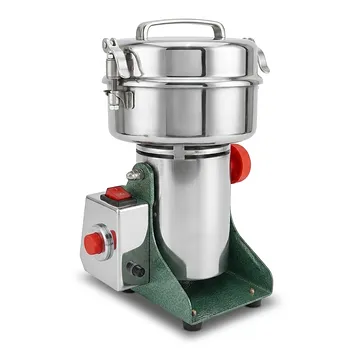
Small High-Speed Laboratory Grinder for Powder Processing
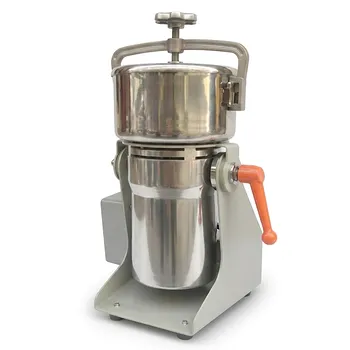
High Speed Laboratory Grinder Efficient Stainless Steel Powder Pulverizer Universal Material Science Mill for Sample Preparation
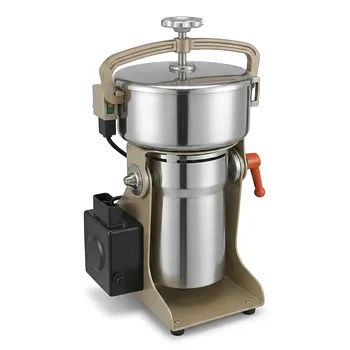
Multifunctional High Efficiency High Speed Laboratory Grinder
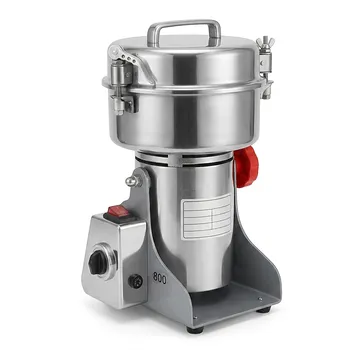
Small High-Speed Laboratory Grinder for Rapid Sample Preparation
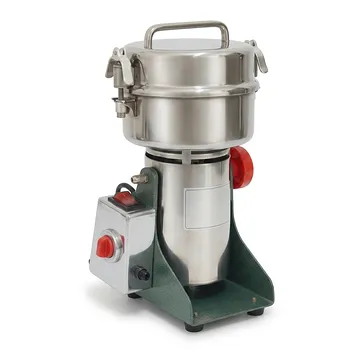
Small High Speed Grinder for Laboratory Sample Preparation
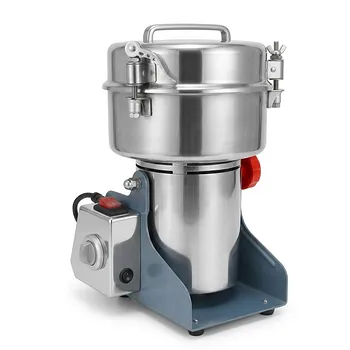
Small High-Speed Grinder for Efficient Laboratory Sample Preparation
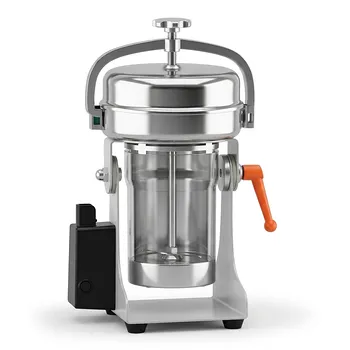
High Efficiency High Speed Grinder 2200W 25000 RPM Laboratory Sample Preparation
Small High-Speed Swing Grinder for Laboratory Sample Preparation