How to scale Meloxicam nanonization to 500mL jars? Adjust RPM for consistent energy equivalence and particle size.
Updated 4 months ago
Scaling up Meloxicam nanonization requires a precise adjustment of rotational speed (RPM) to maintain energy equivalence across different jar volumes. When transitioning to 500 mL large-capacity grinding jars, you must recalculate the planetary ball mill’s RPM based on the increased jar diameter. This adjustment ensures that the centrifugal force applied to the Meloxicam particles remains constant, resulting in a consistent particle size distribution despite the larger scale.
To achieve consistent results during scale-up, the primary objective is to maintain equivalent energy input by adjusting the mill's rotational speed to compensate for changes in the grinding jar's radius.
The Physics of Scale: Energy Density Equivalence
The Impact of Jar Diameter
In planetary ball milling, the centrifugal force is a function of the jar's radius and its rotational speed. As you move to a 500 mL jar, the increased diameter changes the distance from the center of rotation, which directly alters the kinetic energy delivered to the grinding media.
Mathematical Recalculation of RPM
You cannot use the same RPM settings from laboratory-scale tests for large-capacity jars. You must use mathematical models to decrease or increase the RPM relative to the change in the centrifugal force radius to ensure the energy density remains stable.
Maintaining Meloxicam Particle Stability
Consistent energy input is the only way to ensure that Meloxicam achieves the desired nanonization profile. If the energy input is not normalized, the drug may suffer from incomplete size reduction or unwanted polymorphic changes due to excessive force.
Strategic Parameter Adjustment
Balancing Centrifugal Force
The goal of scaling is to replicate the mechanical stress frequency and intensity found in smaller jars. By recalculating the RPM, you ensure that the impact and attrition forces acting on the Meloxicam particles are identical to those in the validated small-scale process.
Controlling Particle Size Distribution
A successful scale-up is defined by a narrow particle size distribution (PSD). By adjusting the grinding parameters to account for the 500 mL jar's geometry, you prevent the formation of "hot spots" where particles might over-grind or aggregate.
Optimizing Milling Duration
While RPM is the primary variable, the milling time may also require minor validation during the scale-up. However, if the energy input is correctly calculated based on the jar diameter, the milling duration typically remains highly predictable.
Understanding the Trade-offs and Constraints
Heat Dissipation in Large Jars
Larger 500 mL jars have a lower surface-area-to-volume ratio compared to smaller jars. This can lead to thermal accumulation, which may affect the stability of Meloxicam if cooling intervals are not adjusted alongside the RPM.
Mechanical Load on the Planetary Mill
Operating large-capacity jars at high speeds increases the mechanical strain on the planetary mill’s drive system. It is vital to ensure that the recalculated RPM does not exceed the structural limits of the equipment when fully loaded with 500 mL jars.
Media-to-Product Ratio
Maintaining energy equivalence also assumes the ball-to-powder ratio remains constant. Any deviation in the filling level of the 500 mL jar can negate the benefits of the RPM adjustments, leading to inconsistent nanonization.
Implementing the Scale-Up Strategy
How to Apply This to Your Process
- If your primary focus is consistent particle size: Recalculate the RPM using the jar diameter ratio to ensure the centrifugal force remains identical to your validated small-scale process.
- If your primary focus is maximizing throughput: Ensure the 500 mL jars are filled to the same volumetric percentage as the small jars to maintain predictable energy transfer.
- If your primary focus is product stability: Monitor the internal temperature of the 500 mL jars, as the adjusted parameters may require longer cooling cycles to compensate for reduced heat dissipation.
By treating energy density as the constant variable and jar geometry as the primary driver for RPM adjustment, you can successfully transition Meloxicam production to large-capacity systems without sacrificing quality.
Summary Table:
| Key Factor | Scale-Up Action | Desired Outcome |
|---|---|---|
| Rotational Speed | Recalculate based on jar radius | Uniform energy density |
| Jar Geometry | Account for larger diameter | Prevents "hot spots" |
| Thermal Control | Extend cooling intervals | Protects product stability |
| Filling Ratio | Maintain ball-to-powder ratio | Predictable particle size |
Optimize Your Scale-Up Process Today
Achieve seamless transition from lab-scale research to large-capacity production with our high-performance laboratory solutions. We specialize in providing complete laboratory sample preparation solutions for material science, focusing on advanced powder processing and compaction equipment.
Whether you are scaling Meloxicam nanonization or processing complex materials, our extensive line includes:
- Advanced Milling: Planetary ball mills, jet mills, and 500 mL large-capacity grinding jars.
- Preparation & Sizing: Jaw/roll crushers, cryogenic grinders, and vibratory sieve shakers.
- Compaction Excellence: Cold/Warm Isostatic Presses (CIP/WIP), vacuum hot presses, and pellet presses.
Ensure consistent results and maintain the highest product stability—contact our technical experts today to find the perfect equipment configuration for your application!
References
- Csilla Bartos, Rita Ambrus. Study on the Scale-Up Possibility of a Combined Wet Grinding Technique Intended for Oral Administration of Meloxicam Nanosuspension. DOI: 10.3390/pharmaceutics16121512
Mentioned Products
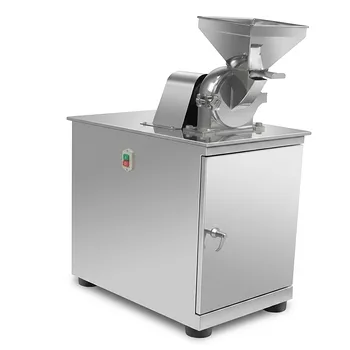
- Laboratory Desktop Ultra Fine Powder Grinder High Speed Micronizing Pulverizer
- Mass Production Nano Sand Mill for Industrial Nanomaterial Grinding and Dispersion
- High Energy Laboratory Planetary Ball Mill for Nano Grinding and Material Science Sample Preparation
- Laboratory Horizontal Pin Nano Sand Mill
- Universal Laboratory Pulverizer Grinder for Small Batch Powder Processing and Material Science Research
People Also Ask
- What role does a laboratory grinder play in the pretreatment of sunflower seed shell-based adsorbents? Boost Efficiency.
- How does a laboratory grinder or mill enhance the adsorption performance of agricultural waste materials? Boost Surface Area
- What is the function of a laboratory high-speed pulverizer in the preparation of eggshell powder? Essential Pretreatment
- Why is high-efficiency ultra-fine grinding required for Portland cement before XRD? Get Accurate Rietveld Results
- What is the function of a laboratory pulverizer in Boerhavia diffusa-based adsorbent prep? Maximize Surface Area

Tech Team · PowderPreparation
Last updated on May 14, 2026
Related Products
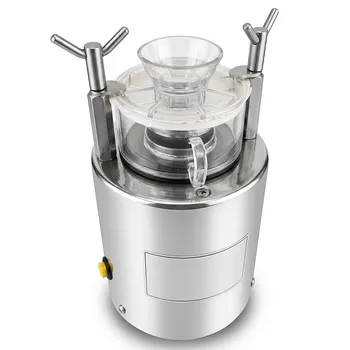
Laboratory Desktop Ultra Fine Powder Grinder High Speed Micronizing Pulverizer
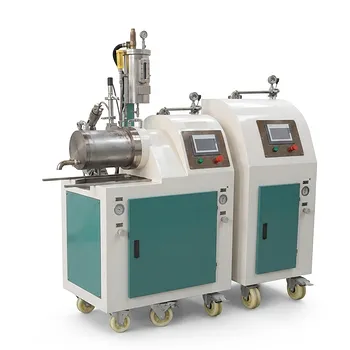
Mass Production Nano Sand Mill for Industrial Nanomaterial Grinding and Dispersion
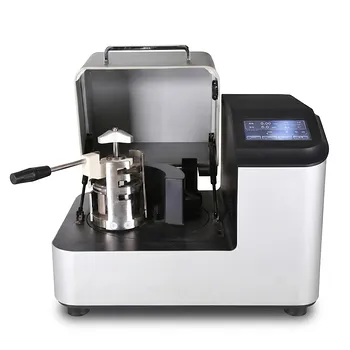
High Energy Laboratory Planetary Ball Mill for Nano Grinding and Material Science Sample Preparation
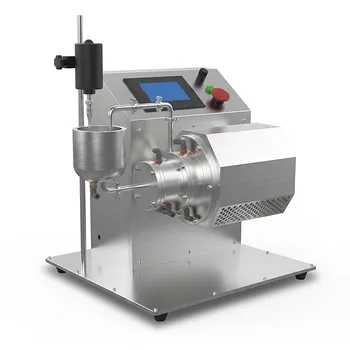
Laboratory Horizontal Pin Nano Sand Mill