Why Your Countertop’s Sparkle Depends on a Ceramic Disc Gap of 0.85 mm
Oct 24, 2026
The Quiet Catastrophe Inside a Premium Slab
A single grey speck in a white quartz countertop can undo a $15,000 kitchen renovation. You don’t see it in the showroom. It appears weeks later, after the sealer cures, when morning light rakes across the surface. A faint, smoky blemish—just a few microns wide—embedded in the glinting mirror glass that was supposed to make the stone sparkle.
That speck is metal. And it came from the very equipment meant to make the glass pure.
The engineered stone industry has been chasing two contradictory goals: higher recycled content and flawless aesthetics. The tension between them lives inside the grinding chamber.
Why Mirror Glass Is Both a Gift and a Threat
Crushed mirror glass gives artificial stone its brilliance. Those tiny reflective facets catch light, making quartz and sintered surfaces look deeper and richer. But glass has a memory. It remembers what touched it last.
The Color Purity Paradox
Post-industrial mirror glass arrives coated in paint, silvering, and sometimes adhesives. After initial crushing, these contaminants separate—mostly. But the real danger enters during sizing. A conventional steel mill exerts intense shear and compression. At the sharp edges of freshly fractured glass, the metal disc sheds microscopic particles that embed into the silica matrix. No magnet catches them all. No chemical wash removes them.
Engineers call this “grey contamination.” Factory managers call it an insurance claim.
Grading: The Structural Imperative
A countertop isn’t just a surface. It’s a dense composite. Its flexural strength, stain resistance, and impact tolerance rely on how aggregates pack together. Too many large particles, and the slab becomes brittle. Too many fines, and resin demand spikes, eating into margins.
The ideal distribution is a carefully tuned curve—often centered on a narrow band around 0.85 mm. Hit that window, and the particles interlock with near-zero void space. Miss it, and the slab is either resin-starved or resin-drowned. Both failures crack the same way: invisibly, until the fabricator drills a faucet hole.
The Ceramic Disc Mill: An Engineer’s Answer to a Materials Riddle
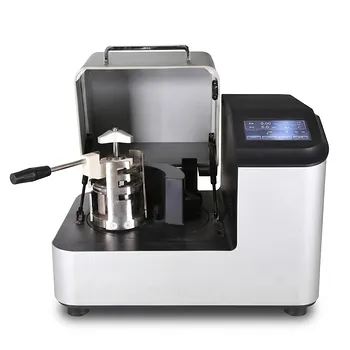
The ceramic disc mill occupies a strange position in the production line. It’s not a primary crusher. It’s not a mixer. It’s the gatekeeper between waste and luxury.
Inert Surfaces for Uncompromised Color
Ceramic grinding discs don’t shed. Alumina and zirconia-based ceramics are harder than glass, chemically stable, and mechanically resistant to the adhesive wear that strips metal from steel rotors. When a mirror glass particle fractures between two ceramic surfaces, the only material entering the powder is the glass itself.
This matters most in white and pastel-colour lines. A reading of L* 94.5 versus 93.2 on a spectrophotometer might seem trivial. But human eyesight detects anomalies in brightness shifts as small as 0.5 ΔE. Customers notice. They just don’t know why.
Gap Precision as a Process Philosophy
Adjustable disc gaps—often set to values like 0.85 mm—provide something that hammer mills and roller crushers can’t: a definitive cutoff. The disc gap defines the maximum particle dimension. Everything above returns to the grinding zone until it passes. Everything below exits.
This gives production engineers a single variable to control their entire aggregate curve. Tighten the gap, shift distribution finer. Widen it, coarsen the mix. The result is repeatable without constant sampling—a concept that appeals to anyone who has run a sieve stack at 2 a.m.
The Production Reality: Brittleness Demands Discipline
Ceramic discs operate under a simple rule: they will grind glass forever, but they will not forgive foreign objects. A stray bolt, a chunk of carbide from the primary crusher, even a hardened ball of congealed resin—any of these can fracture a disc set worth thousands of dollars.
Pre-Milling Hygiene as a Cost Driver
Successful operations build a multi-barrier protection system upstream:
- Primary jaw crushing with magnetic separation to extract tramp metal from bulk glass
- Optical or eddy-current sorting if glass streams are mixed
- Dedicated feed hoppers that prevent cross-contamination from other mineral lines
This front-end investment directly determines ceramic disc lifespan. Mills that run clean last 3–5 times longer between rebuilds.
Alignment: The Micron-Level Attention That Prevents Drift
A ceramic disc gap isn’t a static setting. Thermal expansion, bearing wear, and feed inconsistency all nudge it. Factories that measure their output grading daily—and calibrate disc alignment weekly—produce slabs with coefficient-of-variation figures under 2% on density tests. Those that don’t drift into the danger zone by Thursday afternoon.
Beyond the Disc Mill: The Full Processing Ecosystem
The ceramic disc mill is a star player, but no single machine carries a production line. The glass that enters it has already travelled through crushing, screening, and often premixing. The powder that leaves it goes on to compaction, curing, and finishing. Weakness anywhere in this chain shows up on the polishing line.
The Complete Sample Preparation Logic
In material science and QC labs, this truth is gospel. Particle size analysis, XRF pellet making, and pilot-scale pressing all demand an integrated approach:
- Primary size reduction: Jaw crushers and roll crushers handle the initial bulk glass, reducing it to manageable fragments without generating excessive fines.
- Cryogenic options: For laminated or coated glass, liquid nitrogen grinding embrittles polymers, letting ceramic mills focus on the silica.
- Fine milling spectrum: Beyond ceramic disc mills, planetary ball mills, jet mills, and rotor mills give production engineers latitude to match energy input to material hardness.
- Classification integrity: Vibratory and air-jet sieve shakers validate the cut with precision test sieves, closing the loop on gap settings.
- Mixing and defoaming: Powder mixers homogenize the glass aggregate before it meets resin; vacuum defoaming mixers remove entrapped air that would otherwise become sub-surface defects.
- Compaction excellence: Cold and warm isostatic presses (CIP/WIP), hot presses, and vacuum hot presses transform the formulated powder into dense, void-free green bodies ready for curing.
Every piece of equipment is a checkpoint. The ceramic disc mill sits at the one where colour and structure converge.
The Psychology of Purity: Why Ceramic Milling Wins the Premium Market
Morgan Housel sometimes writes that risk is what’s left over after you think you’ve thought of everything. In engineered stone manufacturing, the invisible risks—metal flecks, particle gaps, resin pockets—are the ones that surface months later in a litigated countertop replacement.
Buyers of premium surfaces are not paying for quartz; they’re paying for certainty. Certainty that the white slab will stay white. That the sparkle won’t dull. That the fabricator won’t call back with bad news.
A ceramic disc mill delivers that certainty by removing the failure mode most customers will never name but will instantly perceive. It’s the kind of technical investment that behaves like an insurance policy—boring to discuss, devastating to omit.
| Feature | Technical Advantage | Psychological Impact |
|---|---|---|
| Ceramic grinding discs | Zero metallic shedding | Maintains the “untouched” purity buyers associate with luxury |
| Adjustable disc gap (e.g., 0.85 mm) | Micron-level particle cutoff | Builds trust through surface consistency lot after lot |
| Inert material interfaces | No chemical reactions with glass | Eliminates the fear of discoloration in light-colour products |
| Fine-grinding specialization | Tight particle distribution curves | Delivers the dense, solid feel that signals quality at first touch |
| Integrated system design | Milling + sieving + pressing coordination | Reduces process anxiety for plant engineers who hate variability |
Turning a Waste Stream into a Signature Aesthetic
Mirror glass waste used to cost money to landfill. With precise ceramic disc milling, it becomes the defining feature of a premium surface—a glitter of recycled purity that architects specify by name.
The path from broken mirror to showroom slab goes through a gap you can measure with a feeler gauge. That’s where the chemistry stops and the craft begins. It’s where an old problem—how to grind glass without ruining it—found its hardest, most elegant solution.
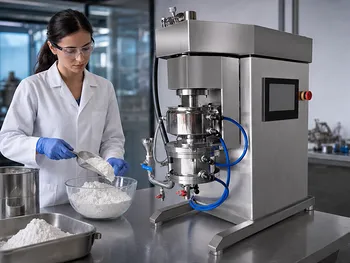
If your production line is asking questions that conventional milling cannot answer—about colour drift, about particle consistency, about the quiet cost of metallic contamination—our laboratory and pilot-scale sample preparation systems are designed to provide those answers. From ceramic disc mills and cryogenic grinders to CIP presses and air-jet sieves, our platform covers the full powder-to-pellet journey with the rigor that advanced material science demands.
Quick Links
Suggested Products
Small Ceramic Structure Laboratory Sand Mill Nanoscale Grinding Dispersion Equipment Seal-less Screen-less Design Vertical Nano Bead Mill for Ceramic Materials with Permanent Magnet Motor and High Efficiency Grinding Laboratory Disc Mill for Fine Sample Preparation of Hard and Brittle Materials Vibratory Disc Mill for Rapid Fine Grinding and High Throughput Sample Preparation of Hard and Brittle Materials Laboratory Disc Mill for Ore and Mineral Sample PreparationFurther Reading
The Grain, the Grinder, and the Hidden Poison: Why Mycotoxin Testing Depends on a Perfectly Boring Pulverization The Particle Paradox: Why the Secret to a Perfect Effervescent Tablet Lives in the Grinding Room The Tyranny of Tiny Impurities: How 10 mm Zirconia Balls Save Rare-Earth Doped Bismuth Ferrite The Energy Window: Why Better Silica Nanoparticles Aren't About Grinding Longer, But Smarter The 0.5mm Gateway: Why Bulk Density Is a Measure of Flow, Not Just Weight
PowderPreparation
Last updated on May 14, 2026
Related Products
Small Ceramic Structure Laboratory Sand Mill Nanoscale Grinding Dispersion Equipment Seal-less Screen-less Design
Vertical Nano Bead Mill for Ceramic Materials with Permanent Magnet Motor and High Efficiency Grinding

Laboratory Disc Mill for Fine Sample Preparation of Hard and Brittle Materials
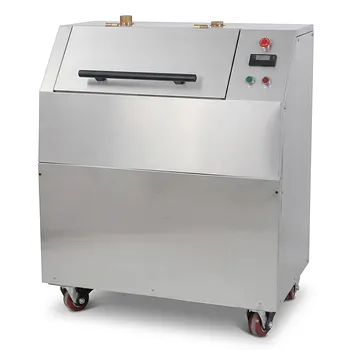
Vibratory Disc Mill for Rapid Fine Grinding and High Throughput Sample Preparation of Hard and Brittle Materials
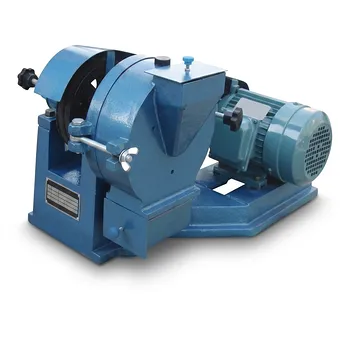
Laboratory Disc Mill for Ore and Mineral Sample Preparation
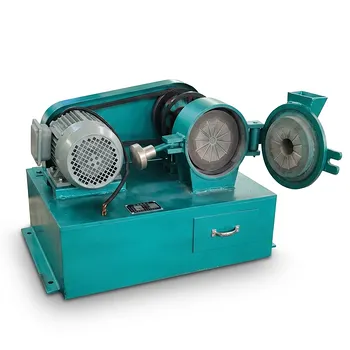
Laboratory Disc Mill Medium Hard Material Grinding Coal Coke Ore Pulverizer
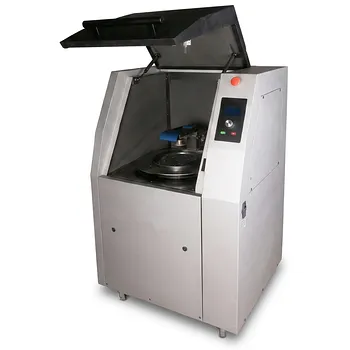
High Speed Vibratory Disc Mill for Spectral Analysis Sample Preparation and Rapid Powder Grinding
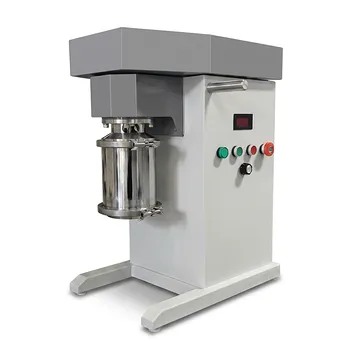
Nano Laboratory Bead Mill Desktop Sub Micron Sand Mill Screenless Seal Less Powder Grinder

Precision Soil Disc Mill for Laboratory Fine Grinding and Environmental Sample Preparation
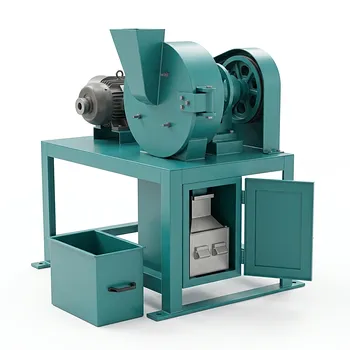
Sealed Disc Pulverizer Customized Model
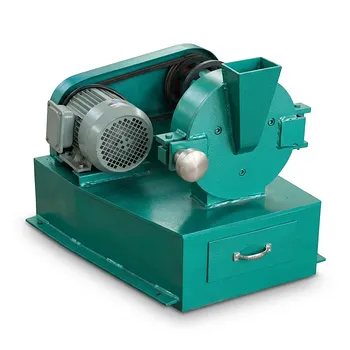
Medium Hardness Material Disc Pulverizer for Coal Ore Sample Preparation
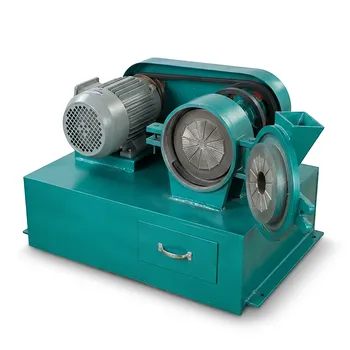
Laboratory Disc Pulverizer for Coal Coke Ore and Medium Hard Materials Sample Preparation
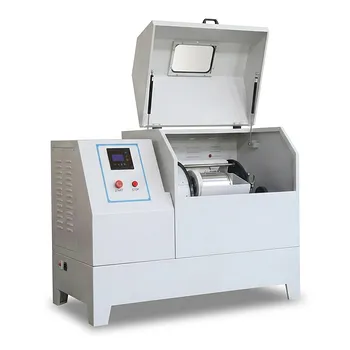
Heavy Duty Horizontal Planetary Ball Mill for Efficient Industrial Grinding and Sample Preparation
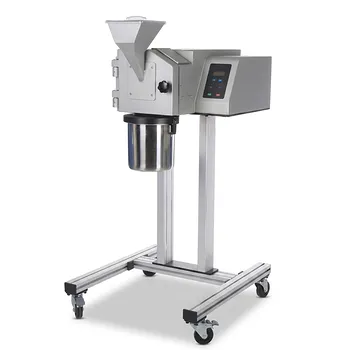
Cross Beater Mill for Brittle Material Grinding and Continuous Fine Crushing Industrial Sample Preparation
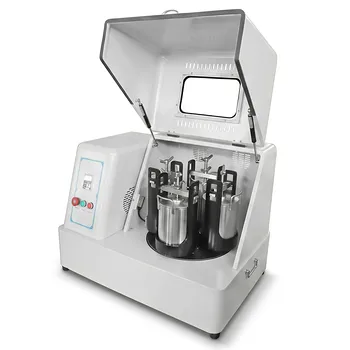
Vertical Square Planetary Ball Mill for Laboratory Sample Preparation and Nanoscale Grinding
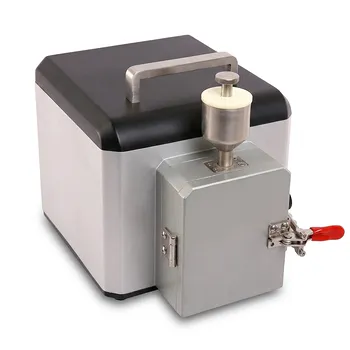
Portable Cutting Mill for Laboratory Sample Preparation and RoHS WEEE Compliance Testing
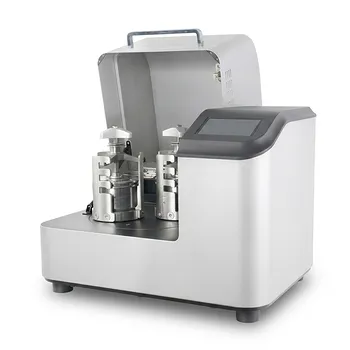
High Energy Planetary Ball Mill for Nano Scale Grinding and Mechanical Alloying