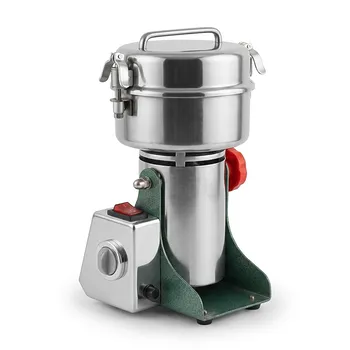
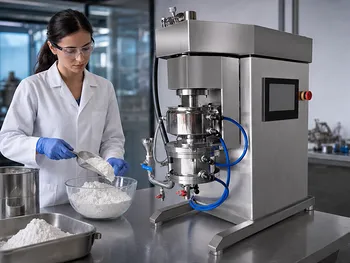
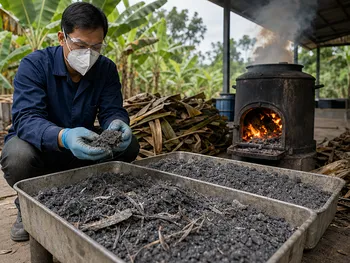
The Unspoken Art of Pulverizing: Why Your Malted Sorghum Won’t Dissolve and the Psychology of Perfect Powder
Oct 22, 2026
The 3 A.M. Dissolution Failure
The graduate student stares at a beaker of clumpy, stubborn sediment. The protocol demanded a fine composite powder of malted sorghum and sprouted mung beans—a nutritional goldmine, perfectly formulated on paper. Yet the particles float like oil slicks, refusing to hydrate. Somewhere between the crop and the centrifuge, a promise was broken.
It’s easy to blame the chemistry. It’s harder to see the real culprit: a laboratory hammer mill that was pushed in the wrong direction.
We tend to treat pulverization as a binary event. You put grains in. Powder comes out. But inside that whirring chamber, a quiet negotiation is happening between speed, heat, and structure. And if you don’t speak the language of impact mechanics, you end up with flour that looks right but behaves wrong.
Morgan Housel once wrote that the biggest risk is always what no one is talking about. In material science, no one talks enough about the hidden trade-offs of size reduction. Most technicians obsess over how fine the powder is. They rarely ask what the mill took away in the process.
Here is the story of how a well-chosen hammer mill—and the mindset behind it—changes everything.
The Brutal Elegance of the Hammer
It’s Not a Grinder. It’s a Kinetic Storyteller.
A laboratory hammer mill doesn’t slowly abrade grains. It tells a story of high-velocity impact. Rotating hammers hit dried sorghum and sprouted mung beans with enough kinetic energy to shatter their cellulose-based armor in milliseconds.
The grains don’t surrender gently. They crack, split, and fracture along lines biologists never intended. This is destruction with a purpose: creating a new architecture of surface area.
The Screen Is the Gatekeeper, Not the Afterthought
Most of the real intelligence in a hammer mill lives in a cheap, replaceable metal component: the internal screen. It’s a deceptively simple ring of perforated steel that refuses to let oversized particles escape.
- If you use a 0.5 mm screen, every particle that exits was forced to pass through a 0.5 mm aperture.
- If your sprouted mung bean chunk is 1.2 mm, the hammers will beat it repeatedly until it submits.
This isn’t just sieving. It’s mechanical discipline. And discipline is what transforms a heterogeneous mix of legumes and grains into a standardized powder that blends without bias.
Why Surface Area Is Not Vanity
A lot of engineers talk about particle size. Few talk about the surface area explosion that happens in the milling chamber. When you crush a single millet-sized grain into dozens of micro-fragments, you are not just making it smaller—you are exposing previously hidden internal structures to the outside world.
For a composite food powder, that means water doesn’t have to fight through a waxy pericarp layer. It rushes in, wets the surfaces, and triggers solubility almost instantly. Without that mechanical revelation, your expensive formulation is just a bag of stubborn sediment.
The Seductive Trap of “As Fine As Possible”
This is where psychology hijacks protocol. Many lab technicians, when target solubility isn’t met, reach for a simple lever: a smaller screen mesh. If 0.5 mm didn’t work, try 0.2 mm. The logic feels unassailable.
Morgan Housel would call this the seduction of precision. We crave simple, quantifiable solutions because they offer a false sense of control. But in a hammer mill, fineness is not a single variable. It drags three unwelcome companions into the room:
- Frictional Heat. High-speed impacts against a tiny screen aperture generate thermal energy that a lab coat can’t measure in time. For sprouted mung beans, that heat denatures delicate proteins, kills residual enzyme activity, and transforms flavor profiles into something that tastes like regret.
- Static Build-Up. Exceedingly fine particles don’t flow. They float, clump, and coat every surface with electrostatic greed. You win on solubility and lose on handling.
- Over-Milled Dust. A powder that measures 10 microns might dissolve instantly, but it also becomes a respiratory hazard in a poor-ventilation lab and refuses to blend homogeneously—it segregates by air currents instead of mixing evenly with the sorghum component.
The technician who chases the smallest micron rating is like an investor who chases the highest yield. Both are ignoring the invisible risks that compound quietly until the system breaks.
What Actually Matters in Composite Powder Preparation
Solubility Is a Mechanical Property, Not a Chemical One
When a malted sorghum powder fails to dissolve, we shouldn’t first question the grain’s starch composition. We should question what the mill produced. Did the high-speed impacts expose enough starchy endosperm? Were the sprouted mung bean tissues reduced to cell fragments that can hydrate immediately?
That hydration capacity is engineered by the hammer mill. The screen aperture dictates the maximum particle size, but the dwell time—how long those particles spend being struck—determines the average morphology. Short, sharp bursts preserve functionality. Endless grinding destroys it.
Uniform Blending Is a Story of Equal Particle Destiny
Composites fail when one ingredient travels differently than another. Imagine sorghum flour at 300 microns and mung bean flour at 80 microns. They don’t blend; they stratify. The finer component sinks to the bottom of the mixer, and every scoop taken from that batch is nutritionally biased.
A hammer mill with a carefully selected screen forces both the malted sorghum and the sprouted beans to share the same size reduction experience. They exit the mill with matching particle size distributions. When you subsequently feed them into a powder mixer, homogeneity is no longer a hope—it’s a geometric certainty.
The Full System Thinking
A laboratory hammer mill doesn’t work in a vacuum. Next to it, often, sits an air-jet sieve shaker that validates the particle distribution. A powder mixer blends the composite into a single identity. And when the final powder must become a solid pellet or a tablet, a hydraulic press—perhaps an XRF pellet press or even a cold isostatic press—completes the transformation.
We get into trouble when we view the mill as a standalone hero. It is one act in a longer play. The best labs design their entire sample preparation workflow: size reduction, classification, blending, and compaction, as an integrated system.
Selecting the Right Parameters for Your Composite
No universal setting exists, but three decision frameworks consistently prevent midnight beaker disasters.
- If your composite must maximize solubility (e.g., instant beverage powders): Use the smallest practical screen, but operate in intermittent cycles with cooling periods. Monitor mill chamber temperature if possible. Sacrifice some throughput to preserve the bioactivity of sprouted legumes.
- If your composite must excel in uniform blending (e.g., premixes for further processing): Choose a screen size that balances both components. Mill the sorghum and the mung beans through the same screen under the same rotor speed. Run validation via a sieve shaker to confirm the distributions overlap.
- If nutrient retention is non-negotiable (e.g., high-value functional foods): Favor larger screen sizes and multi-pass milling. Gentle, repeated impacts often cause less thermal damage than a single brutal pass. Consider complementary low-temperature solutions like a cryogenic grinder for extremely sensitive materials.
The Machinery Behind the Method
Atul Gawande, in his writings on complex systems, emphasized that elegant solutions require a suite of reliable tools, not just good intentions. The same applies here.
Our work in material science has taught us that a laboratory hammer mill is essential, but it’s only the beginning. A properly equipped lab also needs:
- Classification instruments like vibratory sieve shakers and air-jet sieves to verify particle size distribution exactly when it matters.
- Mixing equipment—from simple powder mixers to defoaming mixers—that can blend composite powders without introducing air pockets or shear degradation.
- Compaction tools for when the powder needs to become a solid. Cold isostatic presses (CIP), warm isostatic presses (WIP), standard lab presses, and vacuum hot presses all extend the function of a powder from a loose medium to a formed, testable pellet.
When a customer walks into our facility with a bag of malted sorghum and a vision for a perfectly soluble composite, we don’t just hand them a hammer mill. We map a flow: crusher → mill → sieve → mixer → press. The final powder doesn’t just dissolve beautifully—it behaves predictably under an XRF spectrometer, a tablet hardness tester, or a consumer’s spoon.
That’s the romance of sample preparation. It’s not about any single machine’s horsepower. It’s about the quiet reliability of an interconnected chain that turns unpredictable agriculture into reproducible science.
And if you’re still staring at a beaker of clumps at 3 A.M., the answer isn’t a finer screen. It’s a conversation.
Quick Links
Suggested Products
Water Cooled Airflow Ultra Fine Grinder for Low Temperature Material Processing High Speed Laboratory Grinder Efficient Stainless Steel Powder Pulverizer Universal Material Science Mill for Sample Preparation Small High-Speed Laboratory Grinder for Powder Processing Multifunctional High Efficiency High Speed Laboratory Grinder Vibratory Superfine Grinder for Ultra Fine Laboratory Powder MillingFurther Reading
The Brittle Truth: Why Extreme Cold Delivers the Most Honest Zinc Sulfide Powders Engineered Brittleness: Why Cryogenic Grinding Decides Your Activated Carbon’s Future The Brittle Truth: Why Making PET Microplastics Demands Extremes, Not Effort The Energy Window: Why Better Silica Nanoparticles Aren't About Grinding Longer, But Smarter The Hidden Variable in Green Chemistry: Why Your Banana Leaf Ash Fails (And How Precision Grinding Fixes It)
PowderPreparation
Last updated on May 14, 2026
Related Products
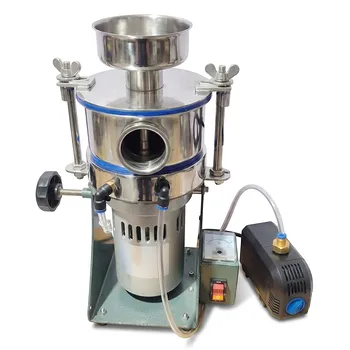
Water Cooled Airflow Ultra Fine Grinder for Low Temperature Material Processing
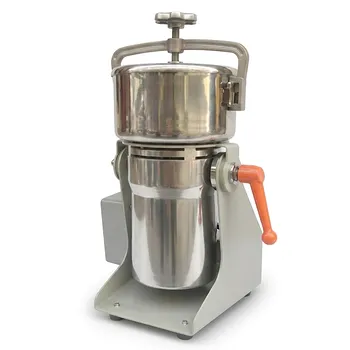
High Speed Laboratory Grinder Efficient Stainless Steel Powder Pulverizer Universal Material Science Mill for Sample Preparation
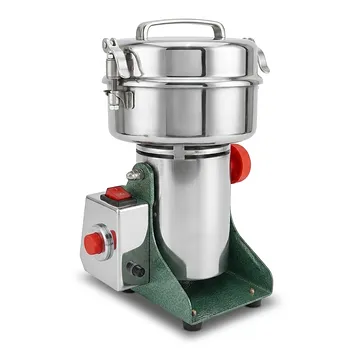
Small High-Speed Laboratory Grinder for Powder Processing
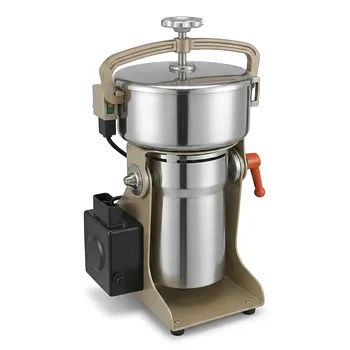
Multifunctional High Efficiency High Speed Laboratory Grinder
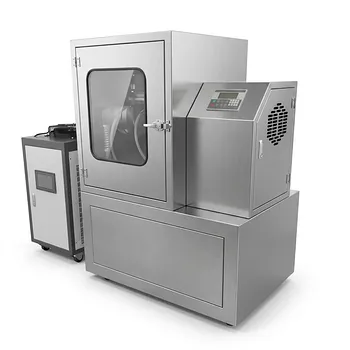
Vibratory Superfine Grinder for Ultra Fine Laboratory Powder Milling
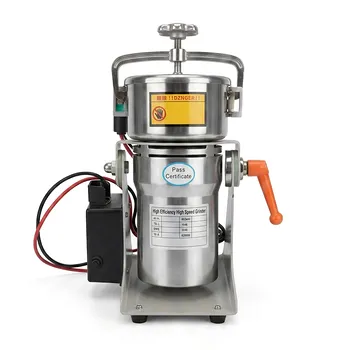
High Efficiency High Speed Grinder Laboratory Mill 1300W 25000rpm
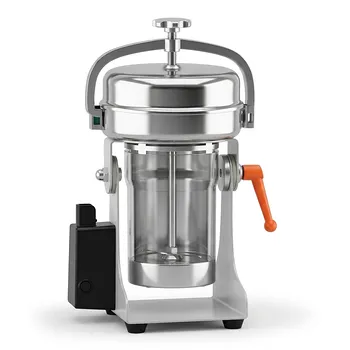
High Efficiency High Speed Grinder 2200W 25000 RPM Laboratory Sample Preparation
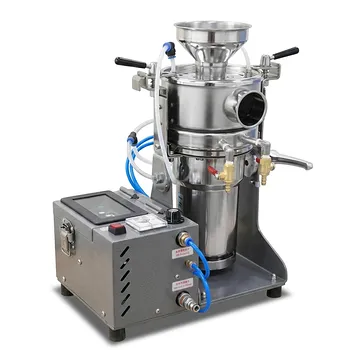
Water Cooled Pulse Jet Ultrafine Grinder
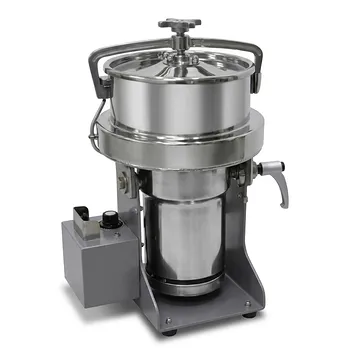
500g Capacity Water Cooled Low Temperature Grinder with Variable Speed and Safety Cover
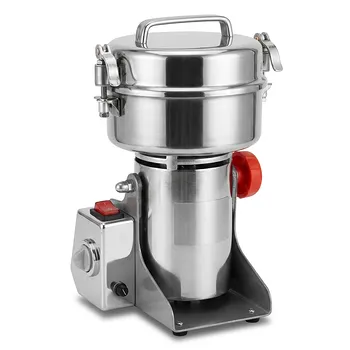
High Speed Laboratory Powder Grinder Small Batch Sample Preparation Mill
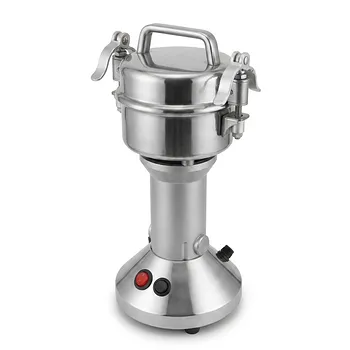
Continuous Feeding Grinding Mill for Dry Fibrous Tough and Hard Materials in Laboratory and Small Production
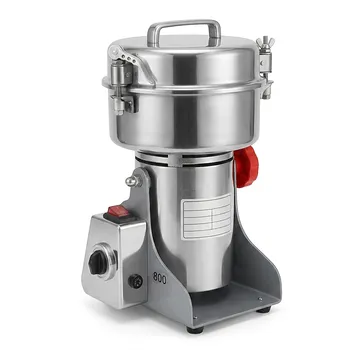
Small High-Speed Laboratory Grinder for Rapid Sample Preparation
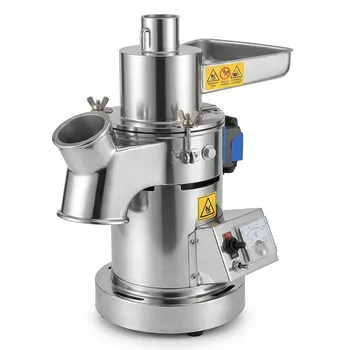
Continuous Feeding Grinder High Efficiency Pulverizer for Lab Sample Preparation
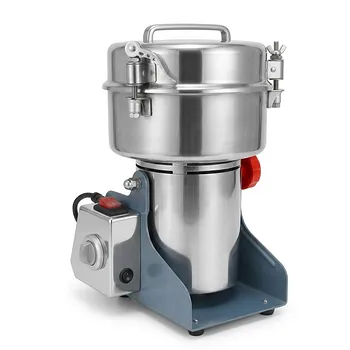
Small High-Speed Grinder for Efficient Laboratory Sample Preparation
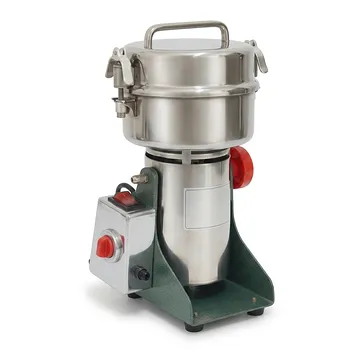
Small High Speed Grinder for Laboratory Sample Preparation
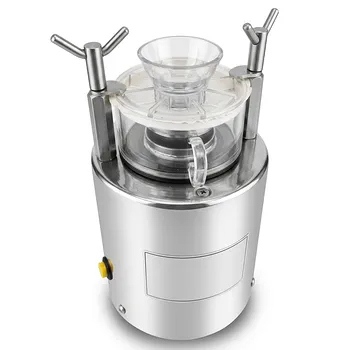
Laboratory Desktop Ultra Fine Powder Grinder High Speed Micronizing Pulverizer
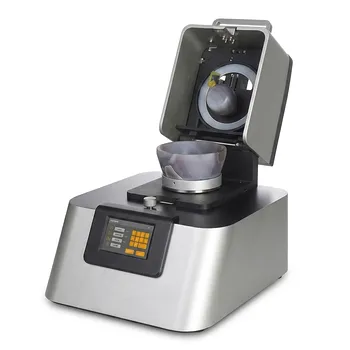
Laboratory Mortar Grinder for Sample Preparation and Cryogenic Powder Homogenization
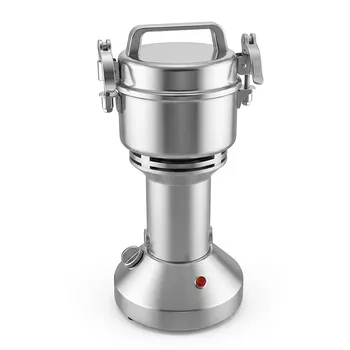
Small High Speed Upright Grinder for Laboratory Sample Preparation
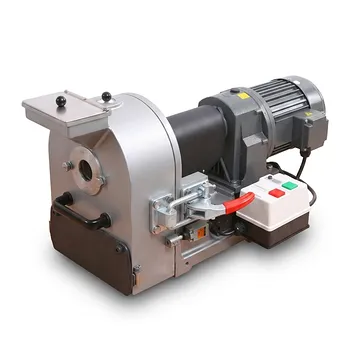
Laboratory Disc Mill for Fine Sample Preparation of Hard and Brittle Materials