The Silent Judge of Limestone: How a Mesh Screen Decides the Fate of Infrastructure
Jun 20, 2026
The Margin of Error Hidden in a Grain of Sand
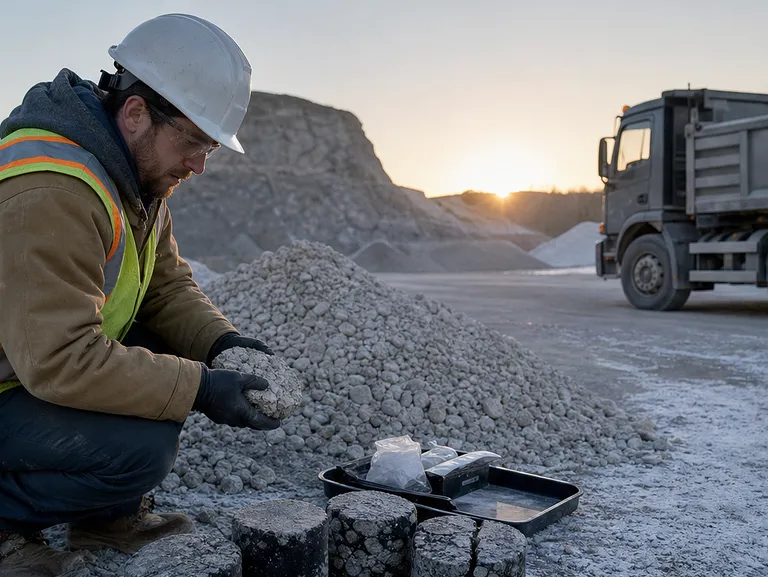
There is a specific kind of silence in a laboratory after a test concludes. The chemical baths are drained. The ovens cool. You are left with a pile of rock that looks, to the untrained eye, exactly like the pile you started with.
But it isn’t. It is smaller. Weaker. A little closer to dust.
The challenge of building a road isn't finding stone strong enough to hold a truck today. The challenge is finding stone that can survive a specific morning in February ten years from now, when the temperature hovers treacherously around zero, and ice crystals bloom into the microscopic pores of the aggregate, prying it apart from the inside.
We can’t wait ten years to see what happens. So we accelerate time. We brutalize the limestone with chemistry and heat. And when the violence is done, we don't look at the rock for answers.
We look at what falls through a sieve.
The Anxiety of Internal Stress
Why Some Rocks Commit Suicide
Most material failures aren’t crushing failures. They are expansion failures. Water doesn't compress. When trapped in a pore, a freezing droplet exerts a pressure of up to 30,000 pounds per square inch—an invisible, patient force that works on the internal scaffolding of the aggregate.
The Sulfate Simulation
We can't simulate a decade of frost on demand, but magnesium sulfate or sodium sulfate crystals get remarkably close. Soaking limestone in these solutions, then baking it, forces the crystals to grow inside the pores. It’s a chemical proxy for ice, replicating the exact hydraulic pressure that shatters rock in the wild.
If the limestone has a fatal internal flaw—a micro-crack, a weak cleavage plane, a porous geology—it will not survive this. You will hear the faint, sad sound of aggregate breaking apart in an oven. The scientific term is "disintegration." The honest term is that the material has confessed its unsuitability.
Why the Sieve is the Confessional
The Logic of Separation
After five cycles of chemical stress, a technician empties the tray. What remains isn't just "rock." It is a spectrum of stability. Some particles endured. Others became sand.
The test sieve is the diagnostic tool that separates the survivors from the casualties. It’s a brutally simple filter. The standard mesh—often a precise 2.36 mm aperture—doesn't care about the history of the stone. It only cares about what broke.
Quantifying Decay
The genius of this process isn't the chemistry. The genius is the metric.
- You weigh what the sieve retains.
- You weigh what passed through.
- You calculate the Soundness Loss.
This single percentage is a prophecy. A 5% loss might be acceptable for a rural base layer. A 15% loss is a pothole waiting to happen. It’s the difference between a 20-year road and a 5-year liability. You are not measuring weight; you are measuring the future cost of maintenance.
The Trap of the Wrong Shard
The Shape Deception
A sieve works on a two-dimensional logic—typically catching or passing a particle based on its second-smallest axis. This is fair for cubical stones. It is deeply unfair for flaky or elongated particles.
Imagine a sliver of limestone that survived the chemical attack. It didn’t break down, but because it is shaped like a razor blade, it slips sideways through the mesh. The sieve screams "failure," but the mass is actually intact. If you don't account for this morphological trickery, you reject good material.
The Blinding Crisis
The other failure mode is even sneakier. A high-fines load—especially if the limestone weathers into a sticky, clay-like paste—will plug the mesh. This is called "blinding." The holes become tiny solid windows. Nothing passes. Your calculation suddenly tells you the aggregate is perfectly sound, when in reality, it has completely degraded into sludge, and the sieve just didn’t let you see it. You are measuring the resistance of a clogged mesh, not the durability of a rock.
The Mechanized Arbiter of Truth
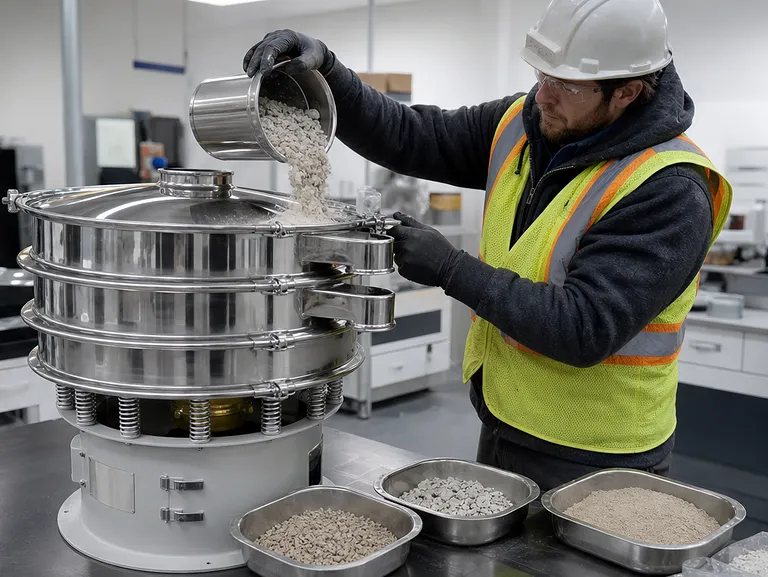
For a single sample, a human hand shaking a sieve is a study in inconsistency. One engineer shakes in a circle. Another shakes linearly. The force varies with the mood.
Human error doesn’t just blur the data; it constructs a false confidence.
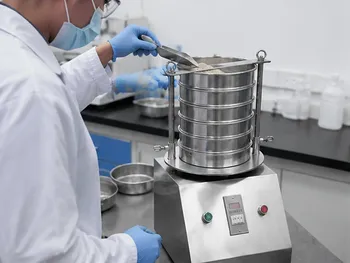
This is why the laboratory vibratory sieve shaker exists. It imposes a rigorous, three-dimensional oscillation on the stack. It forces every particle to re-orient itself against the mesh hundreds of times per minute.
- Repeatability: The machine never gets tired.
- Efficiency: It breaks the static friction holding particles together.
- Resolution: It prosecutes every grain until the only way to pass is to be physically smaller than the gap.
When durability is measured in fractions of a percent, the transition from manual to automated sieving is the moment testing becomes engineering rather than estimation.
Designing a Sentinel System for Aggregate
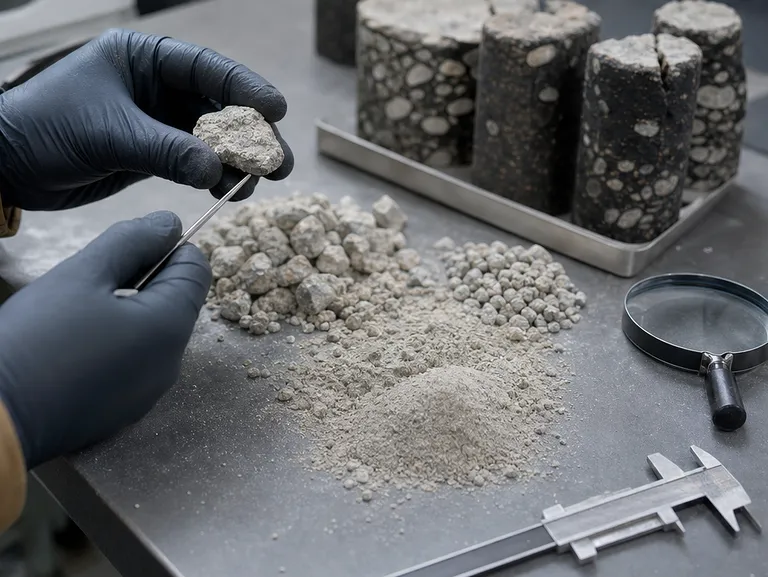
Your testing protocol shouldn't just measure failure; it should be resilient enough to avoid misleading you. Blindness to the limits of your tools is the biggest risk in geotechnical testing.
The Variables to Master
- Mesh Integrity: A single broken wire in a woven mesh creates a highway for oversized particles.
- Load Size: Overloading a sieve stops the migration of fines. The bottom of the pile never sees the light of day.
- Moisture: Wet sieving might be the only way to break the electrostatic bond of fine powder, but it introduces the complexity of material solubility.
The Engineering Stack
The sieve alone is just a ring of metal. It becomes an instrument only when integrated into a calibrated system.
| Stage | Core Action | Risk Mitigation |
|---|---|---|
| Sample Reduction | Crushing to manageable input sizes using jaw or roll crushers | Prevents skewed gradations from oversized inputs |
| Chemical Cycling | Immersion in sulfate solution | Requires precise temperature control for crystal growth |
| Separation | Processing on a vibratory sieve shaker | Eliminates human variability and ensures particle orientation |
| Verification | Checking mesh integrity with calibration standards | Prevents "blinding" errors from entering the record |
| Compaction Prep | If the aggregate passes, preparing it for strength testing via hydraulic presses | Validates the physical performance of the surviving fraction |
The goal is not just to get a number. The goal is to know—with absolute certainty—that the number is the rock’s signature, not an artifact of your tools.
Building on a Foundation of Certainty
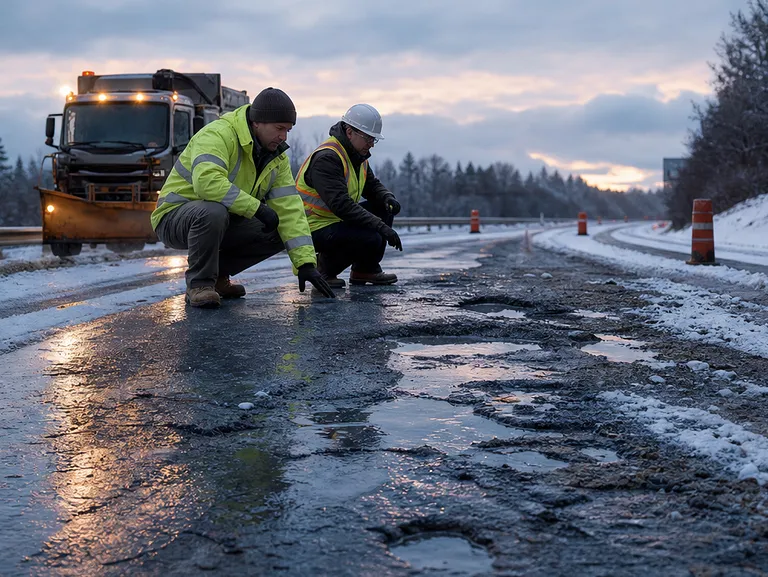
The road that fails because of bad aggregate fails slowly. It cracks in the winter and patches in the spring. Life-cycle cost analysis is merciless here: the most expensive asphalt is the asphalt you have to replace a decade early.
The material science behind limestone durability is a study in internal chaos. But the measurement of that chaos doesn't have to be chaotic. By pairing the destructive acceleration of sulfate baths with the analytical precision of advanced sizing equipment, you turn the invisible fragility of a rock into a visible, bankable number.
Whether you are grinding the sample down to begin the test or using compaction technology to press the survivors into a new specimen, the integrity of your process is the ceiling of your structure’s lifespan. The stones will try to hide their weaknesses. The mesh, when used correctly, does not let them.
Quick Links
Suggested Products
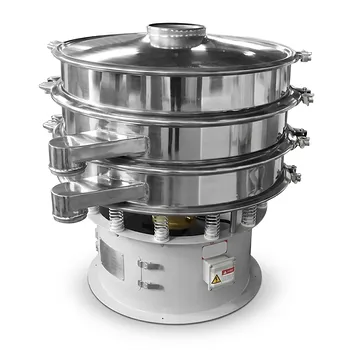
Three Dimensional Rotary Vibrating SieveFurther Reading
The 0.5mm Gateway: Why Bulk Density Is a Measure of Flow, Not Just Weight The 0.033-Inch Gatekeeper: What a Precision Sieve Teaches Us About Life-Saving Powders The Sieve Deception: How Blind Trust in Mesh Numbers Ruins Black Silicon Carbide Performance The Sieve Never Lies: How a Simple Stack of Mesh Became the Lab’s Ultimate Truth-Teller The Hidden Geometry of Grain: What Multi-Dimensional Sieving Reveals About Process, Nutrition, and Consistency
PowderPreparation
Last updated on May 15, 2026