The Sieve That Holds Up Highways: Why Lime’s Particle Size Decides Whether Soil Stands or Fails
Sep 14, 2026
You don't see the sieves.
When a road crew spreads lime over a muddy expanse of future interstate, you see bulldozers, compactors, and survey stakes. What you don't see is a stack of brass rings and stainless-steel mesh that sat in a lab two weeks earlier—the standard analysis sieves that decided whether this ground would hold for 30 years or start cracking in 30 months.
The invisible work of particle-size control is not glamorous. It is, however, the difference between soil that behaves predictably and soil that behaves like soil—which is to say, unpredictably.
The Central Problem: Lime Is Not Just Lime
We tend to think about materials by name, not by structure. “Lime” sounds like a uniform white powder. It isn't.
Fresh out of a kiln, lime contains everything from sub-micron reactive particles to inert, pea-sized chunks of overburnt material. If you dump it directly into damp clay and hope for a pozzolanic reaction, you're hoping. And civil engineering does not run on hope.
The pozzolanic reaction—where calcium from lime reacts with silica in soil to form calcium silicate hydrate (the same binding chemistry as concrete)—only happens at surfaces. A large chunk of lime has almost no available surface relative to its mass. It's a rock. A fine particle of lime passing through a No. 40 sieve (a mesh opening of 425 microns) is mostly surface. It reacts, bonds, and transforms soil into a cement-like matrix.
Oversized particles? Inert. They sit in the soil like tiny time bombs of non-performance.
A sieve stack is thus not a measuring device. It is a performance guarantee.
The Surface-Area to Volume Ratio: A Psychological Lens
Morgan Housel likes to point out that the most important truths are often too simple to believe. People expect complexity. They trust elaborate solutions.
The soil modification industry has elaborate solutions: triple-blend stabilizers, alkali-activation protocols, advanced compaction curves. All of them depend on one embarrassingly simple variable: particle size.
The surface-area-to-volume ratio of a sphere scales inversely with its diameter. Halve the particle size, and you quadruple the reactive surface. The No. 40 sieve enforces a maximum particle size. It erases the long tail of inert bulk that would otherwise dilute every calculation you make about neutralization power, reaction rate, and ultimate strength.
Engineers who skip sieve analysis because it's "basic" are like investors who skip asset allocation because it's "basic." They are building on unknown ground.
Where the Chemistry Actually Happens
When lime meets soil, two parallel processes begin:
- Cation exchange: Calcium ions displace sodium and potassium from clay platelets, collapsing the diffuse double layer and making the soil immediately less plastic, more friable.
- Pozzolanic cementation: Calcium reacts with dissolved silica and alumina to form calcium silicate hydrate (CSH) and calcium aluminate hydrate (CAH) gels that progressively harden into a cementitious skeleton.
Both processes require calcium ions in solution. And dissolution rate is, again, a function of surface area.
Standard analysis sieves control the pharmacokinetics of soil stabilization. Think of it that way. The sieve determines how fast the lime "dose" becomes bioavailable to the ground. Too coarse, and the dose releases too slowly to matter during the critical compaction window. Too fine, and you may be paying for grinding energy you don't need—or creating blinding problems in humid conditions.
The No. 40 Sieve Is Not Arbitrary
There is a quiet poetry in the fact that, across thousands of projects and dozens of soil types, the industry has converged on the No. 40 sieve as a sweet spot for lime-soil modification. It represents a negotiation:
- Fine enough to remove virtually all inert oversize.
- Coarse enough to process high tonnages without excessive cost.
- Open enough to resist blinding from residual moisture.
When you select a No. 40 sieve, you are not just following a standard. You are inheriting the accumulated field experience of pavement engineers who learned, the hard way, that particle size controls everything.
A Sieve Stack Tells You More Than You Think
If a single sieve answers “is it fine enough?”, a sieve stack answers “how will it behave?”
By running lime through a nested series of precision test sieves—say, from No. 30 down to No. 200—you build a particle-size distribution curve. That curve contains practical intelligence:
- The steepness of the curve tells you about process consistency at the lime kiln.
- The percentage passing #200 tells you about dusting potential and handling challenges.
- The calculated reaction efficiency (RE) feeds directly into Effective Neutralizing Power (ENP), the number that actually predicts pH modification.
ENP is not just chemistry. It's chemistry times particle size times crystalline structure. Sieve analysis makes the second variable visible.
| Key Function | Impact on Soil Modification | Equipment |
|---|---|---|
| Impurity Removal | Eliminates inert oversize that weakens stabilized matrix | No. 40 Standard Sieve |
| Surface Maximization | Accelerates CSH formation, increases early strength gain | Precision Mesh Test Sieves |
| ENP Calculation | Predicts actual neutralization performance in the field | Sieve Stack Analysis |
| Secondary Additive Control | Enables fine slag or ash to be alkali-activated effectively | 150-micron Sieves |
| Result Repeatability | Reduces inter-lab variability, improves QC confidence | Standardized Sieve Sets |
| Troubleshooting | Identifies irregular feedstock or feeder problems early | Vibratory / Air-Jet Shakers |
The Hidden Failures: Blinding, Degradation, and False Fineness
Sieving looks mechanical but it is deeply environmental. And environments are aggressive.
Blinding occurs when moist lime cakes onto the mesh, blocking apertures and forcing an artificially coarse result. You think you've removed oversize. You haven't. The resulting soil-lime mixture contains chunks that will not react—a weakness distributed through the entire fill. Blinding is most common in humid labs or with lime that has been improperly stored.
Particle degradation is the opposite error. Prolonged vibratory sieving can fracture fragile lime particles, generating “fines” during the test that did not exist in the original sample. You record a fineness that exaggerates reactivity. In the field, with gentler handling, the material behaves coarser and less reactive than your lab curve predicted.
Both errors share a root cause: treating the sieve shaker as a black box. The amplitude, duration, and even the mesh condition (worn wires, dents, contamination) shape the result more than many chemists would like to admit.
The sieve is a sensor. You must calibrate your sensor.
How Commercial Labs Get It Wrong (And How to Get It Right)
I've watched laboratories run sieve analyses on lime with the same 10-minute vibratory cycle they use for sand. Sand is hard and inert. Lime is reactive and friable. The protocol that works for one can distort the other.
Best practice for lime:
- Dry sieve when possible for quick removal of oversize. But confirm that your lime is truly dry—residual moisture above 2% can cause blinding within 60 seconds.
- Air-jet sieving for critical fines measurement. An air-jet creates negative pressure that pulls particles through the mesh without the mechanical hammering that causes degradation. For ENP determination, this is often the difference between a reliable RE value and a fiction.
- Short, gentle cycles with inspection. Run for 3 minutes, weigh the retained fraction, run for another minute. When the mass passing per minute drops below 0.1% of the total sample, you are done. This minimizes degradation while achieving true endpoint separation.
- Clean sieves between every sample. Cross-contamination between lime and slag or fly ash will ruin a reactivity calculation and cost far more in rework than the 90 seconds it takes to brush a mesh.
The Psychology of Believing a Sieve
We trust numbers that appear on a screen. Weight, pressure, temperature—digital displays convey certainty. But a sieve analysis produces its verdict silently: a pile of powder on a pan, a retained mass you weigh by hand. The result feels analogue, subjective, old-fashioned.
This is a cognitive trap. The sieve stack is arguably more trustworthy than many digital sensors precisely because it is a direct physical separation. There is no transducer, no calibration curve, no assumed linearity. The material either passes through a standardised aperture or it does not.
Yet this directness makes sieves paradoxically easy to dismiss. A technician rushing through a grading test may think, “It either passes or it doesn't, no nuance.” But the nuance lies in how much passes, how quickly, and under what conditions. Those questions require experience to ask, and quality equipment to answer.
When Secondary Additives Enter the Mix
Many modern soil-modification recipes layer materials: lime plus granulated blast furnace slag (GGBS), or lime plus banana leaf ash (BLA). Each additive has its own optimum particle size for activation.
GGBS, for instance, needs to be ground to roughly 150 microns or finer to achieve reasonable reactivity when activated by lime. If your slag sits coarser than that, it behaves more as inert filler than as a cementitious participant. Sieve analysis on the slag stream is not optional—it's a gatekeeper for whether you're actually creating the claimed “ternary binder system” or just adding expensive sand.
A full laboratory solution therefore needs to handle:
- Quick coarse cuts for lime (No. 40)
- Precise fines determination for supplementary cementitious materials (150 micron / No. 100 range)
- Compatibility with moist, sticky powders that blind standard meshes
Where the Equipment Defines the Outcome
A sieve is only as good as the motion that drives it. This is where the tired conversation about “just buy a cheap shaker” collapses.
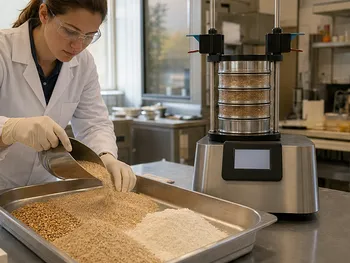
- Vibratory sieve shakers provide the industry-standard vertical oscillation pattern. They are economical and effective for the majority of lime grading work. But they can be aggressive if the amplitude isn't dialed down for friable materials.
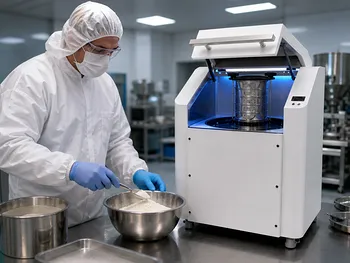
- Air-jet sieve shakers use a rotating jet of air paired with negative pressure to lift and separate particles. They are gentler, dramatically reduce blinding, and produce repeatable results for materials that exhibit both fragility and hygroscopicity—exactly the combination you see in processed lime.
Having both options accessible in your laboratory means you can match the analytical method to the sample's physics, rather than forcing every sample through a single default protocol. This is the difference between compliance (you ran a test) and competence (you got the right answer).
Compaction: The Part That Comes After
Once the lime is correctly sized, it must be integrated into soil, mixed, and compacted. This is where hydraulic presses and sample preparation tools enter the picture—not as separate purchases, but as part of the same workflow.
XRF pellet presses prepare lime samples for rapid chemical analysis. This confirms calcium content and detects magnesium or sulfur levels that might affect reactivity. You sieve to control the physical structure, then press a pellet to verify the chemical structure. The two tests bracket the material: physics and chemistry, structure and composition.
For soil-lime mixture testing, standard laboratory hydraulic presses produce the cylindrical specimens used in unconfined compressive strength (UCS) tests. The specimen density, achieved through precise pressure control, must replicate field compaction conditions. A specimen that is 3% denser than field reality will overstate the soil's strength by 15-20%—a gap that can lead to pavement design errors costing hundreds of thousands.
All of this depends on upstream sample preparation.
- Crushers reduce raw limestone or clinker to a manageable starting size before milling.
- Planetary ball mills achieve the ultra-fine grades needed for certain high-reactivity lime products.
- Powder mixers homogenize lime with powdered additives (slag, ash, silica fume) before the blend ever touches soil.
- Defoaming mixers remove entrapped air from slurry preparations used in alternative stabilization methods.
A soil modification project is not just a construction activity. It is a materials-processing chain that begins in a laboratory and ends beneath a highway. The weakest link in that chain sets the strength of the road.
Choosing Your Sieve Strategy Based on Project Goals
Professionals don't over-specify by default. Over-specifying costs money. Under-specifying costs reputation. The sieve strategy should match the end outcome:
- If maximum bearing capacity is the goal (heavy-haul roads, runways): Use a No. 40 sieve as a minimum, and supplement with No. 100 or No. 200 sieves to profile the reactive fraction. You are chasing every percentage point of potential CSH formation.
- If agricultural pH adjustment is the goal: Focus on the full sieve stack analysis to calculate Reaction Efficiency and Effective Neutralizing Power. The ENP number, not the total calcium content, determines how much lime to apply per acre. Over-application is waste; under-application is crop loss.
- If regulatory compliance is the minimum bar: Know which standard applies (AASHTO T 27/T 11 for soil-lime mixes, ASTM C977 for quicklime, ASTM C110 for hydrated lime). Your sieve set and shaker must be certified and traceable, not just clean.
The Romance of the Sieve Stack
There is a moment in every soil lab when the shaker stops. The technician lifts the lid, and each sieve in the stack holds its fraction of the story: coarse rejects on top, increasingly fine material in the middle, and a pan of powder at the bottom that will do the actual chemical work.
This stack is a physical argument. It says: “This much will react fast. This much will react slow. These chunks will not react at all.” The argument is reproducible, defensible, and transparent. It does not rely on a calibration curve from a manufacturer who last visited your lab three years ago. It relies on wires spaced 425 microns apart, held in a frame that met an international standard the day it was made.
In an era of simulation, digital twins, and AI-driven mix designs, the sieve stack is a reminder that some of the most important engineering truths are established by separating what passes from what stays behind.
Equipment doesn't decide these truths. Equipment reveals them.
That revelation is only as reliable as the tools that perform it. High-quality vibratory and air-jet sieve shakers, precision test sieves with compliant mesh, and compatible sample preparation systems—from crushers and ball mills to XRF pellet presses and mixers—ensure that the physical argument made in your lab corresponds to the physical reality that will stand in the field for a generation.
If you are working on the invisible line where soil becomes structure, start with the mesh. The rest follows.
Quick Links
Suggested Products
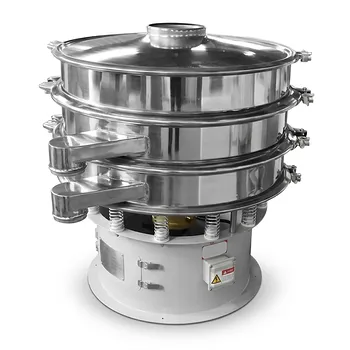
Stainless Steel Rotary Vibrating Sieve High Precision Circular Vibratory Separator Industrial Powder Grading Machine Multi Layer Sifting Equipment Stainless Steel Laboratory Vibratory Test Sieve Shaker Laboratory Air Jet Sieving Machine for Fine Powder Particle Size Analysis and Deagglomeration Small Laboratory Vibratory Sieve Shaker for Powder Gradation and Particle Size Analysis High Frequency Cabinet Type Three-Dimensional Rotary Vibrating Sieve Shaker for Dry Sieving and Particle ClassificationFurther Reading
The 0.5mm Gateway: Why Bulk Density Is a Measure of Flow, Not Just Weight The 0.033-Inch Gatekeeper: What a Precision Sieve Teaches Us About Life-Saving Powders The Sieve Deception: How Blind Trust in Mesh Numbers Ruins Black Silicon Carbide Performance The Hidden Geometry of Grain: What Multi-Dimensional Sieving Reveals About Process, Nutrition, and Consistency The Great Unblinding: How a Simple Sieve Unlocks the Hidden Fortunes in Electronic Waste
PowderPreparation
Last updated on May 14, 2026
Related Products
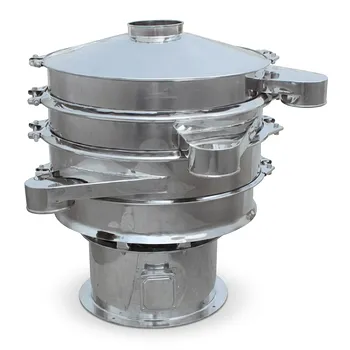
Stainless Steel Rotary Vibrating Sieve High Precision Circular Vibratory Separator Industrial Powder Grading Machine Multi Layer Sifting Equipment
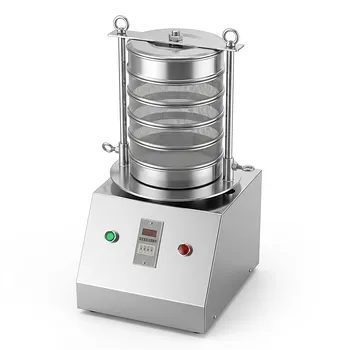
Stainless Steel Laboratory Vibratory Test Sieve Shaker
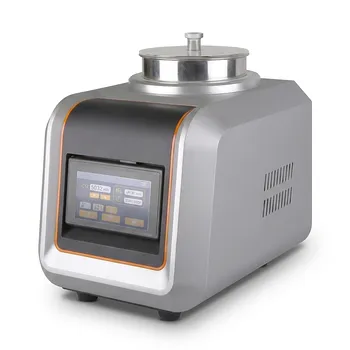
Laboratory Air Jet Sieving Machine for Fine Powder Particle Size Analysis and Deagglomeration
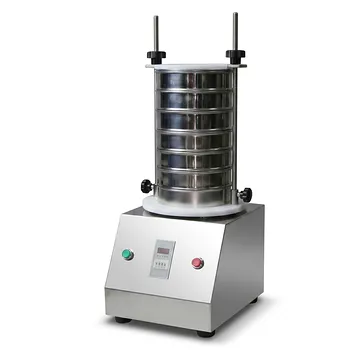
Small Laboratory Vibratory Sieve Shaker for Powder Gradation and Particle Size Analysis
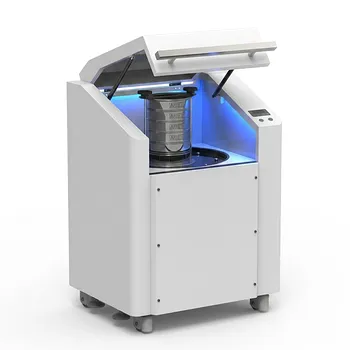
High Frequency Cabinet Type Three-Dimensional Rotary Vibrating Sieve Shaker for Dry Sieving and Particle Classification