The Purity Conscience: How Alumina Grinding Media Preserve the Fracture Toughness You’ll Never See
Aug 06, 2026
The Invisible Architect of Ceramic Failure
You designed the perfect Zirconia Toughened Alumina. The formula is balanced. The calcination is precise. The sintering curve is a thing of quiet beauty.
Yet the component fractures too early.
The culprit isn’t your sintering furnace. It’s a handful of foreign atoms that crept in during a step most labs treat as a brute-force chore: grinding. A speck of tungsten carbide, a sliver of steel—these tiny invaders seed microscopic “soft spots” that unravel your ceramic’s toughness from the inside.
This is the purity paradox of advanced ceramics. What you cannot see will eventually decide what you can measure.
The Psychology of Impurity Distrust
As engineers, we worship control. We tweak dwell times, ramp rates, and atmosphere. But grinding often sits in a psychological blind spot—it feels like a physical, not chemical, operation. We think we’re just making particles smaller.
In reality, every collision between media and powder is a micro-weld, a sub-atomic donation. The jar and the balls are actively dissolving into your product. Chemists understand this intuitively; mechanical engineers sometimes forget it.
To achieve a composite that harnesses the stress-induced transformation toughening of zirconia, you must first banish the amateur mistake of chemical asymmetry between grinding media and powder matrix.
A Speck of Tungsten Carbide and the Demise of a Perfect Composite
Picture a single WC particle, 5 microns across, embedded in your ZTA green body. During sintering at 1600°C, this foreign speck refuses to densify at the same rate. It creates a residual stress halo. On cooling, that halo becomes a ready-made microcrack.
When load is applied, the crack doesn’t hit a zirconia particle and trigger graceful transformation toughening. It propagates straight from the impurity, skipping your microstructural safety nets. Your expensive zirconia dispersion just got outplayed by a piece of someone else’s grinding jar.
This is why the homogeneous grinding principle exists. It’s not a purity fetish—it’s a defensive strategy against probabilistic failure.
The Homogeneous Grinding Principle: Let Wear Debris Become Invisible
The principle is deceptively simple: Mill the material with grinding media of the same chemical composition as the powder matrix.
For ZTA, the matrix is alumina (Al₂O₃). Using high-purity alumina jars and alumina balls means the unavoidable micro-wear produces debris that is chemically identical to the majority phase.
That debris doesn’t need to be filtered out, tolerated, or compensated for. It integrates seamlessly during sintering. It becomes part of the composite—not a defect, but a quiet contributor to the final structure.
What This Demands from Your Grinding Media
- Chemical homogeneity with the alumina matrix.
- High enough purity that no secondary phases (like silica or iron) are introduced.
- Sufficient wear resistance to keep the debris volume negligible relative to the batch size.
The Trade-Off Labyrinth: Alumina vs. Zirconia Media
You might now ask: “Why not use zirconia media? ZTA already contains zirconia, after all.” That question leads into the nuanced territory of grinding economics and physics.
| Media Type | Density | Wear Rate | Contamination Risk | Best For |
|---|---|---|---|---|
| High‑purity alumina | ~3.6 g/cm³ | Moderate | Integrates fully into alumina matrix | ZTA where absolute phase control matters |
| Yttria-stabilized zirconia | ~6.0 g/cm³ | Low | Adds extra ZrO₂, shifting Y₂O₃ balance | ZTA when you can pre‑compensate the recipe |
| Tungsten carbide | ~14.9 g/cm³ | Very low | Introduces catastrophic second phases | Almost never for oxide ceramics |
Alumina media wins not because it’s more durable, but because it’s more invisible. It grinds more slowly and wears out faster—but every particle it sheds speaks the same chemical language as your powder.
That’s a trade worth making when fracture toughness is non‑negotiable.
Engineering Serendipity: When Wear Debris Becomes a Feature
Morgan Housel once noted that the most valuable investments are the ones where time is on your side. In ceramic processing, chemical compatibility is the equivalent of compounding. Small, consistent losses (media wear) do no harm; they simply add to the base material volume.
This turns a liability into a feature:
- No foreign fluxing agents that accelerate abnormal grain growth.
- No grain‑boundary pinning from insoluble oxides that aren’t part of your design.
- No change in the zirconia‑to‑alumina ratio except what you explicitly weighed in.
Your sintered microstructure becomes a faithful, scaled‑up version of your powder blend—not a corrupted one.
Beyond ZTA: The Universal Law of Contamination‑Free Grinding
This isn’t just about ZTA. The homogeneous grinding principle applies any time the powder matrix must remain chemically pristine:
- Alumina ceramics (99.9% Al₂O₃): Use high‑purity alumina media. Zirconia contamination can color the fired body and alter grain‑boundary conductivity in functional ceramics.
- Zirconia ceramics (YSZ): Use yttria‑stabilized zirconia media. Alumina media would introduce a glassy phase.
- Silicon nitride: Use silicon nitride or sialon media to avoid oxide contamination.
- Battery cathode materials (e.g., NMC): Use media that won’t leach magnetic impurities or dopants that sabotage electrochemical performance.
In every case, the grinding jar is not a passive container. It is an active participant in solid‑state chemistry.
A Symphony of Forces: From the Ball Mill to the Isostatic Press
Grinding is only one movement in the full sonata of ceramic sample preparation. A planet’s‑worth of kinetic energy inside a planetary ball mill accomplishes dispersion. But to transform that purified powder into a high‑strength green body, you need equal precision in compaction.
Why Your Compaction Step Deserves Equal Purity Paranoia
An inhomogeneous green density—caused by uniaxial die friction or air pockets—creates differential sintering shrinkage. That shrinkage can warp your part, or worse, generate internal stresses that open cracks during binder burnout.
This is where isostatic pressing becomes not a luxury, but an insurance policy for the purity work you did during grinding.
- Cold Isostatic Pressing (CIP) applies uniform hydrostatic pressure to the powder sealed in a flexible mold, achieving near‑perfect density homogeneity.
- Warm Isostatic Pressing (WIP) adds mild heat to enhance binder flow, achieving higher and more uniform green density.
- Vacuum Hot Pressing then densifies under uniaxial pressure and high temperature, often in a purging atmosphere that protects your hard‑won chemical identity.
The equipment chain mirrors the material’s own logic: defend homogeneity at every step.
Equipment Decoded: Building Your Contamination‑Free Workflow
You start with a brittle chunk of calcined ceramic or coarse powder.
Step 1: Coarse Crushing Without Metal Dreams
Use a jaw crusher with ceramic‑lined plates, or a cryogenic grinder for tough polymers or temperature‑sensitive precursors. The goal: get below 1 mm without a shadow of iron.
Step 2: High‑Energy Milling with the Right Conscience
Here, select a planetary ball mill loaded with appropriately matched jars and media. For ZTA and alumina‑matrix composites:
- Alumina jars (99.5%+ purity) lined inside and out.
- Alumina grinding balls in a graded size distribution to maximize collision frequency without excess wasteful debris.
If you need sub‑micron particle sizes for reactive sintering, a jet mill uses particle‑on‑particle impact—no media at all. This is the ultimate contamination‑free solution, though it requires a precise air or nitrogen supply and a different economic calculation.
Step 3: Classification with Care
Air‑jet sieve shakers or vibratory sieve shakers with stainless steel frames but non‑metallic mesh interfaces preserve the powder’s surface chemistry. Fine powders attract moisture and ions; keep the environment controlled.
Step 4: Mixing and Defoaming Prior to Compaction
A planetary centrifugal mixer homogenizes powder blends and removes trapped air without introducing liquid media or wearing parts that could shed. For slurries, a defoaming mixer ensures no bubbles become lenticular voids in the green body.
Step 5: The Isostatic Promise
After a pre‑press on a standard laboratory press, transfer the compact to a CIP or WIP vessel. This final equalization step materially improves sintered strength uniformity and reduces warpage rejection rates in production.
Throughout this chain, every machine choice either upholds or betrays the chemical purity you secured in the mill. A single mismatch cascades into a system‑wide failure.
The Art of Letting the Material Win
There’s a quiet romance in accepting a material’s own logic. Instead of fighting wear debris, you choose media that turn it into an asset. Instead of bracing for impurity, you design a system where the only atom that can intrude is one that belongs.
That is the secret of ZTA toughness: not just the zirconia that transforms, but the alumina that refuses to compromise. The grinding jar with the same name as the matrix. The press that applies pressure without prejudice. The furnace that seals the truth you have so carefully preserved.
When your ceramic outperforms its specification, no one will think to credit the grinding media. And that is exactly the point.
Quick Links
Suggested Products
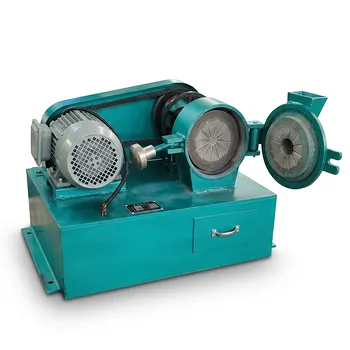
Laboratory Disc Mill Medium Hard Material Grinding Coal Coke Ore Pulverizer Continuous Feeding Grinder High Efficiency Pulverizer for Lab Sample PreparationFurther Reading
The Grain, the Grinder, and the Hidden Poison: Why Mycotoxin Testing Depends on a Perfectly Boring Pulverization The Sleeping Giant in the Ash: How a Laboratory Ball Mill Unlocks High-Volume Sustainable Cement The Particle Size Orchestra: Engineering Precision Powders for Nutrient Enrichment Research The Clock Inside the Rock: Why Precision Timing Makes or Breaks Feldspar Processing From Dust to Data: How Precision Laboratory Presses Forge Truth in Mineral Testing
PowderPreparation
Last updated on May 14, 2026