The Invisible Cage: Why Your Hesperidin Won’t Go Amorphous (And the Physics of Breaking It Free)
Oct 19, 2026
The Silence of the Crystals
You are staring at a report. It’s a failure. The peaks on the X-ray diffraction chart are sharp, jagged, and stubbornly present. Hesperidin, a bioflavonoid with immense potential, is locked in its crystalline cage. It wasn’t supposed to be like this.
The goal was simple: break the structure. Use mechanical force to transform an ordered crystal into a disordered, amorphous solid dispersed in a polymer matrix. Yet, after hours in the mill, your material is still stubbornly organized.
We often blame the recipe—the ratio of drug to polymer, the temperature of the room. But the real culprit is usually more fundamental. It’s the physics of the impact. You aren’t hitting it hard enough, and you aren’t doing it cleanly enough.
The solution isn’t just more time. Time creates heat, and heat creates degradation. The solution lies in the brutal, efficient transfer of kinetic energy. It lies in stainless steel.
The Physics of Disruption
To turn a crystal into an amorphous powder, you have to inject chaos into a perfectly ordered system. You aren't just breaking particles; you are creating defects in the crystal lattice until the structure collapses in on itself.
Density is Non-Negotiable
This is where the psychology of material selection gets interesting. We reach for ceramics—zirconia or alumina—because they are hard. Hardness feels safe. Hardness feels clean.
But hardness is not mass. The critical variable in amorphization is kinetic energy ($E_k = \frac{1}{2}mv^2$). Stainless steel is nearly twice as dense as alumina. A stainless steel ball of the same size simply carries more weight into the collision. It doesn't just scratch the surface; it delivers a body blow that propagates defects deep into the particle core.
The 20 Hertz Reality
This isn't a gentle mixing process. True amorphization requires sustained, high-frequency collisions. We’re talking about the grinding media hitting the powder up to 20 times per second.
At 600 rpm, the mechanical strength of the jar becomes a survival test.
- Ceramics can microfracture.
- Polymers are too light.
- Stainless steel stays intact.
It provides a rigid containment field, ensuring that the motor's energy isn't absorbed by a deforming vessel but is reflected directly back into the Hesperidin.
The Purity Paradox
Here is the inherent tension of high-energy milling: the most effective grinding media is also the most likely to contaminate your sample. The fear of “metallic fragments” has killed more excellent results than friction ever has.
Wear Resistance as a Chemical Guard
We must distinguish between soft steel and hardened stainless steel. The latter forms a passive chromium oxide layer. Under the punishment of a 10:1 ball-to-powder ratio—a technical standard for driving solid-state reactions—high-grade stainless jars exhibit excellent wear resistance.
The debris, if any, is often negligible in atomic percentage.
- You avoid the iron filings that plagued the old paradigm.
- You sidestep the silica dust that changes dissolution profiles.
You get the mechanical energy necessary for amorphization without turning your pharmaceutical-grade powder into an industrial slurry.
The Geometry of Contact
Efficiency is about distribution. A flat-bottom jar isn't an aesthetic choice; it's an engineering one.
When you combine a flat-bottom jar with a mix of ball diameters (say, 15mm and 20mm), you eliminate the "dead zones" common to round-bottom vessels. Scaling up a process that works on 50 grams to one that works on 500 grams requires this geometric predictability. Without it, your energy transfer is erratic.
Heat: The Silent Degrader
The room is air-conditioned. Your mill looks still from the outside. Inside that 500 mL jar, however, the temperature is spiking.
The Insulation Trap
Ceramic jars are thermal insulators. They trap the heat of friction at the point of contact. For Hesperidin, a delicate molecule, this localized heat is the enemy. It doesn't just melt the substance; it causes pre-emptive degradation. It ages the amorphous dispersion before it is even fully formed.
The Conduction Advantage
Stainless steel has high thermal conductivity. It acts as a heat sink, pulling thermal energy away from the powder and spreading it across the entire mass of the jar.
This doesn't mean you can mill non-stop for 30 hours. The risk of heat accumulation is real, and the steel will eventually become hot to the touch. But it buys you time. It smooths the thermal curve. Combined with interval milling—pausing cycles to let the jar radiate heat—you maintain the structural integrity of the Hesperidin-polymer bond.
The Flaw in the Method
A balanced story requires acknowledging the trade-offs. Stainless steel is a tool, not a miracle.
First, trace contamination is biologically real. If you are synthesizing a product with an extreme zero-tolerance policy for iron down to the parts-per-billion level, even hardened steel presents a risk that requires post-processing chelation.
Second, the metal-on-metal friction in a dry milling environment can create "cold welding" if the intensity is too high without a process control agent. You must respect the physics. You must monitor the load.
The Engineered Solution
The difference between a crystalline failure and an amorphous success usually breaks down into three distinct configurations. Science is rarely a monolith; adjust the machine to the goal.
The Protocol Selection Matrix
| Primary Objective | Critical Parameter | Technical Configuration |
|---|---|---|
| Maximum Amorphization | Energy Density | Use a 10:1 ball-to-powder ratio with mixed diameters (15/20mm) in a flat-bottom jar. |
| Absolute Chemical Purity | Wear Limitation | Prioritize hardened, high-chrome stainless steel jars and shorten cycle times to reduce metal shedding. |
| Thermal Stability | Heat Dissipation | Leverage stainless steel conductivity via external cooling jackets or strict interval milling cycles. |
Beyond the Single Machine
The milling jar is just the start. The ecosystem around the mill determines the reproducibility of your data. Before you grind, you must characterize the particle size. After you grind, you must consolidate the powder without reverting it to crystal.
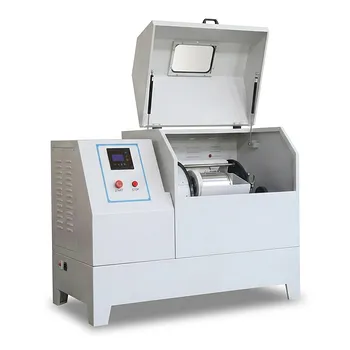
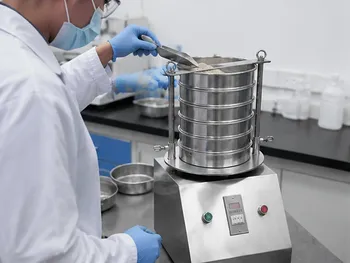
This requires a system. Vibratory sieve shakers ensure your feed material is uniform, preventing the slurry effect inside the jar. A comprehensive range of hydraulic presses—from standard lab presses for simple compaction to Cold Isostatic Presses (CIP) for ultra-uniform density—ensures the amorphous state is stabilized for further testing or tablet formulation.
The romanticism of the engineer lies here: in recognizing that nature resists randomness, and we must impose it with precision. The stainless steel jar is not just a container; it is a crucible where order is systematically dismantled to create a more useful state of matter.
Ready to dismantle the crystalline cage? Contact Our Experts to configure a complete ball milling system that matches your specific material purity and throughput requirements.
Quick Links
Suggested Products
Vibratory Disc Mill for Rapid Fine Grinding and High Throughput Sample Preparation of Hard and Brittle Materials Laboratory Disc Mill for Fine Sample Preparation of Hard and Brittle Materials Laboratory Disc Mill Medium Hard Material Grinding Coal Coke Ore Pulverizer Cross Beater Mill for Brittle Material Grinding and Continuous Fine Crushing Industrial Sample Preparation Heavy Duty Horizontal Planetary Ball Mill for Efficient Industrial Grinding and Sample PreparationFurther Reading
The Sledgehammer Before the Scalpel: Why Pre-Pulverization Decides the Fate of Your Advanced Ceramic The Particle Paradox: Why the Secret to a Perfect Effervescent Tablet Lives in the Grinding Room The Brittle Truth: Why Your Catalyst's Potential Is Trapped in the Ribbon, and the One Violent Step to Set It Free The Particle Size Orchestra: Engineering Precision Powders for Nutrient Enrichment Research The Sieve Never Lies: How a Simple Stack of Mesh Became the Lab’s Ultimate Truth-Teller
PowderPreparation
Last updated on May 14, 2026
Related Products
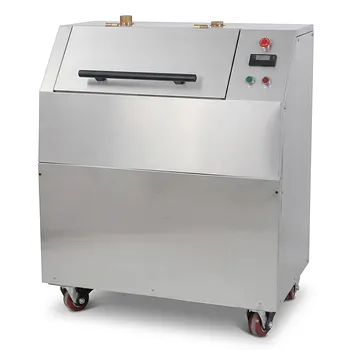
Vibratory Disc Mill for Rapid Fine Grinding and High Throughput Sample Preparation of Hard and Brittle Materials
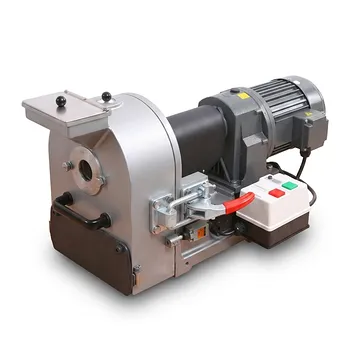
Laboratory Disc Mill for Fine Sample Preparation of Hard and Brittle Materials
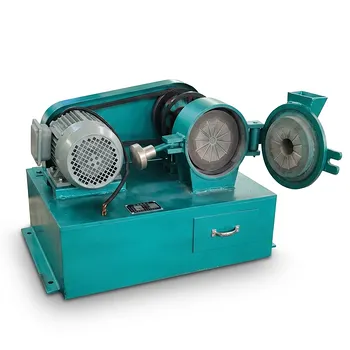
Laboratory Disc Mill Medium Hard Material Grinding Coal Coke Ore Pulverizer
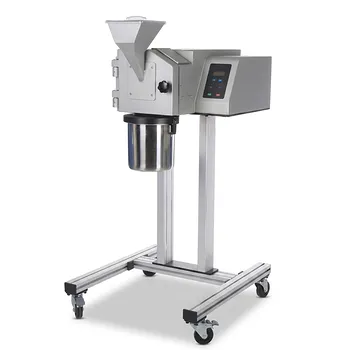
Cross Beater Mill for Brittle Material Grinding and Continuous Fine Crushing Industrial Sample Preparation