Breaking Glass to Build Homes: The Hidden Physics of Grinding Waste into Eco-Bricks
Jun 26, 2026
The Puzzle Inside a Bottle
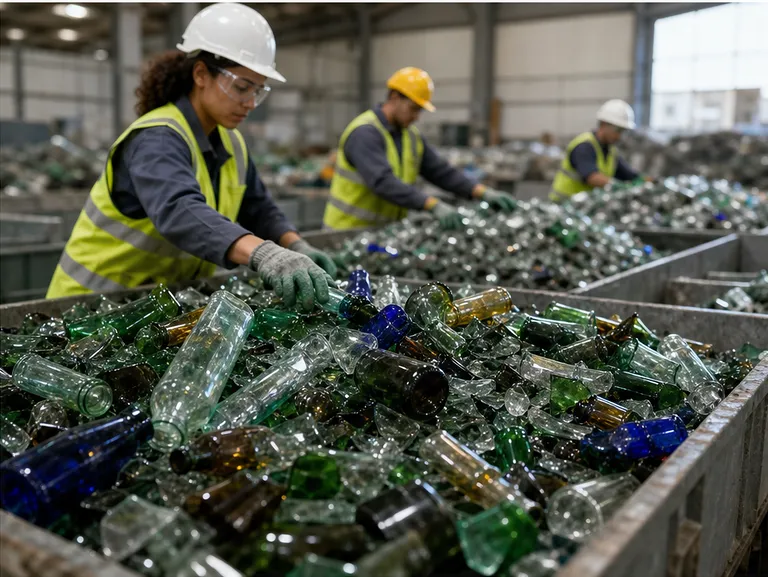
Every day, builders, researchers, and city planners face a quiet, stubborn problem: mountains of discarded glass. Bottles, jars, and industrial cullet pile up because melting them back into container glass is often too costly and too finicky. The raw material isn’t the issue. The logic of reuse is.
The issue is that glass in its bulk form is chemically lazy. It sits. It doesn’t bind. It doesn’t react. For years, the construction industry looked at this mountain and saw only aggregate—cheap filler for low-grade concrete, nothing more.
But a small, thrilling idea has been gaining momentum: what if the glass isn’t just filling space? What if, with the right mechanical activation, it could become the reactive heart of a new generation of eco-friendly red bricks?
This isn’t a story about recycling. It’s a story about physics. It’s a story of surface area.
The Problem with Big Pieces
Start with a shard of waste glass. Chemically, it’s a goldmine: rich in silica (SiO₂) and alumina (Al₂O₃), the same ingredients that give clay bricks their strength. But in a large fragment, those oxides are trapped inside a dense, inert structure. Mix shards into brick clay, and you get exactly what you’d expect: a brick with glass inclusions that does little except interrupt the clay matrix.
To turn glass from inert filler into a functioning binder, you have to break something much more fundamental than the glass itself. You have to break the scale at which physics operates.
The Romantic Truth: It’s All Surface Area
This is where the lab grinding equipment enters the story. And yes, this is where a technical process becomes quietly beautiful.
When you take glass and apply controlled mechanical stress—high-energy impacts, shear forces, attrition—you aren’t just making smaller pieces. You are creating new surface area at an exponential rate. A single gram of glass, milled to a d90 of less than 15 µm, presents an enormous landscape of exposed silica and alumina to the surrounding clay matrix.
This is the invisible lever that changes everything. A larger specific surface area means more contact points for chemical exchange. It means the glass stops being a passenger and starts becoming a participant in the brick’s creation.
The Mechanics of Activation
Laboratory grinding equipment is designed to exploit this principle ruthlessly:
- Jaw and roll crushers handle the initial violence, reducing dump-ready cullet into manageable feedstock.
- High-energy planetary ball mills then take over, subjecting the particles to impacts that fracture grains along microscopic boundaries.
- Jet mills use particle-on-particle collisions to reach the ultra-fine distributions without introducing excess contamination.
The engineer’s romance here isn’t about machines. It’s about the moment the glass particle becomes so small that its surface energy flips a chemical switch—triggering pozzolanic reactions during brick sintering that would never occur at the macro scale.
The Two Gifts of Fine Grinding
Grind glass fine enough, and you unlock not one but two distinct mechanisms for building a better brick.
Gift One: Chemical bonding. The fine silica and alumina dissolve into the liquid phase at high temperature and then reform as a denser, more continuous ceramic network. The glass melts uniformly, acting as a flux that bonds the entire matrix together, not just in isolated pockets. The result is higher compressive strength, lower water absorption.
Gift Two: Physical packing. Think of the clay particles as irregular spheres. No matter how tightly you pack them, microscopic voids remain. Finely ground glass, an order of magnitude smaller than typical clay grains, fills these gaps before the brick is even fired. This higher “green density” reduces drying shrinkage and minimizes structural cracking—problems that have plagued brickmakers for centuries.
There’s an elegance in this dual role. The same milling process that makes the glass chemically reactive also makes it mechanically adhesive. The brick becomes both stronger and more stable because of what happened in the mill.
The Hidden Trade-offs No One Talks About
But no good engineering story hides the costs. The relationship between particle size and benefit isn’t linear.
-
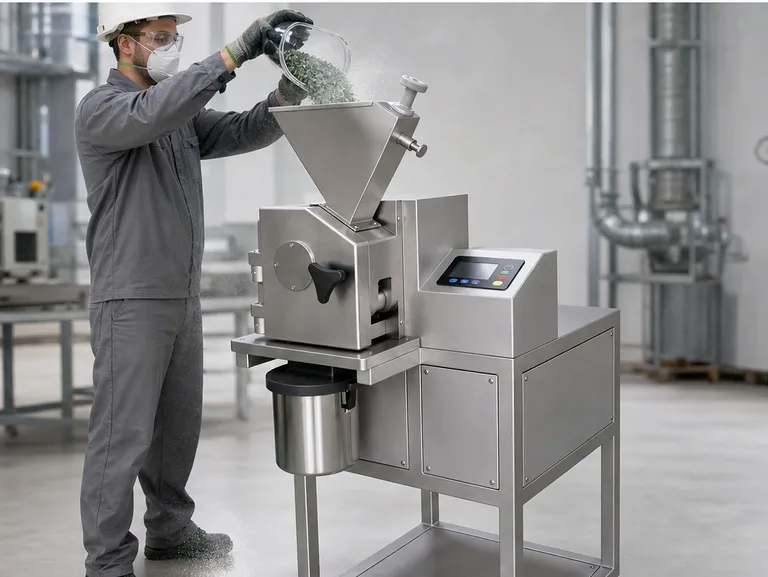
Energy appetite. Achieving a d90 of 5 µm demands far more kilowatt-hours than hitting 30 µm. In a project already motivated by environmental benefit, researchers must find the “sweet spot” where the reactivity gain still outweighs the carbon footprint of grinding. A planetary ball mill turned up too high isn’t a sustainability tool—it’s a liability.
-
Abrasive punishment. Glass is silica, and silica eats steel. Grinding media and mill liners wear rapidly, contaminating the powder with trace metals. This can alter brick color, or worse, compromise the very chemical binding you’re trying to achieve. Material selection—alumina ceramic linings, for instance—stops being an accessory and starts being essential.
-
Over-milling’s paradox. Go too fine, and particles agglomerate, forming weak clumps that behave like larger grains inside the clay mix. You chase surface area and end up losing homogeneity.
Understanding these trade-offs is what separates a successful formulation from an expensive waste of time.
How to Design Your Grinding Strategy
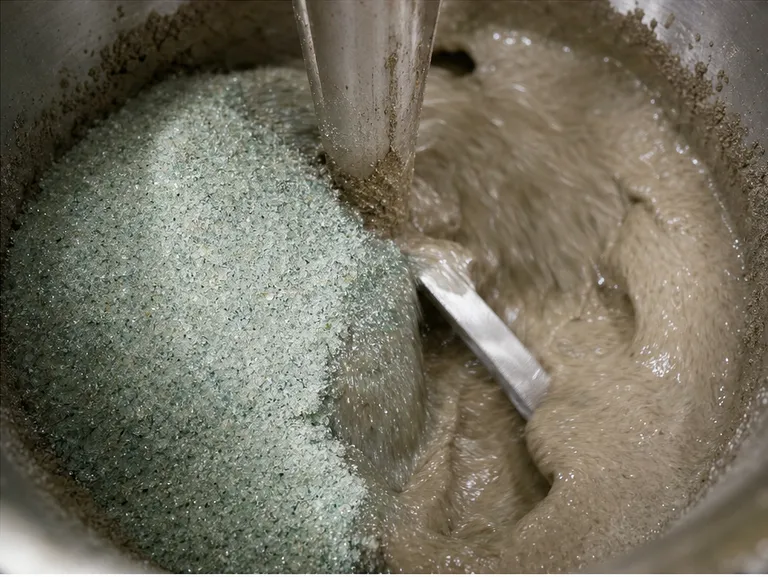
The answer isn’t “grind as fine as possible.” It’s “choose your objective and let that dictate your mill’s parameters.”
| Primary Objective | Grinding Strategy | Equipment Focus |
|---|---|---|
| Maximum Structural Strength | Pursue the finest distribution achievable (d90 <10 µm). Prioritize chemical activation over energy cost. | High-energy planetary ball mill, occasionally jet milling for uniform fines |
| Cost-Effective Recycling | Target a coarser “glass sand” range. Accept moderate strength gains in exchange for drastically lower energy use. | Efficient jaw crusher plus short-cycle disc or rotor mill |
| Heavy Metal Stabilization | Precision-mill to d90 <15 µm to maximize immobilization sites. Surface area, not bulk size, is the key. | Ball mill with classification sieves to ensure tight distribution control |
For researchers working with clay-glass formulations, the process doesn’t end with crushing. Homogeneity matters just as much as particle size. A powder mixer or defoaming mixer ensures the glass distributes evenly through the clay before pressing. And when it’s time to form test briquettes, controlled pressure from a hydraulic press—even better, a Cold Isostatic Press (CIP)—eliminates density gradients that can distort sintering results.
Closing the Loop: From Waste to Precision Feedstock
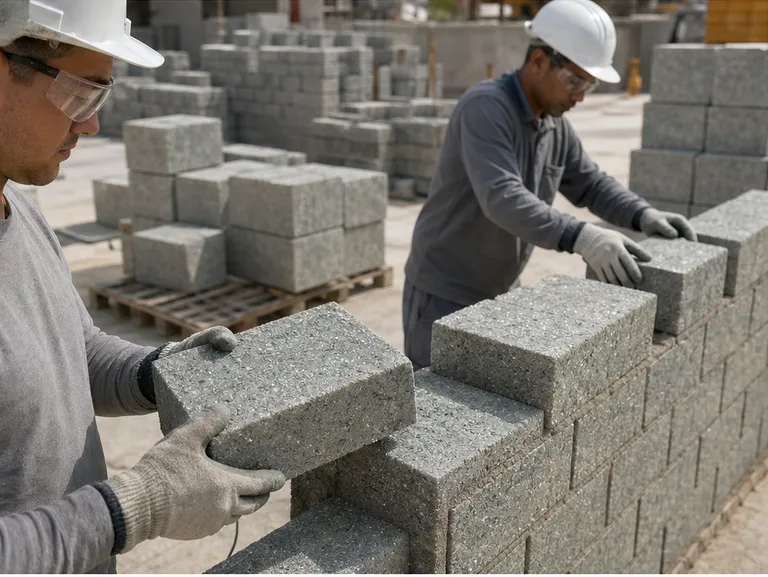
A bottle thrown away is a problem. That same bottle, milled under controlled conditions and packed with intention into a brick’s structure, becomes a solution. The transformation isn’t glamorous from the outside. It’s steel, abrasion, noise, and fine dust.
But inside all that noise is a quiet, elegant physics. The physics of making a surface area large enough that chemistry wakes up. It’s a reminder that some of the most important innovations in sustainability don’t come from exotic new materials. They come from better processes. They come from grinding smarter.
We specialize in providing the complete laboratory sample preparation solutions that make this transformation possible—from high-energy planetary ball mills and jet mills for mechanical activation, to sieve shakers and powder mixers for uniformity, through to hydraulic and Isostatic Presses for precision forming. Getting the particle right is the whole game.
Contact our experts to configure a grinding and compaction system tuned to your eco-friendly construction research. Let’s turn the glass problem into structural strength.
Quick Links
Suggested Products
Heavy Metal Free RoHS WEEE Testing Sample Pretreatment Cutting Mill Industrial Solid Waste Grinder for Plastics and Electronics Water Cooled Airflow Ultra Fine Grinder for Low Temperature Material Processing 500g Capacity Water Cooled Low Temperature Grinder with Variable Speed and Safety Cover Water Cooled Pulse Jet Ultrafine Grinder Multifunctional High Efficiency High Speed Laboratory Grinder
PowderPreparation
Last updated on May 15, 2026
Related Products
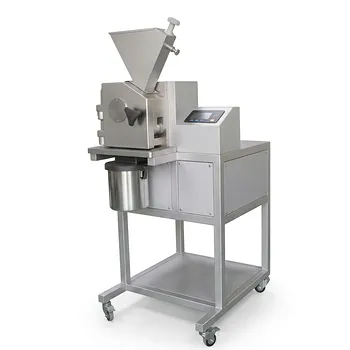
Heavy Metal Free RoHS WEEE Testing Sample Pretreatment Cutting Mill Industrial Solid Waste Grinder for Plastics and Electronics
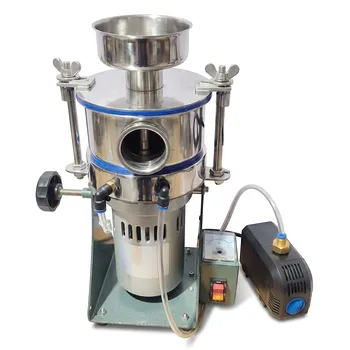
Water Cooled Airflow Ultra Fine Grinder for Low Temperature Material Processing
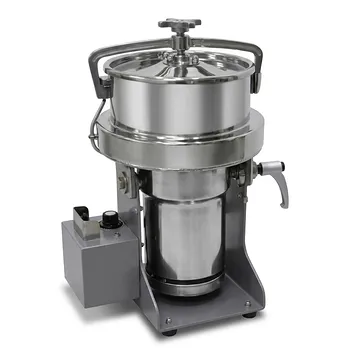
500g Capacity Water Cooled Low Temperature Grinder with Variable Speed and Safety Cover
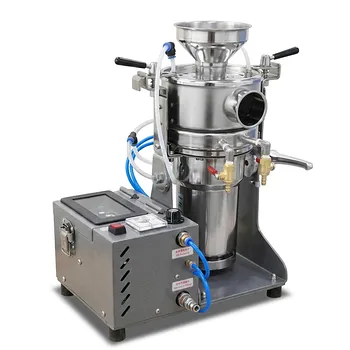
Water Cooled Pulse Jet Ultrafine Grinder
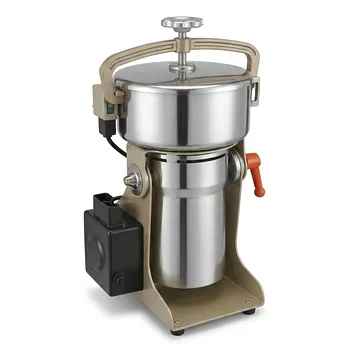
Multifunctional High Efficiency High Speed Laboratory Grinder
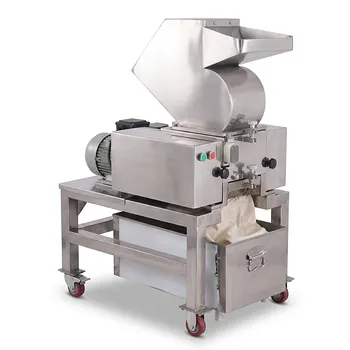
Stainless Steel Coarse Crusher for Pharmaceutical Food and Plastic Material Processing
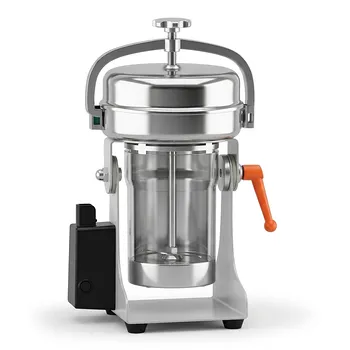
High Efficiency High Speed Grinder 2200W 25000 RPM Laboratory Sample Preparation
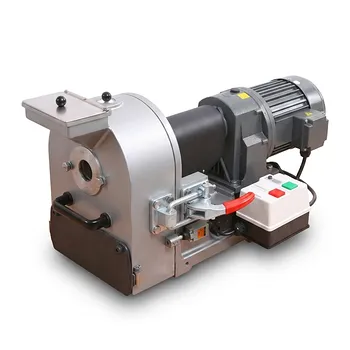
Laboratory Disc Mill for Fine Sample Preparation of Hard and Brittle Materials
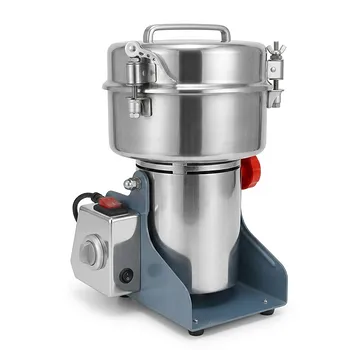
Small High-Speed Grinder for Efficient Laboratory Sample Preparation
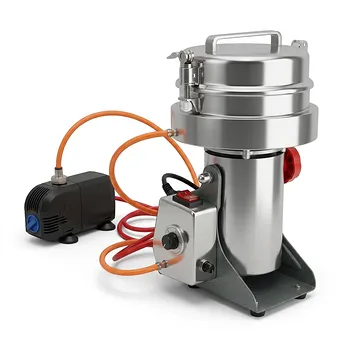
Water Cooled High Speed Grinder with Cryogenic Option for Laboratory Sample Preparation
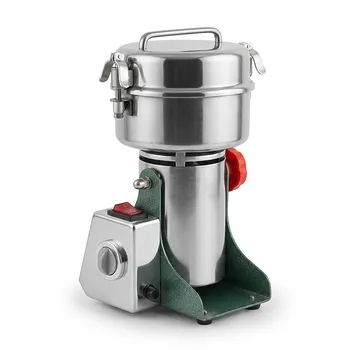
Small High-Speed Swing Grinder for Laboratory Sample Preparation
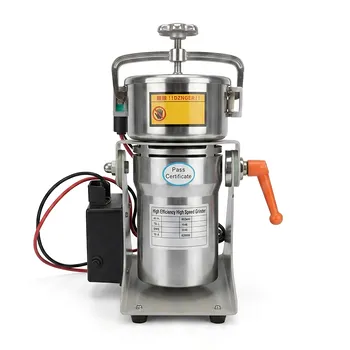
High Efficiency High Speed Grinder Laboratory Mill 1300W 25000rpm
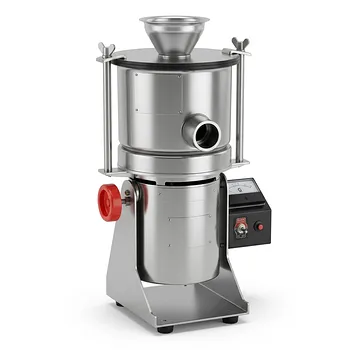
Laboratory Ultrafine Impact and Airflow Grinder for Precise Particle Size Control
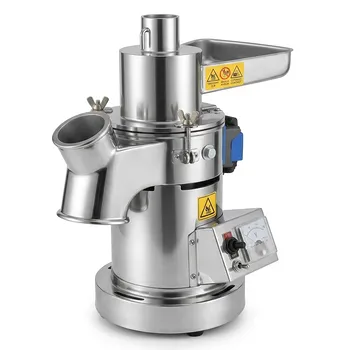
Continuous Feeding Grinder High Efficiency Pulverizer for Lab Sample Preparation
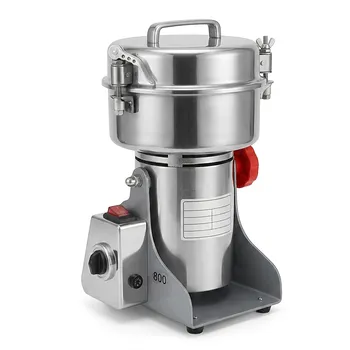
Small High-Speed Laboratory Grinder for Rapid Sample Preparation
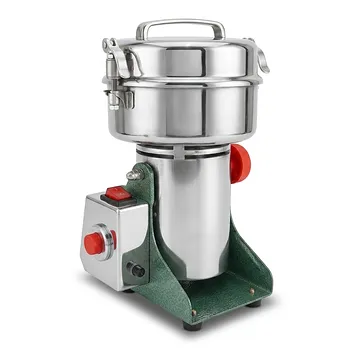
Small High-Speed Laboratory Grinder for Powder Processing
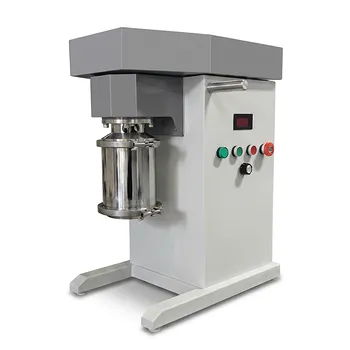
Nano Laboratory Bead Mill Desktop Sub Micron Sand Mill Screenless Seal Less Powder Grinder
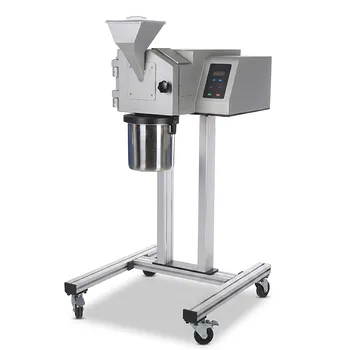
Cross Beater Mill for Brittle Material Grinding and Continuous Fine Crushing Industrial Sample Preparation
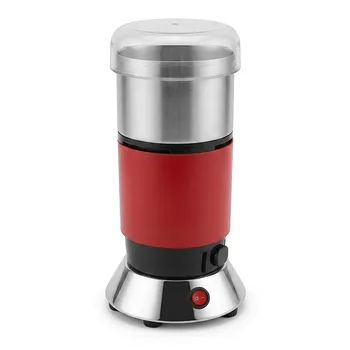
Micro Solid Sample Grinder High Speed Pulverizer for Laboratory Small Batch Grinding