The Contaminant You Don’t See: Matching Your Milling Media to the Soul of Tungsten Carbide
Aug 05, 2026
The 3 AM Failure That Shouldn’t Have Happened
A batch of cutting tool inserts came out of the sintering furnace looking perfect. Dense. Uniform. Shiny. But in the machining test, they chipped. Prematurely. Inexplicably.
Lab analysis traced the culprit: microscopic iron-rich phases scattered through the grain boundaries. They weren’t supposed to be there. They came from somewhere no one thought to check—the milling process itself.
The grinding jar was steel. The balls were steel. And over hours of high-energy milling, tiny flakes of that steel had been peeled away and blended into the tungsten carbide powder like a slow, invisible poison.
This is not an equipment failure story. It’s a chemistry-matching story. And it’s one of the quietest, most expensive mistakes in powder processing.
The Unnatural Problem of Hard Things
Processing tungsten carbide is paradoxical. You want to break down one of the hardest engineering materials on Earth into fine, uniform powder. But the act of breaking it exerts immense force on your tools. Tools that are often made of something softer. Or something chemically alien.
High-energy ball milling is not gentle. It’s a controlled chaos of collisions. Every impact that fractures a powder particle also sends a micro-shock into the grinding media. Over time, that media sheds.
If the shed material matches your target chemistry, it’s a “friendly” addition. If it doesn’t, it becomes a defect nucleating site you’ll pay for later—in brittleness, in sintered porosity, in scrapped batches.
Two chemistries collide. One loses.
When steel media meets WC powder, the steel loses. Iron atoms diffuse. Chromium from stainless grades mixes in. These foreign metals lower the thermodynamic stability of the final alloy. They alter grain growth kinetics. And they create weak points that no amount of sintering temperature can heal.
Every part-per-million of unintended iron is a stress concentration waiting to fail.
Chemistry as a Strategy, Not a Default
The industry standard is not a marketing gimmick. It’s a hard-won lesson from decades of failure: use tungsten carbide (WC-Co) grinding jars and balls when you mill WC-based powders.
Why? Because the grinding media shares virtually the same chemical composition as the target powder. Any wear is chemically identical to the primary phase. That means:
- No heterogeneous metallic contamination
- No interference with grain boundary chemistry
- No unintended liquid-phase formation during sintering
The wear becomes a trace additive—sometimes even aiding the integration of carbide and binder phases.
This is not just purity. This is chemical continuity.
In nanocrystalline research, purity is non-negotiable
When you study grain growth suppression in nano-WC alloys, even parts-per-million of foreign metal can skew your activation energy calculations. Your phase stability data become ghosts—accurate to your mill, not to your material.
Matching the jar chemistry to the powder chemistry makes your mill disappear from the equation. It becomes transparent infrastructure rather than an uncontrolled variable.
Physics Joins Chemistry: The Density Advantage
There’s a second, equally compelling reason to use WC-Co media: mass.
Cemented carbide is roughly twice as dense as stainless steel and far denser than alumina. In a planetary ball mill, impact energy scales with mass. Heavier balls hit harder at identical rotational speeds. Harder hits mean:
- More efficient particle size reduction
- Shorter milling times for the same fineness
- Higher surface energy imparted to the powder particles
That surface energy is not an abstract concept. It transfers directly into sintered densification. Research shows that powders processed with high-density WC-Co media can reach densification levels up to 92% during sintering—a number that conventional steel media struggle to deliver.
The Hardness Logic
WC-Co media doesn’t just deliver energy—it survives the process. With hardness values that dominate the Mohs scale, cemented carbide resists the severe compressive and shear stresses of high-energy milling for 10, 15, even 20 hours without significant deformation.
That durability means the kinetic energy goes where you want it:
- Into fracturing powder particles
- Into generating fresh, active surfaces
- Into reducing the crystallite size
Not into rounding off your grinding balls.
The Hidden Costs (and How to Respect Them)
Every engineering decision has a shadow. Tungsten carbide grinding tools come with trade-offs that honest engineers acknowledge:
1. Premium media commands a premium price
WC-Co jars and balls cost significantly more than steel or alumina alternatives. The initial capital outlay can feel punitive. But amortized over hundreds of milling cycles—and multiplied by the value of zero-contamination output—the cost often inverts into savings.
2. Weight stresses equipment
The density that makes WC-Co so effective also makes it heavy. Really heavy. Before loading a jar, verify your planetary mill’s load rating. A motor rated for steel may burn out early if asked to spin dense carbide media at maximum speed.
3. Brittleness respects no arrogance
Cemented carbide is hard, not indestructible. It can chip or fracture if dropped, or if milled at extreme speeds without adequate powder buffering. It demands careful handling and optimized milling parameters—a small behavioral tax on its performance.
Matching Media to Your Purpose: A Decision Framework
Your choice depends on what you value most. There’s no universal answer—only context.
| Your Priority | Recommended Media | Rationale |
|---|---|---|
| High-purity alloy synthesis | WC-Co jars and balls | Eliminates iron, chromium, and foreign metal contamination |
| Maximum sintered density | WC-Co media | High-impact mass activates powder surfaces for superior densification |
| Budget-constrained industrial production | Evaluate hardened steel or ceramic alternatives | Justify WC-Co only if performance gain outweighs tooling cost |
| Nanocrystalline research | WC-Co with carefully matched binder content | Prevents parts-per-million cross-contamination that distorts phase data |
The wrong choice doesn’t announce itself until after sintering. By then, hours of work, grams of powder, and your deadline have all crystallized into a disappointing micrograph.
From Powder to Part: A Complete Processing Chain
Milling is rarely the end of the story. After achieving a contamination-free, high-activity powder, you need to consolidate it into a near-net shape that preserves all that careful chemistry.
This is where integrated laboratory sample preparation becomes critical. A mill that delivers perfect powder can be undermined by a press that introduces inhomogeneity, or a sintering cycle that can’t maintain the thermal uniformity your material demands.
The process chain matters as much as any single step.
Solutions built for the logic of hard materials
Addressing the full spectrum of powder-to-part workflows, complete laboratory processing solutions now pair high-purity milling with precision compaction. The goal is to let you move from raw feedstock to sintered test coupons without introducing a single uncontrolled variable.
Milling core technologies include:
- Planetary ball mills with tungsten carbide (WC-Co) grinding jars and balls—chemistry-matched for zero contamination
- Jet mills for ultra-fine, contamination-averse grinding
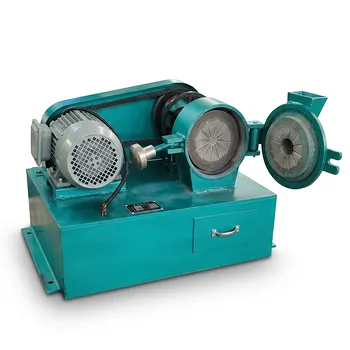
- Disc and rotor mills for rapid primary size reduction
- Cryogenic grinders using liquid nitrogen for temperature-sensitive or oxidation-prone materials
Powder preparation and mixing:
- Vibratory and air-jet sieve shakers with certified test sieves for precise particle size analysis
- High-precision powder mixers and defoaming mixers to homogenize additive-loaded formulations
Compaction and shaping:
- Cold Isostatic Presses (CIP) and Warm Isostatic Presses (WIP) for uniform density distribution across complex green bodies
- Standard lab presses and XRF pellet presses for routine sample formation
- Hot presses and vacuum hot presses for simultaneous pressure and temperature consolidation
When the grinding jar and the final compacting toolset share the same philosophy—preserving chemical identity and mechanical potential—the entire workflow becomes a coherent system rather than a collection of disconnected machines.
The Psychology of “Good Enough” Contamination
There’s a quiet temptation in every lab to reach for the standard steel jar because it’s already there. The contamination feels abstract. It won’t show up today, or this week. It will surface only when the data looks a little too scattered, or when the tool life falls short of the spec sheet.
That lag between cause and consequence is what makes mismatched media so dangerous. It creates a false sense of security. It turns a systematic error into a recurring mystery.
Engineers who treat their milling tools as neutral intermediaries—rather than active chemical participants—will forever chase variations they cannot explain.
The ones who match their media to their material stop chasing. They start controlling.
Your Material Deserves a Matched Partner
Tungsten carbide powder carries within it the potential to cut, to last, to resist extreme environments. That potential survives only if every processing step respects its chemistry.
Don’t let foreign contamination decide your results before sintering ever begins. If you’re pursuing high-purity alloys, maximum density, or defect-free nanocrystalline structures, your milling tools must mirror the material they process.
Explore how a fully integrated platform—from WC-Co grinding jars and planetary mills to isostatic presses—can protect that chemical integrity from powder to finished part. Contact Our Experts
Quick Links
Suggested Products
Laboratory Disc Mill Medium Hard Material Grinding Coal Coke Ore Pulverizer Cross Beater Mill for Brittle Material Grinding and Continuous Fine Crushing Industrial Sample Preparation Small High-Speed Laboratory Grinder for Powder ProcessingFurther Reading
The Grain, the Grinder, and the Hidden Poison: Why Mycotoxin Testing Depends on a Perfectly Boring Pulverization The Sleeping Giant in the Ash: How a Laboratory Ball Mill Unlocks High-Volume Sustainable Cement The Particle Size Orchestra: Engineering Precision Powders for Nutrient Enrichment Research The Clock Inside the Rock: Why Precision Timing Makes or Breaks Feldspar Processing From Dust to Data: How Precision Laboratory Presses Forge Truth in Mineral Testing
PowderPreparation
Last updated on May 14, 2026