Why are zirconia grinding jars and balls preferred for the high-energy milling of lithium sulfide powders? | Purity & Power
Updated 3 months ago
Zirconia grinding media are preferred for lithium sulfide powders because they combine high mechanical energy transfer with exceptional chemical purity. This material provides the necessary hardness and density to achieve rapid particle refinement and amorphization while its wear resistance and inertness prevent the introduction of contaminants that would otherwise degrade the ionic conductivity and cycle life of the battery.
High-energy milling of sulfide-based materials requires a balance of intense mechanical stress and strict contamination control. Zirconia (ZrO2) is the industry standard because it delivers the kinetic energy required for nanocompositing without introducing metallic or oxide impurities that compromise electrochemical performance.
Maximizing Mechanical Energy Transfer
Density and Impact Force
Zirconia possesses a high density that allows grinding balls to generate significant kinetic energy during high-speed rotation. This energy is essential for the impact and attrition required to break down the tough molecular structure of lithium sulfide.
Achieving Full Amorphization
High-energy ball milling often lasts for extended periods, sometimes up to 160 hours, to achieve full amorphization of the powder. Zirconia media can withstand these prolonged, high-intensity impacts, ensuring the material reaches the necessary nanocomposite state.
Efficiency in Particle Refinement
The extreme hardness of zirconia allows for a more efficient transfer of energy from the mill to the powder. This results in shorter processing times to reach the desired sub-micron particle size compared to softer media like alumina or glass.
Preserving Chemical Purity and Performance
Exceptional Wear Resistance
Lithium sulfide and related sulfide electrolytes are highly sensitive to mechanical debris generated during the milling process. Zirconia's superior wear resistance ensures that virtually no material from the jars or balls sheds into the powder, maintaining high chemical purity.
Chemical Inertness and Stability
Zirconia is chemically inert and does not react with the highly reactive sulfide components. This prevents the introduction of foreign ions or metallic impurities that would otherwise cause side reactions or degrade the electrochemical stability of the final battery cell.
Protection of Ionic Conductivity
Contaminants in sulfide electrolytes can act as barriers to lithium-ion transport. By using zirconia, researchers ensure that the ionic conductivity remains at peak levels, as the material remains free from the oxide or metallic "poisoning" common with steel or lower-grade ceramic media.
Understanding the Trade-offs
Thermal Management Challenges
The high energy generated by zirconia media can lead to significant heat accumulation within the grinding jar. In some sulfide systems, excessive heat can cause unwanted phase transitions or degradation, necessitating programmed cooling breaks during the milling cycle.
Cost and Material Weight
Zirconia is significantly more expensive than stainless steel or alumina media, which can impact the budget for large-scale production. Additionally, the weight of zirconia requires robust milling equipment capable of handling the high mechanical load without premature motor wear.
Risk of Thermal Shock
While durable, zirconia is susceptible to thermal shock if exposed to extreme temperature gradients. Care must be taken during cleaning or high-temperature processing to avoid cracking the jars or balls.
How to Apply This to Your Project
Recommendations for Success
Choosing the right milling setup depends on your specific performance requirements and material sensitivity.
- If your primary focus is maximum ionic conductivity: Utilize high-purity Yttria-stabilized Zirconia (YSZ) to ensure the lowest possible contamination levels and maintain the integrity of the sulfide electrolyte.
- If your primary focus is rapid amorphization: Prioritize smaller diameter zirconia balls (0.1mm to 1mm) to increase the number of contact points and accelerate the energy transfer during the milling process.
- If your primary focus is cost-effective scaling: Consider a "step-down" approach where initial refinement is done with harder media, followed by a final zirconia milling stage to achieve the end-state purity and particle size.
By leveraging the unique physical and chemical properties of zirconia, you can achieve the precise material characteristics required for next-generation solid-state battery applications.
Summary Table:
| Feature | Advantage for Lithium Sulfide | Impact on Battery Performance |
|---|---|---|
| High Density | Maximum kinetic energy transfer | Faster amorphization and refinement |
| Wear Resistance | Minimal mechanical debris | Maintains high chemical purity |
| Chemical Inertness | No reaction with sulfide components | Prevents ionic "poisoning" |
| Extreme Hardness | Efficient impact and attrition | Shorter processing to sub-micron size |
Elevate Your Material Research with Precision Engineering
Achieving the perfect nanocomposite state for solid-state electrolytes requires equipment that balances power with extreme purity. We provide complete laboratory sample preparation solutions tailored for advanced material science.
Whether you need to refine powders or consolidate materials, our extensive product line has you covered:
- Advanced Milling: Planetary ball mills, jet mills, and cryogenic grinders designed for contamination-free processing.
- Precision Pressing: A full spectrum of hydraulic presses, including Cold/Warm Isostatic Presses (CIP/WIP), vacuum hot presses, and XRF pellet presses.
- Processing Essentials: Jaw/roll crushers, sieve shakers, and high-performance mixers.
Ready to optimize your lithium sulfide processing and battery performance? Contact our experts today to find the ideal zirconia media and milling setup for your specific research goals.
References
- Joshua Cruddos, Alexander J. E. Rettie. Toward zero-excess lithium sulfur batteries: a systematic cell parameter study. DOI: 10.1088/2515-7655/ada700
Mentioned Products
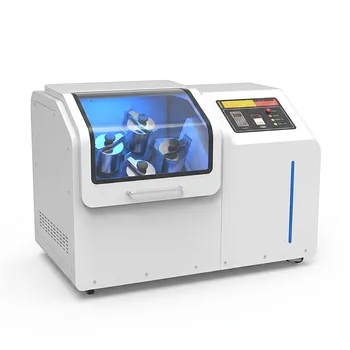
- High Energy Omnidirectional Planetary Ball Mill 16L
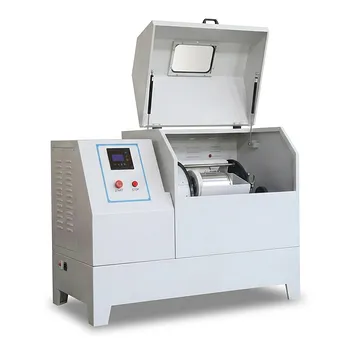
- Heavy Duty Horizontal Planetary Ball Mill for Efficient Industrial Grinding and Sample Preparation
- High Energy Laboratory Planetary Ball Mill for Nano Grinding and Material Science Sample Preparation
People Also Ask
- What role does an omni-directional planetary ball mill play in brass/cobalt antimonide pretreatment? Achieve Nano-Scale Homogeneity.
- What is the primary function of a high-energy planetary ball mill in Ni2MnSn synthesis? Optimize Solid-State Alloying.
- What role do high-energy planetary ball mills play in MgH2 modification? Enhance hydrogen storage via nanostructuring.
- What role does a high-energy planetary ball mill play in processing quenched bioactive glass? Achieve Nano-Scale Precision
- What is the role of a high-energy planetary ball mill in Li2ZrO3 and LBS prep? Achieve Superior Electrolyte Density

Tech Team · PowderPreparation
Last updated on May 14, 2026