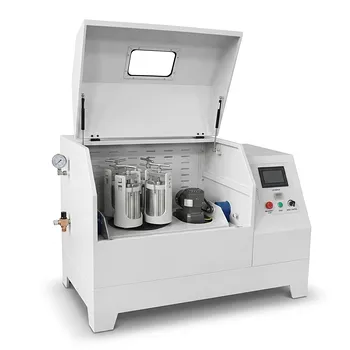
Why are grinding beads of various diameters utilized in planetary ball milling? Optimize Zirconia Slurry Quality.
Updated 4 months ago
The use of graded grinding media is a strategic necessity for precision milling.
Utilizing multiple bead diameters—such as a combination of 10 mm, 5 mm, and 2 mm—optimizes milling efficiency by balancing high-energy gravitational impact with intensive shear forces. This multi-stage approach ensures that large particles are crushed effectively while smaller particles are refined through high-frequency contact, resulting in a narrow particle size distribution and a uniform mesoporous structure.
Core Takeaway: Graded grinding beads maximize the mill's filling rate and energy distribution, allowing for the simultaneous breakdown of coarse materials and the fine polishing of the slurry. This synergy is essential for achieving the specific surface area required for high-performance zirconia applications.
The Mechanics of Multi-Diameter Grinding
High-Energy Impact for Coarse Reduction
Larger-diameter beads (e.g., 10 mm or larger) provide the necessary gravitational impact and kinetic energy to initiate the crushing process. These "heavy hitters" are essential for breaking down the initial coarse particles that smaller beads cannot effectively fracture.
Intensive Shear and Attrition for Fine Grinding
Smaller beads fill the interstitial gaps between the larger media, significantly increasing the total surface area and contact frequency within the mill. This increased contact generates the shear forces and friction required to refine particles to a sub-micron level.
Optimizing the Filling Rate
Mixing different sizes improves the "packing limit" or filling rate within the planetary ball mill. By filling the voids between large balls with smaller media, the mill achieves more efficient grinding kinetics and a more stable motion of the media charge.
Optimizing the Slurry Microstructure
Achieving Narrow Particle Size Distribution (PSD)
A multi-stage combination of bead sizes covers a broader range of grinding energies. This ensures that no single particle size escapes the milling process, leading to a highly consistent and narrow Particle Size Distribution (PSD).
Promoting Uniform Mesoporous Structures
For zirconia slurries, the specific surface area (SSA) is a critical quality metric. Properly graded media produce an ideal SSA that promotes the formation of a uniform mesoporous structure, which is vital for the density and insulation strength of the final ceramic layer.
Ensuring Chemical and Physical Purity
Zirconia beads are selected for their high hardness, density, and wear resistance. Following the homogeneous grinding principle—using zirconia media for zirconia slurries—prevents the introduction of foreign chemical impurities that could compromise subsequent elemental analysis or phase identification.
Understanding the Trade-offs
The Complexity of Media Ratios
Determining the exact ratio of large to small beads can be challenging and requires careful experimentation. Incorrect ratios can lead to "dead zones" in the mill where material is not processed or, conversely, excessive wear on the smaller media.
Post-Milling Separation and Cleaning
Using very small beads (under 1 mm) increases the difficulty of separating the media from the slurry once the process is complete. Additionally, the high surface area of small beads means more slurry is "lost" as a coating on the media during recovery.
Heat Generation and Degassing
High-energy milling with graded media generates significant heat and can trap air bubbles within the viscous slurry. It is often necessary to follow high-speed milling with a low-speed (e.g., 300 rpm) degassing phase to prevent structural defects like pinholes in the final product.
Strategic Recommendations for Milling Zirconia
How to Apply This to Your Project
To achieve the best results with planetary ball milling, consider your specific end-goal for the zirconia slurry:
- If your primary focus is rapid particle size reduction: Use a higher proportion of large-diameter beads (10 mm to 40 mm) to maximize the initial impact kinetic energy.
- If your primary focus is achieving a sub-micron, narrow PSD: Prioritize a higher concentration of small-diameter beads (2 mm or smaller) to increase shear frequency and attrition.
- If your primary focus is chemical purity for trace analysis: Ensure you use high-purity zirconia media of the same material as your powder to prevent cross-contamination.
- If your primary focus is structural integrity of a printed layer: Implement a low-speed stirring phase after high-energy milling to degas the slurry and eliminate air bubbles.
By carefully grading your grinding media, you transform the milling process from a simple crushing operation into a precise engineering tool for material synthesis.
Summary Table:
| Bead Size Category | Primary Milling Mechanism | Key Benefit for Zirconia Slurries |
|---|---|---|
| Large Beads (10mm+) | High-Energy Gravitational Impact | Rapid breakdown of coarse particles |
| Small Beads (<5mm) | Intensive Shear & Attrition | Sub-micron refinement & narrow PSD |
| Graded Mixture | Optimized Energy Distribution | Uniform mesoporous structure & density |
Achieve Unmatched Precision in Your Material Synthesis
Optimizing your zirconia slurry requires more than just the right beads; it requires a complete, high-performance equipment ecosystem. As experts in material science laboratory sample preparation, we provide the precision tools necessary to transform your powder processing workflow.
From our robust planetary ball mills, jet mills, and disc mills to our high-purity grinding media, we ensure your samples achieve the exact particle size distribution and chemical purity your research demands. Beyond milling, we offer a full spectrum of compaction solutions, including Cold/Warm Isostatic Presses (CIP/WIP), standard lab presses, and vacuum hot presses to bring your materials to their final form.
Ready to enhance your lab's efficiency and output quality?
Contact Our Technical Experts Today to find the perfect solution for your specific application.
References
- Takaya Shioki, Seigo Ito. Insulation Ability and Morphological Effect of ZrO2 Spacer Layer in Carbon-Based Multiporous Layered Electrode Perovskite Solar Cells. DOI: 10.3390/pr13072264
Mentioned Products
- Miniature Planetary Ball Mill with Vacuum Grinding and High Efficiency for Laboratory Sample Preparation
- Vertical Square Planetary Ball Mill for Laboratory Sample Preparation and Nanoscale Grinding
- Vertical Semi Circular Planetary Ball Mill for Laboratory Precision Grinding
- 8L Planetary Ball Mill for Laboratory Grinding and Sample Preparation
- 360° Rotating Omnidirectional Laboratory Planetary Ball Mill for Homogeneous Ultra-Fine Grinding and Mixing
People Also Ask
- Why is a planetary ball mill essential for SiBCN-rGO wet-spinning? Achieve Superior Dispersion and Spinnability
- What role does a planetary ball mill play in the preparation of forsterite (Mg2SiO4) ceramic raw materials? Key Insights
- How does a planetary ball mill contribute to the top-down size reduction of silica particles? Achieve Nano-Scale Precision
- Why is a benchtop planetary ball mill used for eggshell microparticles? Optimize Flame Retardant Grinding Efficiency
- Why grind lime-pozzolan specimens for TG/DTA for 3 mins? Master sample prep for high-precision thermal analysis.

Tech Team · PowderPreparation
Last updated on Jun 03, 2026
Related Products

Miniature Planetary Ball Mill with Vacuum Grinding and High Efficiency for Laboratory Sample Preparation

Vertical Square Planetary Ball Mill for Laboratory Sample Preparation and Nanoscale Grinding
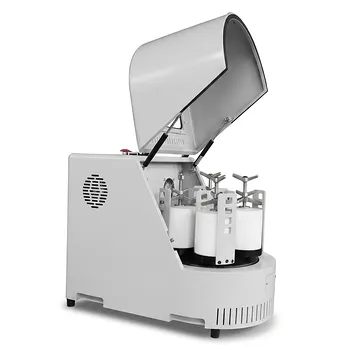
Vertical Semi Circular Planetary Ball Mill for Laboratory Precision Grinding
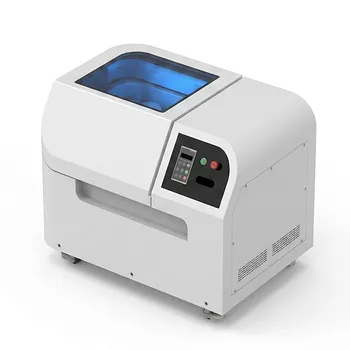
8L Planetary Ball Mill for Laboratory Grinding and Sample Preparation
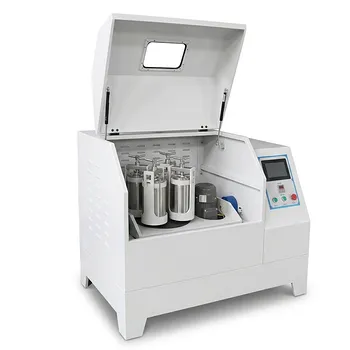
360° Rotating Omnidirectional Laboratory Planetary Ball Mill for Homogeneous Ultra-Fine Grinding and Mixing
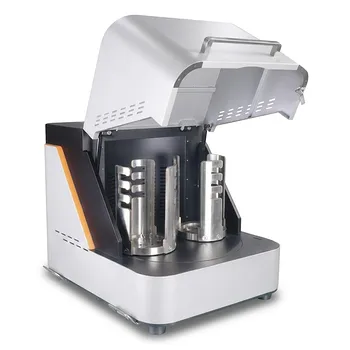
High Energy Laboratory Planetary Ball Mill for Nano Grinding and Colloidal Mixing of Hard and Brittle Materials
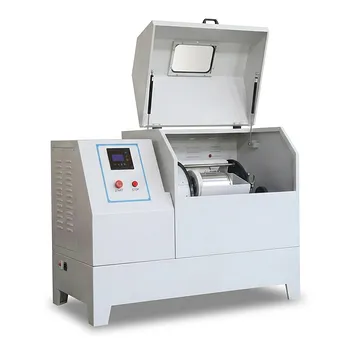
Heavy Duty Horizontal Planetary Ball Mill for Efficient Industrial Grinding and Sample Preparation

High Energy Laboratory Planetary Ball Mill for Nano Grinding and Material Science Sample Preparation
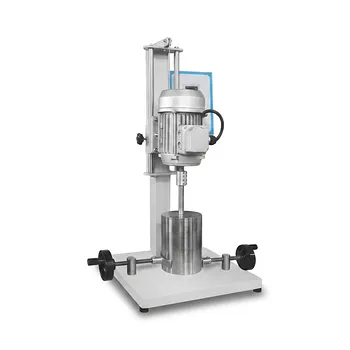
Laboratory Basket Sand Mill for Wet Grinding and Dispersion of Viscous Slurries
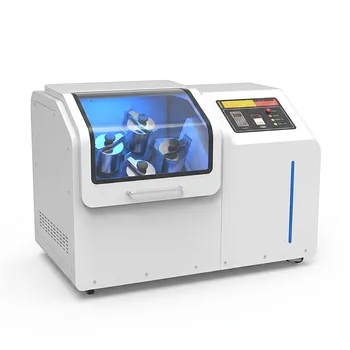
High Energy Omnidirectional Planetary Ball Mill 16L
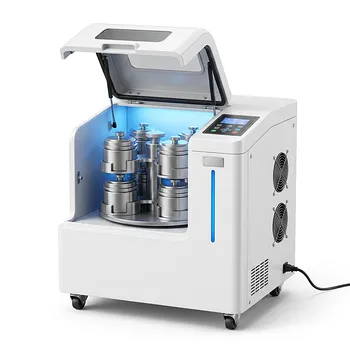
High Energy Omnidirectional Planetary Ball Mill 20L
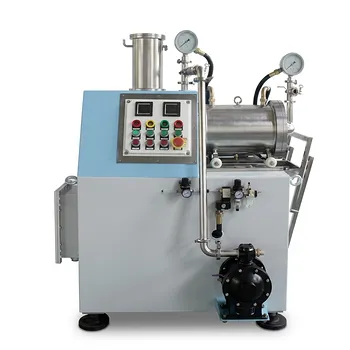
Horizontal Bead Mill for Nanoscale Grinding and Advanced Material Powder Processing
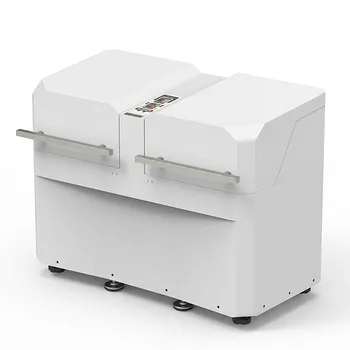
Dual Station Planetary Ball Mill 24L

High Energy Planetary Ball Mill for Nano Scale Grinding and Mechanical Alloying
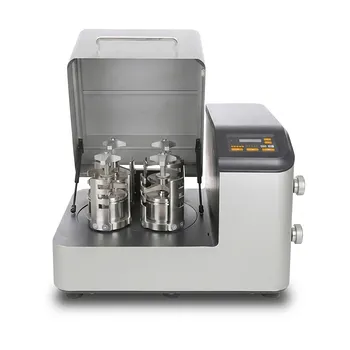
High Energy Planetary Ball Mill for Nano Scale Grinding and Colloidal Mixing in Material Science Research
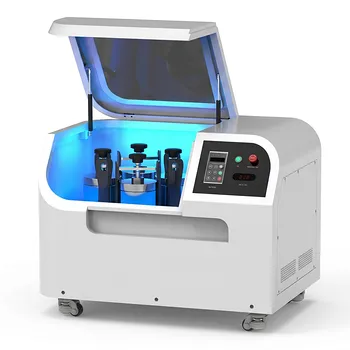
Planetary Ball Mill 12L
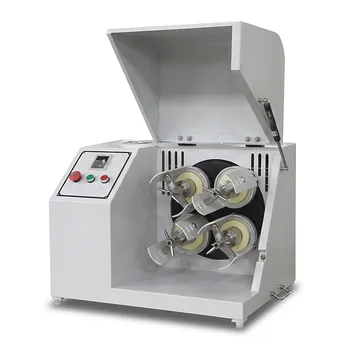
Horizontal Light Duty Planetary Ball Mill for Laboratory Sample Preparation
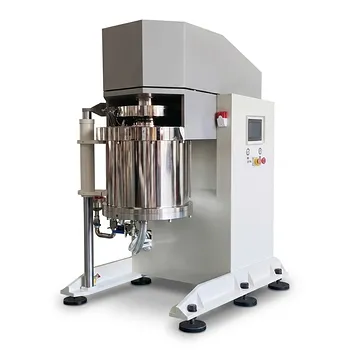
Vertical Nano Bead Mill for Ceramic Materials with Permanent Magnet Motor and High Efficiency Grinding
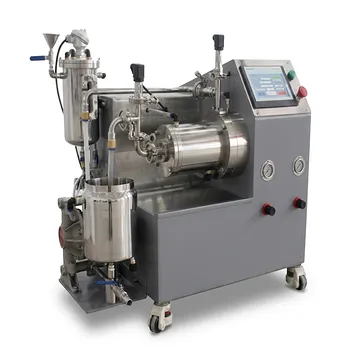
Laboratory Horizontal Bead Mill for Nanomaterial Wet Grinding and Material Science Research