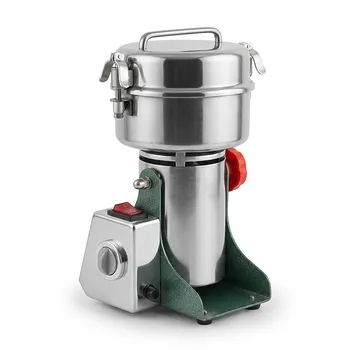
What role does crushing equipment play in Locust Bean Pod Powder prep? Optimize Binder Surface Area
Updated 5 months ago
Industrial crushing and grinding equipment serve as the critical catalyst for transforming raw biomass into a high-performance chemical binder. By reducing dried locust bean pods to an ultra-fine powder, these machines maximize the specific surface area and activate the material's latent reactivity. This refinement is essential for ensuring the powder functions effectively as a stabilizer when integrated into mineral-based composites like brick or soil mixtures.
Core Takeaway: The primary role of industrial processing equipment is surface area optimization. By achieving ultra-fine particle sizes, the equipment unlocks the physical and chemical binding potential of the locust bean pods, allowing them to react efficiently with mineral components like alumina and silica.
Enhancing Chemical Reactivity through Particle Refinement
Increasing Specific Surface Area
The transition from a whole pod to an ultra-fine powder exponentially increases the specific surface area available for chemical interaction.
This increased surface area is the primary driver of the material's effectiveness as a stabilizer. It ensures that more of the organic material comes into direct contact with the mineral components of the mix.
Activation of Latent Binding Properties
Industrial grinding triggers the physical and chemical reactivity of the locust bean pods when they are mixed with alumina and silica.
Without this mechanical reduction, the pods would remain chemically inert within a mixture. The refinement process allows the powder to exhibit the binding characteristics necessary for successful brick pressing and structural integrity.
Achieving Structural Uniformity and Material Distribution
Ensuring Homogeneous Mixing
Uniformity in particle size allows the locust bean pod powder to distribute evenly throughout a cementitious or soil-based system.
Consistent fineness ensures there are no "weak spots" caused by large, unprocessed organic chunks. This leads to a homogenized composite that reacts predictably during the stabilization process.
Optimizing Mechanical Interlocking
While the primary goal is chemical reactivity, the specific fineness of the powder contributes to the structural density of the final product.
Like the processing of shells or fibers, the powder fills the microscopic voids between larger mineral aggregates. This results in a tighter matrix that enhances the shear strength and tensile resistance of the stabilized material.
Understanding the Trade-offs
Energy Intensity vs. Material Performance
Achieving an ultra-fine powder requires significant energy input and high-efficiency mechanical pulverizers.
Project managers must balance the cost of intensive grinding with the required strength of the stabilizer. Over-processing may lead to diminishing returns if the chemical reactivity peaks before the smallest possible particle size is reached.
Heat Generation and Organic Integrity
High-speed grinding equipment generates substantial heat, which can potentially degrade the organic compounds within the locust bean pods.
If the equipment is not properly calibrated, the thermal impact may compromise the very binding characteristics the process is intended to unlock. Monitoring the temperature during the pulverization stage is critical for maintaining material quality.
Optimizing Processing for Your Specific Application
Effective stabilization depends on matching the equipment’s output to your final engineering goals.
- If your primary focus is high-strength brick pressing: Prioritize high-efficiency grinding to reach the ultra-fine stage, maximizing reactivity with alumina and silica.
- If your primary focus is general soil reinforcement: Focus on achieving a consistent particle fineness that matches the aggregate size of the local soil to ensure uniform distribution and friction.
- If your primary focus is minimizing production costs: Calibrate your equipment to reach the minimum effective surface area required for stabilization rather than pursuing maximum possible fineness.
The strategic use of crushing and grinding equipment is the fundamental step in turning raw organic waste into a sophisticated stabilization agent.
Summary Table:
| Processing Phase | Key Function | Impact on Material |
|---|---|---|
| Primary Crushing | Initial Size Reduction | Breaks down raw biomass for secondary processing. |
| Ultra-fine Grinding | Surface Area Optimization | Unlocks latent chemical binding with alumina and silica. |
| Particle Refinement | Homogeneous Mixing | Ensures uniform distribution and eliminates structural weak spots. |
| Mechanical Pulverization | Structural Density | Fills microscopic voids to enhance shear and tensile strength. |
Elevate Your Material Stabilization with Precision Processing
To transform raw locust bean pods into effective stabilizers, you need equipment that delivers both consistency and ultra-fine precision. We provide complete laboratory sample preparation solutions for material science, specializing in high-performance powder processing and compaction equipment.
Our extensive product line supports every stage of your research and production:
- Size Reduction: Jaw and roll crushers, liquid nitrogen cryogenic grinders, and high-efficiency mills (Planetary Ball, Jet, Sand/Bead, Disc, and Rotor).
- Classification & Mixing: Vibratory/Air-jet sieve shakers and advanced powder/defoaming mixers.
- Compaction & Synthesis: A full spectrum of hydraulic presses, including Cold/Warm Isostatic Presses (CIP/WIP), standard lab presses, XRF pellet presses, and vacuum hot presses.
Whether you are optimizing biomass binders or engineering mineral composites, our specialized equipment ensures maximum reactivity and structural integrity.
Ready to refine your process? Contact our experts today to find the perfect solution for your laboratory or production line!
References
- U. B. Markus, Jen-Kuan Yau. Assessment of the Properties of Compressed Earth Bricks Stabilized with Locust Bean Pod Powder. DOI: 10.52589/ajste-aqp0zuhb
Mentioned Products
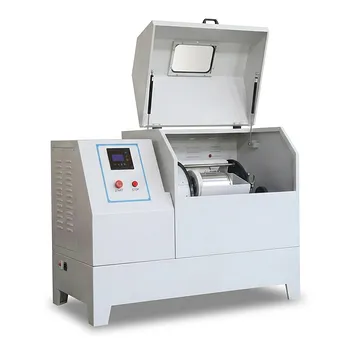
- Heavy Duty Horizontal Planetary Ball Mill for Efficient Industrial Grinding and Sample Preparation
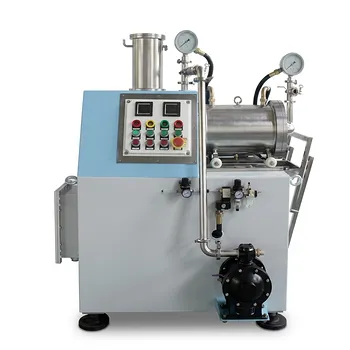
- Horizontal Bead Mill for Nanoscale Grinding and Advanced Material Powder Processing
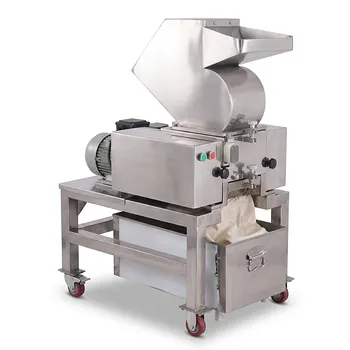
- Stainless Steel Coarse Crusher for Pharmaceutical Food and Plastic Material Processing
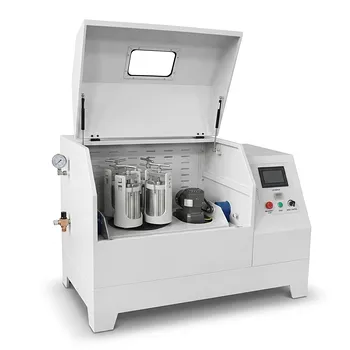
- Vertical Production Planetary Ball Mill for High Throughput Powder Processing
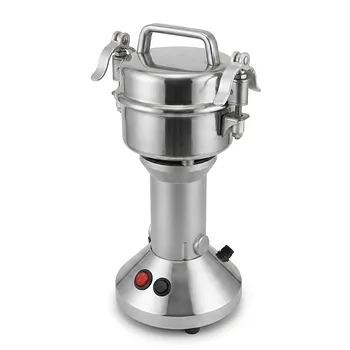
- Continuous Feeding Grinding Mill for Dry Fibrous Tough and Hard Materials in Laboratory and Small Production
People Also Ask
- Why grind lime-pozzolan specimens for TG/DTA for 3 mins? Master sample prep for high-precision thermal analysis.
- What is the role of a planetary ball mill in the mechanical activation of ZTA powder? Boost Sintering Performance
- What is the function of a planetary ball mill in wollastonite ceramic prep? Achieve Molecular Homogenization & Reactivity
- How does a planetary ball mill contribute to the homogenization of trace elements? Achieve Sub-Micron Uniformity
- What is the function of a high-performance planetary ball mill in AMZ laminates? Master Ceramic Homogenization.

Tech Team · PowderPreparation
Last updated on May 14, 2026
Related Products
Heavy Duty Horizontal Planetary Ball Mill for Efficient Industrial Grinding and Sample Preparation
Horizontal Bead Mill for Nanoscale Grinding and Advanced Material Powder Processing
Stainless Steel Coarse Crusher for Pharmaceutical Food and Plastic Material Processing
Vertical Production Planetary Ball Mill for High Throughput Powder Processing
Continuous Feeding Grinding Mill for Dry Fibrous Tough and Hard Materials in Laboratory and Small Production
Precision Soil Disc Mill for Laboratory Fine Grinding and Environmental Sample Preparation
Continuous Feeding Grinder High Efficiency Pulverizer for Lab Sample Preparation
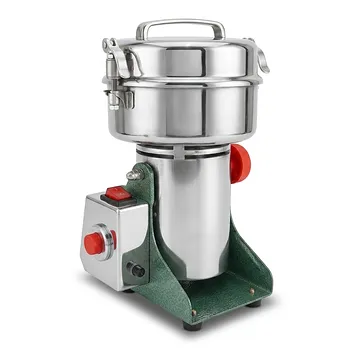
Small High-Speed Laboratory Grinder for Powder Processing
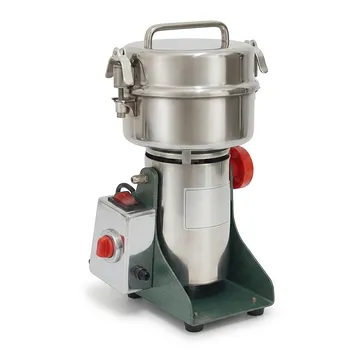
Small High Speed Grinder for Laboratory Sample Preparation
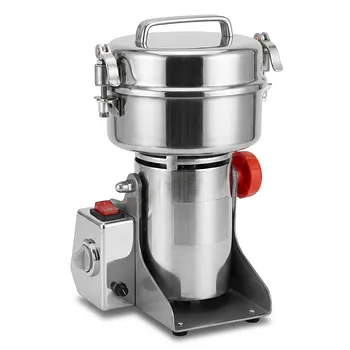
High Speed Laboratory Powder Grinder Small Batch Sample Preparation Mill
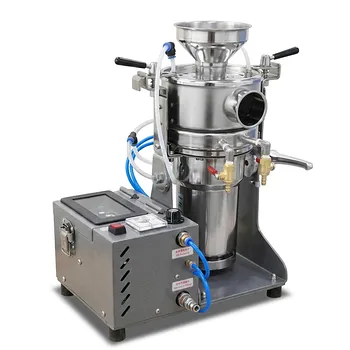
Water Cooled Pulse Jet Ultrafine Grinder
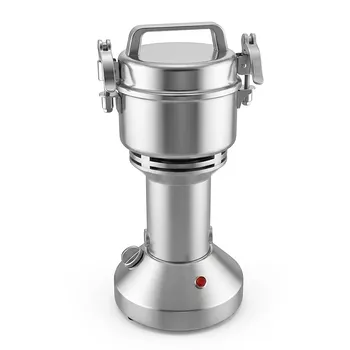
Small High Speed Upright Grinder for Laboratory Sample Preparation
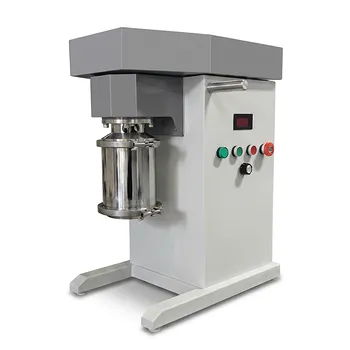
Nano Laboratory Bead Mill Desktop Sub Micron Sand Mill Screenless Seal Less Powder Grinder
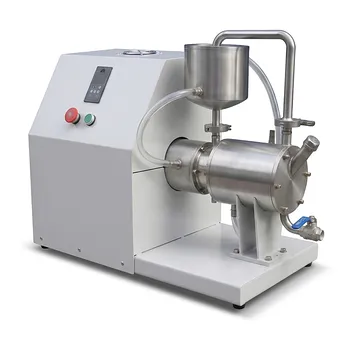
Laboratory Small Horizontal Sand Mill for Nano Materials Wet Grinding