What is the purpose of using standard stainless steel woven wire mesh test sieves? Accuracy in Particle Sizing
Updated 4 months ago
Standard stainless steel woven wire mesh test sieves are precision instruments designed to physically segregate granular materials into specific size fractions through mechanical interception. These sieves provide a standardized benchmark that allows researchers to accurately quantify particle size distribution, determine optimal residence times, and ensure experimental repeatability across different laboratory environments.
The primary purpose of utilizing standardized sieves is to establish a rigorous, repeatable framework for particle classification that complies with international benchmarks like ISO 3310 or ASTM E11. By providing a consistent physical cutoff mechanism, they allow for the precise evaluation of material passage rates and the optimization of industrial or scientific processing parameters.
The Role of Standardization and Benchmarking
Compliance with ISO 3310 and ASTM E11
Using sieves that meet international standards ensures that the aperture sizes are precise and consistent. This allows researchers to establish benchmarked sieving efficiency data that can be compared globally.
Accuracy in Passage Rate Evaluation
Standardized meshes allow for the accurate measurement of passage rates under specific vibration frequencies and amplitudes. This is critical in experiments involving complex materials, such as simulated lunar regolith, where particle behavior is highly sensitive to frequency changes.
Determining Optimal Residence Time
By observing how long it takes for a sample to pass through a standard mesh, researchers can calculate the optimal residence time. This ensures that the material is separated efficiently without unnecessary energy expenditure or mechanical degradation of the particles.
Physical Mechanisms of Particle Separation
Mechanical Interception and Precision Cutoffs
The woven wire mesh acts as a physical cutoff mechanism that prevents particles larger than the aperture size from passing through. This mechanical interception ensures that each layer of a stacked sieve set contains a specific, predictable range of particle sizes.
Quantitative Soil Gradation Analysis
In dry sieving, sieves are typically stacked from largest to smallest aperture (ranging from 75mm to 0.075mm). This allows for the physical separation of dried soil or mineral samples for the quantitative analysis of soil gradation characteristics.
Removal of Oversized Impurities
Test sieves are often used to filter out undissolved particles or large agglomerates from a suspension or powder. This ensures that subsequent rheological or compression experiments are not compromised by large-particle impurities that could skew the results.
Application in Industrial and Specialized Research
Closed-Circuit Cycle Grinding Simulation
Standard sieves act as classifiers in closed-circuit grinding to control the upper limit of product particle size. This process helps simulate industrial steady-state energy consumption by determining the "grindability factor" (G) of a specific material.
Microplastic Preparation and Characterization
In specialized environmental research, stainless steel sieves are used to extract target components at the sub-micron level. They ensure the material proceeding to characterization has an ideal particle size distribution by mechanically filtering out oversized contaminants.
Ensuring Repeatability in Rheology
Using standardized sieves like the 212 mesh (ASTM E11) ensures that the solid particles in a mixture are uniform. This uniformity is essential for the repeatability of results in experiments measuring the flow and deformation of materials under stress.
Understanding the Trade-offs
The Risk of Mesh Blinding
A common pitfall in dry sieving is blinding, where particles become wedged in the mesh apertures. This reduces the effective screening area and can lead to inaccurate data regarding particle size distribution.
Material Degradation During Vibration
Subjecting fragile materials to high-frequency vibration for extended periods can cause particle attrition. Over time, this physical breakdown changes the particle size distribution during the experiment itself, potentially leading to false results.
Sieve Wear and Calibration Drift
Stainless steel is durable, but the wire mesh can deform or wear down with repeated use, especially with abrasive materials. Regular calibration is required to ensure that a "standard" sieve still meets the precise aperture requirements of its certification.
Making the Right Choice for Your Goal
How to Apply This to Your Project
- If your primary focus is scientific data integrity: Prioritize sieves that are strictly certified to ISO 3310 or ASTM E11 standards to ensure your results are globally comparable.
- If your primary focus is optimizing industrial throughput: Use standard sieves to determine the minimum residence time required to reach a stable passage rate, reducing cycle times.
- If your primary focus is sample purity for rheology: Select a mesh size slightly smaller than your target limit to effectively eliminate large-particle impurities that interfere with material flow.
- If your primary focus is characterizing soil or regolith: Utilize a full stacked series of sieves to capture the complete gradation curve rather than relying on a single cutoff point.
By adhering to standardized sieving protocols, researchers can transform raw granular data into a precise, actionable understanding of material behavior.
Summary Table:
| Key Function | Core Benefit | Industrial & Research Application |
|---|---|---|
| Mechanical Interception | Precise physical size cutoff | Soil gradation & mineral analysis |
| Standardization | ISO 3310 / ASTM E11 compliance | Global benchmarking & data repeatability |
| Efficiency Tuning | Determines optimal residence time | Optimization of industrial grinding cycles |
| Sample Purification | Removes oversized impurities | Preparation for rheology & XRF analysis |
Elevate Your Material Analysis with Precision Equipment
Achieving accurate particle size distribution is the cornerstone of successful material science research. At [Company Name], we provide complete laboratory sample preparation solutions tailored for powder processing and material characterization.
Whether you need to optimize your sieving workflow or require high-performance compaction equipment, our extensive product line has you covered:
- Sieving & Separation: Vibratory and air-jet sieve shakers with a full range of standard stainless steel test sieves and meshes.
- Grinding & Milling: Planetary ball mills, jet mills, and liquid nitrogen cryogenic grinders for sub-micron precision.
- Powder Processing: Advanced powder mixers and defoaming mixers for uniform material preparation.
- Compaction Solutions: A full spectrum of hydraulic presses, including Cold/Warm Isostatic Presses (CIP/WIP), standard lab presses, and vacuum hot presses.
Ready to enhance your lab's efficiency and ensure experimental repeatability? Contact our experts today to find the perfect solution for your specific application requirements.
References
- Gunter H. Just, Katherine Smith. Development and test of a Lunar Excavation and Size Separation System (LES<sup>3</sup>) for the LUVMI‐X rover platform. DOI: 10.1002/rob.22050
Mentioned Products
- Stainless Steel Laboratory Vibratory Test Sieve Shaker
- Stainless Steel Rotary Vibrating Sieve High Precision Circular Vibratory Separator Industrial Powder Grading Machine Multi Layer Sifting Equipment
- Laboratory Vibratory Test Sieve Shaker for Precision Particle Size Analysis and Powder Grading
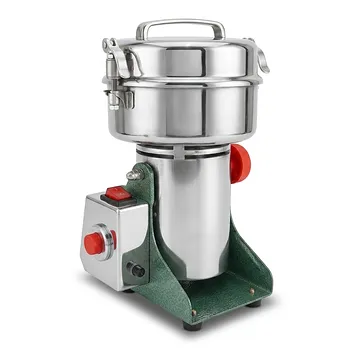
- Small High-Speed Laboratory Grinder for Powder Processing
People Also Ask
- What function does a laboratory vibratory sieve shaker serve in the production process of metakaolin? Optimize Reactivity
- Why is a precision laboratory vibratory sieve shaker necessary for particle size control? Optimize Biomass Carbonization
- What is the function of a laboratory vibratory sieve shaker? Enhance Coal Particle Size Distribution (PSD) Analysis
- What role do laboratory vibratory sieve shakers and test sieves play before the molding of Nb-Cu composite powders?
- What is the primary function of a laboratory vibratory sieve shaker in the evaluation of sand liquefaction potential?

Tech Team · PowderPreparation
Last updated on Jun 03, 2026
Related Products
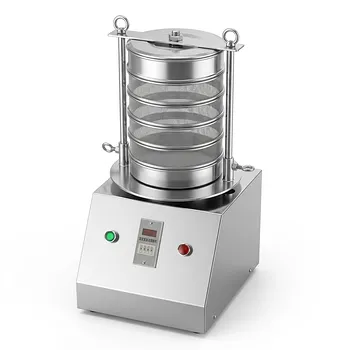
Stainless Steel Laboratory Vibratory Test Sieve Shaker
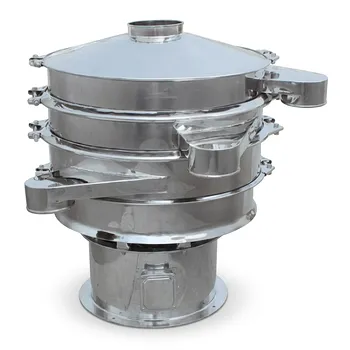
Stainless Steel Rotary Vibrating Sieve High Precision Circular Vibratory Separator Industrial Powder Grading Machine Multi Layer Sifting Equipment
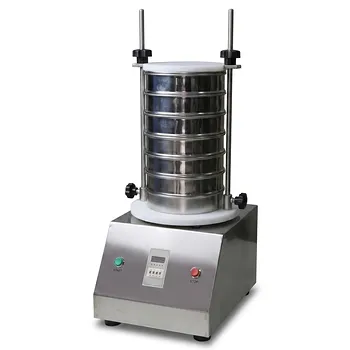
Laboratory Vibratory Test Sieve Shaker for Precision Particle Size Analysis and Powder Grading