What is the purpose of using a ball mill with porcelain grinding media? Achieve High Purity & Uniform Ceramic Slurry
Updated 4 months ago
The primary purpose of using a ball mill with porcelain grinding media is to achieve a homogeneous, high-purity slurry by refining particle size and ensuring uniform chemical distribution. This process utilizes mechanical impact and shear forces to de-agglomerate raw materials like ball clay and quartz, resulting in the stable rheological properties necessary for forming a consistent ceramic foam structure.
Ball milling transforms raw ceramic powders into a refined, flowable suspension while porcelain media safeguards the mixture from metallic contamination. This dual focus on particle refinement and chemical purity is essential for the structural integrity and electrical insulation of the final foam product.
Achieving Particle Refinement and De-agglomeration
Mechanical Force and Particle Breakdown
A ball mill uses the impact and shear forces generated by rolling media to crush raw materials. This mechanical energy breaks down large grains of quartz, feldspar, and kaolin into finer particles.
Increasing Specific Surface Area
Refining the powder to a finer consistency significantly increases its specific surface area. This enhancement improves chemical reactivity during the subsequent sintering phase, ensuring a more robust final ceramic.
Eliminating Agglomerates
Raw ceramic powders often form "soft agglomerates" that can cause structural weaknesses. Extended milling ensures these clusters are fully dispersed within the distilled water, leading to a sub-micron scale distribution.
Ensuring Chemical and Rheological Stability
Uniform Chemical Composition
Thorough mixing ensures that additives, fluxing agents, and primary minerals are distributed evenly throughout the slurry. This chemical homogeneity prevents localized defects in the foam's porous structure.
Optimizing Slurry Fluidity
Ball milling is critical for achieving stable rheological properties, which dictate how the slurry flows. Good fluidity is a prerequisite for processes like dip-coating or gelcasting used in foam production.
Maintaining High Solid Content
Advanced milling techniques allow for the creation of suspensions with high solid content (up to 70 wt.%) while remaining pourable. This balance is vital for maintaining the density and strength of the ceramic foam after firing.
The Critical Role of Porcelain Grinding Media
Preventing Metallic Contamination
Using porcelain jars and balls instead of metallic media prevents the introduction of iron or other conductive impurities. High purity is non-negotiable for ceramic foams intended for high-temperature or electrical insulation applications.
Maintaining Electrical Insulation
Metallic particles can create conductive paths within the ceramic matrix, ruining its insulation performance. Porcelain media ensures the material remains an effective dielectric.
Synergy with Raw Materials
Porcelain is chemically compatible with traditional ceramic powders like ball clay and kaolin. Any minor wear from the media is less likely to negatively alter the chemical signature of the final slurry compared to steel or plastic alternatives.
Understanding the Trade-offs and Pitfalls
The Risk of Over-Milling
Extending the milling duration (e.g., beyond 24 hours) can lead to excessively fine particles that increase slurry viscosity. If the slurry becomes too thick, it may trap air bubbles prematurely or fail to coat foam templates evenly.
Media Wear and Contamination
While porcelain prevents metallic impurities, the media itself undergoes mechanical wear over time. Users must monitor the condition of the porcelain balls to ensure that "media debris" does not shift the alumina-silica ratio of the batch.
Energy Efficiency vs. Refinement
Planetary ball mills offer high-speed refinement but consume significant energy and generate heat. Temperature control may be necessary during long milling cycles to prevent the premature activation of dispersants or binders.
Applying Ball Milling to Your Production Goals
Recommendations for Slurry Preparation
To maximize the quality of your ceramic foam, align your milling strategy with your specific material requirements:
- If your primary focus is high electrical insulation: Use high-alumina porcelain media and jars to eliminate any possibility of metallic trace elements.
- If your primary focus is structural uniformity: Prioritize longer milling times (15–24 hours) at lower speeds to ensure the complete breakdown of soft agglomerates without over-heating the slurry.
- If your primary focus is high-volume throughput: Utilize planetary ball mills with optimized energy inputs to reach the desired mesh size (e.g., 200 mesh) in a shorter timeframe.
Selecting the correct milling duration and media type is the foundation for producing a stable, high-purity ceramic foam with a reliable porous structure.
Summary Table:
| Key Feature | Benefit for Ceramic Foam Production |
|---|---|
| Mechanical Impact & Shear | Breaks down quartz/kaolin for sub-micron particle distribution. |
| De-agglomeration | Eliminates soft clusters to prevent structural defects in the foam. |
| Porcelain Grinding Media | Prevents metallic contamination; critical for electrical insulation. |
| High Solid Content (70%) | Ensures structural density and strength after the sintering phase. |
| Rheological Control | Optimizes slurry fluidity for consistent dip-coating or casting. |
Optimize Your Ceramic Research with Precision Sample Preparation
Achieving the perfect ceramic foam requires uncompromising purity and precise particle control. At our facility, we provide complete laboratory sample preparation solutions tailored for material science. Whether you are refining powders or forming complex structures, our specialized equipment ensures professional-grade results.
Our extensive product line includes:
- Advanced Milling: Planetary ball mills, jet mills, and disc mills for superior refinement.
- Powder Processing: Crushers (jaw/roll), liquid nitrogen cryogenic grinders, and high-efficiency powder mixers.
- Sample Shaping: A full spectrum of hydraulic presses, including Cold/Warm Isostatic Presses (CIP/WIP), hot presses, and XRF pellet presses.
- Analysis Prep: Sieve shakers (vibratory/air-jet) and specialized defoaming mixers.
Ready to enhance your lab's efficiency and material integrity? Contact our technical experts today to find the ideal solution for your powder processing and compaction needs.
References
- Mohd Al Amin Muhamad Nor, Zainal Arifin Ahmad. The effect of polymeric template density and solid loading on the properties of ceramic foam. DOI: 10.2298/sos0903319n
Mentioned Products
- Miniature Planetary Ball Mill with Vacuum Grinding and High Efficiency for Laboratory Sample Preparation
- Vertical Semi Circular Planetary Ball Mill for Laboratory Precision Grinding
- Heavy Duty Horizontal Planetary Ball Mill for Efficient Industrial Grinding and Sample Preparation
- Vertical Square Planetary Ball Mill for Laboratory Sample Preparation and Nanoscale Grinding
- High Energy Laboratory Planetary Ball Mill for Nano Grinding and Colloidal Mixing of Hard and Brittle Materials
People Also Ask
- Why is a planetary ball mill essential for SiBCN-rGO wet-spinning? Achieve Superior Dispersion and Spinnability
- What role does a planetary ball mill play in the preparation of forsterite (Mg2SiO4) ceramic raw materials? Key Insights
- How does a planetary ball mill contribute to the top-down size reduction of silica particles? Achieve Nano-Scale Precision
- Why is a benchtop planetary ball mill used for eggshell microparticles? Optimize Flame Retardant Grinding Efficiency
- Why grind lime-pozzolan specimens for TG/DTA for 3 mins? Master sample prep for high-precision thermal analysis.

Tech Team · PowderPreparation
Last updated on Jun 03, 2026
Related Products
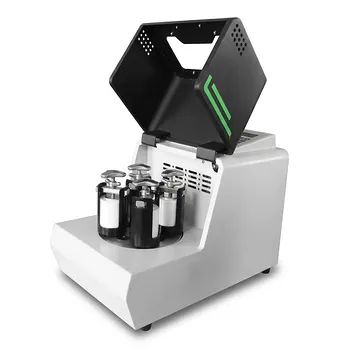
Miniature Planetary Ball Mill with Vacuum Grinding and High Efficiency for Laboratory Sample Preparation
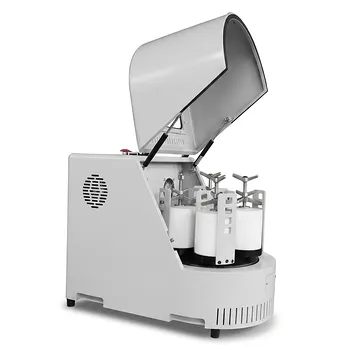
Vertical Semi Circular Planetary Ball Mill for Laboratory Precision Grinding
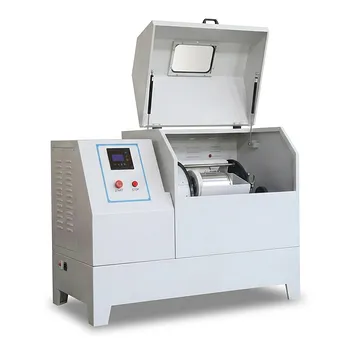
Heavy Duty Horizontal Planetary Ball Mill for Efficient Industrial Grinding and Sample Preparation
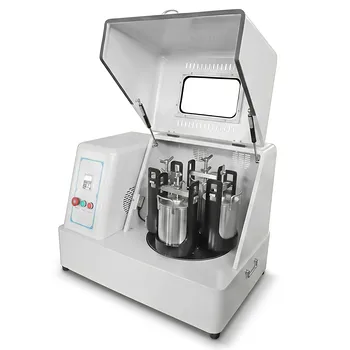
Vertical Square Planetary Ball Mill for Laboratory Sample Preparation and Nanoscale Grinding
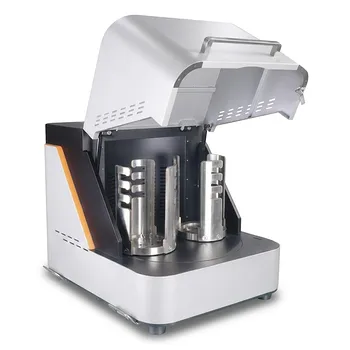
High Energy Laboratory Planetary Ball Mill for Nano Grinding and Colloidal Mixing of Hard and Brittle Materials
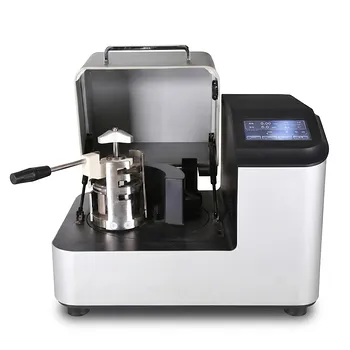
High Energy Laboratory Planetary Ball Mill for Nano Grinding and Material Science Sample Preparation
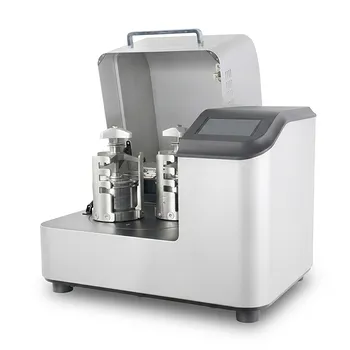
High Energy Planetary Ball Mill for Nano Scale Grinding and Mechanical Alloying
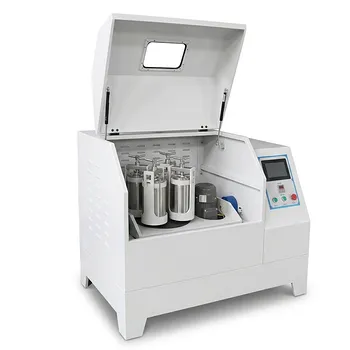
360° Rotating Omnidirectional Laboratory Planetary Ball Mill for Homogeneous Ultra-Fine Grinding and Mixing
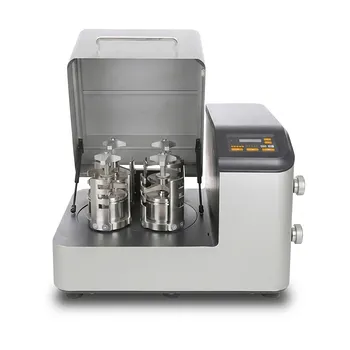
High Energy Planetary Ball Mill for Nano Scale Grinding and Colloidal Mixing in Material Science Research
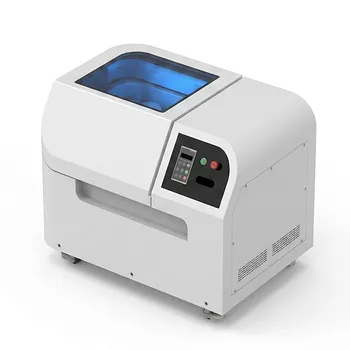
8L Planetary Ball Mill for Laboratory Grinding and Sample Preparation
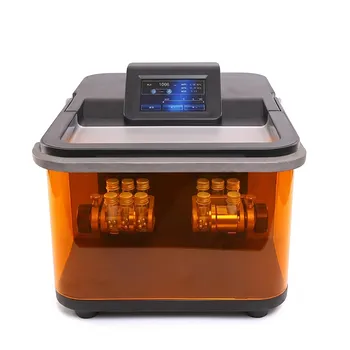
High Throughput Micro Ball Mill for Cryogenic Grinding and Laboratory Cell Disruption
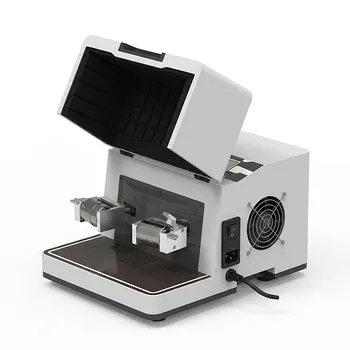
High Energy Hybrid Vibratory Ball Mill for Grinding Mixing and Cell Disruption
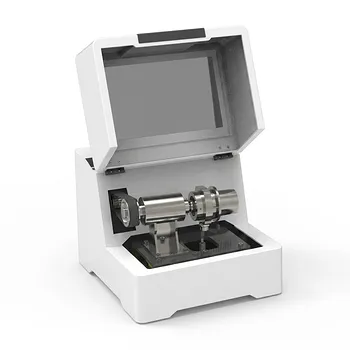
Single Tank High Energy Vibratory Ball Mill for Laboratory Grinding and Mixing
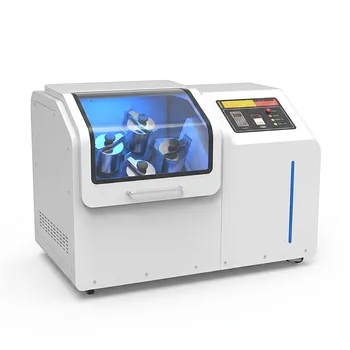
High Energy Omnidirectional Planetary Ball Mill 16L
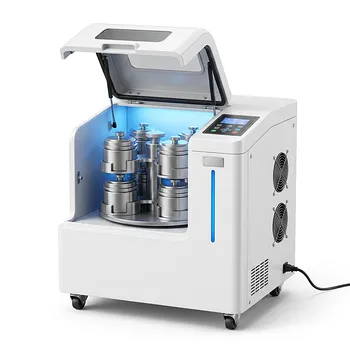
High Energy Omnidirectional Planetary Ball Mill 20L
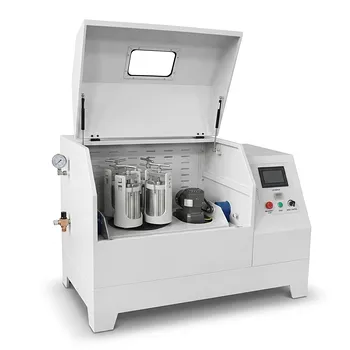
Vertical Production Planetary Ball Mill for High Throughput Powder Processing
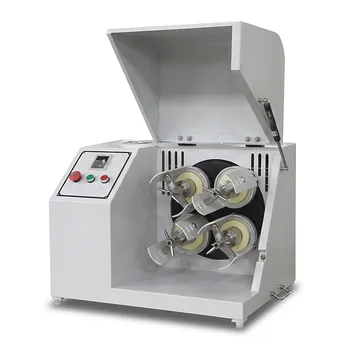
Horizontal Light Duty Planetary Ball Mill for Laboratory Sample Preparation
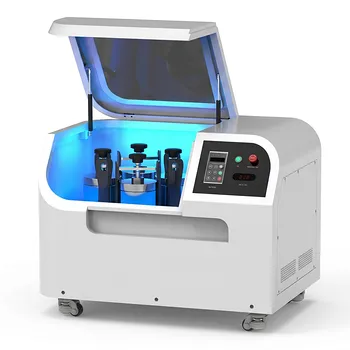
Planetary Ball Mill 12L
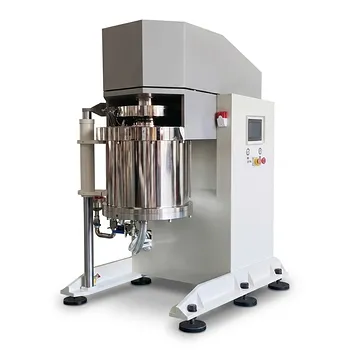
Vertical Nano Bead Mill for Ceramic Materials with Permanent Magnet Motor and High Efficiency Grinding