What is the primary purpose of adding Polyethylene Oxide (PEO) organic additives during the isostatic pressing process?
Updated 4 months ago
Polyethylene Oxide (PEO) serves as a critical mold release agent during the isostatic pressing process. By wetting the surface of the green body, PEO creates a physical separation barrier between the forming mold and the powder particles. This mechanism significantly reduces friction at the interface, ensuring that complex components, such as alumina pistons, can be demolded without surface damage or structural cracking.
The primary role of PEO is to provide a lubricating interface that prevents mechanical bonding between the mold and the ceramic powder. This protection is essential for maintaining the structural integrity of the fragile green body during the transition from the pressing stage to demolding.
The Mechanics of PEO as a Mold Release Agent
Surface Wetting and Barrier Formation
PEO functions by effectively wetting the external surface of the compressed powder compact. This creates a thin, uniform organic film that acts as a non-reactive barrier between the powder and the flexible mold.
Friction Reduction at the Interface
During isostatic pressing, high pressure is applied uniformly, which can cause particles to lock against the mold wall. PEO reduces the coefficient of friction at this boundary, allowing the mold to pull away cleanly once the pressure is released.
Impact on Green Body Integrity
Preventing Surface Damage and Cracking
The "green body"—the pressed powder before it is fired—is extremely fragile and susceptible to tensile stress. PEO ensures that no part of the powder adheres to the mold, preventing the formation of micro-cracks or surface spalling during extraction.
Ensuring Dimensional Accuracy
By facilitating a smooth release, PEO helps maintain the net-shape precision of the component. Without it, the mechanical force required to strip the mold could slightly deform the part, leading to costly post-processing or rejected batches.
Understanding the Trade-offs
The Necessity of Binder Burnout
Because PEO is an organic additive, it must be completely removed from the green body before the final sintering process. Failure to implement a controlled thermal debinding stage can result in internal gas pressure and carbon residue, which compromises the final ceramic density.
Potential Impact on Powder Flow
While PEO is excellent for demolding, an excess of organic additives can sometimes alter the flowability of the raw powder. It is vital to balance the concentration of PEO to ensure the mold fills uniformly before the pressing cycle begins.
How to Apply This to Your Process
When integrating PEO into your isostatic pressing workflow, consider your primary manufacturing objective to determine the optimal concentration.
- If your primary focus is minimizing scrap rates: Prioritize a uniform PEO coating to ensure that high-value parts, like alumina pistons, remain defect-free during the high-stress demolding phase.
- If your primary focus is final material purity: Use the minimum effective concentration of PEO and optimize your kiln’s ramp-up cycle to ensure a clean, residue-free burnout.
- If your primary focus is high-volume production speed: Evaluate PEO’s impact on powder flow to ensure that the automated mold-filling stage is not slowed down by increased particle cohesion.
Selecting the right balance of PEO ensures that the physical benefits of mold lubrication do not outweigh the requirements for chemical purity in the finished ceramic.
Summary Table:
| Key Feature | Role of PEO in Isostatic Pressing |
|---|---|
| Primary Function | High-efficiency mold release agent and lubricant |
| Mechanism | Wets powder surfaces to create a non-reactive physical barrier |
| Core Benefit | Reduces interface friction to prevent cracking during demolding |
| Quality Control | Preserves net-shape precision and dimensional accuracy |
| Post-Processing | Requires a controlled thermal debinding stage (burnout) |
Elevate Your Material Research with KinTek Solutions
Achieving the perfect green body requires both the right additives and precision engineering. KinTek provides complete laboratory sample preparation solutions for material science, specializing in high-performance powder processing and compaction equipment.
Whether you are working with alumina pistons or advanced ceramics, our extensive range of equipment ensures superior results:
- Isostatic Pressing: Cold/Warm Isostatic Presses (CIP/WIP) for uniform density.
- Compaction & Pressing: Standard lab presses, XRF pellet presses, and vacuum hot presses.
- Milling & Grinding: Planetary ball mills, jet mills, and cryogenic grinders for optimal particle size.
- Powder Handling: Sieve shakers, powder mixers, and defoaming mixers.
Ready to minimize scrap rates and enhance material purity? Our experts are here to help you select the ideal equipment for your specific workflow.
Contact KinTek Today to Optimize Your Process
References
- Viktor Gerlei, Miklós Jakab. Manufacturing of Large and Polished Ceramic Pistons by Cold Isostatic Pressing. DOI: 10.33927/hjic-2023-05
Mentioned Products
- Medium Hardness Material Disc Pulverizer for Coal Ore Sample Preparation
- Small Trace Sample High Speed Pulverizer Grinder Laboratory Powder Mill
- High-Speed Simple Disperser for Efficient Mixing, Dispersion, and Emulsification
- Laboratory Horizontal Pin Nano Sand Mill
- Industrial Planetary Centrifugal Vacuum Defoaming Mixer for High Viscosity Paste and Advanced Material Science
People Also Ask
- Why is a lab pulverizer necessary for XRF ore analysis? Ensure Accurate & Homogeneous Results
- Why are high-efficiency pulverizers necessary for the further refinement of copper ore? Optimize Energy & Accuracy
- What is the primary function of a laboratory disc mill for oyster shells? Boost Reactivity & Analytical Precision
- What is the function of a laboratory pulverizer in Boerhavia diffusa-based adsorbent prep? Maximize Surface Area
- Why are grinding consumables made of zirconia used for high-purity chemical samples? Ensure Pure Sample Prep & Efficiency

Tech Team · PowderPreparation
Last updated on Jun 03, 2026
Related Products
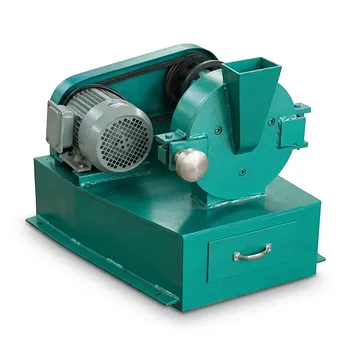
Medium Hardness Material Disc Pulverizer for Coal Ore Sample Preparation
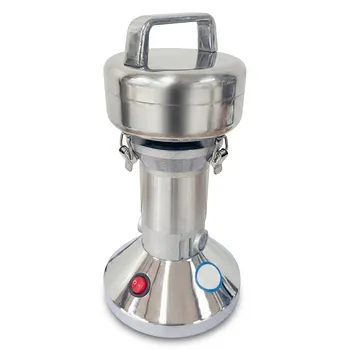
Small Trace Sample High Speed Pulverizer Grinder Laboratory Powder Mill
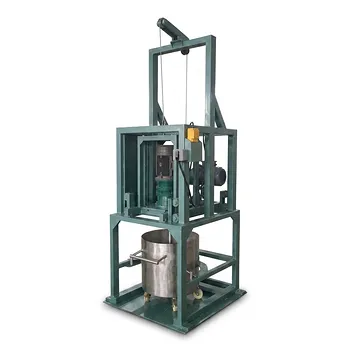
High-Speed Simple Disperser for Efficient Mixing, Dispersion, and Emulsification
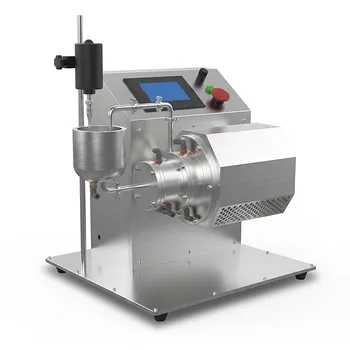
Laboratory Horizontal Pin Nano Sand Mill
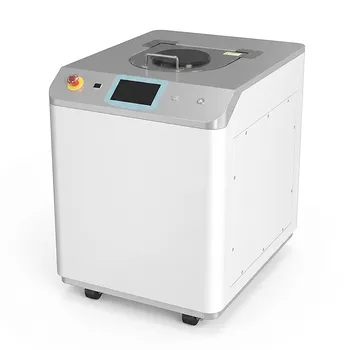
Industrial Planetary Centrifugal Vacuum Defoaming Mixer for High Viscosity Paste and Advanced Material Science
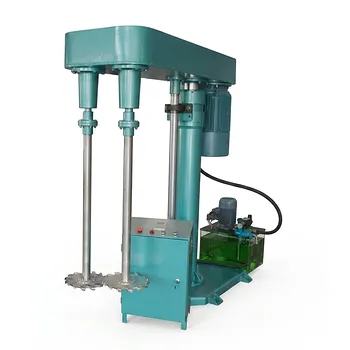
Hydraulic Double Shaft Disperser for High Viscosity Liquid Mixing and Dispersion
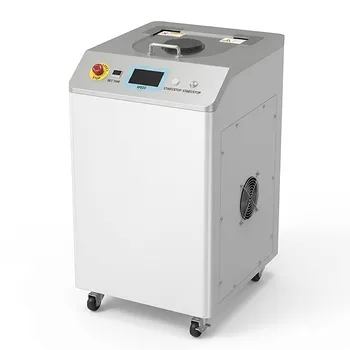
High Viscosity Planetary Centrifugal Vacuum Mixer for Material Defoaming and Uniform Mixing