What is the function of a planetary ball mill in SSC cathode preparation? Enhance IT-SOFC Performance & Nano-Refinement
Updated 5 months ago
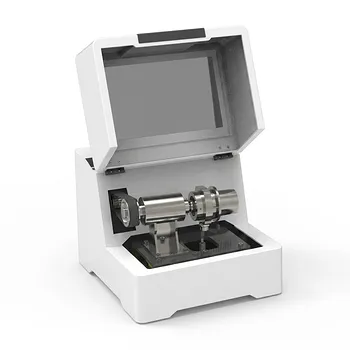
The planetary ball mill is the primary engine for mechanical refinement in the synthesis of Samarium Strontium Cobaltite (SSC) cathode materials. By utilizing high-energy impact and friction, the mill breaks down raw material powders into nano-scale fragments with a narrow particle size distribution. This process significantly increases the electrocatalytic active area, which is essential for accelerating the oxygen reduction reaction (ORR) and enhancing the overall efficiency of Intermediate-Temperature Solid Oxide Fuel Cells (IT-SOFCs).
Core Takeaway: The planetary ball mill serves as a mechanochemical processor that transforms coarse precursors into highly reactive, nano-sized powders. This refinement is critical for maximizing the active surface area and ensuring a uniform chemical distribution, which directly dictates the electrochemical performance of the final fuel cell cathode.
Particle Refinement and Surface Area Optimization
Achieving Nano-Scale Dimensions
The high-speed rotation of the planetary ball mill generates powerful impact and shear forces between the grinding balls and the powder. These forces crush secondary particles and agglomerates into primary particles at the micron or nanometer scale.
Reducing particle size is vital for SSC cathodes because it increases the specific surface area. A larger surface area provides more sites for oxygen adsorption and dissociation, lowering the activation energy required for the cathode's operation.
Narrowing Particle Size Distribution
Beyond simple reduction, the milling process ensures a narrow particle size distribution. This uniformity is critical for creating a consistent electrode microstructure during the subsequent sintering process.
A controlled distribution prevents the formation of "dead zones" within the cathode. It allows for a highly uniform active area, ensuring that the entire volume of the cathode contributes effectively to the oxygen reduction reaction.
Mechanochemical Activation and Homogenization
Enhancing Chemical Reactivity
High-energy milling induces plastic deformation and thermal shock in the powder particles. This mechanical stress increases the surface energy and reactivity of the SSC precursors.
By increasing the stored energy within the powder, the planetary ball mill lowers the temperature required for subsequent sintering reactions. This "mechanochemical activation" ensures that the solid-state reactions occur more completely and at faster rates.
Atomic-Level Mixing and Distribution
The reciprocal impact of the grinding media promotes the deep mixing of samarium, strontium, and cobalt oxides. This ensures a highly uniform distribution of chemical components at the microscopic scale.
In IT-SOFCs, this homogeneity is essential for the formation of a stable crystal lattice. Accurate dopant distribution within the lattice prevents phase separation and ensures consistent ionic and electronic conductivity across the electrode.
Understanding the Trade-offs
Risk of Milling Media Contamination
While high-energy milling is effective, it carries the inherent risk of impurities from the grinding jars and balls. Wear and tear on zirconia or alumina media can introduce foreign elements into the SSC powder.
These contaminants can act as "poisons" in the fuel cell environment. Even trace amounts of foreign oxides can degrade the electrocatalytic activity or lead to structural instability during long-term operation.
Over-Milling and Structural Damage
Excessive milling time or intensity can lead to amorphization, where the crystalline structure of the precursor is destroyed. While highly reactive, amorphous powders can lead to unpredictable shrinkage during sintering.
Furthermore, excessive mechanical energy can generate significant heat. If not managed through cooling cycles, this heat can cause unwanted premature reactions or the re-agglomeration of the nano-particles.
How to Apply This to Your Project
Maximizing Powder Quality in Your Lab
The effectiveness of your SSC cathode depends on balancing refinement with material purity. Your choice of milling parameters should reflect your specific performance targets.
- If your primary focus is Maximum Power Density: Prioritize longer milling times at high RPMs to achieve the smallest possible nano-scale fragments, which maximizes the active area for the ORR.
- If your primary focus is Material Purity: Utilize high-hardness milling media (like yttria-stabilized zirconia) and implement intermittent milling cycles to minimize media wear and prevent thermal contamination.
- If your primary focus is Scalable Production: Optimize for a bimodal particle size distribution to improve the tap density of the powder, allowing for easier processing and more stable cathode layers.
By precisely controlling the mechanical energy of the planetary ball mill, you lay the necessary foundation for high-performance, durable IT-SOFC cathode materials.
Summary Table:
| Key Milling Function | Impact on SSC Powder | Benefit for IT-SOFC Cathodes |
|---|---|---|
| Particle Refinement | Reduces particles to nano-scale | Increases active surface area for ORR |
| Homogenization | Atomic-level chemical mixing | Ensures stable lattice & uniform conductivity |
| Mechanochemical Activation | Increases surface energy/reactivity | Lowers required sintering temperatures |
| Distribution Control | Narrow particle size range | Creates uniform, high-performance microstructure |
Elevate Your Fuel Cell Research with Precise Powder Processing
Achieving the perfect nano-scale refinement for SSC cathodes requires equipment that balances high-energy impact with material purity. At [Brand Name], we provide complete laboratory sample preparation solutions tailored for material science. We specialize in advanced powder processing and compaction equipment designed to meet the rigorous standards of IT-SOFC development.
Our extensive product lines include:
- Milling & Grinding: High-performance planetary ball mills, jet mills, and liquid nitrogen cryogenic grinders for superior particle refinement.
- Sample Preparation: Precision crushers, sieve shakers, and high-efficiency powder mixers.
- Advanced Compaction: A full spectrum of hydraulic presses, including Cold/Warm Isostatic Presses (CIP/WIP), vacuum hot presses, and XRF pellet presses.
Ready to optimize your material synthesis and increase your lab's efficiency? Contact us today to discover how our specialized equipment can transform your research outcomes.
References
- Mohammad Fikrey Roslan, Mohamed Saiful Firdaus Hussin. Comparative Study of SSC Cathode Materials for IT-SOFC Applications: Short Review. DOI: 10.64382/mjii.v3i4.73
Mentioned Products
- Vertical Square Planetary Ball Mill for Laboratory Sample Preparation and Nanoscale Grinding
- 8L Planetary Ball Mill for Laboratory Grinding and Sample Preparation
- Horizontal Light Duty Planetary Ball Mill for Laboratory Sample Preparation
- Vertical Production Planetary Ball Mill for High Throughput Powder Processing
- Miniature Planetary Ball Mill with Vacuum Grinding and High Efficiency for Laboratory Sample Preparation
People Also Ask
- What is the function of a planetary ball mill in wollastonite ceramic prep? Achieve Molecular Homogenization & Reactivity
- How does a planetary ball mill contribute to the homogenization of trace elements? Achieve Sub-Micron Uniformity
- Why grind lime-pozzolan specimens for TG/DTA for 3 mins? Master sample prep for high-precision thermal analysis.
- What role does a planetary ball mill play in the synthesis of Li6PS5Cl (LPSCl)? Unlock High Ionic Conductivity
- What role does a planetary ball mill play in KNTO ceramic refinement? Optimize Homogeneity & Reactivity

Tech Team · PowderPreparation
Last updated on May 14, 2026
Related Products

Vertical Square Planetary Ball Mill for Laboratory Sample Preparation and Nanoscale Grinding

8L Planetary Ball Mill for Laboratory Grinding and Sample Preparation
Horizontal Light Duty Planetary Ball Mill for Laboratory Sample Preparation

Vertical Production Planetary Ball Mill for High Throughput Powder Processing

Miniature Planetary Ball Mill with Vacuum Grinding and High Efficiency for Laboratory Sample Preparation

High Energy Laboratory Planetary Ball Mill for Nano Grinding and Material Science Sample Preparation

Heavy Duty Horizontal Planetary Ball Mill for Efficient Industrial Grinding and Sample Preparation

360° Rotating Omnidirectional Laboratory Planetary Ball Mill for Homogeneous Ultra-Fine Grinding and Mixing
Vertical Semi Circular Planetary Ball Mill for Laboratory Precision Grinding
High Energy Laboratory Planetary Ball Mill for Nano Grinding and Colloidal Mixing of Hard and Brittle Materials
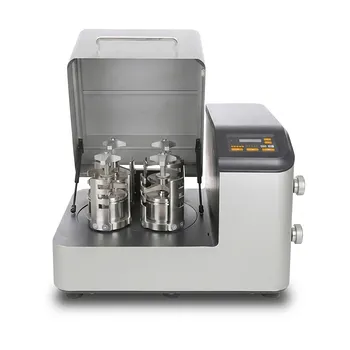
High Energy Planetary Ball Mill for Nano Scale Grinding and Colloidal Mixing in Material Science Research

High Energy Omnidirectional Planetary Ball Mill 16L
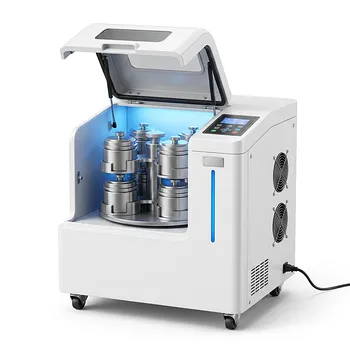
High Energy Omnidirectional Planetary Ball Mill 20L
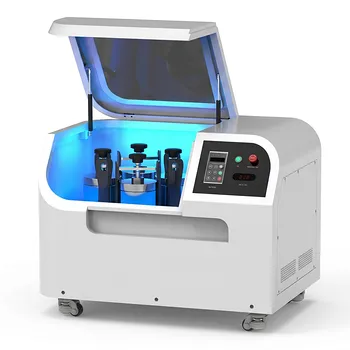
Planetary Ball Mill 12L

High Energy Planetary Ball Mill for Nano Scale Grinding and Mechanical Alloying
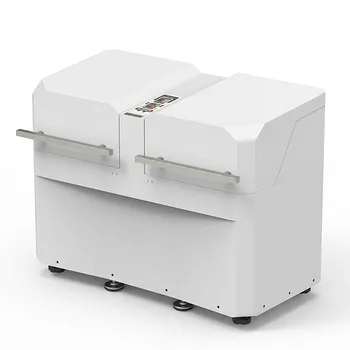
Dual Station Planetary Ball Mill 24L
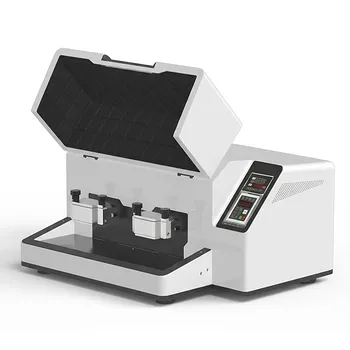
Nanoscale High-Energy Vibratory Ball Mill for Laboratory Sample Preparation, Mechanochemistry, and Mechanical Alloying
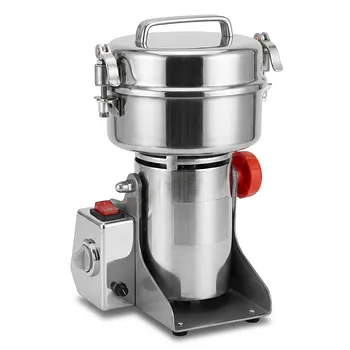
High Speed Laboratory Powder Grinder Small Batch Sample Preparation Mill
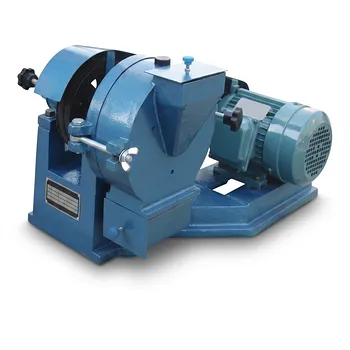
Laboratory Disc Mill for Ore and Mineral Sample Preparation