What core functions does a laboratory vacuum hot press provide for CMCs? Master Densification and Microstructure Control
Updated 4 months ago
A laboratory vacuum hot press functions as the critical engine for simultaneous thermal and mechanical processing, enabling the production of ceramic matrix composites (CMCs) with near-theoretical density. By integrating extreme heat (up to 1750°C) with precise axial pressure within a controlled atmosphere, these systems overcome the inherent resistance of high-performance ceramics to traditional sintering.
The core value of a laboratory vacuum hot press lies in its ability to couple high-temperature sintering with mechanical force to accelerate densification while preventing material degradation. This synergy allows for the creation of composites with superior flexural strength and a refined microstructure that cannot be achieved through heat alone.
Achieving Near-Theoretical Density
The primary challenge in ceramic fabrication is the removal of internal voids that weaken the final structure.
Simultaneous Thermal-Mechanical Action
A vacuum hot press promotes solid-phase or liquid-phase sintering by applying axial pressure during the heating cycle. This mechanical energy complements thermal energy, forcing particles together and significantly accelerating the densification process compared to pressureless sintering.
Elimination of Closed Porosity
The application of external pressure is essential for eliminating closed pores within the material matrix. By collapsing these internal voids, the hot press ensures the final composite achieves the high density required for extreme environmental resistance.
Lowering Required Sintering Temperatures
Because mechanical pressure acts as a secondary driver for densification, researchers can often use lower sintering temperatures. This reduction in heat helps maintain the integrity of reinforcing fibers which might otherwise degrade at extreme temperatures.
Atmospheric Control and Material Integrity
Advanced ceramics, particularly non-oxide varieties like silicon carbide (SiC), are highly sensitive to their environment during processing.
Preventing Oxidative Degradation
The vacuum environment—or the introduction of an inert gas—is vital to preventing the oxidation of non-oxide ceramics at high temperatures. This protection ensures that the chemical composition and mechanical properties of the CMC remain uncompromised during the long heating cycles.
Removal of Volatiles and Air Bubbles
In the preparation of glass or polymer-infiltrated composites, the vacuum effectively extracts air bubbles and volatile gases from the matrix. This process prevents the formation of internal defects and ensures a dense, strong interfacial bond between different material layers.
Establishing Initial Geometry
Beyond sintering, the hot press is used to manufacture Carbon Fiber Reinforced Plastic (CFRP) preforms. By applying precise pressure, the system ensures the resin matrix fully infiltrates the fiber fabric, establishing a high-density foundation for subsequent carbonization stages.
Microstructural Evolution and Phase Control
The performance of a CMC is dictated by its grain structure and the quality of the bond between the matrix and the reinforcement.
Inhibiting Abnormal Grain Growth
By utilizing simultaneous pressure to speed up densification, the "hold time" at high temperatures is reduced. This effectively inhibits abnormal grain growth, resulting in a finer microstructure that directly translates to higher flexural strength and toughness.
Precision Interface Engineering
The hot press allows for the adjustment of the matrix's crystallization behavior through controlled cooling rates. This level of control is necessary to produce flat, dense experimental specimens with predictable thermal and mechanical properties.
Fine Structure Replication
In "press-over" applications, mechanical pressure drives molten ceramic into complex molds. The vacuum environment ensures that the material replicates fine structures accurately and forms a tight physical bond with core materials, such as zirconia.
Understanding the Trade-offs
While the vacuum hot press is a definitive tool for high-performance materials, it introduces specific constraints that must be managed.
- Geometry Limitations: The reliance on axial pressure generally limits the production to relatively simple geometries, such as discs, plates, or cylinders.
- Cycle Times: The requirement to maintain a vacuum and the slow ramp-up/cool-down periods to prevent thermal shock result in long processing cycles compared to other molding methods.
- Equipment Wear: Operating at temperatures like 1750°C while applying high pressure places extreme stress on the graphite or ceramic dies, necessitating frequent maintenance and high consumable costs.
How to Apply This to Your Project
To maximize the utility of a laboratory vacuum hot press, your processing parameters must align with your specific material goals.
- If your primary focus is Maximum Mechanical Strength: Prioritize the synchronization of peak temperature and maximum axial pressure to eliminate all traces of closed porosity.
- If your primary focus is Oxidation-Sensitive Non-Oxides: Ensure the vacuum seal integrity is verified before heating and consider backfilling with high-purity argon to further protect the matrix.
- If your primary focus is Preserving Fiber Integrity: Utilize the highest allowable pressure to drive densification at the lowest possible temperature, minimizing the thermal budget the fibers must endure.
The vacuum hot press remains the most reliable method for translating advanced ceramic formulations into standardized, high-density specimens for rigorous testing.
Summary Table:
| Core Function | Key Benefit for CMCs | Technical Mechanism |
|---|---|---|
| Densification | Achieves near-theoretical density | Simultaneous axial pressure and high heat |
| Atmospheric Control | Prevents oxidation and degradation | Vacuum or inert gas (Argon/Nitrogen) environment |
| Microstructure Control | Refined grain size & higher strength | Reduced sintering time via mechanical energy |
| Void Elimination | Removes internal air bubbles | Pressure-driven removal of volatiles/closed pores |
| Infiltration | High-density preform foundation | Forced resin/melt infiltration into fiber fabrics |
Elevate Your Material Research with Precision Sample Preparation
At our core, we provide complete laboratory sample preparation solutions designed specifically for the rigorous demands of material science. Whether you are developing advanced ceramic matrix composites or high-performance alloys, our equipment ensures your specimens meet the highest standards of density and purity.
Our specialized product lines include:
- Powder Processing: High-efficiency jaw/roll crushers, liquid nitrogen cryogenic grinders, and advanced mills (planetary ball, jet, sand/bead, disc, and rotor).
- Classification & Mixing: Vibratory and air-jet sieve shakers, along with precision powder and defoaming mixers.
- Advanced Pressing: A full spectrum of hydraulic solutions including Cold/Warm Isostatic Presses (CIP/WIP), XRF pellet presses, and our flagship Vacuum Hot Presses for high-temperature sintering.
Ready to achieve superior flexural strength and refined microstructures in your next project? Contact our technical experts today to find the perfect equipment configuration for your laboratory's needs.
References
- Hong Tan, Huilin Li. Preparation, performances and application of carbon-ceramic brake discs. DOI: 10.2298/pac2404331t
Mentioned Products
- High Efficiency Vacuum Planetary Centrifugal Mixer and Defoaming Machine for Industrial Material Research and Precise Laboratory Powder Dispersion
- High Viscosity Planetary Centrifugal Mixing and Vacuum Defoaming Machine for Laboratory Material Preparation
- 5 Ton Single Punch Tablet Press Laboratory Small Batch Production
- Dual Cup Vacuum Centrifugal Mixer Planetary Paste Defoaming Machine Industrial Material Processor
- 6-Ton Small Single-Punch Tablet Press — Laboratory Powder & Granule Tableting Equipment / Tablet Forming Machine
People Also Ask
- Why is a planetary centrifugal mixer recommended for geopolymer slurries? Achieve high-shear, air-free homogenization.
- What core functions does a planetary centrifugal mixer perform? Optimize Hard Carbon Anode Slurry & Degassing
- Why is a planetary centrifugal mixer utilized for wood powder and HPMC? Achieve uniform dispersion & rapid defoaming.
- What role does a planetary centrifugal mixer play in flexible sensor inks? Achieve Nano-Scale Homogenization
- What is the role of a planetary centrifugal mixer in preparing DCPD resin-based matrices? Ensure Flawless Homogeneity

Tech Team · PowderPreparation
Last updated on Jun 03, 2026
Related Products
High Efficiency Vacuum Planetary Centrifugal Mixer and Defoaming Machine for Industrial Material Research and Precise Laboratory Powder Dispersion
High Viscosity Planetary Centrifugal Mixing and Vacuum Defoaming Machine for Laboratory Material Preparation
5 Ton Single Punch Tablet Press Laboratory Small Batch Production
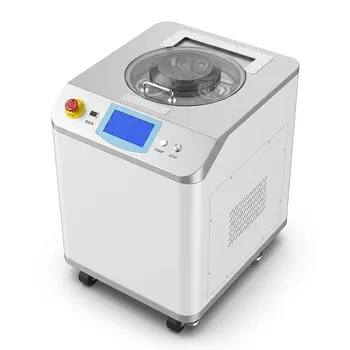
Dual Cup Vacuum Centrifugal Mixer Planetary Paste Defoaming Machine Industrial Material Processor
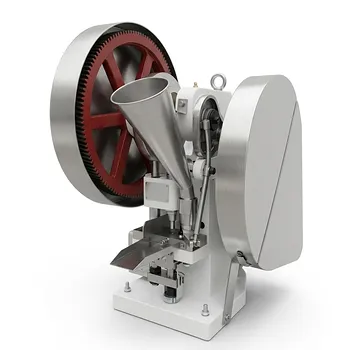
6-Ton Small Single-Punch Tablet Press — Laboratory Powder & Granule Tableting Equipment / Tablet Forming Machine
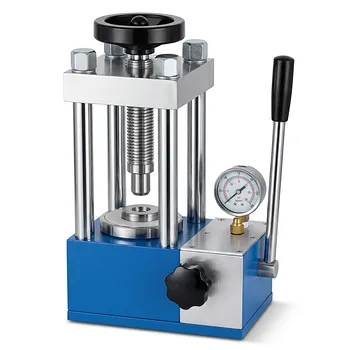
Manual Tablet Press with Dual Scale Pressure Gauge for Pharmaceutical Food Chemical Laboratory Sample Preparation
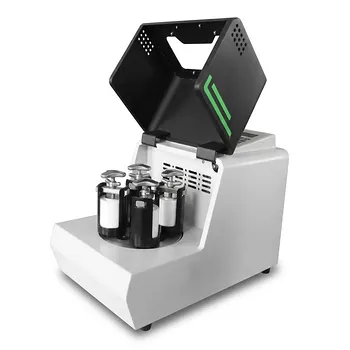
Miniature Planetary Ball Mill with Vacuum Grinding and High Efficiency for Laboratory Sample Preparation
6 Ton Variable Frequency Single Punch Tablet Press
High Speed Swing Type Laboratory Pulverizer for Fine Powder Grinding and Sample Preparation
Air Guided Ultrafine Pulverizer High Speed Laboratory Powder Grinder for Chemical and Material Processing
Industrial Planetary Centrifugal Vacuum Defoaming Mixer for High Viscosity Paste and Powder Homogenization
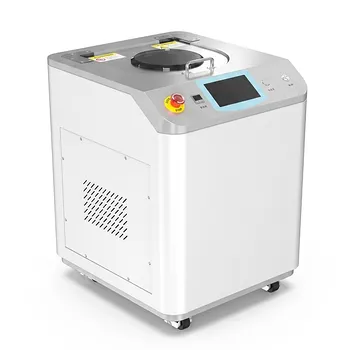
High Speed Vacuum Planetary Centrifugal Mixer and Defoamer for Industrial Paste Processing