What are the functional advantages of a planetary ball mill with a gas control lid? Boost Your Mechanochemical Research
Updated 4 months ago
A planetary ball mill equipped with a gas control lid functions as a sealed, high-energy chemical reactor that allows researchers to isolate and manipulate atmospheric variables during mineral-catalyzed reactions. By facilitating vacuuming and precise gas-filling, the equipment enables the simulation of specific redox potentials and atmospheric compositions, such as those found on other planets. This capability is essential for quantifying how different gas components influence solid-surface catalytic efficiency and the resulting product distribution.
The integration of a gas control lid transforms traditional mechanical grinding into a precise mechanochemical synthesis environment. This setup allows for the simultaneous application of high dynamic energy and controlled chemical atmospheres, enabling the study of gas-solid interactions that would be impossible in open or uncontrolled systems.
Precise Manipulation of Atmospheric Environments
Simulating Planetary and Industrial Conditions
The primary advantage of the gas control lid is the ability to establish a defined gaseous environment within the grinding jar. Researchers can introduce specific gases like methane, nitrogen, or carbon dioxide to simulate the redox potentials of various planetary atmospheres or specific industrial process conditions.
Isolation of Catalytic Variables
By utilizing vacuuming and gas-filling operations, the system ensures that the reaction is not contaminated by ambient air. This isolation allows for the precise evaluation of how individual gas components interact with mineral surfaces to drive catalytic reactions.
Synergistic High-Energy Mechanochemistry
Generating High Dynamic Energy
Planetary ball mills utilize superimposed rotational movements and Coriolis forces to generate intense impact and friction. This energy is transferred to the mineral catalysts, creating fresh, highly reactive surfaces and increasing the overall surface area available for gas-solid interactions.
Enhanced Sintering and Surface Activity
The mechanical energy not only reduces particle size to the nanoscale (down to 0.1 µm) but also induces structural defects in the minerals. These defects often serve as active sites that, when combined with a controlled atmosphere, significantly enhance the efficiency of mineral-catalyzed reactions.
Sustainability and Green Chemistry Advantages
Elimination of Toxic Solvents
Using a gas control lid facilitates solvent-free mechanochemical synthesis, removing the need for large volumes of organic solvents. This approach aligns with green chemistry principles by preventing environmental pollution and drastically reducing the burden of wastewater treatment.
Improved Atom Economy
In a sealed, gas-controlled environment, the reaction becomes more efficient, leading to higher atom economy. For example, the synthesis of catalysts can be achieved without the need for surfactants or complex liquid-phase recovery steps, saving hundreds of milliliters of wastewater per small batch.
Understanding the Trade-offs
Pressure and Seal Integrity
Maintaining a consistent atmosphere requires high-quality seals that can withstand the vibrational stresses of high-energy milling. Over time, seals may degrade, potentially leading to gas leakage or the introduction of atmospheric contaminants if not monitored rigorously.
Temperature-Pressure Interdependency
The high-energy impacts within the jar generate significant heat, which can cause the internal gas pressure to rise unexpectedly. Researchers must carefully calibrate their starting pressures to account for this thermal expansion to avoid safety risks or unintended changes in reaction kinetics.
Potential for Media Contamination
While using materials like tungsten carbide minimizes contamination, the intense energy of the mill can still lead to trace amounts of grinding media entering the sample. In sensitive catalytic studies, these trace elements must be accounted for as they may provide unintended catalytic pathways.
How to Apply This to Your Research Goal
Choosing the Right Configuration
To maximize the effectiveness of your planetary ball mill in atmospheric research, consider your primary experimental objective:
- If your primary focus is Simulating Extraterrestrial Chemistry: Utilize the vacuum and gas-filling cycles to precisely replicate the redox potentials of nitrogen- or carbon-dioxide-heavy atmospheres.
- If your primary focus is Green Catalyst Production: Prioritize solvent-free runs to enhance atom economy and eliminate the need for post-reaction wastewater treatment.
- If your primary focus is Nanoscale Surface Science: Optimize the milling speed and duration to achieve sub-micron particle sizes, maximizing the surface area exposed to your controlled gas environment.
By leveraging the gas control lid, you turn a mechanical pulverizer into a sophisticated laboratory for discovering new pathways in mineral-catalyzed chemistry.
Summary Table:
| Feature | Functional Advantage | Research Impact |
|---|---|---|
| Atmospheric Control | Vacuuming and precise gas-filling (e.g., $CH_4, N_2, CO_2$) | Simulates planetary or industrial redox environments. |
| Mechanochemistry | High dynamic energy via rotational and Coriolis forces | Creates reactive surfaces and induces structural defects. |
| Nanoscale Milling | Particle size reduction down to 0.1 µm | Maximizes surface area for gas-solid catalytic interactions. |
| Green Chemistry | Solvent-free synthesis environment | Eliminates toxic waste and improves atom economy. |
| Process Isolation | Sealed, contamination-free reaction chamber | Ensures precise evaluation of specific gas-catalyst variables. |
Elevate Your Material Research with Precision Engineering
At [Brand Name], we provide complete laboratory sample preparation solutions tailored for advanced material science. Whether you are simulating extraterrestrial atmospheres or developing green catalysts, our specialized equipment ensures repeatable, high-precision results.
Our extensive product line includes:
- Powder Processing: Planetary ball mills, jet mills, cryogenic grinders, and disc/rotor mills for achieving nanoscale particle sizes.
- Sizing & Mixing: Vibratory/air-jet sieve shakers and high-efficiency powder/defoaming mixers.
- Compaction & Synthesis: A full spectrum of hydraulic presses, including Cold/Warm Isostatic Presses (CIP/WIP), standard lab presses, XRF pellet presses, and advanced vacuum hot presses.
Ready to transform your mechanochemical workflows and achieve superior catalytic efficiency? Contact our technical experts today to find the perfect equipment configuration for your specific research goals!
References
- Maren Haas, Oliver Trapp. Mineral-mediated carbohydrate synthesis by mechanical forces in a primordial geochemical setting. DOI: 10.1038/s42004-020-00387-w
Mentioned Products
- Miniature Planetary Ball Mill with Vacuum Grinding and High Efficiency for Laboratory Sample Preparation
- Planetary Ball Mill 12L
- High Energy Omnidirectional Planetary Ball Mill 16L
- High Energy Omnidirectional Planetary Ball Mill 20L
- Dual Station Planetary Ball Mill 24L
People Also Ask
- Why is a planetary ball mill essential for SiBCN-rGO wet-spinning? Achieve Superior Dispersion and Spinnability
- What role does a planetary ball mill play in the preparation of forsterite (Mg2SiO4) ceramic raw materials? Key Insights
- How does a planetary ball mill contribute to the top-down size reduction of silica particles? Achieve Nano-Scale Precision
- Why is a benchtop planetary ball mill used for eggshell microparticles? Optimize Flame Retardant Grinding Efficiency
- Why grind lime-pozzolan specimens for TG/DTA for 3 mins? Master sample prep for high-precision thermal analysis.

Tech Team · PowderPreparation
Last updated on May 14, 2026
Related Products
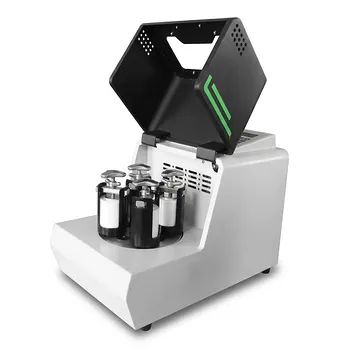
Miniature Planetary Ball Mill with Vacuum Grinding and High Efficiency for Laboratory Sample Preparation
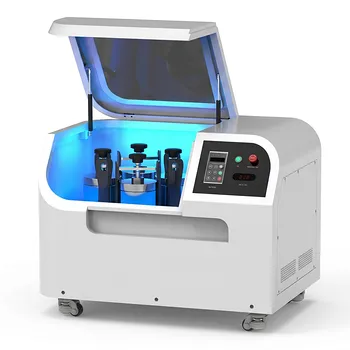
Planetary Ball Mill 12L
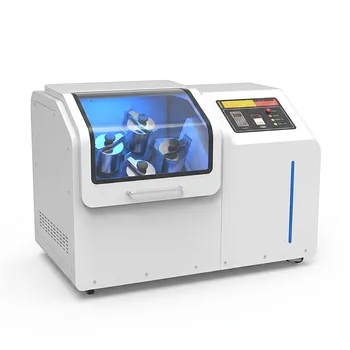
High Energy Omnidirectional Planetary Ball Mill 16L
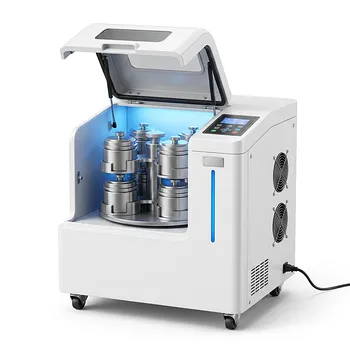
High Energy Omnidirectional Planetary Ball Mill 20L
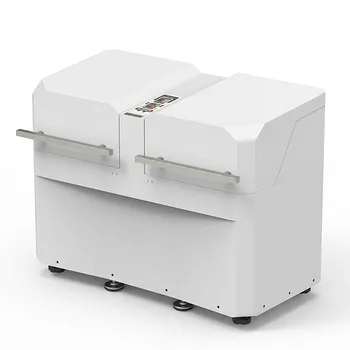
Dual Station Planetary Ball Mill 24L
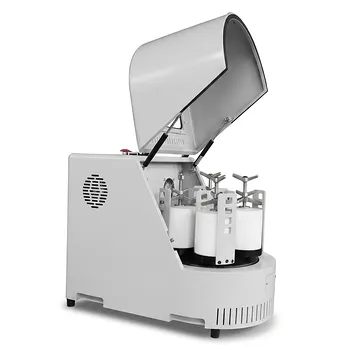
Vertical Semi Circular Planetary Ball Mill for Laboratory Precision Grinding
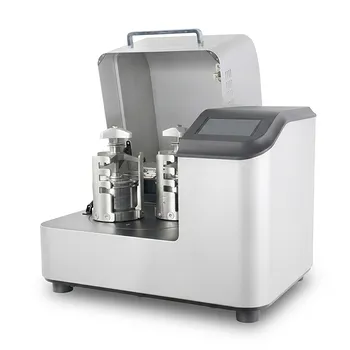
High Energy Planetary Ball Mill for Nano Scale Grinding and Mechanical Alloying
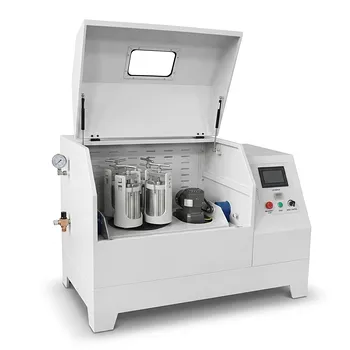
Vertical Production Planetary Ball Mill for High Throughput Powder Processing
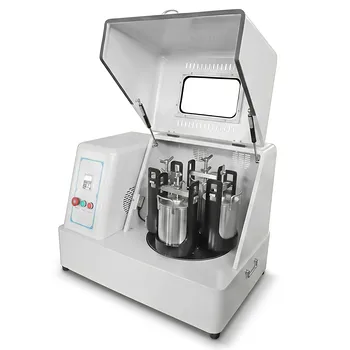
Vertical Square Planetary Ball Mill for Laboratory Sample Preparation and Nanoscale Grinding
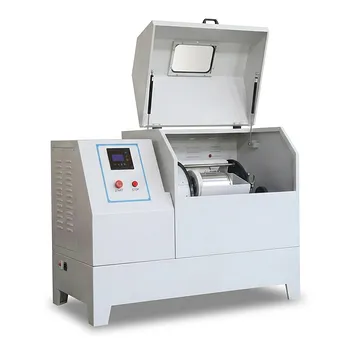
Heavy Duty Horizontal Planetary Ball Mill for Efficient Industrial Grinding and Sample Preparation
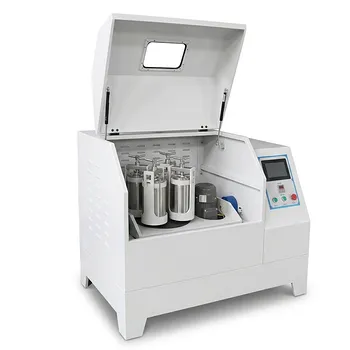
360° Rotating Omnidirectional Laboratory Planetary Ball Mill for Homogeneous Ultra-Fine Grinding and Mixing
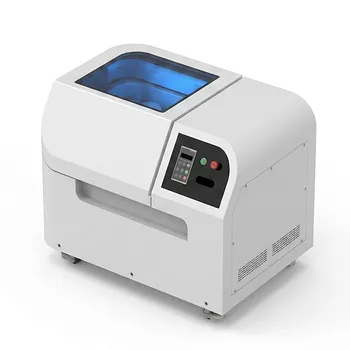
8L Planetary Ball Mill for Laboratory Grinding and Sample Preparation
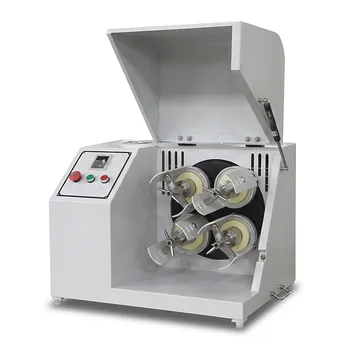
Horizontal Light Duty Planetary Ball Mill for Laboratory Sample Preparation
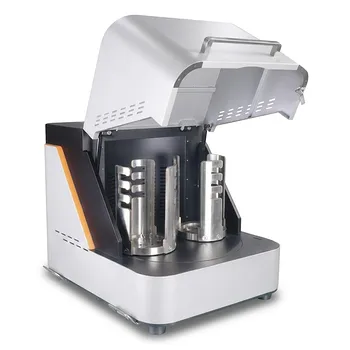
High Energy Laboratory Planetary Ball Mill for Nano Grinding and Colloidal Mixing of Hard and Brittle Materials
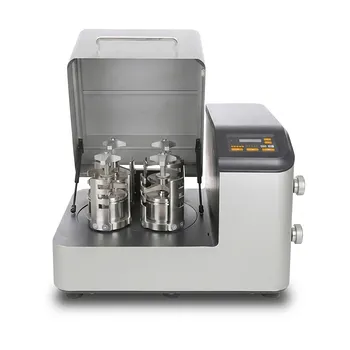
High Energy Planetary Ball Mill for Nano Scale Grinding and Colloidal Mixing in Material Science Research
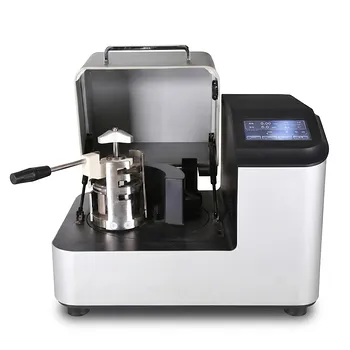
High Energy Laboratory Planetary Ball Mill for Nano Grinding and Material Science Sample Preparation
Heating Temperature Controlled High Energy Vibratory Ball Mill
Single Tank High Energy Vibratory Ball Mill for Laboratory Grinding and Mixing