How is a laboratory vacuum hot press used to produce high-performance SiC mold materials? Achieve Armor-Grade Density
Updated 3 months ago
High-performance Silicon Carbide (SiC) mold materials are produced through the simultaneous application of extreme thermal energy and uniaxial mechanical pressure within a controlled vacuum. A laboratory vacuum hot press facilitates this by sintering SiC powder—often mixed with specific additives—at temperatures reaching 2050°C and pressures up to 40 MPa. This process achieves near-theoretical density and a flexural strength exceeding 500 MPa, creating blocks capable of withstanding the rigorous electrical and mechanical demands of Spark Plasma Sintering (SPS).
The vacuum hot press provides the necessary thermodynamic and mechanical "coupling" to overcome the low self-diffusion of Silicon Carbide. By combining a high-vacuum atmosphere with constant axial force, the equipment eliminates internal pores and prevents oxidation, resulting in a dense, high-purity ceramic with optimized conductivity.
Overcoming the Sintering Barriers of Silicon Carbide
Managing Low Self-Diffusion
Silicon Carbide is characterized by strong covalent bonding, which results in extremely low self-diffusion coefficients. This makes it nearly impossible to achieve full densification through conventional pressureless sintering without reaching impractical temperatures.
The vacuum hot press solves this by providing an additional physical driving force. The mechanical load assists the movement of atoms across grain boundaries, allowing for dense packing that heat alone cannot achieve.
The Role of Uniaxial Pressure
During the heating cycle, the press applies a constant uniaxial (axial) pressure, typically between 20 MPa and 60 MPa. This force induces particle rearrangement and plastic deformation, ensuring that the SiC particles interlock tightly.
Under this pressure, the cross-sections of SiC fibers or grains can actually change shape, transitioning from circular to polygonal or hexagonal structures. This deformation minimizes the space between particles and drives the material toward full densification.
The Critical Functions of the Vacuum Environment
Prevention of Material Oxidation
At the extreme temperatures required for SiC (often exceeding 1750°C), exposure to oxygen would lead to the rapid oxidation and deterioration of the material. The vacuum environment removes oxygen, protecting the non-oxide ceramic and any carbon-based additives or fibers used in the composite.
By maintaining a high vacuum, the integrity of the SiC matrix is preserved. This ensures the final mold material retains its intended high thermal conductivity and mechanical toughness.
Volatilization of Impurities
The high-vacuum state accelerates the volatilization of impurities and suppresses unwanted gas-phase reactions. This "cleansing" effect is vital for producing high-purity blocks with a fine grain structure.
Removing these impurities prevents the formation of secondary phases that could weaken the material. The result is a ceramic that can reach a relative density exceeding 99%.
Achieving Superior Material Properties for Molds
Eliminating Residual Porosity
The synergistic effect of high temperature and pressure is specifically designed to close residual and closed pores. By reducing porosity to as low as 0.52%, the material achieves "armor-grade" hardness and durability.
Low porosity is critical for mold materials because it prevents crack initiation under tensile loads. This makes the resulting SiC blocks ideal for high-pressure industrial environments.
Optimization for Spark Plasma Sintering (SPS)
SiC blocks produced via vacuum hot pressing are frequently used as molds in SPS processes. Because the hot press can regulate the material's electrical conductivity, the resulting mold can effectively manage electric field distribution.
The high flexural strength (500+ MPa) ensures the mold does not deform or fail when subjected to the rapid heating and high-pressure cycles inherent to SPS.
Understanding the Trade-offs
Equipment and Operational Constraints
While vacuum hot pressing produces superior material density, it is a batch process that is more time-consuming than continuous sintering methods. The requirement for specialized vacuum chambers and high-tonnage hydraulic systems also increases the initial capital investment.
Structural and Geometry Limitations
The use of uniaxial pressure means that the material is primarily compressed from one or two directions. This can lead to internal residual strain and limits the complexity of the shapes that can be produced directly in the press; most SiC molds must be machined from simple blocks or cylinders after pressing.
How to Apply This to Your Project
Selecting Parameters for Your Goal
- If your primary focus is maximum mechanical strength: Prioritize a higher sintering temperature (near 2050°C) and higher pressure (40-60 MPa) to ensure flexural strength exceeds 500 MPa.
- If your primary focus is high-purity and fine grain structure: Utilize a high-vacuum environment to accelerate the volatilization of impurities and keep the sintering temperature closer to 1750°C to prevent excessive grain growth.
- If your primary focus is producing SPS mold components: Ensure the inclusion of specific additives during the hot press process to regulate the final electrical conductivity of the SiC block.
By mastering the balance of thermal fields and mechanical force, you can transform raw Silicon Carbide into a high-performance material capable of surviving the most extreme industrial conditions.
Summary Table:
| Key Parameter | Process Specification | Performance Impact |
|---|---|---|
| Sintering Temp | Up to 2050°C | Overcomes low self-diffusion of Silicon Carbide |
| Uniaxial Pressure | 20 - 60 MPa | Drives particle rearrangement to eliminate pores |
| Atmosphere | High Vacuum | Prevents oxidation and volatilizes impurities |
| Final Density | > 99% Relative Density | Achieves superior hardness and thermal conductivity |
| Flexural Strength | 500+ MPa | Ensures mold durability for SPS applications |
Elevate Your Advanced Material Research
Are you looking to achieve theoretical density and superior mechanical properties in your advanced ceramics? Contact us today to discover how our precision engineering solutions can optimize your laboratory workflow.
We provide complete laboratory sample preparation solutions for material science, specializing in high-performance powder processing and compaction equipment. Our expertise includes:
- Powder Processing: Advanced crushers (jaw/roll), liquid nitrogen cryogenic grinders, and a full range of mills (planetary ball, jet, sand, disc, rotor).
- Sizing & Mixing: Sieve shakers (vibratory/air-jet) and high-efficiency powder or defoaming mixers.
- Compaction Excellence: A full spectrum of hydraulic presses, including Cold/Warm Isostatic Presses (CIP/WIP), vacuum hot presses, XRF pellet presses, and standard lab presses.
Let our technical experts help you select the ideal configuration for producing high-performance SiC molds and other critical materials. Get a professional consultation now!
References
- Byung‐Nam Kim, Yoshio Sakka. Low-temperature spark plasma sintering of alumina by using SiC molding set. DOI: 10.2109/jcersj2.16082
Mentioned Products
- 非介入式材料均质机真空脱泡行星搅拌高粘度混合设备
- Industrial Vacuum Kneader for High-Viscosity Silicone, Rubber, and Compound Mixing
- Dual Cup Vacuum Centrifugal Mixer Planetary Paste Defoaming Machine Industrial Material Processor
- High Efficiency Vacuum Planetary Centrifugal Mixer and Defoaming Machine for Industrial Material Research and Precise Laboratory Powder Dispersion
- High Speed Vacuum Planetary Centrifugal Mixer and Defoamer for Industrial Paste Processing
People Also Ask
- How does a planetary vacuum defoaming mixer help magnesium calcium phosphate slurries? Achieve Flawless 3D Printed Bone
- Why is vacuum defoaming necessary for PDMS mixtures before microwave irradiation curing? Key to Structural Integrity
- What role does a vacuum defoaming mixer play in BNT MLCC slurry? Ensure High Dielectric Strength & Pinhole-Free Prep
- Why is a vacuum defoaming mixer essential for DLP 3D printing ceramic slurries? Key to Structural Integrity
- What is the purpose of using a high-vacuum defoaming mixer for SiC/Cf composites? Optimize Density and Strength

Tech Team · PowderPreparation
Last updated on Jun 03, 2026
Related Products
非介入式材料均质机真空脱泡行星搅拌高粘度混合设备
Industrial Vacuum Kneader for High-Viscosity Silicone, Rubber, and Compound Mixing
Dual Cup Vacuum Centrifugal Mixer Planetary Paste Defoaming Machine Industrial Material Processor
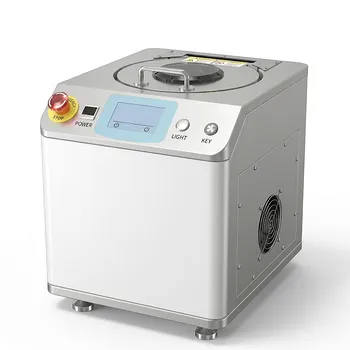
High Efficiency Vacuum Planetary Centrifugal Mixer and Defoaming Machine for Industrial Material Research and Precise Laboratory Powder Dispersion
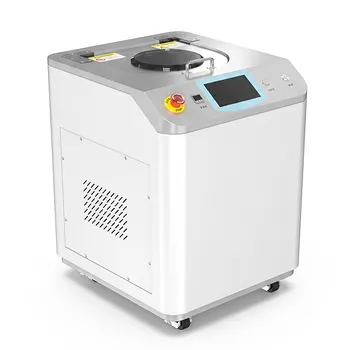
High Speed Vacuum Planetary Centrifugal Mixer and Defoamer for Industrial Paste Processing
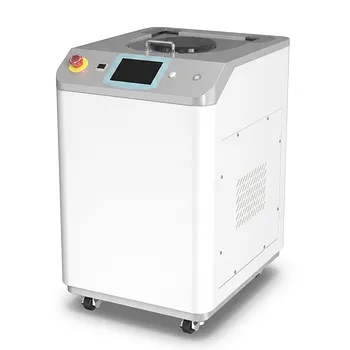
High Viscosity Planetary Centrifugal Mixing and Vacuum Defoaming Machine for Laboratory Material Preparation
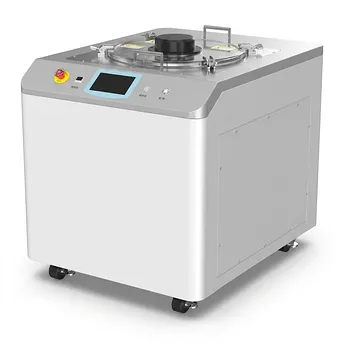
Industrial Planetary Centrifugal Vacuum Defoaming Mixer for High Viscosity Paste and Powder Homogenization
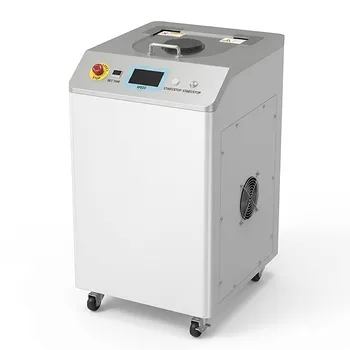
High Viscosity Planetary Centrifugal Vacuum Mixer for Material Defoaming and Uniform Mixing