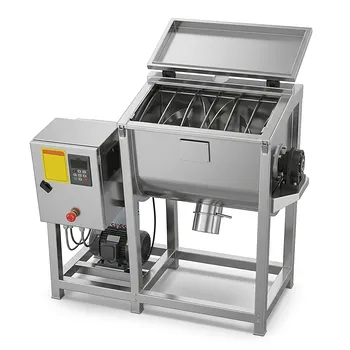
How does an industrial planetary gravity mixer improve 3DPX support gels? Achieve Defect-Free Precision Printing
Updated 5 months ago
Industrial planetary gravity mixers are essential for 3DPX support gels because they achieve deep, micron-scale homogenization and total degassing simultaneously. By utilizing simultaneous revolution and rotation, these mixers remove micro-bubbles and ensure that gel particles are uniformly distributed. This process is critical for maintaining a continuous extrusion path and consistent fiber diameter during the printing process.
A planetary gravity mixer ensures the structural integrity of 3DPX prints by eliminating trapped air and creating a perfectly uniform support medium, which prevents extrusion failures and mechanical defects in the final part.
The Mechanics of Dual-Axis Motion
Simultaneous Revolution and Rotation
These mixers generate powerful centrifugal and shear forces by rotating the material container while it simultaneously revolves around a central axis. This dual-axis motion creates a complex flow pattern that forces high-density particles to disperse evenly throughout viscous matrices.
Non-Contact High-Shear Processing
Unlike traditional impellers, this non-contact method uses internal friction and shear to mix materials. This is particularly effective for high-viscosity components, ensuring deep mixing without the risk of contaminating the gel with stirrer blades or introducing new air into the mix.
Critical Functions in Support Gel Processing
Micron-Scale Homogenization
3DPX support gels often consist of micron-scale particles that must be perfectly distributed to function correctly. The mixer's high-speed action ensures these particles are homogenized into a stable matrix, preventing localized variations in density that could compromise the print.
Efficient Degassing and De-foaming
The centrifugal forces effectively "push" air bubbles to the surface where they are eliminated, even in highly viscous gels. This de-foaming action is vital because air pores can lead to structural weaknesses or "sputtering" during the extrusion process.
Ensuring 3DPX Print Precision
Maintaining Extrusion Path Continuity
For 3DPX printing, any micro-bubble in the support medium can break the continuity of the extrusion path. By providing a bubble-free medium, the planetary mixer ensures the printing nozzle delivers a steady, uninterrupted flow of material.
Achieving Consistent Fiber Diameters
Uniform rheological properties are required to keep the fiber diameter consistent throughout the build. Homogeneous support gels provide predictable resistance to the extrusion nozzle, which results in high-precision parts with repeatable dimensions.
Understanding the Trade-offs
Heat Generation from Friction
The high-speed shear forces necessary for mixing can generate significant internal heat within the gel. If not carefully monitored, this temperature rise can alter the chemical properties or viscosity of sensitive silicone or elastomer matrices.
Scalability and Batch Limits
Planetary mixers are typically batch-processing machines with specific weight and volume limits. This may require careful production scheduling and precise timing compared to continuous mixing methods used in large-scale industrial manufacturing.
How to Apply This to Your Project
- If your primary focus is structural integrity: Prioritize the degassing settings to ensure the complete removal of micro-bubbles that cause air pore defects in the printed component.
- If your primary focus is high-viscosity dispersion: Utilize high-speed revolution settings to generate the shear forces necessary to move dense particles like barium sulfate into the elastomer matrix.
- If your primary focus is precision fiber printing: Focus on achieving micron-scale homogenization to maintain constant resistance for the extrusion nozzle.
Achieving a defect-free 3DPX print begins with the fundamental physics of how your support medium is homogenized and degassed.
Summary Table:
| Key Feature | Benefit for 3DPX Support Gels |
|---|---|
| Dual-Axis Motion | Creates high shear for uniform particle dispersion in viscous matrices. |
| Micron-Scale Homogenization | Prevents localized density variations to ensure consistent fiber diameters. |
| Simultaneous Degassing | Removes micro-bubbles to prevent extrusion failure and structural defects. |
| Non-Contact Mixing | Eliminates contamination risk and ensures material purity without stirrers. |
Optimize Your Material Preparation for 3DPX Success
Achieving the perfect support gel requires precision equipment that eliminates air and ensures total homogeneity. We provide complete laboratory sample preparation solutions for material science, specializing in high-performance powder processing and compaction equipment.
Our extensive product line includes:
- Mixers: Advanced planetary and defoaming mixers for viscous gels and elastomers.
- Milling & Grinding: Planetary ball mills, jet mills, and cryogenic grinders.
- Pressing Solutions: Full spectrum of hydraulic presses, including Cold/Warm Isostatic Presses (CIP/WIP), vacuum hot presses, and XRF pellet presses.
- Sieving & Mixing: Sieve shakers, powder mixers, and more.
Whether you are refining 3DPX support media or processing advanced ceramics, our expertise ensures your materials meet the highest standards of structural integrity.
Contact our technical experts today to find the ideal solution for your laboratory’s specific needs!
References
- Wonsik Eom, Sameh Tawfick. Fast 3D printing of fine, continuous, and soft fibers via embedded solvent exchange. DOI: 10.1038/s41467-025-55972-1
Mentioned Products
- High Efficiency Vacuum Planetary Centrifugal Mixer and Defoaming Machine for Industrial Material Research and Precise Laboratory Powder Dispersion
- High Viscosity Planetary Centrifugal Vacuum Mixer for Material Defoaming and Uniform Mixing
- High Viscosity Planetary Centrifugal Mixing and Vacuum Defoaming Machine for Laboratory Material Preparation
- Industrial Planetary Centrifugal Vacuum Defoaming Mixer for High Viscosity Paste and Powder Homogenization
- Industrial Planetary Centrifugal Vacuum Defoaming Mixer for High Viscosity Paste and Advanced Material Science
People Also Ask
- Why is a planetary centrifugal mixer recommended for geopolymer slurries? Achieve high-shear, air-free homogenization.
- What core functions does a planetary centrifugal mixer perform? Optimize Hard Carbon Anode Slurry & Degassing
- Why is a planetary centrifugal mixer utilized for wood powder and HPMC? Achieve uniform dispersion & rapid defoaming.
- What role does a planetary centrifugal mixer play in flexible sensor inks? Achieve Nano-Scale Homogenization
- What is the role of a planetary centrifugal mixer in preparing DCPD resin-based matrices? Ensure Flawless Homogeneity

Tech Team · PowderPreparation
Last updated on May 14, 2026
Related Products
High Efficiency Vacuum Planetary Centrifugal Mixer and Defoaming Machine for Industrial Material Research and Precise Laboratory Powder Dispersion
High Viscosity Planetary Centrifugal Vacuum Mixer for Material Defoaming and Uniform Mixing
High Viscosity Planetary Centrifugal Mixing and Vacuum Defoaming Machine for Laboratory Material Preparation
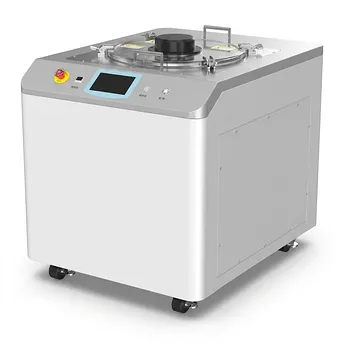
Industrial Planetary Centrifugal Vacuum Defoaming Mixer for High Viscosity Paste and Powder Homogenization
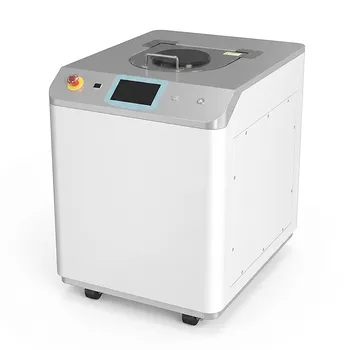
Industrial Planetary Centrifugal Vacuum Defoaming Mixer for High Viscosity Paste and Advanced Material Science
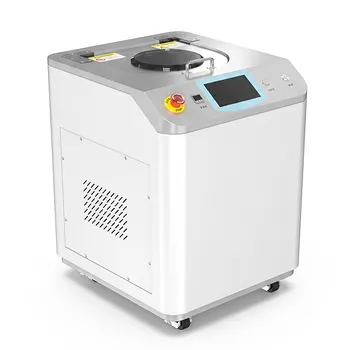
High Speed Vacuum Planetary Centrifugal Mixer and Defoamer for Industrial Paste Processing
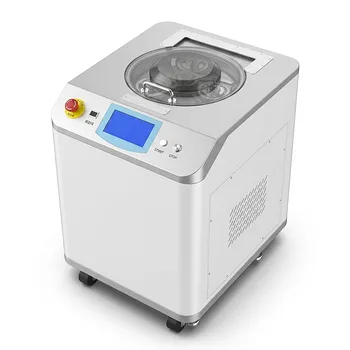
Dual Cup Vacuum Centrifugal Mixer Planetary Paste Defoaming Machine Industrial Material Processor
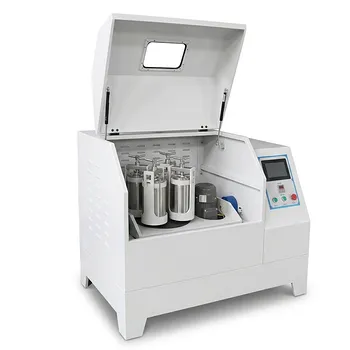
360° Rotating Omnidirectional Laboratory Planetary Ball Mill for Homogeneous Ultra-Fine Grinding and Mixing
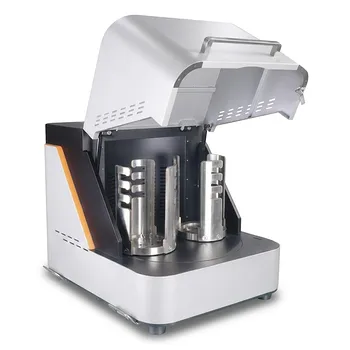
High Energy Laboratory Planetary Ball Mill for Nano Grinding and Colloidal Mixing of Hard and Brittle Materials
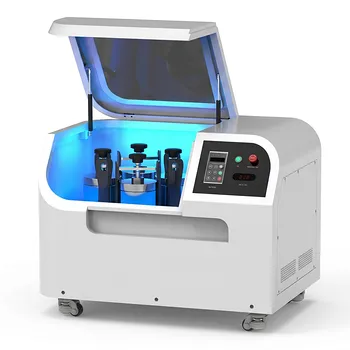
Planetary Ball Mill 12L
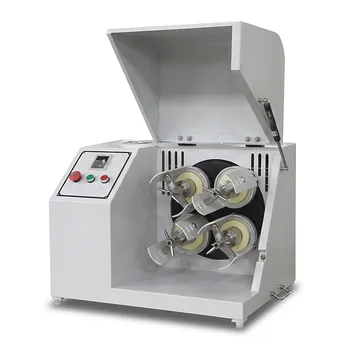
Horizontal Light Duty Planetary Ball Mill for Laboratory Sample Preparation
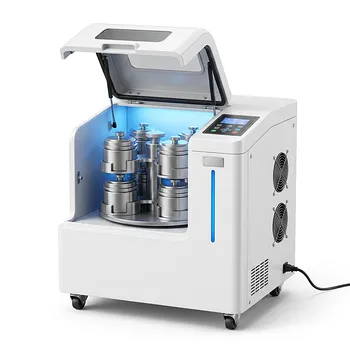
High Energy Omnidirectional Planetary Ball Mill 20L
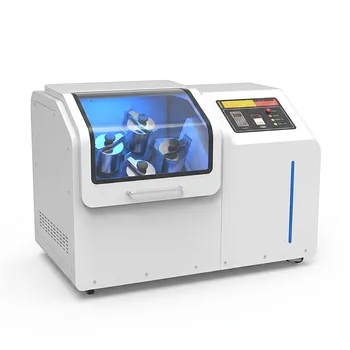
High Energy Omnidirectional Planetary Ball Mill 16L
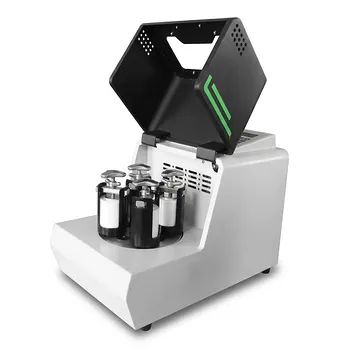
Miniature Planetary Ball Mill with Vacuum Grinding and High Efficiency for Laboratory Sample Preparation
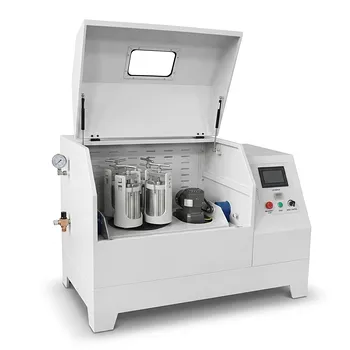
Vertical Production Planetary Ball Mill for High Throughput Powder Processing
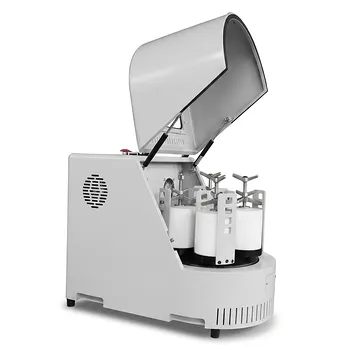
Vertical Semi Circular Planetary Ball Mill for Laboratory Precision Grinding
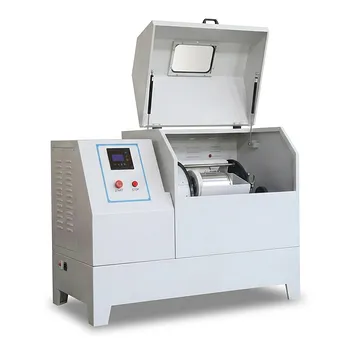
Heavy Duty Horizontal Planetary Ball Mill for Efficient Industrial Grinding and Sample Preparation
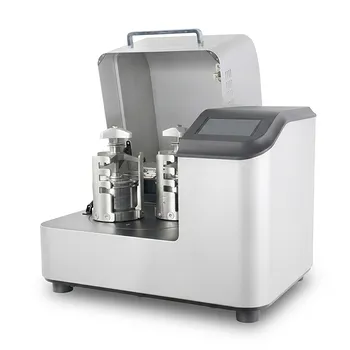
High Energy Planetary Ball Mill for Nano Scale Grinding and Mechanical Alloying
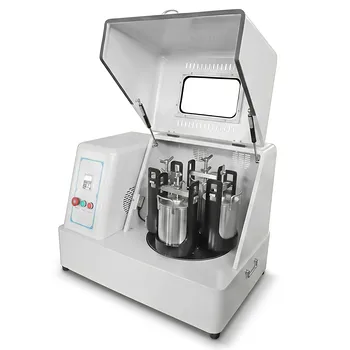
Vertical Square Planetary Ball Mill for Laboratory Sample Preparation and Nanoscale Grinding