How do ceramic powder mixers influence the optical performance of AlON? Mastering Homogeneity for Superior Clarity
Updated 4 months ago
High-performance ceramic powder mixers are the critical factor in achieving optical transparency in Aluminum Oxynitride (AlON) because they establish the microscopic chemical homogeneity necessary for a defect-free solid-state reaction. By ensuring precursors like alumina and aluminum nitride are perfectly distributed, these mixers prevent the formation of light-scattering secondary phases and residual porosity during the sintering process.
The optical clarity of AlON is dictated by its microscopic uniformity; ceramic mixers serve as the foundational tool that eliminates light-scattering centers by ensuring a homogeneous chemical reaction, thereby enabling the production of large-scale, high-transmittance armor.
The Link Between Homogeneity and Transparency
Achieving Microscopic Uniformity
The synthesis of AlON relies on a precise solid-state reaction between alumina ($Al_2O_3$) and aluminum nitride (AlN) powders.
High-performance mixers ensure that these multi-component precursors are distributed with absolute precision at the microscopic level.
Without this uniformity, the chemical reaction remains localized, leading to inconsistent material properties across the final ceramic plate.
Preventing Light-Scattering Centers
Transparency in ceramics is easily compromised by any internal feature that deflects or absorbs light.
Mixers influence optical performance by suppressing the formation of light-scattering centers, which are often caused by uneven chemical distribution.
When precursors are perfectly blended, the resulting AlON is free from the refractive index variations that cause cloudiness or "haze" in the material.
Impact on the Sintering Process
Avoiding Secondary Phase Precipitation
If the precursor powders are not mixed thoroughly, localized areas may have an excess of one component.
This imbalance leads to the precipitation of secondary phases, which are distinct chemical structures that block light transmission.
Effective mixing ensures a stoichiometric balance throughout the volume, resulting in a single-phase AlON ceramic with superior optical transmittance.
Eliminating Residual Porosity
Residual porosity is perhaps the greatest enemy of transparent armor, as even tiny air pockets scatter light effectively.
High-performance mixing promotes uniform particle packing, which is essential for achieving complete densification during sintering.
By ensuring that the precursors react fully and uniformly, these mixers help eliminate the microscopic voids that would otherwise degrade the material's clarity.
Understanding the Trade-offs and Risks
The Risk of Impurity Contamination
While high-energy mixing is required for homogeneity, it introduces the risk of media wear, where particles from the mixer itself contaminate the powder.
Even trace amounts of metallic or foreign impurities can cause discoloration or absorption bands, significantly reducing the optical quality of the AlON plate.
Over-processing and Particle Morphology
Excessive mixing can lead to over-processing, which may alter the particle size distribution or morphology of the precursor powders.
If the particles become too fine or lose their optimal shape, it can negatively impact the flowability of the powder and the consistency of the final sintered product.
Optimizing Mixing for Your Application
Selecting the right mixing strategy is essential for balancing throughput with the rigorous optical requirements of transparent armor.
- If your primary focus is Maximum Optical Transmittance: Utilize high-energy, high-purity mixing environments to ensure absolute chemical homogeneity and the total elimination of secondary phases.
- If your primary focus is Large-Scale Production: Implement continuous, high-volume mixing processes that maintain strict tolerances to prevent localized defects across large ceramic plates.
By mastering the precision of the initial powder blend, manufacturers can consistently produce AlON ceramics that meet the most demanding ballistic and optical standards.
Summary Table:
| Key Factor | Impact on AlON Optical Performance | Outcome for Transparent Armor |
|---|---|---|
| Microscopic Uniformity | Ensures precise solid-state reaction between Al2O3 and AlN | Eliminates refractive index variations and haze |
| Phase Control | Prevents localized imbalances and secondary phase precipitation | Achieve single-phase ceramics with max transmittance |
| Densification | Promotes uniform particle packing during the sintering process | Eliminates residual porosity and internal light scattering |
| Impurity Management | Minimizes media wear and foreign particle contamination | Prevents discoloration and unwanted absorption bands |
Optimize Your Transparent Armor Production with Advanced Processing Solutions
Achieving theoretical density and optical clarity in materials like AlON requires precision at the microscopic level. We provide complete laboratory sample preparation solutions designed specifically for high-performance material science.
Our specialized equipment ensures your precursors are perfectly blended and processed to prevent defects:
- Advanced Mixing & Milling: High-performance powder mixers, defoaming mixers, and planetary ball mills for absolute chemical homogeneity.
- Precision Compaction: A full spectrum of hydraulic presses, including Cold/Warm Isostatic Presses (CIP/WIP), vacuum hot presses, and standard lab presses for maximum densification.
- Material Preparation: Industrial-grade crushers (jaw/roll), cryogenic grinders, and air-jet sieve shakers to control particle morphology.
Ready to eliminate light-scattering defects and enhance your ceramic performance? Contact our technical experts today to find the ideal equipment for your laboratory or production line.
References
- James W. McCauley. Institutional and technical history of requirements‐based strategic armor ceramics basic research leading up to the multiscale material by design materials in extreme dynamic environments (MEDE) program. Part I. Brief history of institutional changes and relevant major research programs. DOI: 10.1002/ces2.10176
Mentioned Products
- Multi Dimensional Universal Mixer for High Uniformity Powder Blending
- Inclined Mixer for Homogeneous Powder Blending and Grinding
- V-Type Powder Mixer for Uniform Blending of Dry Powders and Granules
- Horizontal Trough Mixer for Uniform Powder and Paste Blending
- Horizontal Ribbon Mixer for Uniform Powder and Slurry Mixing
People Also Ask
- What is the role of a multi-dimensional powder mixer in the preparation of Ce-TZP ceramics? Optimize Homogenization
- What is the importance of using a high-efficiency powder mixer when preparing sand and soil mixtures? Accurate Results.
- What is the role of a powder mixer in SiC mechanical seal ring production? Ensure Homogeneity and Structural Integrity
- Why is high-uniformity powder mixing essential for antibacterial ceramic glazes? Ensure Consistent Bioactive Protection
- How do powder mixers and additives influence ZTA ceramics? Optimize microstructure for superior toughness and density

Tech Team · PowderPreparation
Last updated on Jun 03, 2026
Related Products
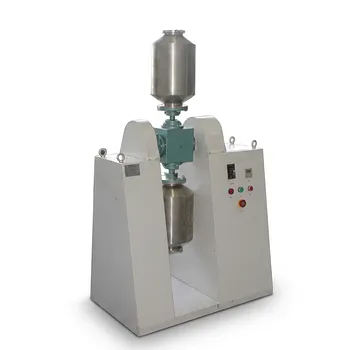
Multi Dimensional Universal Mixer for High Uniformity Powder Blending
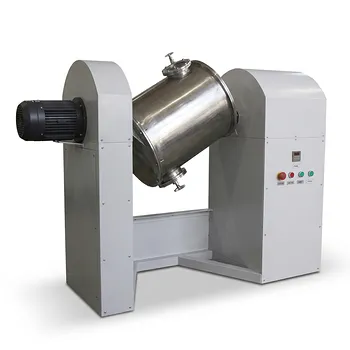
Inclined Mixer for Homogeneous Powder Blending and Grinding
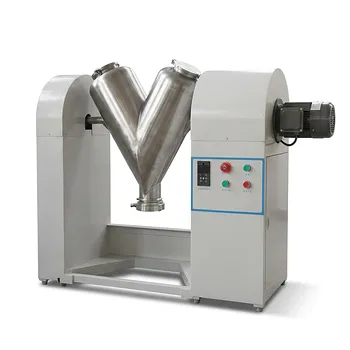
V-Type Powder Mixer for Uniform Blending of Dry Powders and Granules
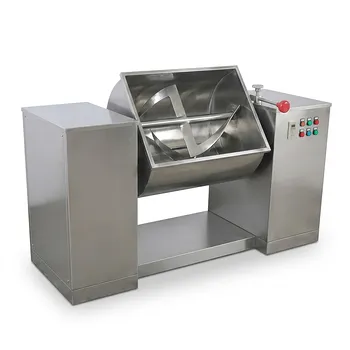
Horizontal Trough Mixer for Uniform Powder and Paste Blending
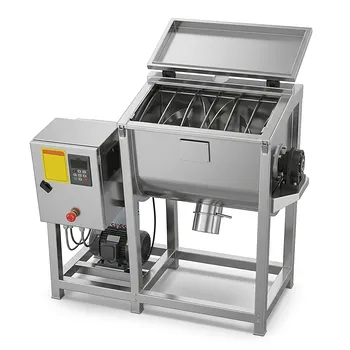
Horizontal Ribbon Mixer for Uniform Powder and Slurry Mixing
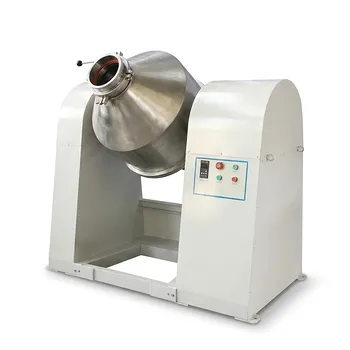
Industrial Double Cone Mixer for Powder Blending and Homogeneous Mixing
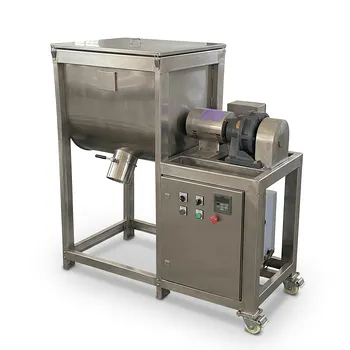
Horizontal Ribbon Mixer for Dry Powder and Slurry Blending
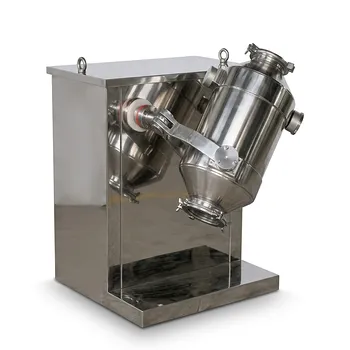
Three-Dimensional Motion Mixer for Laboratory Powder and Granule Blending
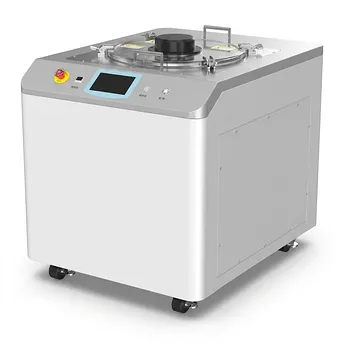
Industrial Planetary Centrifugal Vacuum Defoaming Mixer for High Viscosity Paste and Powder Homogenization
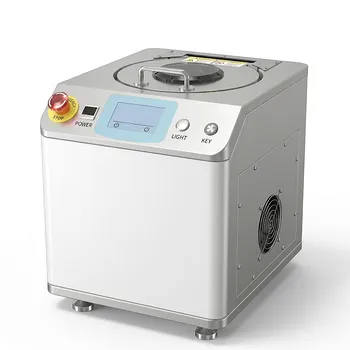
High Efficiency Vacuum Planetary Centrifugal Mixer and Defoaming Machine for Industrial Material Research and Precise Laboratory Powder Dispersion
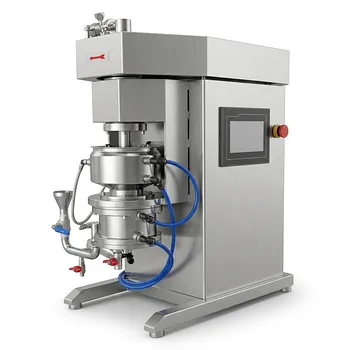
Small Ceramic Structure Laboratory Sand Mill Nanoscale Grinding Dispersion Equipment Seal-less Screen-less Design
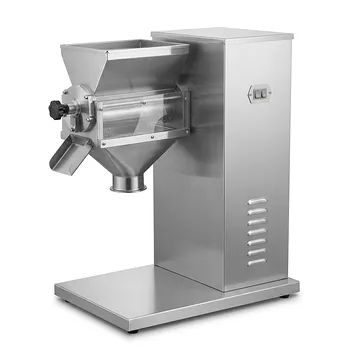
Small Swing Granulator Efficient Powder Granulation for Pharmaceutical Chemical Food Industries
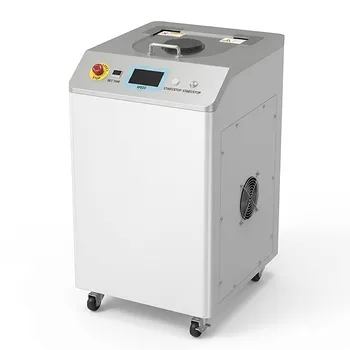
High Viscosity Planetary Centrifugal Vacuum Mixer for Material Defoaming and Uniform Mixing
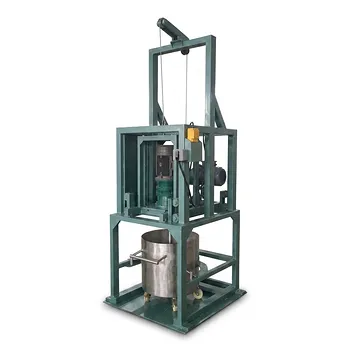
High-Speed Simple Disperser for Efficient Mixing, Dispersion, and Emulsification
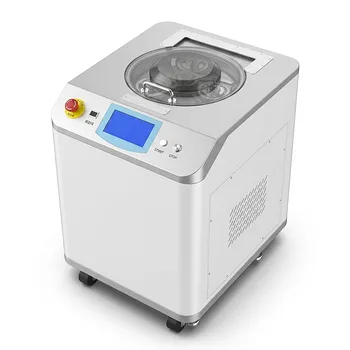
Dual Cup Vacuum Centrifugal Mixer Planetary Paste Defoaming Machine Industrial Material Processor
Industrial Swing Granulator for Powder Processing in Pharma Food and Chemical Industries
Industrial Planetary Centrifugal Vacuum Defoaming Mixer for High Viscosity Paste and Advanced Material Science
High Speed Vacuum Planetary Centrifugal Mixer and Defoamer for Industrial Paste Processing
Hydraulic Double Shaft Disperser for High Viscosity Liquid Mixing and Dispersion