Why the Most Expensive Mill Can't Save a Bad Grinding Bead
Oct 10, 2026
Dr. Rossi stared at the particle size report. The numbers were stuck at 450 nanometers.
Her new high-energy mill had cost more than anyone in the lab wanted to mention. Every variable on the control panel had been optimized. The suspension looked right. The temperature curve was flat. Yet the active pharmaceutical ingredient remained stubbornly coarse.
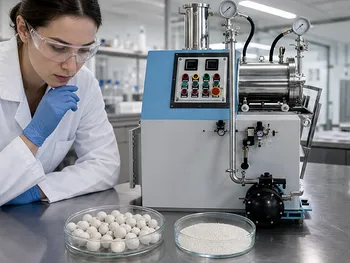
She popped open the grinding chamber. Inside, the culprit sat silently: a bed of standard-density media. The mill was telling the truth. It was the beads that had been lying.
We buy smart microscopes. We agonize over mill horsepower. But we instinctively treat grinding beads as a commodity—a bulk consumable that just has to be “hard enough.” That instinct is the most expensive mistake in particle engineering.
Mass is the messenger. The beads don’t just stir the slurry; they are the moving parts that intercept and fracture every single crystal. If the media lacks the right mass, the rest of the machine is just moving air.
The Energy Budget Nobody Audits
The physics is embarrassing in its simplicity. Kinetic energy equals one-half mass times velocity squared.
Your mill controls velocity (stirrer tip speed, disk rotation, vibration amplitude). But mass? That belongs to the bead. A high-density yttria-stabilized zirconia (YSZ) bead sits at roughly 6 g/mL. A standard glass bead is half that. Halve the mass, and you halve the energy delivered at any given speed.
The psychology of the mistake is pure Morgan Housel: we pay attention to the expensive thing we just bought, not to the invisible consumable that actually transfers the force. The entire system is an energy budget, and the beads are the final expense line.
Energy Anchors, Not Just Agitators
High-density YSZ beads function as energy anchors. Their job is to convert global mill motion into localized, high-intensity stress events that overwhelm the intermolecular bonds holding a crystal together.
When that anchor is too light, the motor works just as hard, but the stress at the point of collision drops. You pay for power that never reaches the particle.
Knocking on the Nanometer Door
Getting from 10 microns to 150 nanometers is a milling problem. Getting from 150 nanometers down to 50 is a fracture problem.
Three Forces, One Purpose
Inside the grinding zone, every particle is subjected to:
- High-energy impact: The blunt force that initiates the first crack.
- Shear: The sliding friction that peels away surface roughness.
- Compression: The squeeze that drives those cracks deeper into the core.
YSZ beads deliver these three forces with ruthless efficiency because their density keeps momentum high, even after hundreds of thousands of collisions. Low-density media decelerates quickly in viscous slurries. It floats. It slides. It stops hammering.
The Threshold Nobody Sees
Intermolecular forces don’t care about averages. They care about peak stress. If the delivered energy per collision stays just below what’s needed to propagate a crack, you can mill for hours and generate nothing but heat. The bead doesn’t just grind—it must cross a critical stress threshold.
High-density YSZ hits that threshold more often, simply because each impact carries a deeper energy reserve.
The Precision Paradox: Smaller Is Sharper, but Only If You Can Push It
You reach the sub-100nm range by maximizing specific surface area. That means using smaller beads—frequently 0.1 mm to 0.3 mm in diameter.
There’s a catch. Smaller beads are lighter. If you drop the diameter without increasing the density, you lose the impact force you just shortened the bead to create. You get more collisions, but each of them becomes just a tap.
The Sweet Spot Exists Only With the Right Material
YSZ resolves this paradox elegantly. Its high density lets a 0.2 mm bead carry the same inertial mass as a much larger glass bead, while multiplying the number of grinding contact points by an order of magnitude. More contact points. No force penalty.
The lesson: specific surface area wins only when density is non-negotiable.
The Hidden Cost of Speed: Heat, Wear, and Integrity Traps
Every engineer knows that nanonization generates heat. Few realize that the media itself is the thermostat.
When Energy Becomes Unwanted Temperature
The same kinetic energy that shatters crystals also warms the suspension. YSZ’s density means you can often achieve target size in fewer passes, reducing total thermal exposure. But the real risk emerges when users compensate for weak media by cranking up the mill speed.
Higher speed with light beads creates shear heating without fracture. The API cooks. Re-aggregation begins. The batch fails not because the mill was weak, but because the bead was invisible.
The Purity Mandate
Zirconia beads are not wear-free. They are wear-resistant. Over extended cycles, even premium YSZ media will contribute a vanishingly small trace of ions to the slurry. For pharmaceutical and optical applications, that trace matters.
The engineer must trade off grinding time against allowable impurity levels. Cheaper media wears faster, contaminates earlier, and erases the safety margin. YSZ’s fracture toughness and chemical inertness protect that margin, but they demand respect for the clock.
Integrating the System: Why Your Bead Mill Is Only as Good as Its Media
Media doesn’t work alone. It functions inside a machine that must be engineered to translate its properties.
The Equipment That Multiplies the Bead’s Work
High-density YSZ beads require a milling apparatus that can handle denser packing and precise temperature control. A laboratory planetary ball mill designed for high-energy impact can maximize the collision frequency these beads offer. A bead mill built with superior agitation geometry keeps heavy media suspended rather than centrifuged against the wall, preventing dead zones.
Our complete sample preparation range is designed to capture the full kinetic potential of premium grinding media:
- High-efficiency milling systems (planetary ball mills, jet mills, and bead mills) that maintain momentum distribution across the grinding chamber.
- Cryogenic grinding solutions for heat-sensitive materials, ensuring that the high energy from YSZ beads doesn’t translate into thermal degradation.
- Defoaming mixers and homogenizers that prepare stable suspensions before they ever enter the mill, removing the viscosity spikes that can cause media float.
Beyond the Grind: Preserving the Nano-State
Once the nanonization cycle finishes, the physics doesn’t stop. Nano-powders want to agglomerate. They demand gentle processing that doesn’t crush the very structure you just engineered.
That’s where the second half of the workflow enters: compaction and analysis. Our Cold/Warm Isostatic Presses (CIP/WIP) apply uniform pressure to pack nanostructured powders into green bodies without destroying particle morphology. A vacuum hot press can then densify the compact into a solid material, all while the microstructure remains a direct descendent of those high-density bead collisions.
Finally, sieve shakers and test sieves confirm that the particle distribution has translated from the liquid phase into the finished product. The logic of the bead carries forward into every subsequent step.
Building a Foolproof Process: A Few Rules Worth Tattooing
The bead is the processor. The machine is the platform. If you design the protocol around that truth, very little surprises you.
| Variable | The Temptation | The Reality |
|---|---|---|
| Media density | Save cost with glass or low-density ceramic | You lose impact force; you then compensate with speed and create heat |
| Bead diameter (0.1–0.3 mm) | Go larger to increase individual impact | You lose specific surface area and the sub-100nm finishing touch |
| Milling time | Run until the target size appears | Over-milling wears the media, risks contamination, and triggers re-aggregation |
| Equipment | Buy the strongest mill and ignore the consumables | The mill can’t transfer energy the media doesn’t carry; match the system to the bead |
The common thread is psychological. We tend to over-engineer what we can see and under-engineer what we pour into the chamber.
High-density yttria-stabilized zirconia beads don’t look like a technology. They don’t have a display. They just sit there, 6 grams per cubic centimeter of potential. But they are the tiny anvils that decide whether a batch of medicine becomes a nano-suspension or a write-off.
The romantic part of engineering hides in that moment: when the material choice inside a dark grinding bowl exerts more control over the final product than the motors outside it. Respect the bead, and the rest of the system will follow.
Quick Links
Suggested Products
Horizontal Bead Mill for Nanoscale Grinding and Advanced Material Powder Processing Laboratory Horizontal Bead Mill for Nanomaterial Wet Grinding and Material Science Research Laboratory Small Horizontal Sand Mill for Nano Materials Wet Grinding Vertical Nano Bead Mill for Ceramic Materials with Permanent Magnet Motor and High Efficiency Grinding Nano Laboratory Bead Mill Desktop Sub Micron Sand Mill Screenless Seal Less Powder Grinder
PowderPreparation
Last updated on May 14, 2026
Related Products
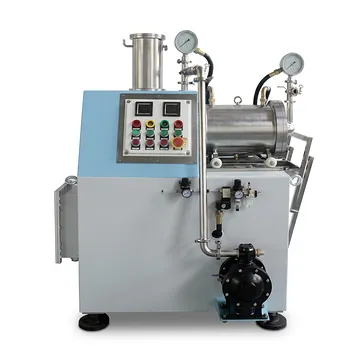
Horizontal Bead Mill for Nanoscale Grinding and Advanced Material Powder Processing
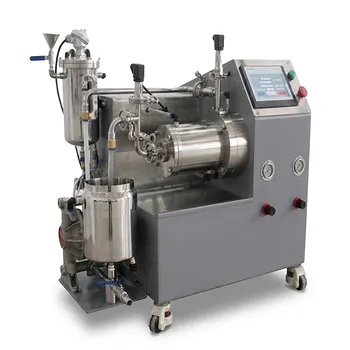
Laboratory Horizontal Bead Mill for Nanomaterial Wet Grinding and Material Science Research
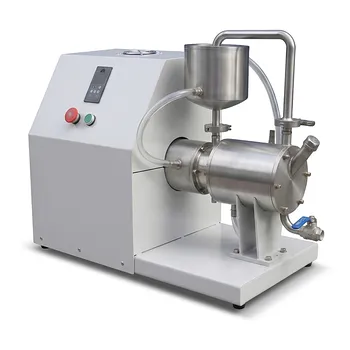
Laboratory Small Horizontal Sand Mill for Nano Materials Wet Grinding
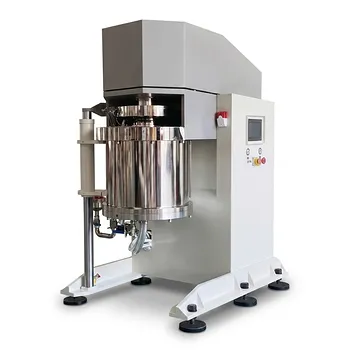
Vertical Nano Bead Mill for Ceramic Materials with Permanent Magnet Motor and High Efficiency Grinding
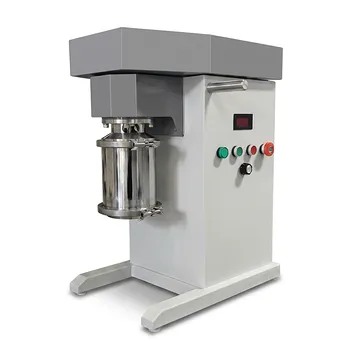
Nano Laboratory Bead Mill Desktop Sub Micron Sand Mill Screenless Seal Less Powder Grinder
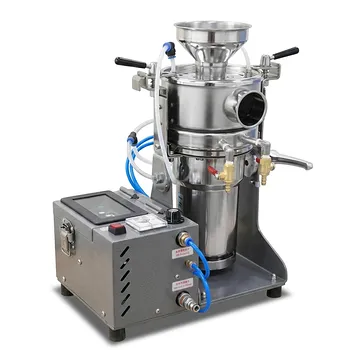
Water Cooled Pulse Jet Ultrafine Grinder
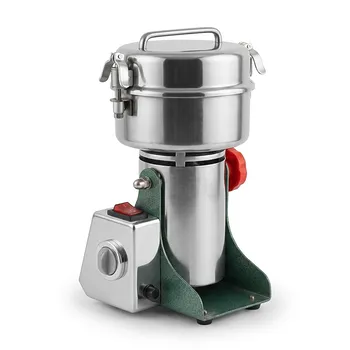
Small High-Speed Swing Grinder for Laboratory Sample Preparation
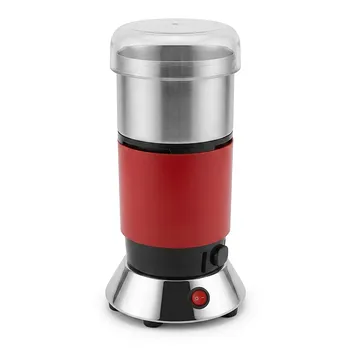
Micro Solid Sample Grinder High Speed Pulverizer for Laboratory Small Batch Grinding
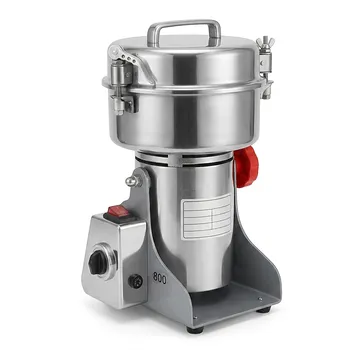
Small High-Speed Laboratory Grinder for Rapid Sample Preparation
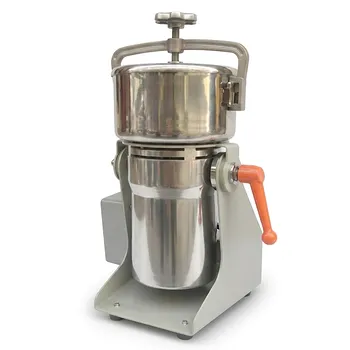
High Speed Laboratory Grinder Efficient Stainless Steel Powder Pulverizer Universal Material Science Mill for Sample Preparation
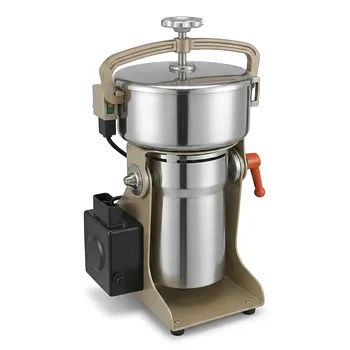
Multifunctional High Efficiency High Speed Laboratory Grinder
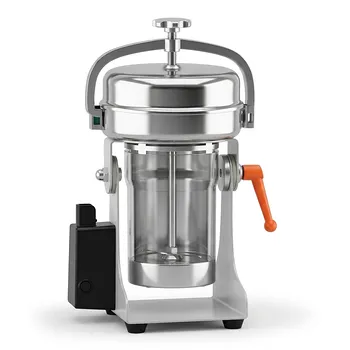
High Efficiency High Speed Grinder 2200W 25000 RPM Laboratory Sample Preparation
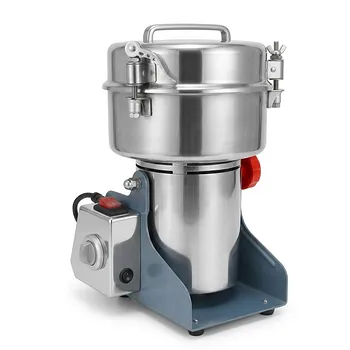
Small High-Speed Grinder for Efficient Laboratory Sample Preparation
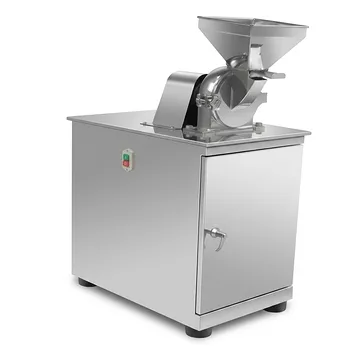
Universal Laboratory Pulverizer Grinder for Small Batch Powder Processing and Material Science Research
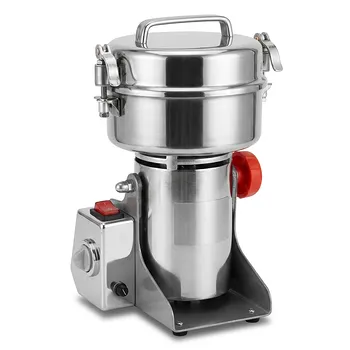
High Speed Laboratory Powder Grinder Small Batch Sample Preparation Mill
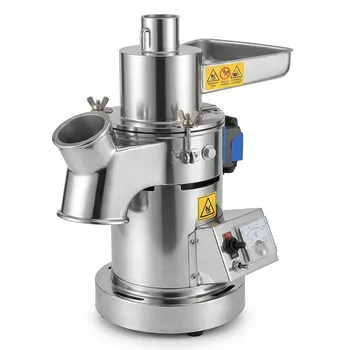
Continuous Feeding Grinder High Efficiency Pulverizer for Lab Sample Preparation
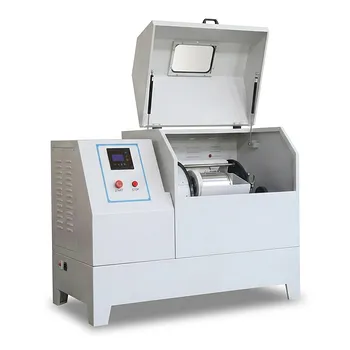
Heavy Duty Horizontal Planetary Ball Mill for Efficient Industrial Grinding and Sample Preparation
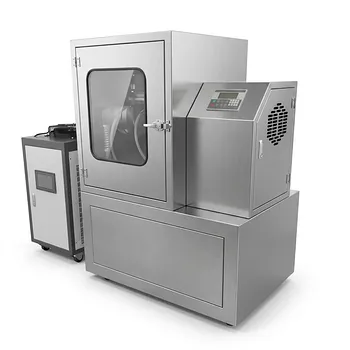
Vibratory Superfine Grinder for Ultra Fine Laboratory Powder Milling
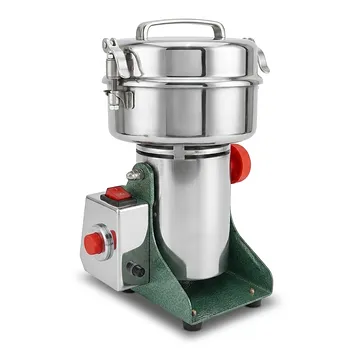
Small High-Speed Laboratory Grinder for Powder Processing