The First Truth of Silicates: Why Crushing Defines Everything That Follows
Sep 02, 2026
The Problem No One Sees Until It’s Too Late
You have a pile of red mud. Or a container of black slag. Or a mound of diatomaceous earth that looks more like chalky rubble than a precision industrial feedstock.
A chemist might reach for the acid. A process engineer might open the furnace schedule. But someone who has spent years solving why identical recipes produce wildly different results will tell you to step back. Much further back.
They will tell you that the fate of your silicate mineral—whether it becomes a reliable supplementary cementitious material, an inert analytical pellet, or a batch of expensive waste—is mostly sealed before the first real chemical reaction ever occurs. It is sealed the moment you decide how to crush it.
Industrial crushers occupy a strange place in the material science psyche. They are easy to overlook. They are almost never celebrated. Yet they perform a function no subsequent piece of equipment can rescue if done poorly: they transform geological chaos into statistical order. That is not just a mechanical task. It is a philosophical one.
The Memory That Rocks Carry
Raw Silicates Are Not “Dirty”—They Are Historic
A chunk of black slag is not a simple solid. It is a composite of crystalline phases, glassy regions, trapped porosity, and cooling stresses that formed unevenly. Red mud carries the drying history of an alumina refinery. Diatomaceous earth contains microscopic architectures built by organisms millions of years ago.
When you feed this material into your process without a deliberate crushing strategy, you are not processing one material. You are processing hundreds of micro-materials, each with its own hardness, cohesiveness, and chemical accessibility.
A laboratory jaw crusher does something profound in that first pass: it overrides the material’s memory with a new, controlled fracture network. The block loses its original boundaries. It becomes a representative collection of fragments, each carrying the internal chemistry of the whole but now at a scale that subsequent analytical instruments can actually interpret.
The 12.5mm Standard Is Not Arbitrary
If you have ever wondered why so many sample preparation protocols converge on reducing silicates to pass 12.5 mm before splitting, it is not tradition. It is statistics.
When particles vary in size, composition drifts with particle size because different mineral phases break at different rates. Crushing to a uniform top size minimizes that compositional segregation. You stop sampling fragments of geological bias. You start sampling the true bulk chemistry of your batch.
Two Kinds of Violence, Two Kinds of Order
Compression: The Patient Squeeze of a Jaw Crusher
Imagine a pair of hardened steel plates closing on a fist-sized lump of slag. The force builds slowly, travels through the material, finds its weakest internal planes, and propagates cracks until the lump shatters into a handful of angular pieces.
This is compressive crushing. It excels at primary reduction of hard, abrasive silicates. It does not try to make fine powder. It tries to make something manageable.
What you gain: High throughput on tough materials, low risk of immediate equipment damage if a metal tramp accidentally enters the feed.
What you accept: Elongated particle shapes, a relatively wide particle size distribution, and the need for at least one more stage before your material is ready for anything chemically sophisticated.
Impact: The Kinetic Gift of Surface Area
An impact crusher works differently. A rotor—spinning fast—throws the material against breaker plates or anvils. The collision fractures the particles instantly along internal boundaries that a slow squeeze might never open.
That difference matters enormously for silicates headed into calcination or chemical activation. Impact crushing multiplies specific surface area by orders of magnitude compared to simple jaw reduction. For diatomaceous earth or an alkali-activated slag precursor, this is the moment you either capture reactivity or leave it locked forever inside smooth fracture faces.
What you gain: Superior particle shape, a finer product in a single pass, and a surface that invites chemical agents rather than repelling them.
What you accept: Higher wear on wear parts when the silicate happens to be silica-rich and sharp-edged. A trade-off you must consciously make.
The Hidden Contamination Cost
Every time steel strikes silicate, a few atoms of iron transfer. For most cementitious applications this is too small to matter. For refractory-grade silica or electronic-purity diatomaceous earth, it can be the difference between a saleable product and an out-of-spec rejection.
This is not an argument against crushing. It is an argument for knowing what your crusher leaves behind and matching the choice to the purity envelope your final application actually demands. There are moments when a roll crusher's softer action—or a ceramic-lined impact zone—is not an upgrade but a requirement.
The 2mm Sieve and the Principle of Thermal Justice
Heat does not enter a large silicate particle the way it enters a small one. In a calcination furnace, a 10mm red mud aggregate develops a temperature gradient. The surface can be fully transformed, sometimes over-transformed, while the core remains chemically unchanged. Later, when you test the batch, you are measuring a statistical average of two completely different phases.
Crush that material to pass 2 mm before it ever enters the furnace, and the physics changes. Thermal diffusion distances shrink. Every piece experiences roughly the same thermal history. The result is not just a better batch yield; it is a batch you can honestly characterize.
This is not a crushing detail. This is where the decision of which crusher and which target size becomes a direct instrument of experimental control.
The Psychology of the Shortcut
Here is a pattern that repeats across industries: an operator inherits a fine grinding mill and discovers it can—with some effort—handle chunks much larger than its design specification. So the jaw crusher gets bypassed. One step eliminated. Faster turnaround.
For a while, nothing bad happens. Then throughput drops because the mill needs more time per batch. Then particle size uniformity degrades because large feed fragments pack differently in the grinding chamber. Then the mill consumes more energy per kilogram of product, which shows up as cost. Then a bearing fails earlier than expected.
The real cost of skipping primary crushing is almost never immediate. It accrues silently—in data quality, in maintenance, in process variability—until it becomes an accepted part of “how we do things here.”
Morgan Housel often writes about how the most destructive risks are the ones that do not come with a loud alarm. They feel fine in the short run. Skipping proper silicate reduction is exactly that kind of risk. The jaw crusher is not a bottleneck. It is an insurance policy on everything downstream.
Choosing a Crushing Strategy Is Choosing a Final Destination
Your application is not a general case. It has a specific relationship with particle size, surface area, and purity. The table below maps the most common silicate processing destinations to the crushing philosophy that serves them best.
| Your Final Goal | What the Crusher Must Deliver | Equipment That Aligns |
|---|---|---|
| Representative Lab Analysis (XRF, XRD, wet chemistry) | Uniform 12.5mm maximum size; no cross-contamination between samples | Jaw Crusher with hardened steel or tungsten carbide plates |
| Thermal Calcination Uniformity | Particles pass 2mm—maximized surface area, minimal thermal core-shell gradients | Impact Crusher or Roll Crusher optimized for fine output |
| Chemical Activation (alkali-activated SCM, geopolymers) | A foundation for micron-scale grinding; early fracture networks that reduce downstream grinding energy | Two-stage: Jaw Crusher for primary reduction → Disc Mill or Jet Mill for precision |
| High-Purity Silica/Diatomaceous Earth Processing | Structural deconstruction with minimal iron pick-up; preservation of natural porous architecture | Ceramic-lined Roll Crusher or cryogenic grinding systems |
A Full Orchestra, Not a Solo Instrument
Crushing deserves its moment of respect. But it does not work alone.
After the crusher creates a statistically homogeneous powder, a planetary ball mill or jet mill can push that material into the micron regime where true chemical reactivity lives. A vibratory sieve shaker separates out the few stubborn oversized particles and gives you a narrow distribution that publishes cleanly. A powder mixer ensures that any additives, activators, or binders contact every grain equally. And when it is time to turn loose powder into a stable solid form for analysis or material testing, a hydraulic press—from a standard lab press to a Cold Isostatic Press (CIP)—locks the physical state into something measurable.
This integrated logic shapes how we build complete laboratory sample preparation solutions: jaw and roll crushers for primary reduction; liquid nitrogen cryogenic grinders for temperature-sensitive materials; planetary ball, jet, sand, disc, and rotor mills for fine grinding; air-jet and vibratory sieve shakers with precision test sieves for sizing; powder mixers and defoaming mixers for homogeneity; and a full spectrum of hydraulic presses including Warm Isostatic Presses (WIP), XRF pellet presses, hot presses, and vacuum hot presses. Everything downstream depends on the crushing decision. But everything possible depends on having the full sequence in place.
The Engineer’s Romance of the First Touch
There is something quietly beautiful about the moment a crusher first encounters a raw silicate. The material arrives carrying its entire history—its mine, its cooling path, its weathering. It leaves carrying a new structure, one you chose. That transformation is the place where a material stops being a random natural object and starts being an engineering substance.
Get this step right, and the chemistry flows. The calcination works. The pressed pellet sits flat and stable under the XRF beam. Every measurement you take refers to the material you actually have, not an artifact of poor preparation.
That is not a small thing. It is the quiet precondition for every material truth that silica, slag, or diatomaceous earth will ever tell you.
Quick Links
Suggested Products
Versatile Industrial Crusher for Laboratory Crushing and Material Processing Heavy Duty Industrial Jaw Crusher for Primary Ore Crushing and High Capacity Mineral Material Size Reduction Heavy Duty Industrial Laboratory Jaw Crusher for Primary Sample Preparation and Hard Material Size Reduction Heavy-Duty Crusher for Laboratory and Industrial Material Size Reduction Industrial Sealed Hammer Knife Crusher for Mining Ore and Coal Sample Preparation
PowderPreparation
Last updated on May 14, 2026
Related Products
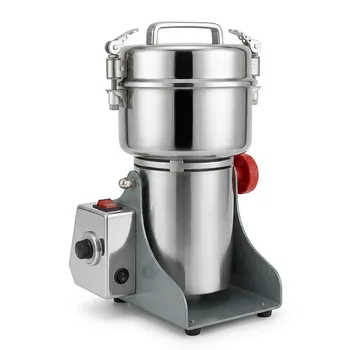
Versatile Industrial Crusher for Laboratory Crushing and Material Processing
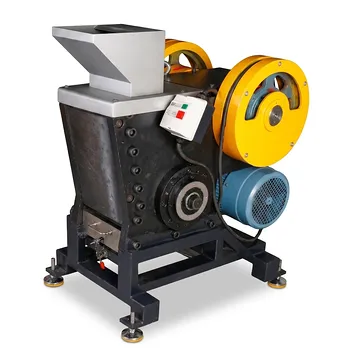
Heavy Duty Industrial Jaw Crusher for Primary Ore Crushing and High Capacity Mineral Material Size Reduction
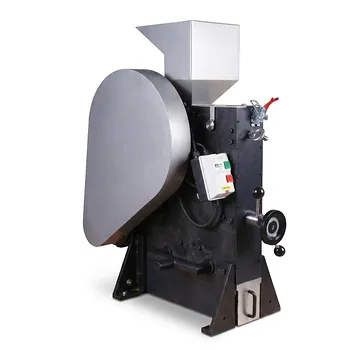
Heavy Duty Industrial Laboratory Jaw Crusher for Primary Sample Preparation and Hard Material Size Reduction
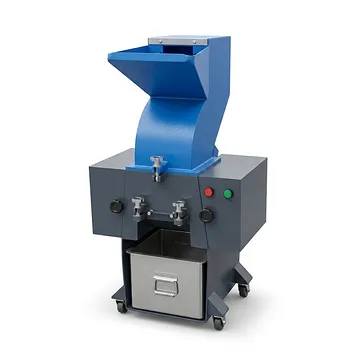
Heavy-Duty Crusher for Laboratory and Industrial Material Size Reduction
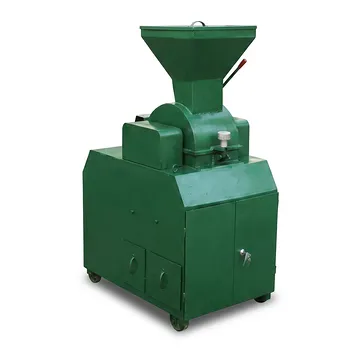
Industrial Sealed Hammer Knife Crusher for Mining Ore and Coal Sample Preparation
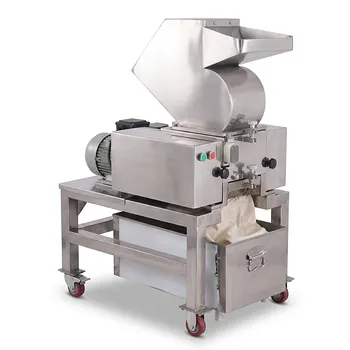
Stainless Steel Coarse Crusher for Pharmaceutical Food and Plastic Material Processing
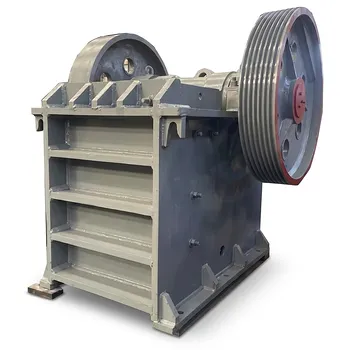
Heavy-Duty Jaw Crusher for Medium-Hard Ore and Industrial Mineral Crushing
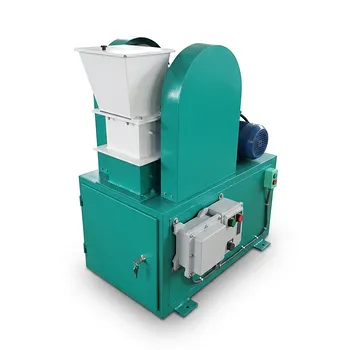
Custom Explosion-Proof Sealed Jaw Crusher for Laboratory and Industrial Sample Preparation
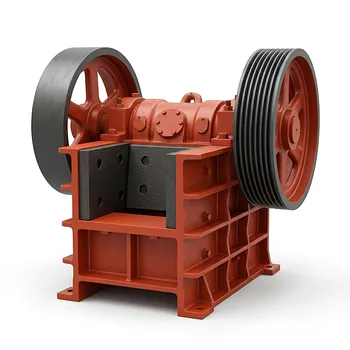
250x400 Jaw Crusher for Primary Crushing of Ores and Bulk Materials
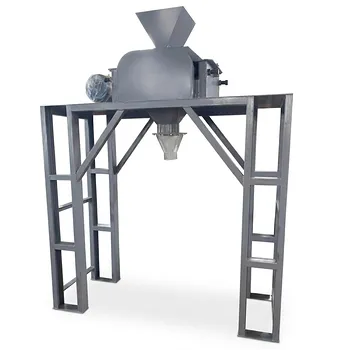
Heightened Customized Laboratory Double Roll Crusher for Coal Ore Rock Crushing
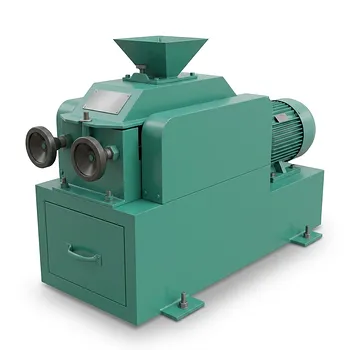
Horizontal Double Roll Crusher for Medium Fine Crushing of Coal Limestone and Ores
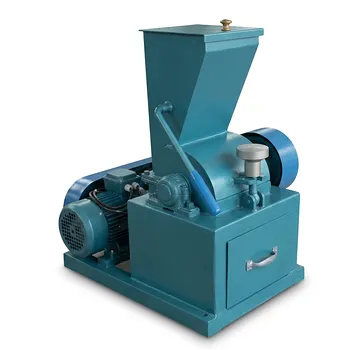
Small Hammer Crusher for Brittle Material Crushing in Mining Metallurgy and Lab Sample Preparation
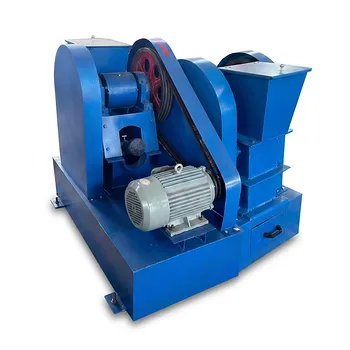
Horizontal Jaw Crusher Medium Hard Material Crushing Laboratory Sample Preparation Equipment
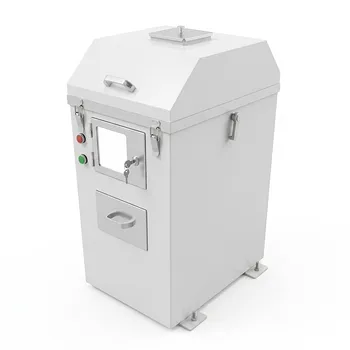
Sealed Double Roll Crusher for Laboratory Sample Preparation of Medium Hardness Materials
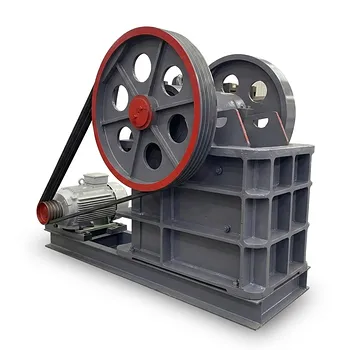
250x400mm Jaw Crusher Medium Crushing Equipment for Mining Mineral Sample Preparation
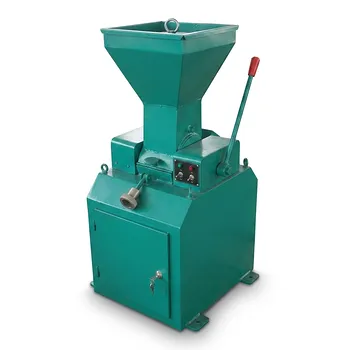
Laboratory Sealed Hammer Crusher for Coal and Mineral Sample Preparation
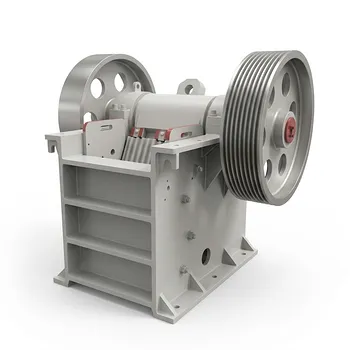
Jaw Crusher with 400x600mm Feed Opening for Primary Rock Crushing in Mining and Construction
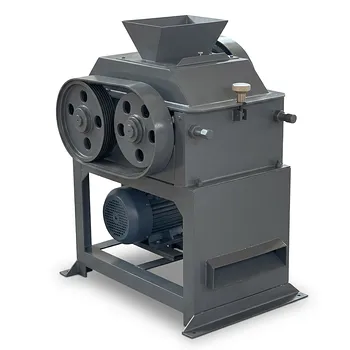
Sealed Laboratory Double Roll Crusher for Coal, Mineral, Ore Sample Preparation
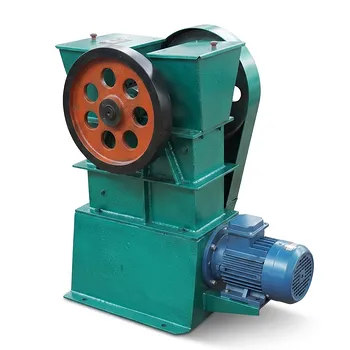
150×125mm Laboratory Jaw Crusher for Medium and Fine Crushing of Brittle Materials